
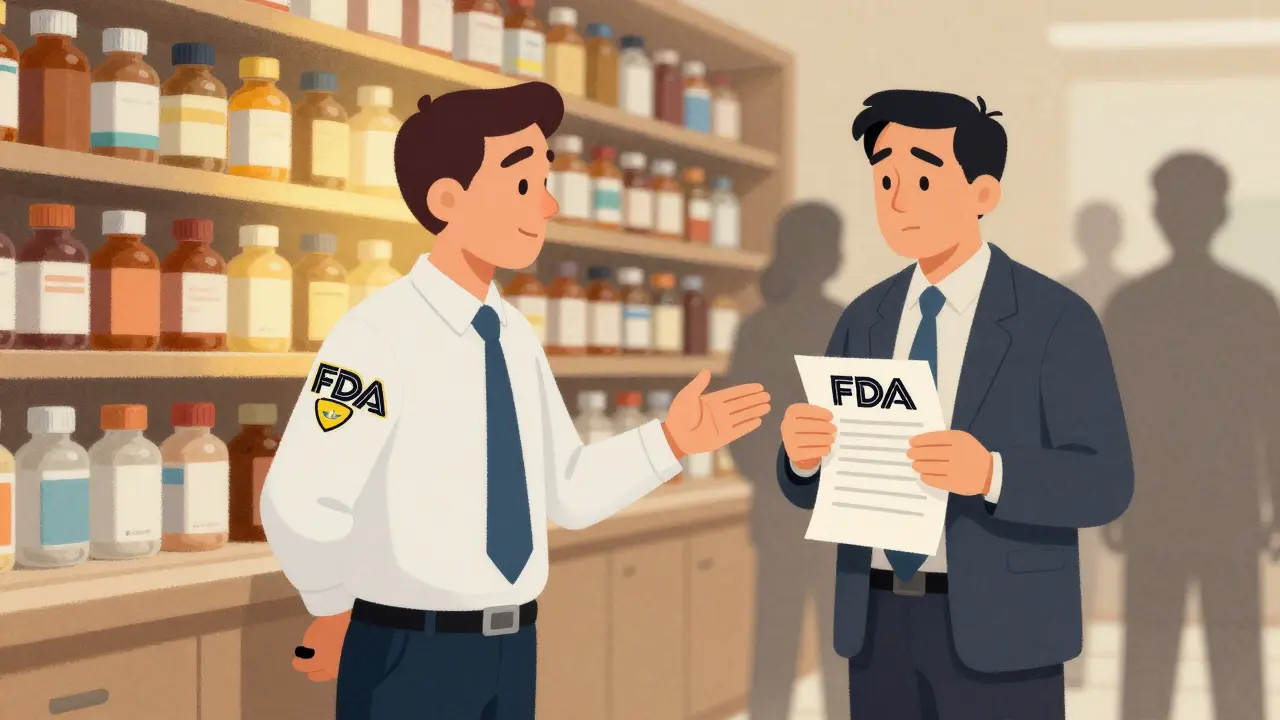
When a drug turns out to be unsafe, people assume the FDA just steps in and pulls it off the shelves. But that’s not how it works. The FDA doesn’t have the power to force a drug company to recall a medicine. Not directly. Instead, it asks. And in almost every case, the company listens.
How the FDA Actually Removes Unsafe Drugs
The legal foundation for drug safety in the U.S. comes from the Federal Food, Drug, and Cosmetic Act (FD&C Act) of 1938. Under this law, the FDA can’t order a recall. It can only request one. This is a key detail that gets lost in headlines. When a dangerous medication is found-whether it’s contaminated, mislabeled, or linked to serious side effects-the FDA contacts the manufacturer and says: ‘This needs to come off the market.’
Manufacturers almost always agree. Why? Because refusing means a public health emergency, a damaged reputation, and likely a lawsuit. The FDA doesn’t need to force the issue. It just needs to make it clear that continuing to sell the drug is too risky. In 2022, out of 4,312 drug recalls, 99.7% were voluntary. That’s not luck. It’s pressure.
But here’s the catch: if a company refuses? Then the FDA has to go to court. It files for an injunction under Section 304 of the FD&C Act. That means a judge has to order the company to stop distribution. It’s rare, but it’s happened. In 2018, during the valsartan recall, one manufacturer in China delayed action for 17 days after contamination was confirmed. The FDA had to escalate. Public alerts, media pressure, and legal threats eventually forced compliance.
The Three Levels of Drug Recalls
Not all recalls are the same. The FDA uses a three-tier system to classify how dangerous a product is:
- Class I: The most serious. These drugs could cause serious injury or death. Think contaminated injectables, pills with the wrong dose, or drugs linked to heart attacks. In 2022, only 2.1% of recalls fell into this category.
- Class II: These might cause temporary or reversible harm. Maybe the label is wrong, or the pill has a minor impurity. About 68.7% of recalls are Class II. They’re common, but rarely life-threatening.
- Class III: These are the least dangerous. Usually, they’re about packaging, labeling, or storage issues-nothing that affects how the drug works. About 29.2% of recalls are Class III. You might never even hear about these.
The classification determines how far the recall goes. A Class I recall might require hospitals to notify every patient who got the drug. A Class III? Maybe just a notice to pharmacies.
How Recalls Start: From Testing to Alerts
Recalls don’t happen out of nowhere. They usually start one of two ways:
- Manufacturers find the problem. Companies are required to do annual stability testing on all drugs. If a batch starts breaking down faster than expected, or if contamination shows up, they must report it-and often initiate a recall themselves.
- The FDA spots the issue. Through its MedWatch program, the agency collects over a million reports each year from doctors, pharmacists, and patients about adverse reactions. If a pattern emerges-say, five people in different states have liver failure after taking the same generic blood pressure pill-the FDA investigates. If the evidence is strong, they ask the manufacturer to recall.
Once a recall is initiated, the manufacturer must submit a Recall Strategy to the FDA. This includes: how deep the recall goes (retail? hospital? patient level?), how they’ll notify customers, and how they’ll collect returned products. The FDA reviews it and may demand changes.

Why Devices Are Different
Here’s where things get surprising. The FDA can force a recall of medical devices. That’s because of the Medical Device Amendments of 1976. If a pacemaker, ventilator, or insulin pump has a defect that could cause death or serious injury, the FDA can issue a mandatory recall order under 21 CFR 810. No asking. No waiting. Just an order.
Why the difference? It’s historical. When the FD&C Act was written in 1938, drugs were simpler. Devices weren’t as complex or widespread. By the time devices became a major health issue in the 1970s, lawmakers gave the FDA stronger tools. Drugs were left behind. Experts like Dr. Sidney Wolfe from Public Citizen have called this a dangerous gap. In the 2018 valsartan case, it took six months to fully clear contaminated pills from the market. A mandatory recall system could have cut that time in half.
What’s Changing? The Fight for Mandatory Recall Power
For years, safety advocates have pushed Congress to give the FDA the power to mandate drug recalls. The FD&C Modernization Act of 2022 included a provision-Section 604-that would have done exactly that. But it was stripped out during committee markup. Why? Lobbying. Pharmaceutical companies spent $8.2 million in just one quarter of 2023 fighting this change.
PhRMA, the industry group, argues that voluntary recalls work. They say only 3 out of 15,241 recalls between 2012 and 2022 required FDA enforcement. But critics point to real-world delays. In 2022, 68% of hospital pharmacy directors said they struggled to track recalled drugs because manufacturers used inconsistent lot numbers. Forty-two percent said communication breakdowns delayed patient alerts by more than three days.
Meanwhile, the proposed PREVENT Pandemics Act (S.2871) includes a new section-Section 3103-that would finally give the FDA explicit authority to order mandatory recalls of drugs and biologics. If passed, it would be the biggest change in drug safety law in decades. But industry opposition remains strong.
What Hospitals and Pharmacies Do
When a recall hits, hospitals and pharmacies don’t wait for the FDA to call. They have systems in place. The American Society of Health-System Pharmacists (ASHP) recommends a 12-point plan:
- Assign staff to monitor recall alerts daily
- Train pharmacists to recognize recall notices
- Use barcode scanning to track affected lots
- Notify prescribers and patients immediately for Class I recalls
- Document every step taken
Still, gaps remain. In 2022, one hospital in Ohio didn’t realize a recalled antibiotic had been dispensed to 12 patients until a nurse noticed a mismatched label. The recall notice had been buried in an email folder. Systems help-but they’re only as good as the people using them.
Global Recalls and Supply Chains
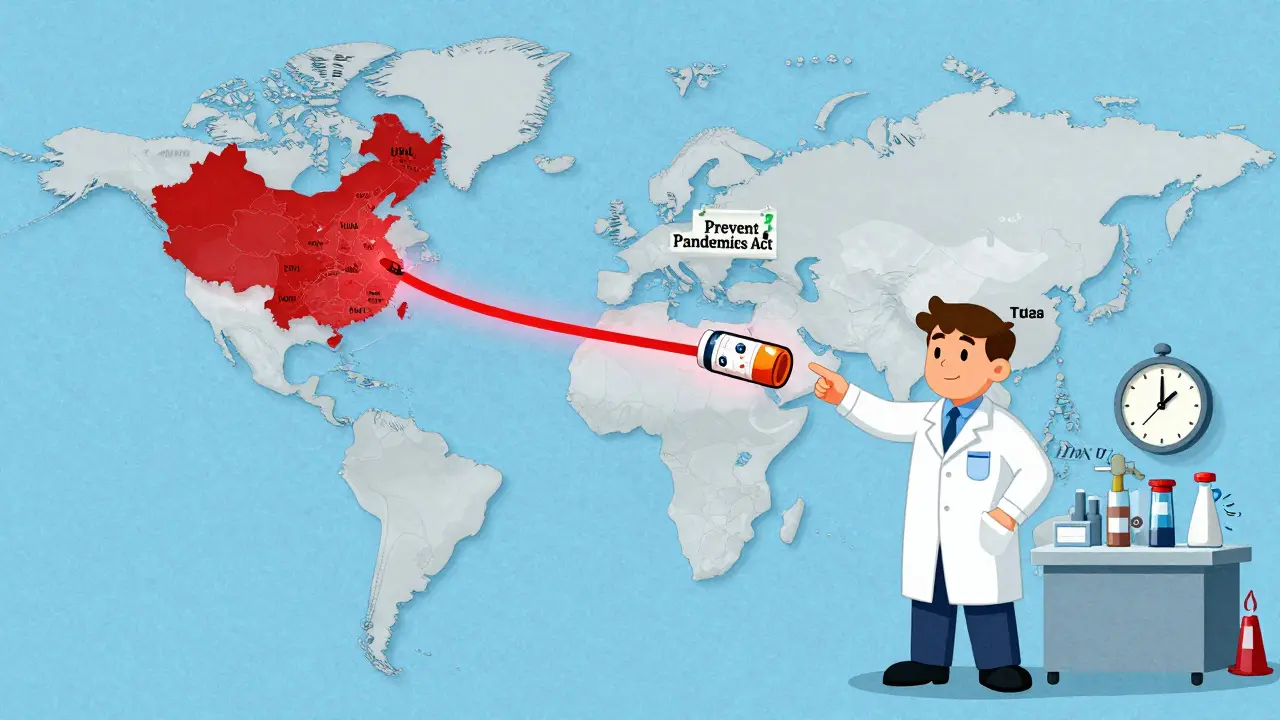
Today, most drugs aren’t made in the U.S. Over 80% of active pharmaceutical ingredients (APIs) come from China and India. When contamination is found, the FDA can’t just shut down a factory overseas. It has to coordinate with foreign regulators. In the 2018 valsartan recall, Chinese manufacturers didn’t respond to U.S. requests for 17 days. International cooperation is improving-89% of Class I recalls now involve cross-border coordination-but delays still happen.
That’s why the International Council for Harmonisation (ICH) is pushing for global recall standards. The goal? Make it faster, clearer, and more consistent-no matter where the drug was made.
Who Pays for Recalls?
Manufacturers cover the cost of recalls. That includes retrieving products, destroying them, and notifying customers. Some companies even pay for patient testing if harm is suspected. But there’s no federal reimbursement. And no penalty for delays-unless the FDA takes them to court.
There’s a growing industry around recalls. Companies like Recall Masters and Recall Index now offer tracking services to 73% of U.S. hospitals. They monitor FDA alerts, send automated notifications, and even help with patient outreach. The market for these services hit $287 million in 2023. It’s a sign that the system is working-but only because private companies are filling the gaps.
What You Can Do
If you take prescription drugs, here’s what you should know:
- Check your pill bottle for lot numbers. Keep them in a note on your phone.
- Sign up for FDA recall alerts at fda.gov/medwatch.
- If your pharmacy calls about a recall, don’t ignore it-even if you feel fine.
- Ask your doctor or pharmacist: ‘Has this drug been recalled recently?’
You don’t need to be an expert. But a little awareness can keep you safe.




10 Comments
Katherine Rodriguez March 12, 2026
So the FDA just asks nicely and hopes the drug companies do the right thing? Wow. That's not oversight, that's a prayer meeting. I'm supposed to trust this system when my cousin got sick from a recalled blood pressure pill that took three weeks to get pulled? No thanks. We need real power, not hand-holding.
Devin Ersoy March 13, 2026
The FDA’s whole system is a Shakespearean tragedy wrapped in a regulatory comma. They’re the ghost of Hamlet’s father, whispering ‘Recall this!’ while the corporation sips Chardonnay and ignores the plea. And let’s be real - 99.7% voluntary? That’s not cooperation, that’s corporate cowardice in a suit. If you’re not forcing recalls, you’re just enabling a slow-motion massacre with a PowerPoint slide.
Scott Smith March 14, 2026
The fact that the FDA can mandate recalls for devices but not drugs is a glaring inconsistency. It’s not about historical accident - it’s about lobbying. The pharmaceutical industry has spent decades shaping this loophole. We’re not talking about a broken system. We’re talking about a system designed to fail. And hospitals? They’re doing their best with outdated tools. The real crisis is that we treat drug safety like a suggestion.
Sally Lloyd March 15, 2026
You ever wonder who really controls the FDA? The same people who own the factories in China and India. The 17-day delay in the valsartan recall? Not incompetence. That’s coordination. The system is built to delay, to confuse, to bury. Class III recalls? They don’t even notify patients. That’s not safety - that’s obfuscation. And the PREVENT Pandemics Act? Don’t believe the hype. It’s a trap. They’ll pass it and then gut the enforcement. Always the same script.
Emma Deasy March 16, 2026
I am absolutely appalled by the sheer, unmitigated negligence embedded in this entire framework. The FDA, a regulatory body entrusted with the very sanctity of human life, is reduced to a polite suggestion box? How is this even remotely defensible? The fact that Class I recalls - those capable of causing death - are still subject to voluntary compliance is not merely a flaw; it is a moral catastrophe. And let us not forget: pharmaceutical corporations, whose primary fiduciary duty is to shareholders, are being asked to police themselves? This is not oversight - it is a farce dressed in bureaucratic linen.
tamilan Nadar March 17, 2026
In India, we have a saying - 'Jab darr lagta hai, tabhi toh darr ka naam hai' - fear only exists when you name it. Here, they name it 'voluntary recall' and pretend it’s safe. But the truth? Most drugs are made in our factories, and the FDA doesn’t inspect them. They just get a PDF. So when a recall happens, it’s not because the system works - it’s because someone in a US hospital noticed a mismatched label. That’s not safety. That’s luck.
Adam M March 19, 2026
Voluntary recalls work because companies know the alternative is worse. No need for laws. Just let the market and media do the work.
Rosemary Chude-Sokei March 20, 2026
I appreciate the depth of this breakdown. The distinction between drug and device recall authority is indeed a critical oversight. I’ve worked in hospital pharmacy for over 15 years, and I can tell you - the burden falls entirely on frontline staff. We’re not just checking emails; we’re cross-referencing lot numbers manually, calling reps, and sometimes guessing. The system isn’t broken - it’s abandoned. We need standardized, automated alerts with real-time integration into pharmacy systems. Not more paperwork. More infrastructure.
Noluthando Devour Mamabolo March 22, 2026
The recall ecosystem is a perfect storm of regulatory arbitrage + supply chain opacity + corporate inertia. We’re not just dealing with pharmacovigilance - we’re in the realm of supply chain risk analytics. The $287M market for recall tracking platforms? That’s the market pricing in systemic failure. We need blockchain-based lot traceability, AI-driven adverse event clustering, and real-time global regulatory sync. Until then, we’re just rearranging deck chairs on the Titanic. #PharmSafetyTech
Leah Dobbin March 22, 2026
Honestly, if you’re still taking generic meds without checking the lot number, you’re just asking for trouble. It’s not the FDA’s fault - it’s yours. You don’t read the fine print. You don’t sign up for alerts. You assume someone else is handling it. Well, they’re not. And now you’re surprised when something goes wrong? Classic.