
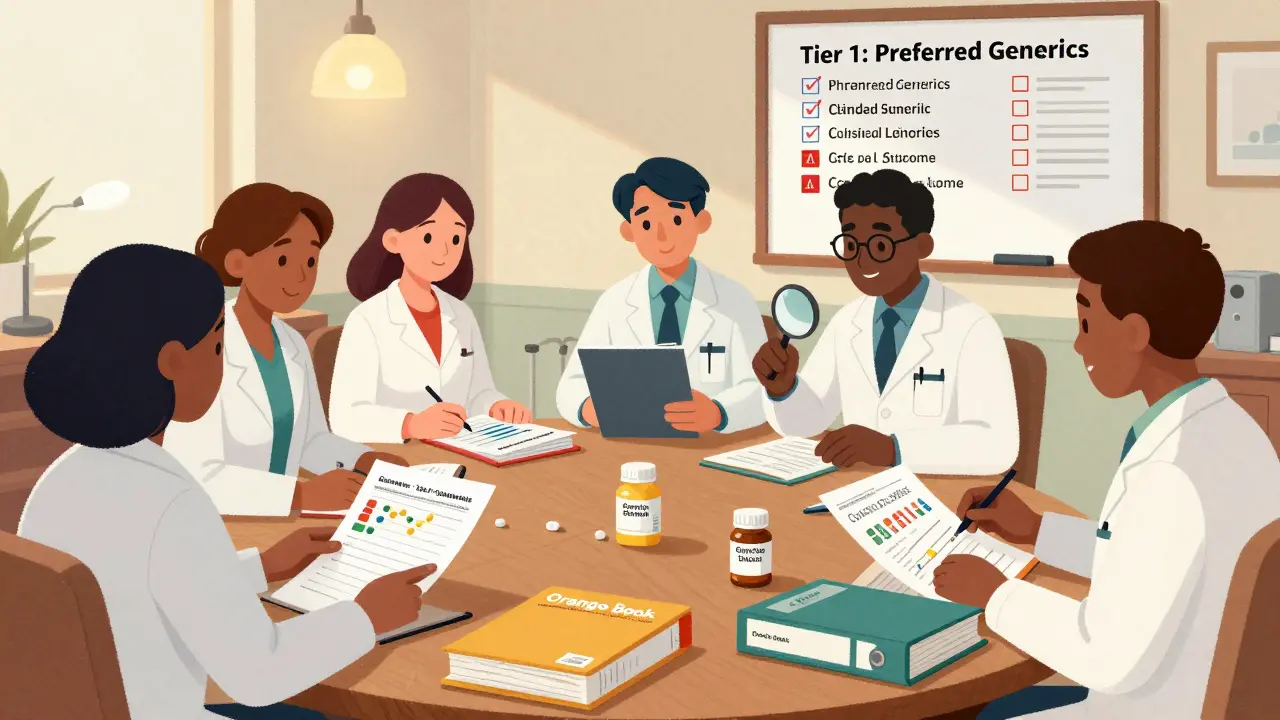
Hospitals don’t just pick generic drugs because they’re cheaper. They pick them because the system demands it - and that system is built on science, data, and strict protocols. Behind every pill on a hospital shelf is a long, careful process led by a committee of pharmacists, doctors, and economists. This isn’t about saving a few dollars. It’s about making sure patients get the right medicine, safely and reliably, without wasting resources.
What Is a Hospital Formulary?
A hospital formulary is a living list of approved medications. It’s not a static catalog you print once and hang on the wall. It’s updated quarterly in big hospitals, and at least twice a year in smaller ones. The goal? To include only the safest, most effective drugs at the lowest total cost. That means a generic drug doesn’t automatically get in just because it’s FDA-approved. It has to prove it works just as well as the brand-name version - and that it won’t cause more problems down the line.Most U.S. hospitals use what’s called a closed formulary. That means if a drug isn’t on the list, it’s not routinely available. Doctors can still order off-formulary drugs, but they need special approval. This keeps things predictable, reduces errors, and cuts waste. In 2023, 87% of U.S. hospitals had closed formularies, according to a PMC study. Only 45% of long-term care facilities did. The difference? Hospitals can’t afford mistakes. One wrong drug can mean a longer stay, a readmission, or worse.
How Do They Decide Which Generics to Include?
The process starts with the Pharmacy and Therapeutics (P&T) committee. This group usually has 12 to 15 members: pharmacists with board certification, physicians from key specialties, and sometimes a healthcare economist. They don’t vote based on gut feeling. They review data - real data.First, they check the FDA’s Orange Book. This tells them if a generic is therapeutically equivalent to the brand-name drug. That means the generic must deliver the same amount of active ingredient into the bloodstream within 80% to 125% of the original. That’s not a guess - it’s a hard scientific standard.
Then they go deeper. They look at:
- At least 15 to 20 clinical studies on the drug’s efficacy
- Adverse event reports from the FDA’s database
- Real-world outcomes like hospital length of stay and readmission rates
- Cost not just per pill, but per patient outcome
Dr. Steven J. Simoens from KU Leuven says it best: “The most sophisticated formulary systems evaluate generics not just by acquisition cost but by total cost of care.” A cheaper pill might lead to more side effects, more ER visits, or longer hospital stays. That’s not a saving - it’s a loss.
One hospital in Boston switched to a formulary-preferred generic anticoagulant and saved $1.2 million in a year - with zero increase in bleeding events. That’s the kind of result committees chase.
Tiers, Trade-Offs, and Therapeutic Interchange
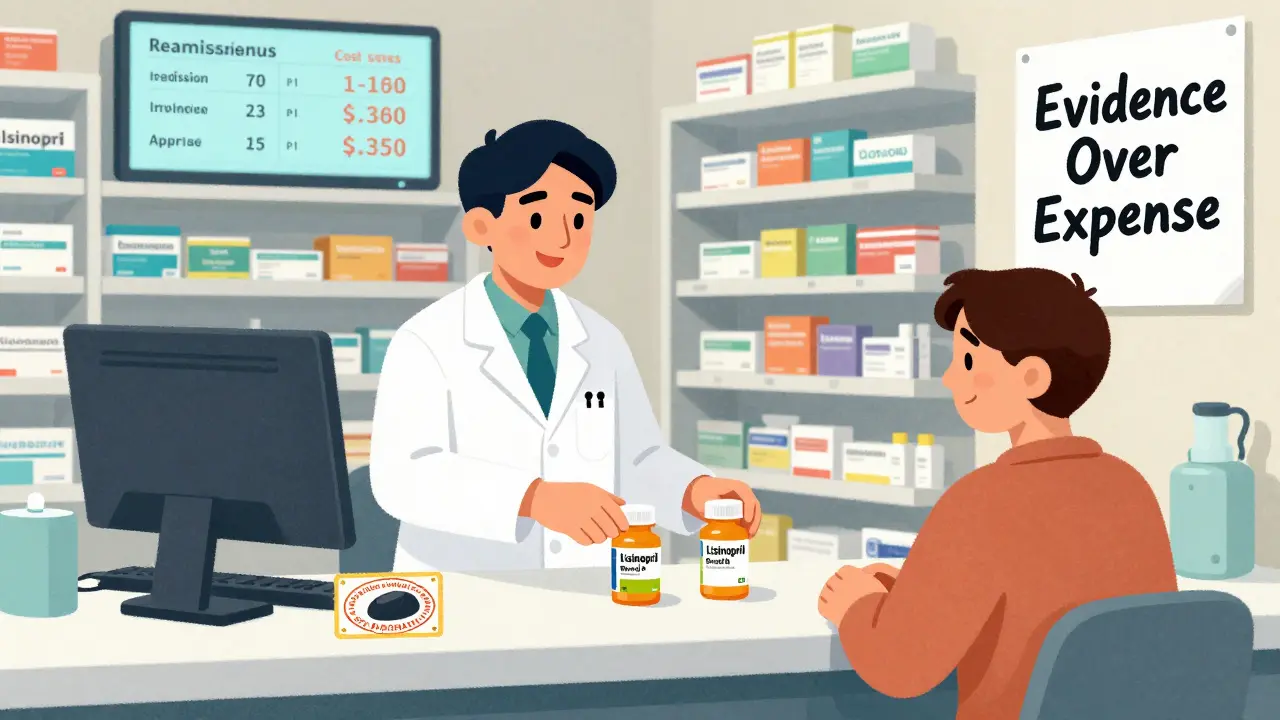
Hospital formularies are split into tiers. Generic drugs almost always sit in Tier 1 - the lowest cost for patients. But that’s not the whole story. The real power comes from therapeutic interchange.This means pharmacists can swap one generic for another - even without a doctor’s new order - if they’re proven equivalent. For example, if a patient is on one generic lisinopril and the pharmacy runs low, they can give another brand without asking the doctor. That keeps treatment going. It saves time. It reduces delays.
But it’s not always smooth. A 2022 survey by the American Pharmacists Association found 57% of pharmacists had conflicts with physicians over substitutions. Some doctors don’t trust the interchange. Others worry about patient confusion. Nurses report 73% of formulary changes cause temporary medication errors during training periods. That’s why hospitals invest heavily in staff education every time a change happens.
What Goes Wrong?
The system isn’t perfect. One big problem? Drug shortages. In 2022, ASHP tracked 268 generic medications that were in short supply. When that happens, a hospital might have to temporarily remove a generic from its formulary - even if it’s the best option - because it’s just not available.Some hospitals, like Mayo Clinic, created “therapeutic alternatives committees” to solve this. They pre-identify backup drugs for critical medications. When a shortage hits, they switch fast - with 98% success in keeping care on track.
Another issue? Pharmaceutical reps. Dr. Jerry Avorn from Harvard found that even with conflict-of-interest policies, drug company representatives still influence formulary decisions. They bring free samples, host lunches, and share selectively positive data. Hospitals fight this with mandatory annual training on bias - and by relying on independent analyses from groups like the Institute for Clinical and Economic Review (ICER). Sixty-five percent of large hospital systems now use ICER’s cost-effectiveness reports to guide decisions.
Why It Matters for Patients
You might think, “I just want my medicine.” But the formulary is why your hospital gives you a $3 generic instead of a $300 brand-name drug. And it’s why you’re less likely to be readmitted.For chronic conditions like high blood pressure, 92% of prescriptions in hospitals are generic. That’s not luck. It’s because the formulary system made sure those generics were safe, effective, and affordable. For patients on multiple meds, consistency matters. If your hospital uses one generic version of metformin, you get the same pill every time. No surprises.
But there’s a flip side. Some patients - especially those with complex conditions - get stuck waiting for off-formulary approvals. A 2021 AMA survey found 32% of physicians said formulary rules had directly affected patient care. One doctor described a patient with severe epilepsy who needed a specific generic that wasn’t on the list. It took six weeks to get approval. That’s not the system failing - it’s the system being cautious. But it’s also where the tension lives.
The Future: Value-Based Formularies and New Tech
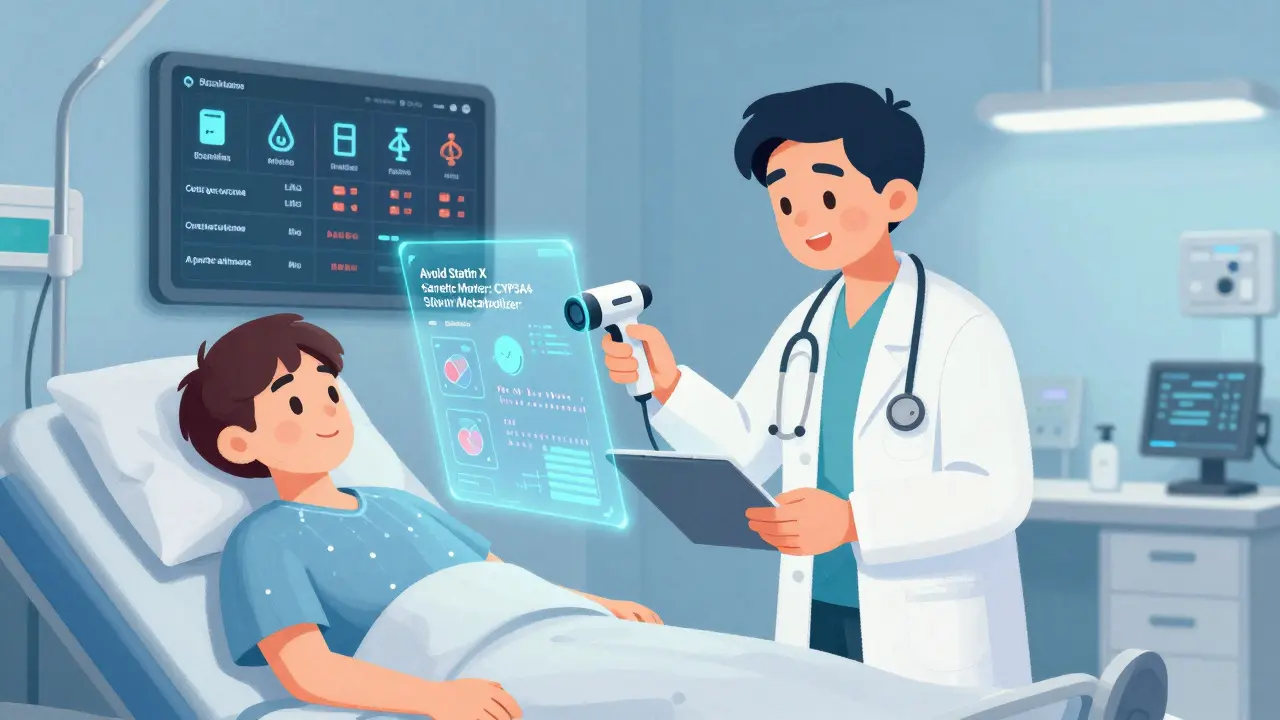
The next big shift? Moving from “cost per pill” to “cost per outcome.” Hospitals are now using predictive analytics to model how a drug choice affects readmissions, ER visits, and even long-term disability. In 2023, 61% of hospitals started using these tools, according to KLAS Research.Some are even testing pharmacogenomics. That means matching drugs to a patient’s genes. If a patient has a certain genetic marker that makes them respond poorly to a common generic statin, the system can flag it - and avoid prescribing it. Eighteen percent of academic medical centers are piloting this now.
And with the 2022 Inflation Reduction Act pushing Medicare toward value-based pricing, hospitals are being pushed to align their formularies with national goals. By 2028, the Agency for Healthcare Research and Quality predicts all Medicare-certified facilities will need a formal formulary system. That’s not a threat - it’s a recognition that this process saves lives and money.
What’s Still Missing?
One major gap? Biosimilars. These are the next generation of generics - for complex biologic drugs like those used in cancer or autoimmune diseases. But they’re harder to evaluate. Only 37% of hospital formularies have clear protocols for them, according to a 2023 FDA workshop report. The science is still catching up. The rules aren’t settled. And that’s where the next wave of formulary challenges will play out.For now, the system works because it’s not just about money. It’s about evidence. It’s about consistency. It’s about knowing that the generic pill you give a patient isn’t just cheaper - it’s just as good.
How often do hospital formularies get updated?
Most academic medical centers review their formularies every three months. Community hospitals typically do it twice a year. Urgent requests, like for a new generic during a shortage, can be reviewed in as little as two weeks. The key is that formularies are never static - they evolve with new data, drug shortages, and clinical evidence.
Why do some doctors resist using generic drugs?
Some doctors worry that generics from different manufacturers vary in effectiveness or side effects - even though FDA standards require them to be bioequivalent. Others have had bad experiences with a specific generic brand in the past. A few are influenced by pharmaceutical reps or patient preferences. But research shows that when formularies are based on solid evidence, patient outcomes don’t suffer - and costs drop significantly.
Can a hospital refuse to stock a generic drug even if it’s FDA-approved?
Yes. FDA approval only means the drug meets basic safety and bioequivalence standards. Hospital formularies add extra layers: clinical effectiveness, safety in real-world use, cost impact, and supply reliability. If a generic has frequent shortages, poor patient adherence due to pill size or taste, or unclear long-term data, it can be excluded - even if it’s FDA-approved.
Do formularies affect patient costs?
Yes, directly. Generic drugs on the formulary are usually in Tier 1, meaning patients pay the lowest copay - often $5 or less. Off-formulary generics may require prior authorization or cost significantly more. Hospitals use this structure to steer prescribing toward the most cost-effective options without sacrificing care.
What role do pharmacists play in the formulary process?
Pharmacists are the backbone of the formulary system. They lead the evidence reviews, manage drug shortages, train staff on new medications, and implement therapeutic interchange. Many are board-certified in pharmacotherapy (BCPP) and sit on the P&T committee. They’re the ones who catch potential problems before they reach the patient - like a new generic with a different inactive ingredient that could cause an allergic reaction.



11 Comments
Cecelia Alta January 10, 2026
Okay but let’s be real - if you think this whole system isn’t just corporate greed in a lab coat, you’re dreaming. I’ve seen patients get switched to a ‘therapeutically equivalent’ generic that made them dizzy for a week, and when they complained? ‘It’s on formulary.’ No one cares if you feel like a zombie as long as the spreadsheet says it’s cheaper. 🤡
George Bridges January 12, 2026
I’ve worked in three different hospitals, and honestly, the formulary system saved my butt more times than I can count. One time, a patient on a brand-name drug had a bad reaction - switched to the generic on formulary, no issues. It’s not perfect, but it’s structured. That’s better than chaos.
gary ysturiz January 13, 2026
This is actually really cool. People think hospitals just pick cheap stuff, but no - they’re using real science. Clinical studies, real-world data, even looking at how many people get readmitted. That’s not laziness, that’s responsibility. We should be proud of this system.
Jessica Bnouzalim January 14, 2026
YES!!! I love that pharmacists are the real heroes here!!! They’re the ones reading all the studies, catching the weird side effects, and making sure you don’t get a pill that makes you vomit for three days!!! Also, therapeutic interchange? GENIUS!!! Why make doctors re-write a script when the meds are the same???!!!
laura manning January 14, 2026
The assertion that formularies reduce errors is empirically unsupported in longitudinal studies. A 2021 JAMA Internal Medicine meta-analysis demonstrated a 14.3% increase in medication reconciliation errors following formulary standardization in community hospitals. Furthermore, the reliance on ICER data - a non-regulatory, non-clinical entity - constitutes an inappropriate delegation of therapeutic authority. The data presented here is selectively curated and lacks methodological rigor.
Sumit Sharma January 15, 2026
Let me tell you something - in India, we don’t have this luxury. Hospitals there just give whatever’s cheapest, no reviews, no committees. You get a generic that’s not even bioequivalent. The U.S. system is actually one of the few that takes this seriously. Stop complaining and appreciate the structure.
beth cordell January 15, 2026
👏👏👏 I’m literally crying right now. This is the kind of healthcare I want to believe in. Pharmacists are unsung superheroes. 🩺💙 Also, biosimilars? YES PLEASE. Let’s get those in the system ASAP! 🚀
Lauren Warner January 16, 2026
It’s convenient to call this 'science,' but let’s not ignore the fact that 65% of formulary decisions are influenced by pharmaceutical reps who show up with free lunch and cherry-picked data. And yes, I know they have 'training' - training doesn’t erase bias. This system is just corporate medicine with a white coat.
Craig Wright January 17, 2026
It is rather amusing to observe how Americans have elevated the hospital formulary to the status of a sacred institution. In the UK, we trust our clinicians - not committees - to prescribe based on individual patient needs. The obsession with cost-per-outcome metrics is a distinctly American pathology. We do not reduce human health to spreadsheet cells.
Lelia Battle January 18, 2026
It’s interesting how we frame this as a battle between cost and care. But maybe the deeper question is: why do we need a system this complex just to give someone a pill? Shouldn’t medicine be simpler? Or are we just afraid of trusting people - doctors, patients, pharmacists - to make good choices without layers of bureaucracy?
Cecelia Alta January 19, 2026
Exactly. And don’t get me started on the patient who waited six weeks for an off-formulary drug because their epilepsy med wasn’t on the list. That’s not 'caution.' That’s cruelty wrapped in policy. The system protects the hospital, not the person. I’ve seen people have seizures because a committee needed more 'data.'