
Drug Interaction Risk Checker for Rhabdomyolysis
Is this combination dangerous?
Check if your medications may interact to cause muscle breakdown (rhabdomyolysis). Based on data from FDA and medical studies.
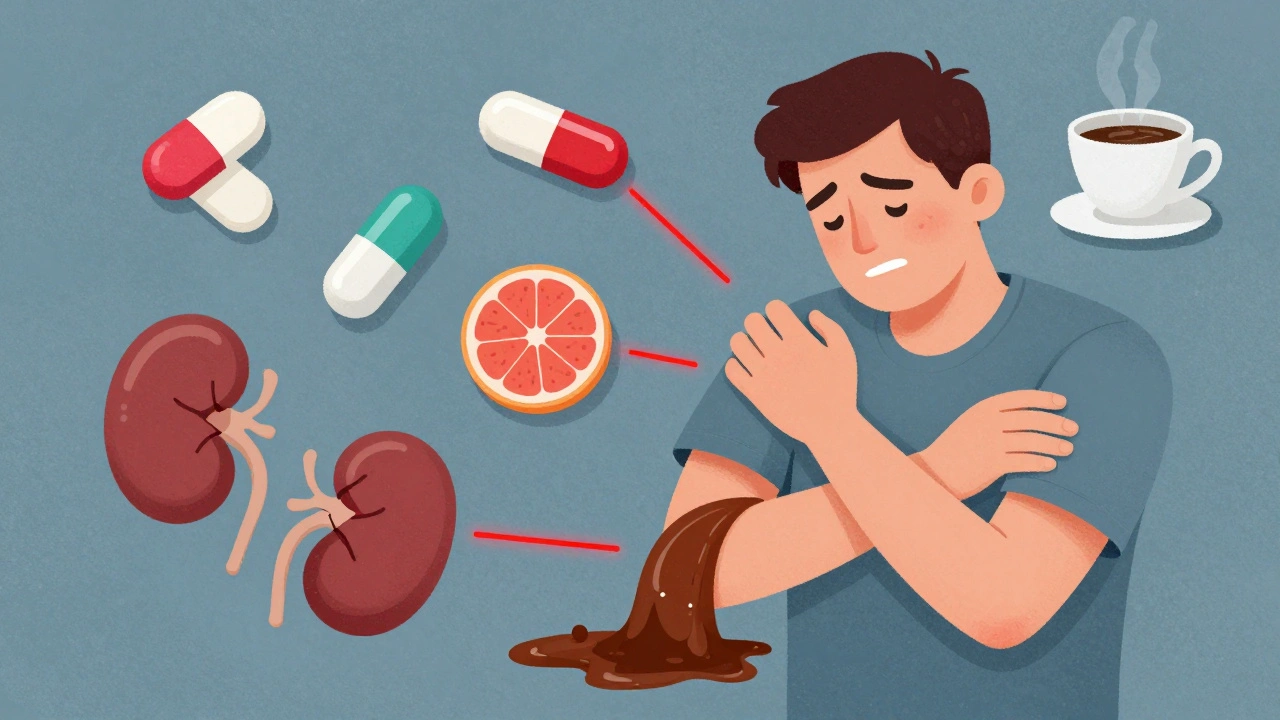
Most people don’t think twice about taking a statin for cholesterol and an antibiotic for a sinus infection. But when these drugs mix, they can trigger something dangerous: rhabdomyolysis. It’s not just muscle soreness. It’s your muscles literally breaking down, spilling toxic proteins into your blood, and potentially shutting down your kidneys. And it’s happening more often than you realize.
What Happens When Muscles Start Breaking Down
Rhabdomyolysis isn’t a disease-it’s a reaction. When muscle cells get damaged, their insides leak out. Creatine kinase (CK), potassium, calcium, and myoglobin flood into your bloodstream. Myoglobin is the big problem. It clogs up your kidneys like rust in a pipe. That’s why up to half of people with severe rhabdomyolysis end up needing dialysis. The classic signs-dark urine, muscle pain, weakness-only show up in about half the cases. Many people just feel tired, nauseous, or have vague back or shoulder pain. By the time they go to the ER, their CK levels are already over 5,000 U/L. In extreme cases, it hits 100,000 U/L. Normal is under 200.Statins Are the Main Culprit-But Only When Combined
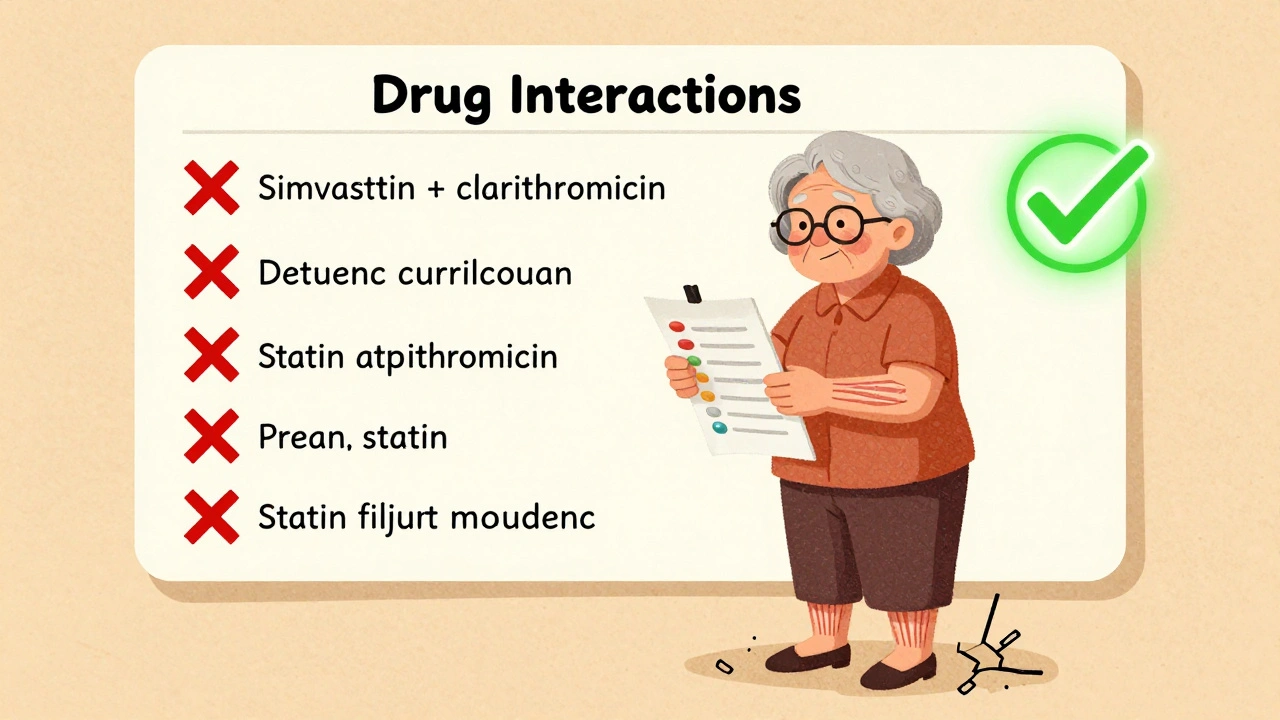
Statins like atorvastatin and simvastatin are the most common cause of drug-induced rhabdomyolysis. But here’s the key: they’re rarely dangerous alone. The real danger comes from what they’re mixed with. The FDA’s own data shows that 78% of statin-related rhabdomyolysis cases involve combinations. The worst offender? Simvastatin with gemfibrozil (a cholesterol drug). That combo increases risk by 15 to 20 times. Even worse? Simvastatin with erythromycin or clarithromycin. That’s an 18.7-fold jump in risk. Why? Because these antibiotics block CYP3A4, an enzyme your liver uses to break down statins. When it’s blocked, the statin builds up to toxic levels. It’s like turning up the volume on a song you’re already listening to-until your speakers explode.Other Dangerous Drug Mixes You Might Not Know About
It’s not just statins. Many everyday medications can trigger this when mixed.- Colchicine + clarithromycin: Used for gout and infections. Together, they cause rhabdomyolysis in nearly 9% of cases. The European Medicines Agency issued a formal warning in 2021 after reviewing over 1,200 cases.
- Erlotinib + simvastatin: Erlotinib is a cancer drug. When taken with simvastatin, CK levels can spike above 20,000 U/L within three days. One patient needed dialysis after just 72 hours.
- Propofol: Used in ICUs for sedation. Propofol infusion syndrome kills 68% of patients when rhabdomyolysis develops. It cripples the mitochondria-the energy factories in your muscle cells.
- Leflunomide: A rheumatoid arthritis drug. Its half-life is two weeks. Once it starts breaking down muscle, it doesn’t stop quickly. Plasma exchange is often needed to flush it out.
- Zidovudine: An HIV drug. In one study, 12.3% of patients on this drug had CK levels over 10 times normal.

Who’s Most at Risk?
It’s not random. Certain people are far more likely to have this happen.- Over 65: Risk is 3.2 times higher. Older bodies process drugs slower.
- Women: 1.7 times more likely than men. Why? Hormonal differences and lower muscle mass.
- People with kidney problems: If your eGFR is below 60, your risk jumps 4.5 times. Your kidneys can’t clear toxins fast enough.
- People on five or more drugs: This is the silent epidemic. A 2022 JAMA study found these patients have 17.3 times higher risk. Polypharmacy isn’t just messy-it’s deadly.
- People with SLCO1B1*5 gene variant: This genetic quirk makes simvastatin 4.5 times more likely to cause muscle damage. It’s common in Europeans. Testing exists-but most doctors don’t order it.
When Does It Happen?
Timing matters. Most cases don’t show up after years of use. They happen fast.- 52% of cases occur within 30 days of starting a new drug or changing a dose.
- Statin-related cases typically appear around 29 days after starting.
- One patient on Reddit posted: “Added clarithromycin to my colchicine for gout. My urine turned cola-colored in 48 hours. CK hit 28,500.”
- Another: “My oncologist didn’t warn me about simvastatin and erlotinib. CK peaked at 42,000. I needed three days of dialysis.”
Doctors often miss the early signs. A 2022 Reddit survey of 147 statin cases found 92% of patients said their provider didn’t take their muscle pain seriously.
What Doctors Should Do-And What You Should Ask
If you’re on a statin and get a new prescription, ask: “Could this interact with my cholesterol pill?” Doctors should:- Check for CYP3A4 inhibitors (azoles, macrolides, some antivirals, grapefruit juice).
- Use lower statin doses in high-risk patients.
- Order a baseline CK test before starting high-risk combos.
- Warn patients to report unexplained muscle pain, dark urine, or extreme fatigue.
Emergency treatment is straightforward but urgent:
- Stop the offending drug immediately.
- Start IV fluids-3 liters in the first 6 hours, then 1.5 liters per hour.
- Alkalinize urine with sodium bicarbonate to keep pH above 6.5. This stops myoglobin from clogging kidneys.
- Monitor potassium, calcium, and kidney function hourly.
Most patients recover-but not always fully. A Mayo Clinic study found 44% still had muscle weakness six months later. Recovery took 12 weeks without kidney damage. With dialysis? Over 28 weeks.
The Bigger Picture: Why This Is Getting Worse
We’re living longer. We’re taking more pills. The average 70-year-old in the U.S. takes 6 medications. That’s a recipe for disaster. The FDA’s Sentinel system saw a 22.4% spike in rhabdomyolysis reports after remdesivir was rolled out for COVID-19. Why? Because it’s metabolized by the same liver enzymes as statins. Regulators are catching up. The EMA now requires all statin labels to list specific contraindications with strong CYP3A4 inhibitors. The NIH is funding a $2.4 million project to build real-time drug interaction alerts for EHRs. But until then, the burden is on you.What You Can Do Right Now
- Make a list of every pill, supplement, and OTC drug you take. Include vitamins, herbal teas, and painkillers.
- Bring it to every doctor visit-even your dentist.
- Ask: “Is this safe with my statin?” Even if you’re not on one yet, ask if you might start one.
- Know your CK levels. If you’re on high-risk meds, ask for a baseline test.
- If your urine turns dark brown or cola-colored, go to the ER. Don’t wait. Don’t assume it’s dehydration.
Rhabdomyolysis isn’t rare. It’s predictable. And it’s preventable-if you know the risks.
Can rhabdomyolysis happen from just one medication?
Yes, but it’s rare. Most cases are caused by drug interactions. Statins alone cause rhabdomyolysis in about 0.1% of users. But when combined with antibiotics like clarithromycin or antifungals like itraconazole, the risk jumps 15 to 20 times. Other single-drug causes include high-dose statins in elderly patients, alcohol abuse, or intense exercise-but these are far less common than interaction-driven cases.
How do I know if my muscle pain is serious?
Normal soreness goes away in a day or two. Serious muscle damage from rhabdomyolysis doesn’t improve with rest. It gets worse. Look for: pain that’s deep and constant (not just after exercise), weakness that makes it hard to climb stairs or stand up, dark or cola-colored urine, and swelling in your arms or legs. If you’re on a statin and have any of these, get a CK test. Don’t wait.
Are all statins equally risky?
No. Simvastatin is the riskiest, especially at doses above 20 mg. Atorvastatin is safer but still dangerous with CYP3A4 inhibitors. Pravastatin and rosuvastatin are metabolized differently and carry much lower risk. If you’re on a high-risk combo, ask your doctor if switching to pravastatin or rosuvastatin is an option. It could cut your risk by 80%.
Can grapefruit juice cause rhabdomyolysis?
Yes. Grapefruit juice blocks CYP3A4 just like antibiotics do. Even one glass a day can raise simvastatin levels by 300%. The FDA warns against it for patients on simvastatin, lovastatin, or atorvastatin. If you’re on one of these, switch to orange juice. It’s safe.
What’s the long-term outlook after rhabdomyolysis?
Most people survive if treated quickly. But recovery isn’t guaranteed. About 44% still have muscle weakness six months later. If you needed dialysis, recovery takes over 28 weeks on average. Some never fully regain strength. The risk of kidney damage later in life also increases. Preventing it the first time is far better than surviving it.
Should I get genetic testing for SLCO1B1*5?
It’s not routine-but if you’re on simvastatin and have unexplained muscle pain, or if you’re over 65 with kidney issues, it’s worth asking. The SLCO1B1*5 gene variant makes simvastatin 4.5 times more likely to cause damage. Testing costs under $100 and can be done with a saliva sample. If you’re positive, your doctor can switch you to a safer statin or lower the dose.
Can supplements cause rhabdomyolysis?
Yes. Creatine, niacin, and some weight-loss supplements have been linked to cases. Herbal products like green tea extract and black cohosh can interfere with liver enzymes. Many people don’t realize supplements are drugs too. Always tell your doctor what you’re taking-even if it’s labeled “natural.”
If you’re on multiple medications, especially statins, antibiotics, or drugs for chronic conditions, talk to your pharmacist. They’re trained to spot these interactions. Don’t wait for a crisis. A simple conversation today could save your kidneys-and your life.


9 Comments
Larry Lieberman December 9, 2025
This is wild 😱 I took simvastatin last year with a Z-pack and thought my sore legs were just from hiking. Never connected the dots. Thanks for laying this out like a bomb squad report.
Lisa Whitesel December 11, 2025
People still don't get it. Taking meds like candy while ignoring interactions is just slow suicide. Stop blaming doctors. You're the one who didn't ask.
Sabrina Thurn December 11, 2025
The CYP3A4 inhibition mechanism is critical here. Statins like simvastatin are hepatically cleared via this pathway, and macrolides like clarithromycin are potent competitive inhibitors. This creates non-linear pharmacokinetics where plasma concentrations spike exponentially. The clinical implication? Even low-dose statins become toxic when paired with these agents. Always check the FDA's drug interaction database before co-prescribing. It's not just theory-it's biochemistry in action.
Courtney Black December 11, 2025
We live in a world where your body is just a battlefield of molecules and enzymes and you didn't even get a say in the war plan. You take a pill for one thing and suddenly your muscles are turning into soup because some chemist in a lab 30 years ago didn't think about what happens when you mix two things that were never meant to meet. We're not patients. We're accidental experiments.
iswarya bala December 13, 2025
So true! I didnt know grapefruit juice can be so dangerous 😅 my dad was on statin and he drink it every morning... now he switched to orange juice. Life saver!
Simran Chettiar December 14, 2025
The systemic failure in pharmaceutical education and clinical practice is not merely an oversight-it is an ethical deficit. When polypharmacy becomes the norm for aging populations, and when genetic predispositions like SLCO1B1*5 remain untested due to cost or indifference, we are not practicing medicine-we are gambling with human physiology. The burden of vigilance should not rest solely on the patient. Regulatory agencies must mandate preemptive pharmacogenomic screening for high-risk medications, and healthcare institutions must integrate real-time interaction alerts into EHR systems with legal accountability. This is not preventative care. This is damage control after negligence.
Anna Roh December 15, 2025
I read this and just sighed. Why do I even bother?
om guru December 15, 2025
Respected sir and madam, this critical information must be disseminated with utmost urgency. The human body is a sacred vessel, and pharmacological ignorance is a grave transgression against its integrity. I urge every healthcare professional to adopt a protocol of mandatory interaction screening prior to prescription. Let us not wait for tragedy to awaken our conscience.
Tiffany Sowby December 16, 2025
Of course Americans are dying from drug interactions. We're too lazy to read labels and too entitled to ask questions. If you can't handle your own health, maybe you shouldn't be allowed to live past 60. This isn't a medical crisis-it's a cultural one.