
When it comes to child medication errors, mistakes in giving medicine to children that can lead to serious harm or death. Also known as pediatric dosing errors, these aren’t just rare accidents—they happen far more often than most parents realize, often because of simple oversights like misreading labels, confusing syringes, or mixing up similar-looking pills. A child’s body doesn’t process drugs like an adult’s. A dose that’s safe for a 150-pound teen could be deadly for a 30-pound toddler. That’s why getting it right isn’t just important—it’s life-or-death.
These errors usually happen because of three things: wrong dosing, the amount of medicine given, often measured in milliliters or milligrams, wrong medication, giving the wrong drug, like confusing ibuprofen with acetaminophen, or wrong timing, giving doses too close together or skipping them entirely. Caregivers juggle multiple prescriptions, sleep-deprived nights, and confusing instructions from different doctors. It’s no wonder mistakes happen. But they don’t have to. Tools like shared medication calendars, clear labeling systems, and automated refill alerts—exactly the kind of practical solutions covered in the posts below—can cut these risks dramatically.
Some errors come from look-alike packaging, where two different drugs look almost identical on the bottle. Others come from using kitchen spoons instead of proper measuring tools. And don’t forget drug interactions—giving a child an antibiotic while they’re on another medication can cause dangerous side effects. Parents and caregivers need clear, simple systems, not complicated charts or medical jargon. The good news? Most of these mistakes are preventable with basic, repeatable habits. Whether you’re managing a daily asthma inhaler, a weekly antibiotic course, or a complex mix of supplements, there’s a proven way to stay on track without burning out.
What you’ll find below isn’t theory. It’s real advice from people who’ve been there—parents who set up reminder apps, nurses who redesigned pill organizers for kids with low vision, and caregivers who built shared calendars to stop double-dosing. These posts cover everything from how to read medication guides to avoiding dangerous interactions between common drugs. No fluff. No guesswork. Just what works.
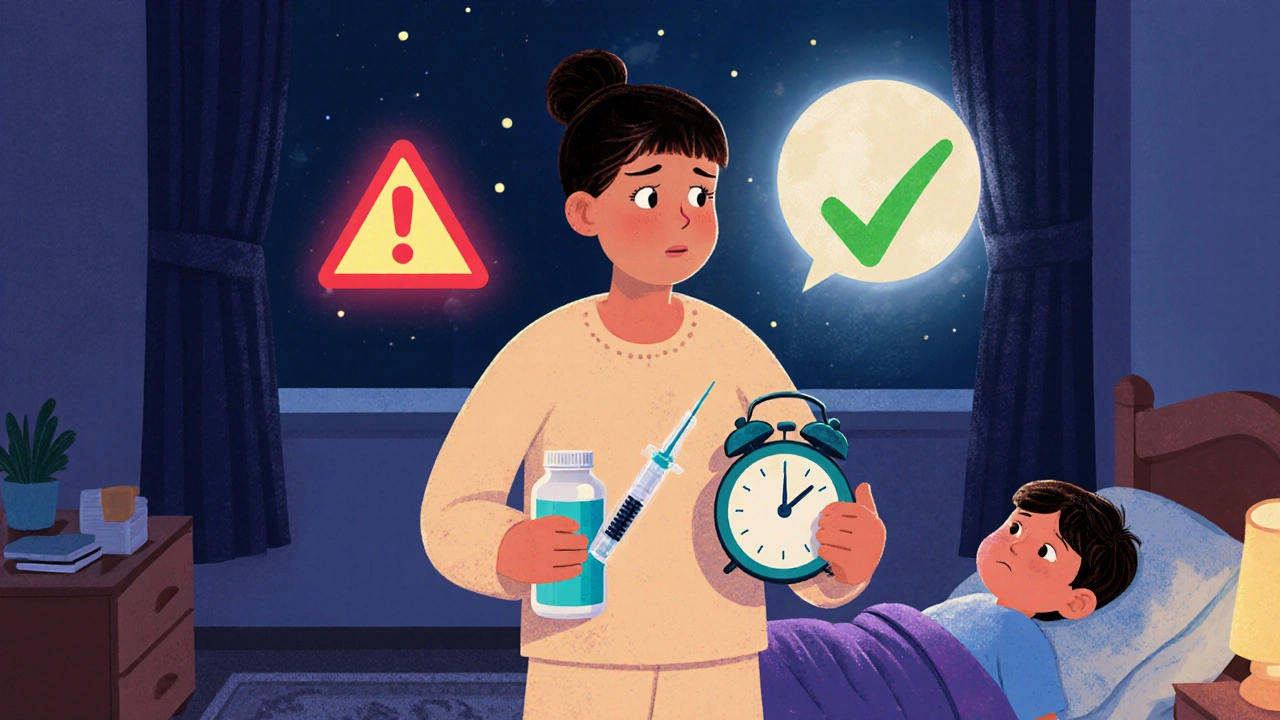
Learn the safe, science-backed steps to handle missed pediatric medication doses without risking overdose. Follow time-based rules, avoid doubling doses, and use tools like oral syringes and apps to prevent errors.
Read more