
When blood sugar swings too high or too low, it triggers a diabetic emergency, a life-threatening condition caused by uncontrolled blood glucose levels that requires immediate action. Also known as insulin reaction, it doesn’t wait for appointments—it strikes suddenly, often at night, during exercise, or after missing a meal. This isn’t just about feeling shaky or tired. A true diabetic emergency can lead to seizures, coma, or death if ignored.
Two main types drive most emergencies: hypoglycemia, dangerously low blood sugar, often from too much insulin or skipped food, and hyperglycemia, dangerously high blood sugar, usually from missed meds, illness, or too many carbs. When hyperglycemia gets severe, it can spiral into diabetic ketoacidosis, a toxic buildup of acids in the blood from the body burning fat instead of sugar. These aren’t abstract risks—they’re real, measurable, and preventable with the right knowledge.
People with type 1 diabetes are at highest risk for ketoacidosis, but type 2 patients aren’t safe either—especially if they’re sick, dehydrated, or taking certain meds like SGLT2 inhibitors. Hypoglycemia hits harder in those using insulin or sulfonylureas. And here’s the twist: you can have a diabetic emergency without knowing you’re diabetic. Some people only find out when they collapse from low blood sugar.
What you’ll find below isn’t theory. These are real stories from people who recognized the signs in time—and those who didn’t. You’ll learn how to spot the early clues: sweating, confusion, fruity breath, rapid heartbeat, or sudden fatigue. You’ll see how simple tools like glucose meters, glucagon kits, and emergency alerts save lives. You’ll also find warnings about meds that can hide symptoms or make things worse—like beta-blockers masking low blood sugar or antibiotics triggering dangerous spikes.
This isn’t about fear. It’s about control. A diabetic emergency doesn’t have to be a surprise. With the right awareness, you can turn panic into action—and action into safety.
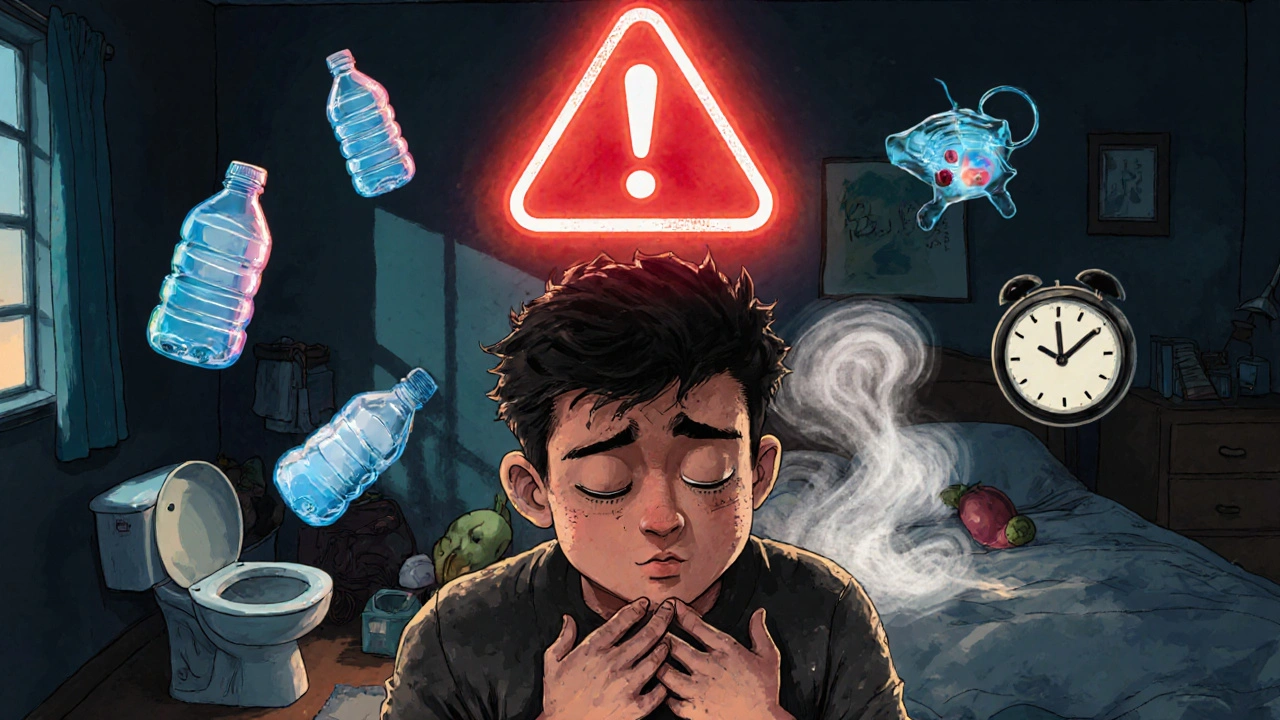
Diabetic ketoacidosis is a life-threatening emergency caused by insulin deficiency. Learn the warning signs-like fruity breath, vomiting, and confusion-and what happens during hospital treatment. Early action saves lives.
Read more