
When you have diabetes, your eyes are at risk—not from sugar directly, but from the damage high blood sugar does over time. Diabetic eye disease, a group of conditions caused by prolonged high blood sugar that damages blood vessels in the retina. Also known as diabetic retinopathy, it’s the leading cause of vision loss in working-age adults in the U.S. Many people don’t notice any changes until their vision is already affected. That’s why waiting for symptoms is like waiting for a leak to flood your house before fixing the pipe.
Diabetic eye disease isn’t one thing—it includes diabetic retinopathy, damage to the retina’s blood vessels, diabetic macular edema, swelling in the central part of the retina, cataracts, and glaucoma. These aren’t separate problems; they’re different ways your eyes respond to uncontrolled blood sugar. The same high glucose levels that harm your kidneys and nerves also weaken the tiny vessels in your eyes. And once those vessels leak or burst, the damage can be permanent.
Controlling your blood sugar helps—but it’s not the whole story. Blood pressure and cholesterol matter just as much. A study from the American Diabetes Association showed that people who kept their HbA1c below 7%, blood pressure under 130/80, and LDL cholesterol under 100 cut their risk of vision loss by more than half. Still, even people with good control need regular eye exams. No symptoms don’t mean no damage. The retina can be deteriorating silently for years.
What do you need to do? Get a dilated eye exam at least once a year—even if your vision feels fine. If you’re pregnant or have existing eye damage, your doctor might recommend exams every few months. Don’t wait for blurry vision, floaters, or dark spots. By then, it’s often too late for simple fixes. Early detection means treatment can stop progression. Laser therapy, injections, or surgery can save your sight—if caught in time.
You’re not alone in this. Thousands of people with diabetes manage their eye health successfully by making small, consistent changes: checking blood sugar daily, eating balanced meals, staying active, and never skipping eye appointments. It’s not about perfection—it’s about showing up. The tools are simple: an A1C test, a blood pressure monitor, and an eye doctor who knows what to look for.
What you’ll find below are real, practical guides on how to avoid mistakes that make diabetic eye disease worse—like mixing medications that raise blood pressure, ignoring warning signs, or skipping checkups because "you feel fine." You’ll learn how to talk to your doctor about eye risks, what to ask during an exam, and how to spot when something’s off before it’s too late. This isn’t theory. These are the strategies people use every day to protect their vision.
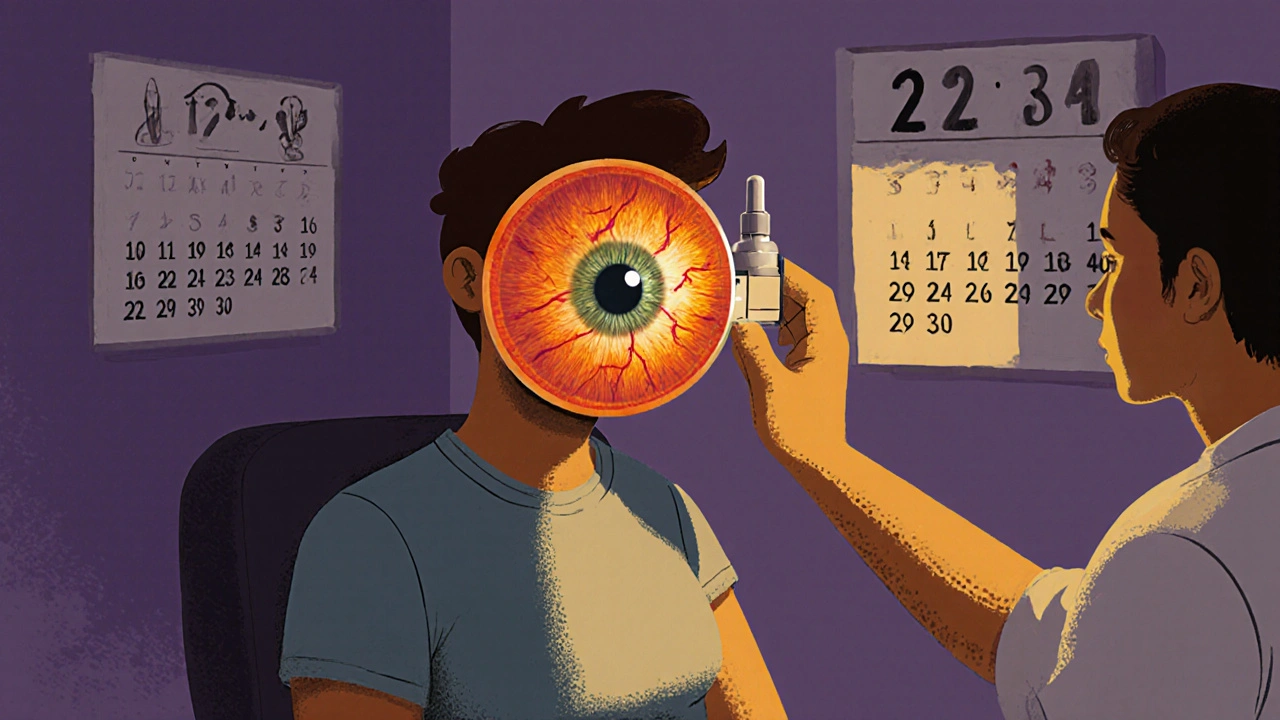
Diabetic retinopathy is the leading cause of preventable blindness in adults with diabetes. Learn when to get screened, how treatment works, and how to protect your vision based on your personal risk level.
Read more