
When you have diabetes, high blood sugar doesn’t just affect your feet or kidneys—it can damage the tiny blood vessels in your eyes. Diabetic macular edema, a swelling in the macula caused by leaking fluid from damaged retinal blood vessels. It’s one of the leading causes of vision loss in working-age adults with diabetes. This isn’t just blurry vision—it’s a structural change in the eye that happens silently, often without pain or warning signs until it’s advanced.
Diabetic retinopathy, the broader group of eye diseases caused by diabetes. It’s the condition that usually comes first, and diabetic macular edema often develops as a complication. If your blood sugar stays high for years, the walls of your retinal capillaries weaken. Fluid leaks out, pools in the macula—the part of your eye responsible for sharp central vision—and that’s when your vision starts to blur, warp, or fade. It’s not just about sugar levels either. High blood pressure, high cholesterol, and being overweight all make it worse.
People with type 1 or type 2 diabetes are at risk, but not everyone gets it. The longer you’ve had diabetes, the higher your chance. Up to 1 in 3 people with diabetes will develop some form of diabetic macular edema. What’s scary is that many don’t notice symptoms until the damage is done. Regular eye exams aren’t optional—they’re your best defense. And while treatments like anti-VEGF injections and steroids can help, the real win is catching it early.
You’ll find posts here that cover how medications like canagliflozin affect emotional health in diabetes, how to read your medication guides for hidden risks, and how to avoid drug interactions that could worsen your condition. There’s also advice on medication reminders, safety for people with low vision, and how to manage multiple prescriptions—all of which matter if you’re living with diabetes and its complications. This isn’t just about eye health. It’s about how your whole body responds to chronic disease, and what you can do every day to protect yourself.
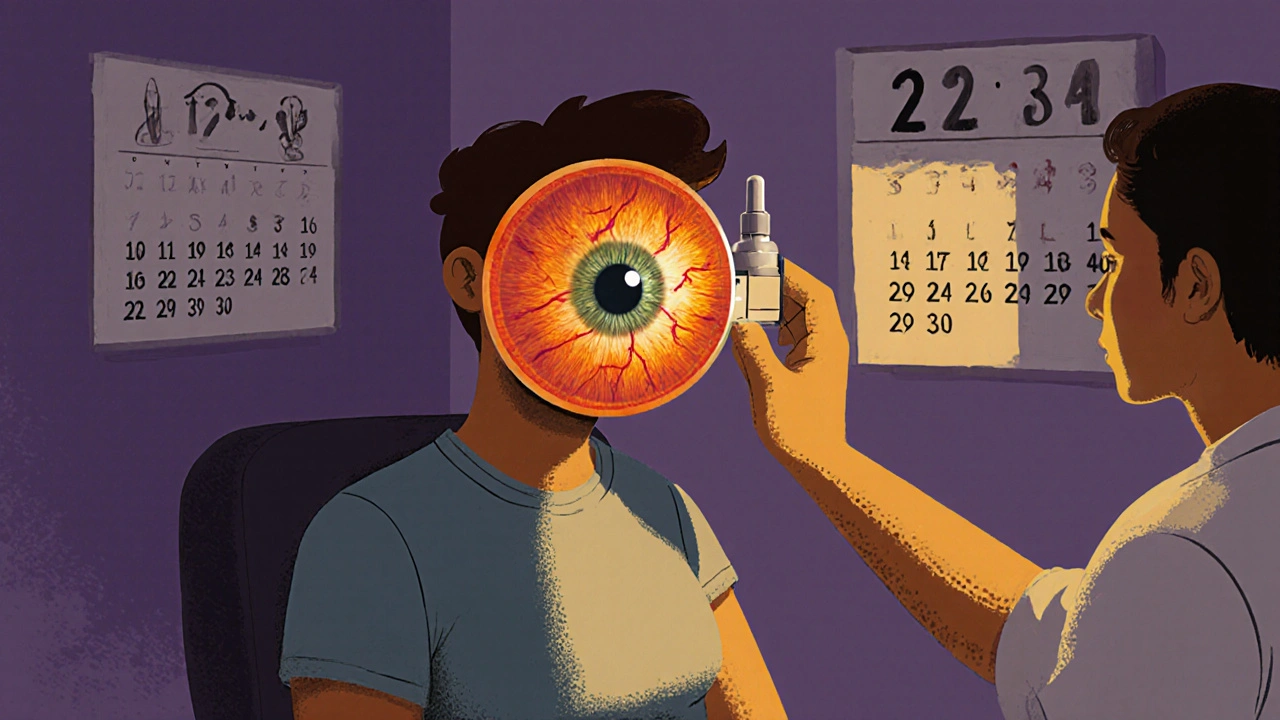
Diabetic retinopathy is the leading cause of preventable blindness in adults with diabetes. Learn when to get screened, how treatment works, and how to protect your vision based on your personal risk level.
Read more