
When diabetic retinopathy, a leading cause of vision loss in people with diabetes, caused by damage to blood vessels in the retina starts to develop, it doesn’t always cause symptoms—until it’s too late. This isn’t just about blurry vision. It’s about losing the ability to read, drive, or recognize faces. The good news? blood sugar control, the foundation of preventing and slowing diabetic retinopathy is still the most powerful tool you have. Studies show that keeping HbA1c below 7% cuts the risk of progression by over 50%. It’s not magic—it’s consistency.
But when damage is already happening, anti-VEGF injections, medications like ranibizumab and aflibercept that block abnormal blood vessel growth in the eye have changed the game. These aren’t cures, but they stop vision loss in up to 90% of cases when caught early. They’re given as tiny shots into the eye, usually every month or two at first. Many patients worry about the injections, but the discomfort is brief, and the results are life-changing. Then there’s laser therapy, a procedure that seals leaking vessels or shrinks abnormal ones to protect the retina. It’s older, but still essential—especially when swelling is the main issue. Not everyone needs it, but for many, it’s the difference between seeing clearly and seeing nothing.
What doesn’t work? Waiting. Assuming that if you feel fine, your eyes are fine. Skipping annual eye exams because your diabetes is "under control." Relying on supplements or herbal remedies instead of proven medical care. Diabetic retinopathy doesn’t wait. It creeps in silently, and once vision is lost, it’s often permanent. The real treatment isn’t just the shots or the lasers—it’s showing up. For your doctor. For your eye specialist. For yourself.
Below, you’ll find real, practical advice from people who’ve been there—how to spot early signs, what to ask your doctor, which medications to watch for, and how to avoid mistakes that cost vision. No fluff. Just what helps.
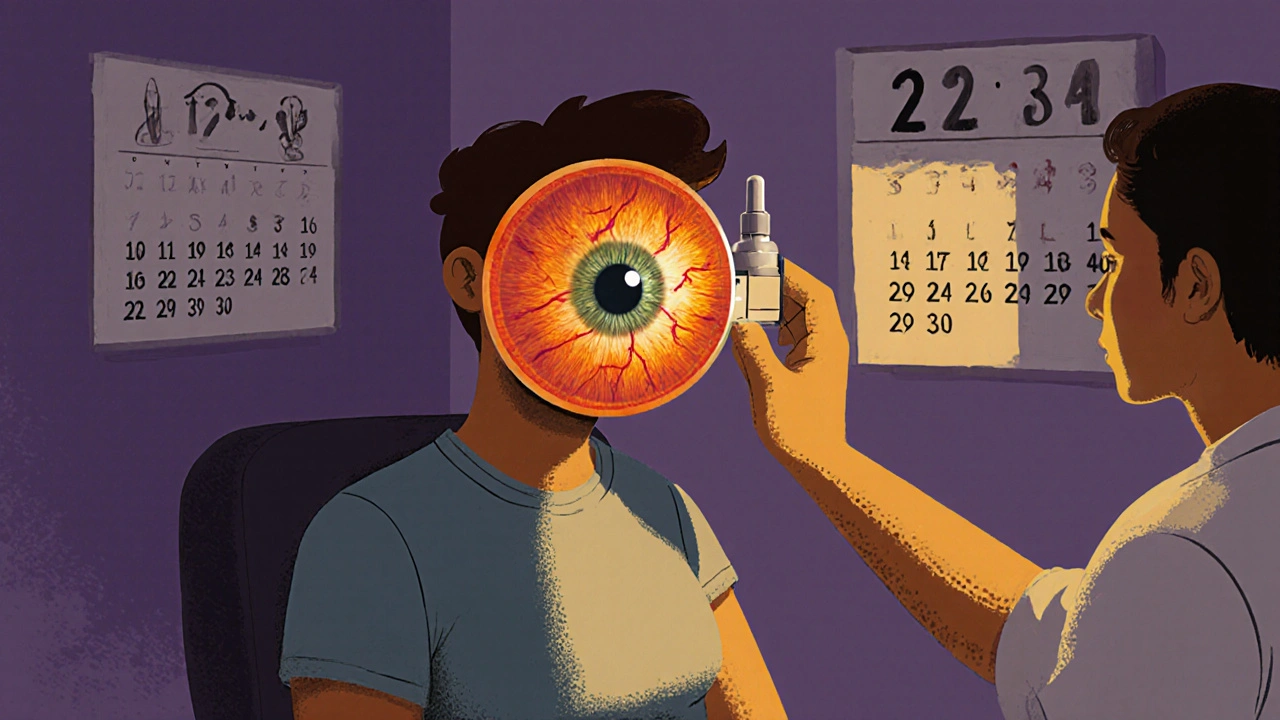
Diabetic retinopathy is the leading cause of preventable blindness in adults with diabetes. Learn when to get screened, how treatment works, and how to protect your vision based on your personal risk level.
Read more