
When someone has low vision, a significant reduction in eyesight that can't be fixed with glasses, contacts, or surgery. Also known as visual impairment, it means you might struggle to read labels, recognize faces, or even walk safely—no matter how hard you squint.
Low vision isn’t one thing. It’s often caused by macular degeneration, a condition that damages the center of your retina, making fine details disappear, or diabetic retinopathy, where high blood sugar slowly destroys blood vessels in the eye. Glaucoma, cataracts, and even stroke can also lead to it. Unlike normal aging, low vision doesn’t just make things a little fuzzy—it changes how you live. You might stop driving, avoid cooking because you can’t see the stove, or feel isolated because you can’t read texts or see your grandkids’ smiles clearly.
What most people don’t realize is that low vision isn’t a dead end. There are tools, tricks, and training that make a real difference. Special magnifiers, screen-reading apps, high-contrast lighting, and even simple things like colored tape on stairs can restore independence. Some people learn to use their peripheral vision better. Others get trained in daily living skills—how to pour coffee without spilling, or find the right button on a remote. It’s not about fixing your eyes. It’s about rebuilding your life around what you can still see.
The posts below cover exactly that: real-world strategies, medication risks that can worsen vision, and how other health conditions like kidney disease or diabetes tie into vision loss. You’ll find practical advice on what to ask your doctor, what tools actually work, and how to avoid mistakes that make things harder. This isn’t theory. It’s what people are using right now to keep living their lives.
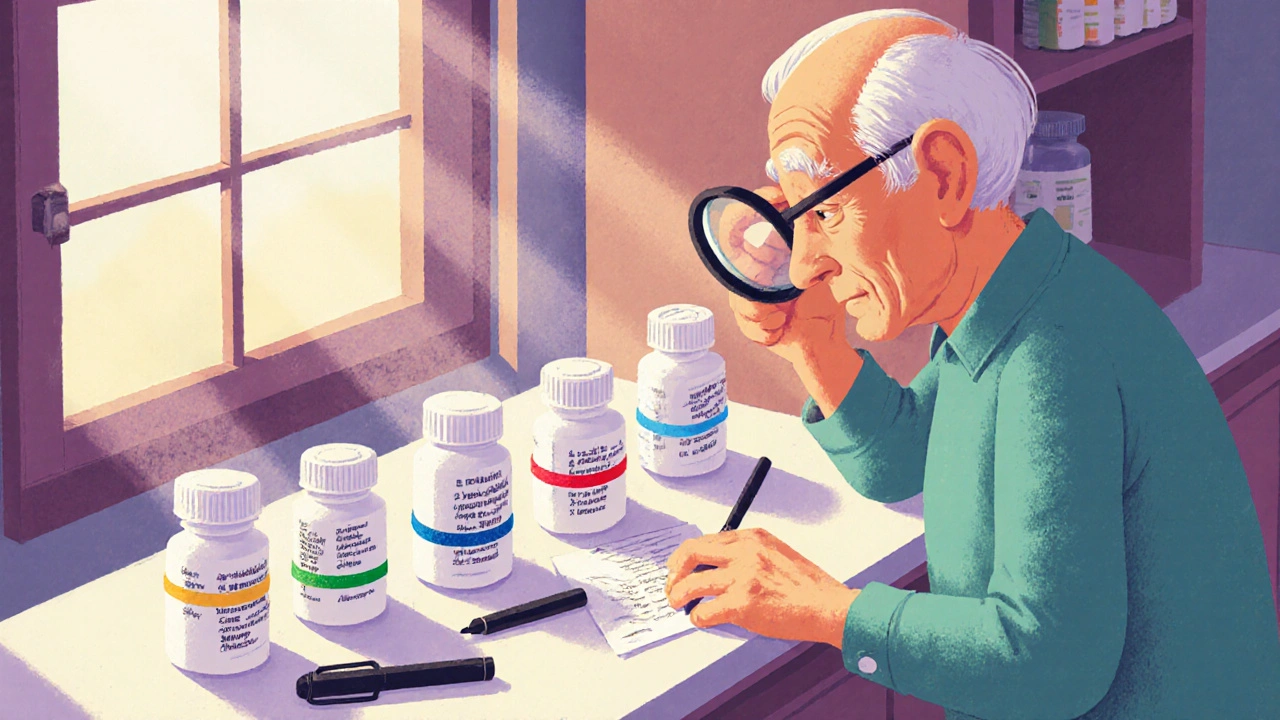
Medication errors are dangerously common for people with low vision or hearing loss. Learn practical, proven strategies to identify pills, read labels, and avoid life-threatening mistakes with simple tools and smart advocacy.
Read more