
When you're taking medication long-term, monitoring advice, practical steps to track how your body responds to drugs and manage health risks over time. Also known as health surveillance, it's not just about checking numbers—it's about catching problems before they become emergencies. Many people think if they feel fine, they’re fine. But that’s not true. Low sodium, dangerous drug combos, or hidden side effects can creep up without warning. That’s why smart monitoring isn’t optional—it’s lifesaving.
Take electrolyte disorders, imbalances in minerals like sodium and calcium that can wreck your heart, brain, and kidneys. In kidney disease, your body loses the ability to balance these minerals. Hyponatremia and hypernatremia aren’t just lab results—they can cause seizures, confusion, or even death if ignored. Then there’s drug interactions, when one medicine messes with another, cutting its power or making it toxic. Antacids killing your antibiotics? That’s not a myth—it’s a real risk that leads to treatment failure. And if you have low vision or hearing loss, reading labels or hearing warnings becomes a nightmare. Without clear monitoring advice, these problems stay hidden until it’s too late.
Good monitoring advice isn’t complicated. It’s simple: know what to watch for, how to test it, and when to call your doctor. It’s about spotting the small changes—like swelling, mood shifts, or stomach pain—that others dismiss. It’s knowing that taking your statin at night or morning doesn’t matter as much as taking it every day. It’s realizing that your painkiller might trigger seizures, or your blood pressure drug could affect your memory. These aren’t edge cases—they’re common enough to show up in dozens of real patient stories.
What you’ll find below isn’t theory. It’s what people actually deal with: how to avoid antibiotic failures, why calcium levels link to bone loss, how to use tools for safer meds if you can’t see the labels, and what to do when your meds start acting weird. Every post here is built from real cases, real risks, and real fixes. No fluff. No guesswork. Just the facts you need to stay safe while managing your health.
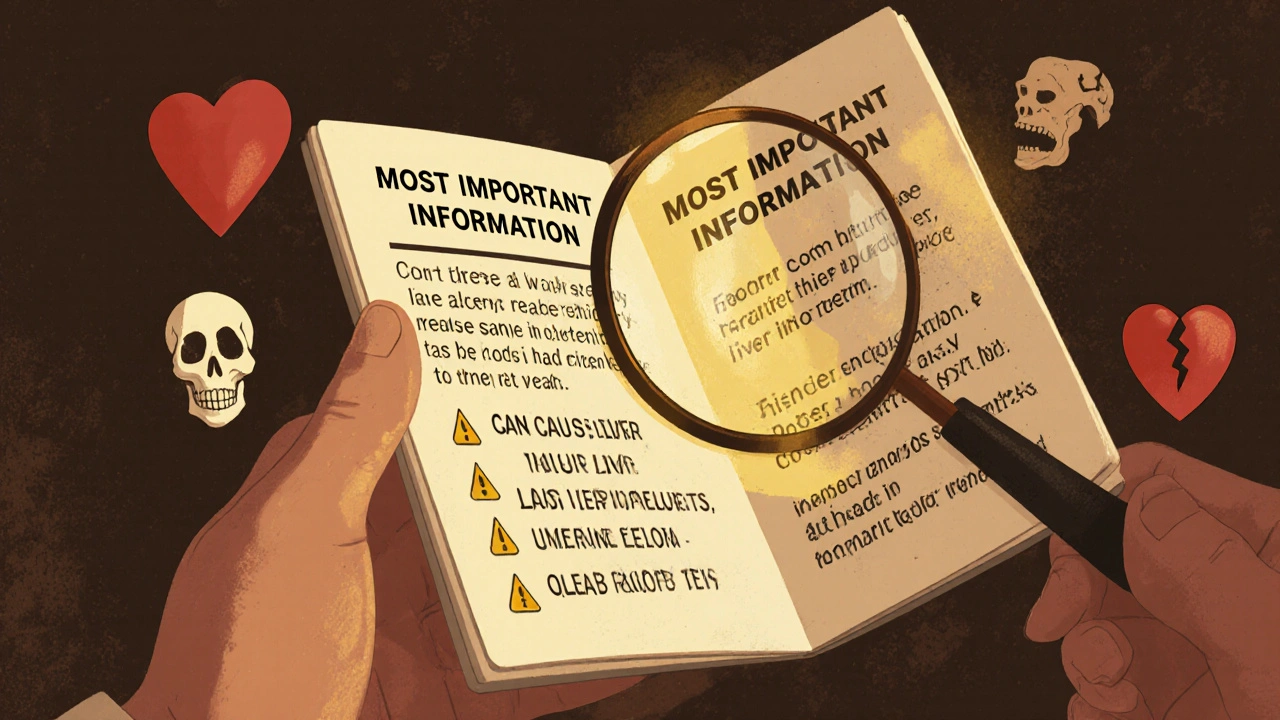
Learn how to read your medication guide to spot serious risks and monitoring requirements. Know what to look for, when to act, and how to stay safe with your prescription drugs.
Read more