
When you pick up a prescription, the prescription labeling, the printed information on your medication bottle that tells you how, when, and why to take the drug. Also known as drug label, it’s the only legal guide you have for using your medicine correctly. Most people glance at it once—maybe check the dosage—and never look again. But that’s where mistakes start. A poorly understood label can lead to missed doses, dangerous interactions, or even overdose. The FDA and WHO both say medication errors are one of the top causes of preventable harm in healthcare—and a lot of them come down to unclear or ignored labeling.
Behind every label are three key things you need to understand: the medication safety, the system of checks and clear instructions designed to protect patients from harm, the pharmacy labeling, the official standards pharmacies must follow when printing directions, warnings, and expiration dates, and the patient instructions, the plain-language guidance meant to help you actually follow the plan. These aren’t just bureaucratic boxes. They’re lifelines. For example, if your label says "take with food," skipping that step might make your drug useless—or worse, give you stomach bleeding. If it warns against alcohol, mixing them could crash your breathing. And if the label doesn’t list side effects like dizziness or palpitations, you might think your symptoms are normal when they’re not.
Real-world problems show up in the data. Studies found that over 40% of patients misread their labels, especially older adults or those on multiple drugs. One man took his blood thinner twice a day because he confused "every 12 hours" with "twice daily." Another didn’t know her antibiotic needed to be taken two hours before meals—and it didn’t work. These aren’t rare mistakes. They’re common. And they’re fixable. You don’t need a medical degree to read a label. You just need to know what to look for: the drug name, the dose, the timing, the warnings, and the expiration date. If anything’s unclear, call your pharmacist. Don’t guess. Don’t assume. The label is your first line of defense.
What you’ll find below are real stories and practical breakdowns of how prescription labeling affects your health. From how antacids ruin antibiotic labels to why your statin timing doesn’t matter as much as you think, these posts cut through the noise. You’ll learn how to spot hidden risks on your bottle, what pharmacy staff aren’t always telling you, and how to turn a confusing label into a clear action plan. This isn’t theory. It’s what happens when people actually read—and understand—what’s printed on their medicine.
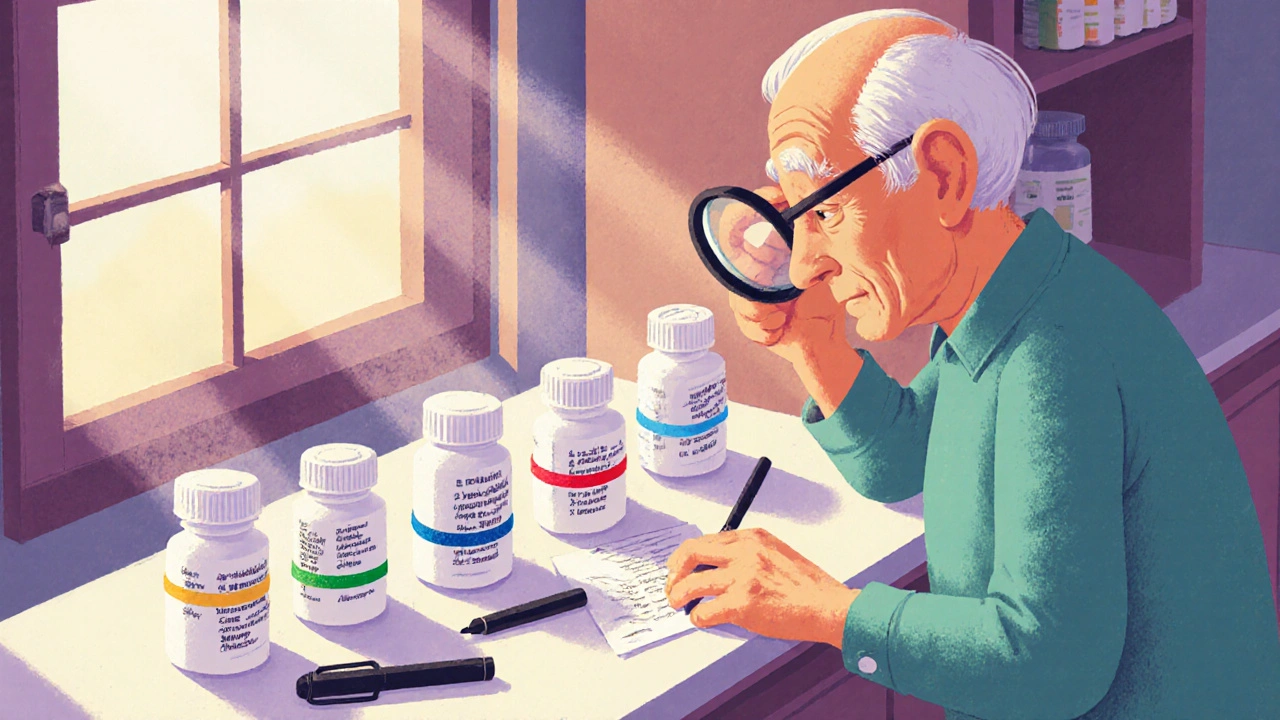
Medication errors are dangerously common for people with low vision or hearing loss. Learn practical, proven strategies to identify pills, read labels, and avoid life-threatening mistakes with simple tools and smart advocacy.
Read more