
Have you ever felt like everyone’s mumbling, even when they’re speaking clearly? Or found yourself turning up the TV so loud that people in the next room complain? These aren’t just annoyances-they could be early signs of hearing loss. The only way to know for sure is through audiometry testing, the gold standard for measuring how well you hear.
What Audiometry Testing Actually Measures
Audiometry testing doesn’t just check if you can hear. It measures the quietest sounds you can detect at different pitches, from low rumbles to high-pitched tones. These sounds are measured in decibels hearing level (dB HL), a standardized scale where 0 dB is the softest sound a healthy young adult can hear. If you can’t hear a tone until it reaches 25 dB or higher, that’s considered normal. Anything above 25 dB means some level of hearing loss.
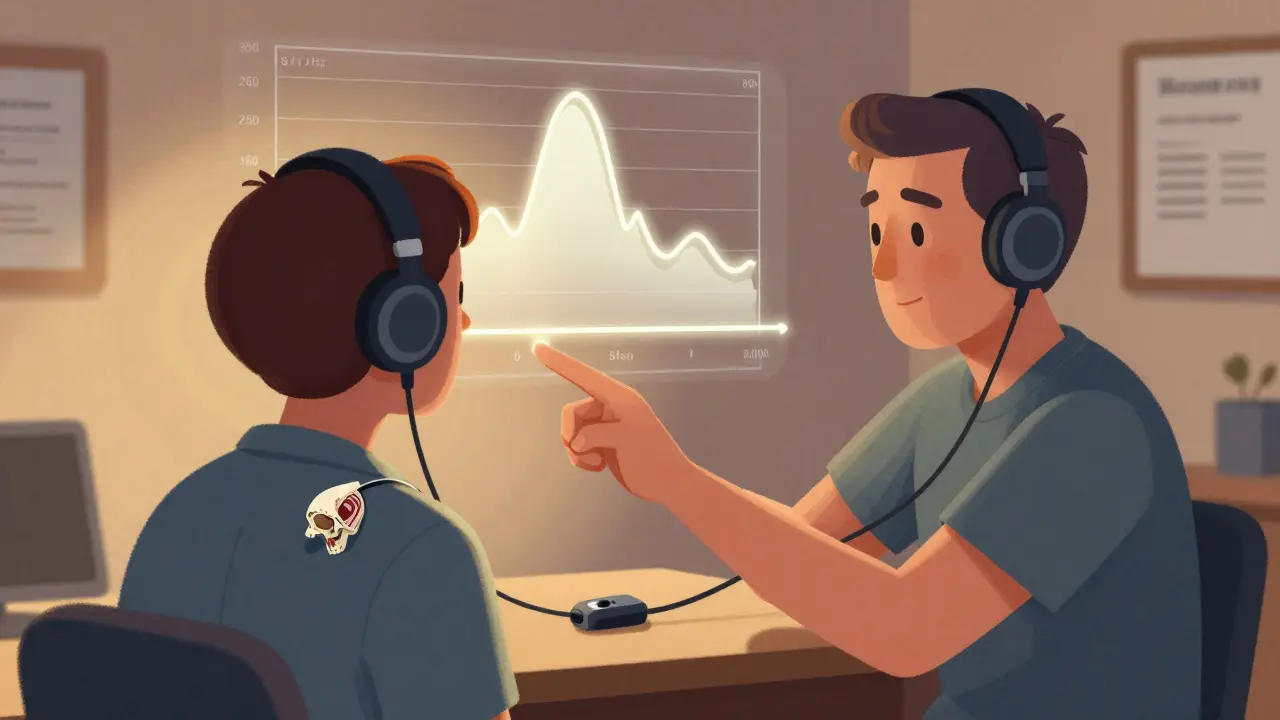
The test covers frequencies from 250 Hz to 8,000 Hz-the range that includes most human speech. You’ll hear beeps, tones, and sometimes words through headphones. Each time you hear something, you signal by raising your hand or pressing a button. The audiologist lowers the volume in steps until you no longer respond, then brings it back up to find the exact point where you catch the sound half the time. This is called the threshold.
That threshold is plotted on a graph called an audiogram. It looks like a mountain range-peaks and valleys showing where your hearing is strong and where it dips. A dip around 2,000 to 4,000 Hz? That’s classic noise-induced hearing loss. A flat line across all frequencies? That could point to something else, like genetics or aging.
How Air and Bone Conduction Testing Work Together
Audiometry isn’t just one test-it’s two tests done side by side. First, air conduction: sounds travel through your ear canal, eardrum, and middle ear bones to reach the inner ear. This tells you how well your entire hearing system works.
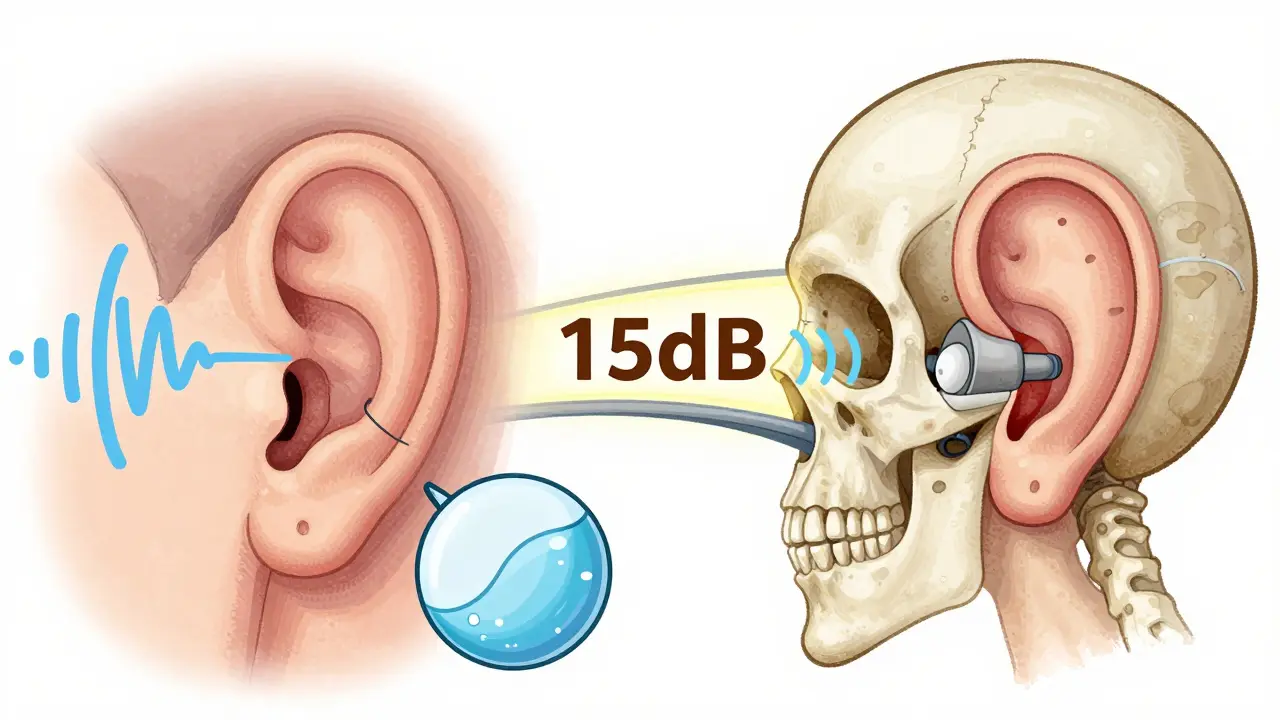
Then comes bone conduction. A small device is placed behind your ear, on the mastoid bone. It sends vibrations straight to the inner ear, skipping the outer and middle ear entirely. If your bone conduction results are much better than your air conduction results, that’s a red flag. It means something’s blocking sound in your outer or middle ear-maybe earwax, fluid from an infection, or a damaged eardrum. This is called a conductive hearing loss.
If both air and bone conduction show the same level of loss, the problem lies in the inner ear or auditory nerve. That’s sensorineural hearing loss, the most common type, often caused by aging, loud noise exposure, or certain medications. The gap between air and bone results is called the air-bone gap. A gap of 15 dB or more is clinically significant.
The Hughson-Westlake Method: Why Precision Matters
There’s a reason audiometry isn’t done with a quick beep-and-press screen. The standard method used in clinics today is the modified Hughson-Westlake technique, developed in 1944 and still the gold standard. Here’s how it works:
- Start at a frequency you can easily hear (usually 1,000 Hz), at 40 dB.
- If you respond, drop the volume by 10 dB. If you don’t respond, raise it by 5 dB.
- Repeat until you find the exact point where you hear the tone half the time.
This method is slow-about 10 to 15 minutes per ear-but it’s accurate. Screening tests, like those at pharmacies or online, skip this step. They just check if you hear something loud enough. They won’t tell you how much hearing you’ve lost or where.
That’s why a screening test saying “your hearing is fine” can be misleading. You might have mild high-frequency loss-enough to miss consonants like ‘s,’ ‘t,’ or ‘th’-but still pass a basic screen. Only full audiometry catches that.
Speech Testing: Hearing vs. Understanding
Hearing a tone isn’t the same as understanding a sentence. That’s why speech testing is part of the full evaluation. Two key parts:
- Speech Reception Threshold (SRT): You repeat two-syllable words like “baseball” or “hotdog” at lower volumes. The goal is to find the softest level where you get half of them right. This should match your pure-tone average within 10 dB. If it doesn’t, something’s off.
- Word Recognition Score: At a comfortable volume, you repeat a list of single-syllable words. A score below 80% means you’re missing details even when sounds are loud enough. This is common in people with hearing loss due to nerve damage or conditions like auditory processing disorder.
Some people hear the words fine but still can’t make sense of them in noisy rooms. That’s not just volume-it’s clarity. Audiometry catches this. A hearing aid that just turns up the sound won’t fix it. You might need one with advanced speech-processing features.
Tympanometry: Checking the Middle Ear
Not all hearing loss comes from the inner ear. Sometimes it’s just fluid behind the eardrum. That’s where tympanometry comes in. A small probe seals your ear canal and changes the air pressure while playing a tone. It measures how well your eardrum moves.
The result? A graph called a tympanogram. A normal one looks like a hill. A flat line? That means your eardrum isn’t moving-likely due to fluid, infection, or a perforation. In kids, a flat tympanogram has a 94% chance of indicating middle ear fluid. In adults, it often points to Eustachian tube dysfunction or recent colds.
This test takes less than 10 seconds per ear. It’s painless. And it’s often skipped in basic screenings. But without it, you might get a hearing aid you don’t need-or miss an infection that needs treatment.
Who Needs Audiometry Testing-and When
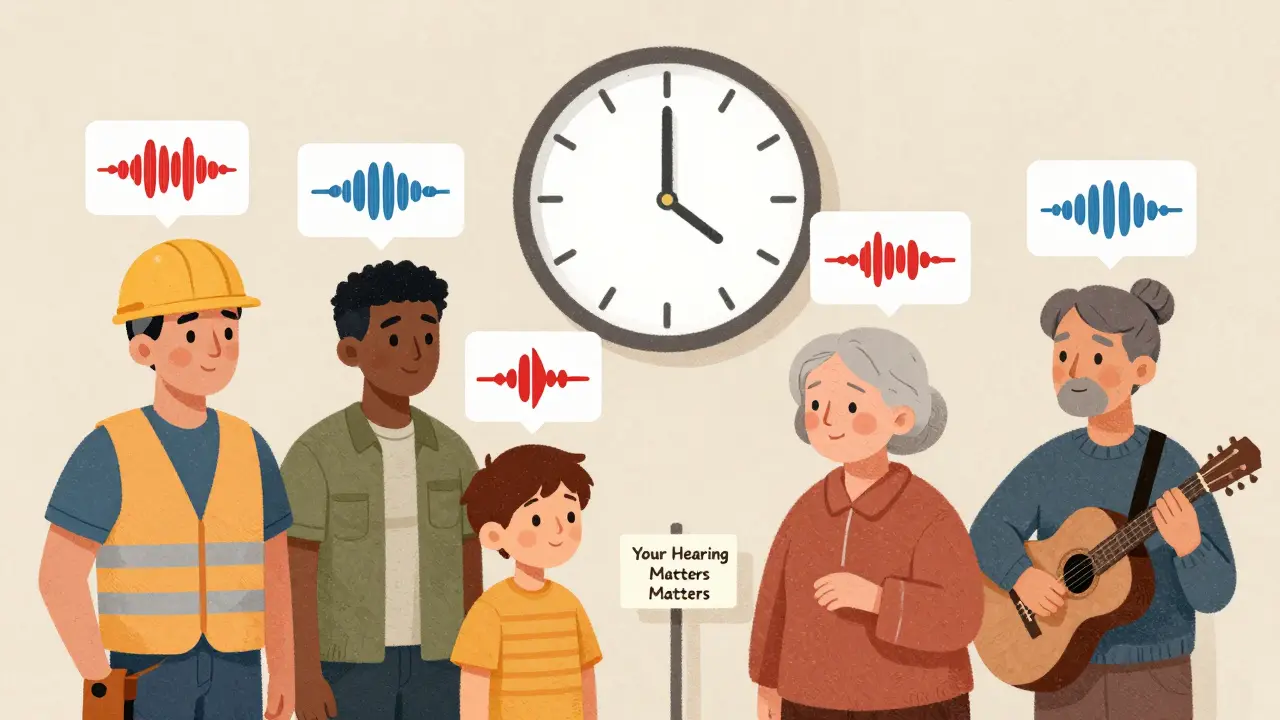
It’s not just for older adults. Here’s who should get tested:
- Adults over 50: Hearing loss starts creeping in around this age. One in three people between 65 and 74 has it. By 75, it’s half.
- Noise-exposed workers: Construction, factory, military, and music industry workers should have annual tests. OSHA requires it in high-risk jobs.
- People with tinnitus: Ringing in the ears often goes hand-in-hand with hearing loss.
- Those with a family history: Genetic hearing loss can show up at any age.
- Anyone who says “I can hear, but I can’t understand”: That’s the classic sign of sensorineural loss.
- Children: All newborns should be screened before leaving the hospital. If they fail, full diagnostic testing must happen by three months of age. Delayed diagnosis means delayed language development.
And don’t wait for symptoms. Hearing loss is slow. You adapt. Your brain fills in gaps. By the time you notice, you’ve already lost years of clear communication.
What Happens After the Test
Audiometry doesn’t end with a graph. A good audiologist walks you through it. They’ll explain:
- What your audiogram means in plain language
- Whether your loss is conductive, sensorineural, or mixed
- How much hearing you’ve lost in everyday situations
- What your options are-whether it’s hearing aids, assistive devices, or medical treatment
Many people leave with just a piece of paper. That’s not enough. You need to know why your hearing changed and what you can do about it.
For example, if your audiogram shows a 45 dB loss at 2,000 Hz, that means you’re missing key consonants like ‘s,’ ‘f,’ and ‘th.’ That’s why conversations in restaurants feel like a blur. A hearing aid programmed to boost those frequencies can make a huge difference.
What to Expect During the Test
It’s not scary. You sit in a quiet room, wear headphones, and press a button when you hear a tone. No needles. No radiation. No pain.
Some people find bone conduction uncomfortable. The oscillator on the mastoid bone can feel odd, especially if you wear glasses. The audiologist will adjust the placement to minimize pressure.
For kids, it’s turned into a game. Visual reinforcement audiometry uses animated toys or lights that turn on when the child turns toward a sound. Parents often say their child thinks it’s fun.
Most tests take 20 to 30 minutes. If you’re tired, it’s okay to ask for a break. Fatigue affects results.
Common Misconceptions
Many people think:
- “I don’t need a test because I can still hear.” But hearing isn’t the same as understanding. You might hear the volume but miss the words.
- “Hearing aids will fix everything.” They help, but they don’t restore normal hearing. Speech clarity depends on the type and severity of loss.
- “It’s just aging.” Not always. Noise exposure, medications, and genetics play big roles. You can prevent some types.
- “Online tests are good enough.” They’re screening tools. They can’t measure thresholds accurately or diagnose the cause.
Real audiometry is a medical diagnostic tool. It’s not a quiz. It’s not a phone app. It’s a clinical procedure backed by decades of research and standards from the American Speech-Language-Hearing Association and the World Health Organization.
What Comes Next
If your test shows hearing loss, the next step isn’t buying a hearing aid off Amazon. It’s a consultation. Audiologists work with ENT doctors to rule out medical causes. If everything’s clear, they’ll recommend hearing aids based on your lifestyle, not just your audiogram.
For example:
- If you work in a quiet office, a basic model might be enough.
- If you’re in noisy environments, you need one with directional microphones and noise reduction.
- If you have trouble with background noise, you might need a device that connects to your phone or TV.
And if you’re a child, early intervention with hearing aids or cochlear implants can mean the difference between catching up and falling behind in school.
Final Thoughts
Hearing loss doesn’t happen overnight. But it does happen-and it’s often silent until it’s too late. Audiometry testing is the only way to catch it early, understand it fully, and take control.
It’s not about being old. It’s about staying connected. To your family. To your work. To the world around you.
If you’ve been ignoring the signs, now’s the time. Schedule a test. Bring someone with you. Ask questions. Don’t settle for a quick screen. Get the full picture. Your ears-and your relationships-will thank you.
What is a normal hearing level on an audiogram?
Normal hearing is defined as being able to hear sounds at 25 decibels hearing level (dB HL) or softer across all tested frequencies, from 250 Hz to 8,000 Hz. Anything above 25 dB HL indicates some degree of hearing loss, even if it’s mild.
Is audiometry testing painful?
No, audiometry testing is completely painless. You’ll hear tones and words through headphones, and you’ll respond by pressing a button or raising your hand. Bone conduction testing may feel slightly odd when the oscillator is placed behind your ear, but it doesn’t hurt.
How long does an audiometry test take?
A full diagnostic audiometry test usually takes 20 to 30 minutes. This includes air and bone conduction testing, speech recognition, and tympanometry. Screening tests are shorter, around 5 to 10 minutes, but they don’t give a full picture of your hearing health.
Can I do audiometry testing at home?
Some apps and online tools claim to test your hearing, but they’re not accurate enough for diagnosis. They can’t control room noise, headphone calibration, or sound levels properly. Only clinical audiometry with calibrated equipment and a trained professional can provide reliable results.
What’s the difference between air and bone conduction testing?
Air conduction tests how sound travels through your ear canal and middle ear to the inner ear. Bone conduction bypasses those parts by sending vibrations directly to the inner ear through the skull. Comparing both helps determine if the hearing loss is due to a blockage (conductive) or nerve damage (sensorineural).
Why is speech testing included in audiometry?
Hearing a tone doesn’t mean you can understand speech. Speech testing checks how well you recognize words at different volumes. A person might hear sounds clearly but still struggle to follow conversations-especially in noise. This helps determine if hearing aids will help with clarity, not just volume.
Do I need a referral to get an audiometry test?
In most cases, no. You can schedule an appointment directly with an audiologist or hearing clinic. However, if you’re using insurance, some plans may require a referral from your primary care doctor.
How often should I get my hearing tested?
Adults over 50 should have a baseline test and then every 2 to 3 years. If you’re exposed to loud noise regularly, have tinnitus, or notice changes in your hearing, get tested annually. Children with hearing concerns or risk factors should be tested as recommended by their audiologist.





14 Comments
Melodie Lesesne January 18, 2026
I got my first audiogram last year after my mom noticed I kept asking her to repeat everything. Turns out I had a mild high-frequency loss. I thought I was just bad at listening, but nope - my ears were just missing the 's's and 't's. Got hearing aids and it's like someone turned up the clarity dial. Life changed.
Also, the bone conduction part felt weird, like someone was tapping my skull with a tiny hammer. But totally worth it.
john Mccoskey January 19, 2026
Let’s be brutally honest here - most people who get audiometry done are either in denial or already past the point of no return. The fact that you’re reading this means you’ve probably been avoiding this for years. The audiogram doesn’t lie. That dip at 3000-4000 Hz? That’s your social life eroding. You hear the volume but not the meaning. You nod along in meetings. You fake-laugh at jokes you didn’t catch. And you blame the speaker. Not your ears. The system is designed to let you slip through the cracks until it’s too late. Screening apps? They’re digital placebo pills. Real audiometry is the only thing that forces you to face the truth.
And yes, it’s uncomfortable. But so is losing your last connection to the world.
Joie Cregin January 20, 2026
My grandma got her first hearing test at 78 and cried because she realized she’d missed 15 years of her grandkids’ voices. I took her to the clinic - she thought it was a joke at first. But after the test, she said, ‘I didn’t know I’d been living in a fog.’
It’s wild how your brain just fills in the gaps until you realize you’ve been hallucinating conversations. I got mine checked last month. Turned out I had a tiny notch at 4k. Just enough to make me miss my partner’s sarcasm. Now I wear my aids like jewelry. No shame. It’s not a weakness - it’s just better tech than my ears.
Rob Deneke January 21, 2026
I work in construction and we get tested every year. Most guys think it’s a waste of time until they see their audiogram. One guy had a 50dB loss at 4k and still said he didn’t need hearing aids. Then he missed his kid’s first word because he thought it was the TV. That hit him hard. Don’t wait for a crisis. Get tested. It’s free if you’re covered. Just do it.
evelyn wellding January 22, 2026
Just got my results back and I’m crying happy tears 😭 I thought I was going deaf but it’s just mild loss! My audiologist said I can totally manage it with hearing aids and I’m already looking at cute ones that look like ear cuffs. Who knew hearing better could feel like a glow-up? Also, the bone conduction thing felt like a tiny spaceship on my head. Weird but cool!
Chelsea Harton January 24, 2026
audiometry not just for old people. my 12yo failed the school screen. turns out she had fluid behind her eardrums from a cold. no hearing loss, just blocked. got treated. now she’s acing reading. don’t ignore kids.
Bianca Leonhardt January 25, 2026
You people are so naive. You think a 25 dB threshold is normal? That’s the bare minimum. My audiologist told me if you’re at 25, you’re already failing at hearing. Real normal is 15 dB or lower. And you’re celebrating a 25? That’s like saying you’re ‘okay’ at driving when you can’t see the road past 10 feet.
And don’t get me started on those ‘I can hear fine’ people. You’re not hearing. You’re guessing. And your brain is lying to you.
Travis Craw January 27, 2026
I used to think hearing loss was just about volume. Then I realized I kept asking people to repeat themselves in quiet rooms. That’s when I knew it wasn’t the speakers - it was me.
I didn’t want to get tested because I thought it’d be embarrassing. But the audiologist was so chill. She made it feel like a checkup, not a diagnosis. I got my aids in 3 weeks. Best decision I’ve made in years.
Also, bone conduction felt like a gentle buzz. Not scary at all. Just weird.
Christina Bilotti January 29, 2026
Oh look, another article telling people to get their hearing tested like it’s some kind of wellness trend. As if the fact that you can’t hear your spouse whispering ‘I love you’ is somehow new information.
And yet, here we are. People still think online tests are ‘good enough.’ I’ve seen people bring their phone results to audiologists like they’re sacred scrolls. It’s not a game. It’s not a quiz. It’s a medical diagnostic tool - and you’re treating it like a TikTok challenge.
And don’t even get me started on ‘hearing aids will fix everything.’ No. They amplify. They don’t reconstruct. Your brain still has to learn how to hear again. And most people give up after a month because it’s ‘too much work.’
So yes. Get tested. But don’t expect magic. Expect effort.
brooke wright January 30, 2026
I had a hearing test last year and my audiologist said I had a 40 dB loss at 3k. I thought that was bad - until I realized I’d been turning my TV up so loud my neighbors called the police. And I didn’t even know.
But here’s the thing - my husband said he’s been whispering to me for years because he thought I was ‘just tired.’ I didn’t know he was doing that. I thought he was being romantic. Turns out he was being polite.
Now I wear my aids and he says I ‘listen better.’ I didn’t even know I was bad at listening. That’s the scariest part.
vivek kumar January 31, 2026
As someone from India where hearing care is often ignored due to stigma or cost, I want to say this: audiometry is not a luxury. It’s a right. In rural areas, people suffer for years because they think ‘hearing less’ is just part of aging. But it’s not. It’s a treatable condition.
My cousin, 42, was misdiagnosed with ‘attention deficit’ because he kept asking for repeats in meetings. Turned out he had noise-induced loss from years of factory work. After the test, he got subsidized aids. Now he’s back to leading teams. Don’t let stigma steal your voice.
Nick Cole January 31, 2026
My dad had a sudden drop in hearing after a virus. We thought it was temporary. Turns out it was permanent sensorineural loss. He refused hearing aids for two years. Said they were ‘too loud.’
Then one day he cried because he heard his granddaughter say ‘I love you’ clearly for the first time. That’s when he got them.
Hearing loss isn’t just about sound. It’s about connection. Don’t wait for a tear to make you listen.
Riya Katyal February 1, 2026
Oh honey, you think you’re the first person to find out your ears are failing? I’ve been hearing ‘you’re mumbling’ since I was 30. Turned out I had a 30 dB notch at 4k. My husband said he stopped singing in the shower because I’d say ‘what?’ every time.
So I got tested. Got aids. Now I hear birds again. And my husband’s off-key singing. Worth it.
Melodie Lesesne February 2, 2026
Just saw your comment about the TV volume - I did that too. My neighbor knocked on my door once and said, ‘Is that a rock concert in there?’ I thought I was at 20. Turned out it was 75.
My audiologist laughed and said, ‘You’re not loud. You’re just deaf.’
Now I have hearing aids with Bluetooth. I can stream my husband’s podcast directly to my ears. He doesn’t have to repeat himself. And I don’t have to fake laugh at his jokes anymore.
It’s not about being old. It’s about being present.