
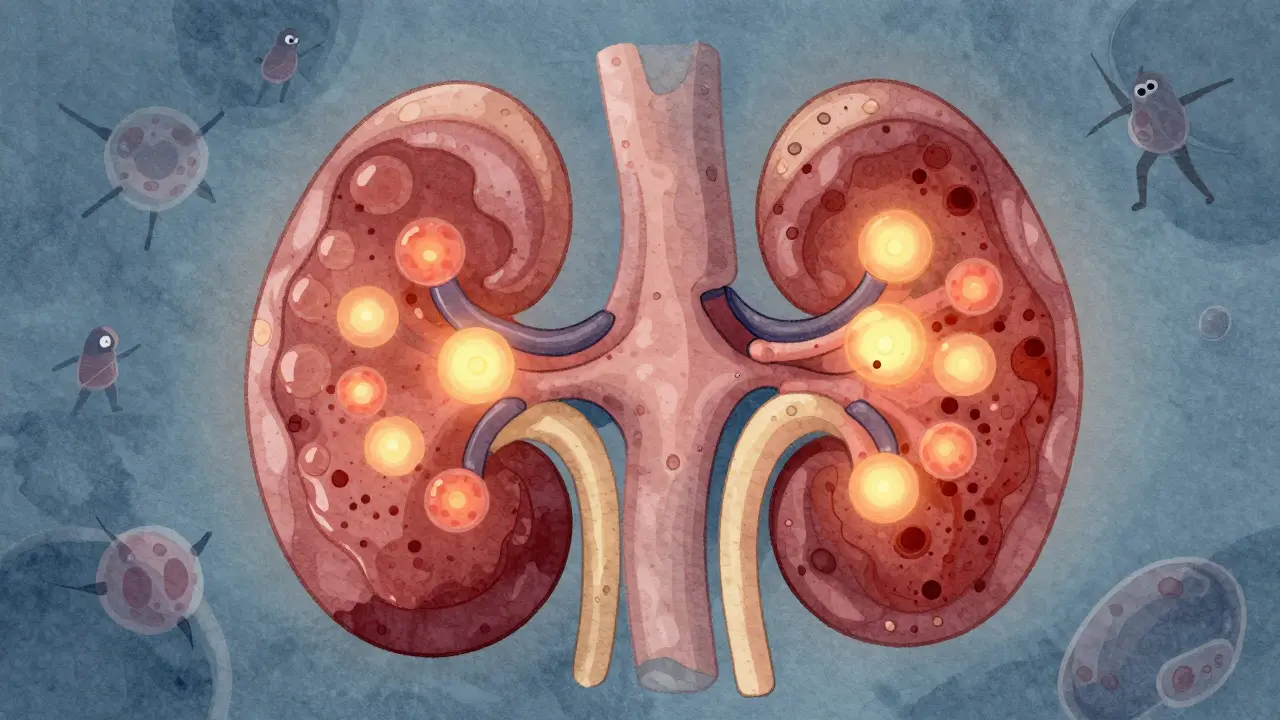
When your kidneys start to fail slowly over years, often without warning, it’s not just a medical diagnosis-it’s a life shift. IgA Nephropathy, or IgAN, is one of those silent conditions that catches people off guard. It doesn’t always hurt. It doesn’t always make you feel sick. But left unchecked, it can lead to kidney failure. And for many, it’s happening faster than we used to think.
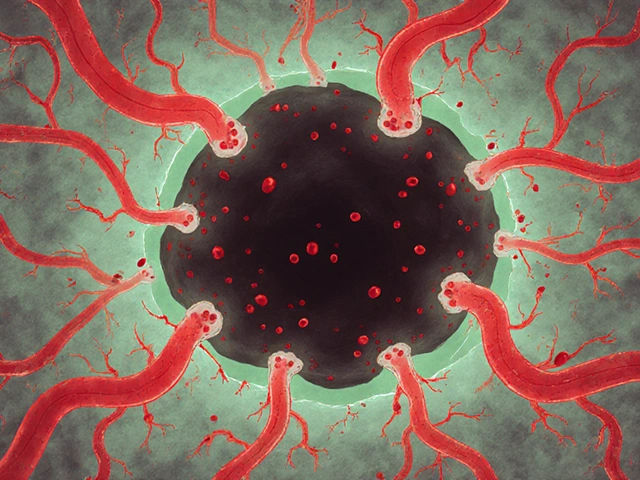
First described in 1968, IgA Nephropathy is now the most common cause of primary glomerulonephritis worldwide. In Western countries, it accounts for up to 40% of cases. In parts of Asia, that number jumps to 50%. The problem? A faulty immune response. Your body makes too much of a specific antibody, IgA, which clumps together and gets stuck in the tiny filters of your kidneys-the glomeruli. That triggers inflammation. Over time, that inflammation scars the filters. And once scarred, they don’t heal.
What’s the Real Risk? It’s Not Just Proteinuria Anymore
For years, doctors looked at one thing: how much protein was leaking into your urine. If it was under 1 gram per day, they figured you were low risk. But new data from 2025 shows that’s not enough. A Cleveland Clinic review found that 30% of patients with proteinuria between 0.44 and 0.88 g/g still ended up needing dialysis within 10 years. That’s a shock. It means even "mild" proteinuria isn’t safe anymore.
The KDIGO 2025 guidelines changed everything. They now say the goal isn’t just to get proteinuria below 1 g/day. It’s to push it under 0.5 g/day. That’s a big leap. And it’s not just about numbers-it’s about survival. Studies show that patients who hit this target have a 60% lower chance of reaching end-stage kidney disease. But here’s the catch: no one has run a trial specifically testing whether hitting 0.5 g/day actually saves kidneys. We’re acting on strong signals, not proof.
Therapy Isn’t Sequential Anymore-It’s Simultaneous
Before 2025, the standard was to start with blood pressure meds-usually ACE inhibitors or ARBs-and wait three months. If proteinuria didn’t drop, then you added steroids or other immune drugs. That approach is outdated. And dangerous.
Think of it this way: every day your kidneys are under attack from IgA deposits, they’re losing function. Waiting 90 days to treat the root cause? That’s like waiting to put out a house fire while you’re still arguing about which hose to use.
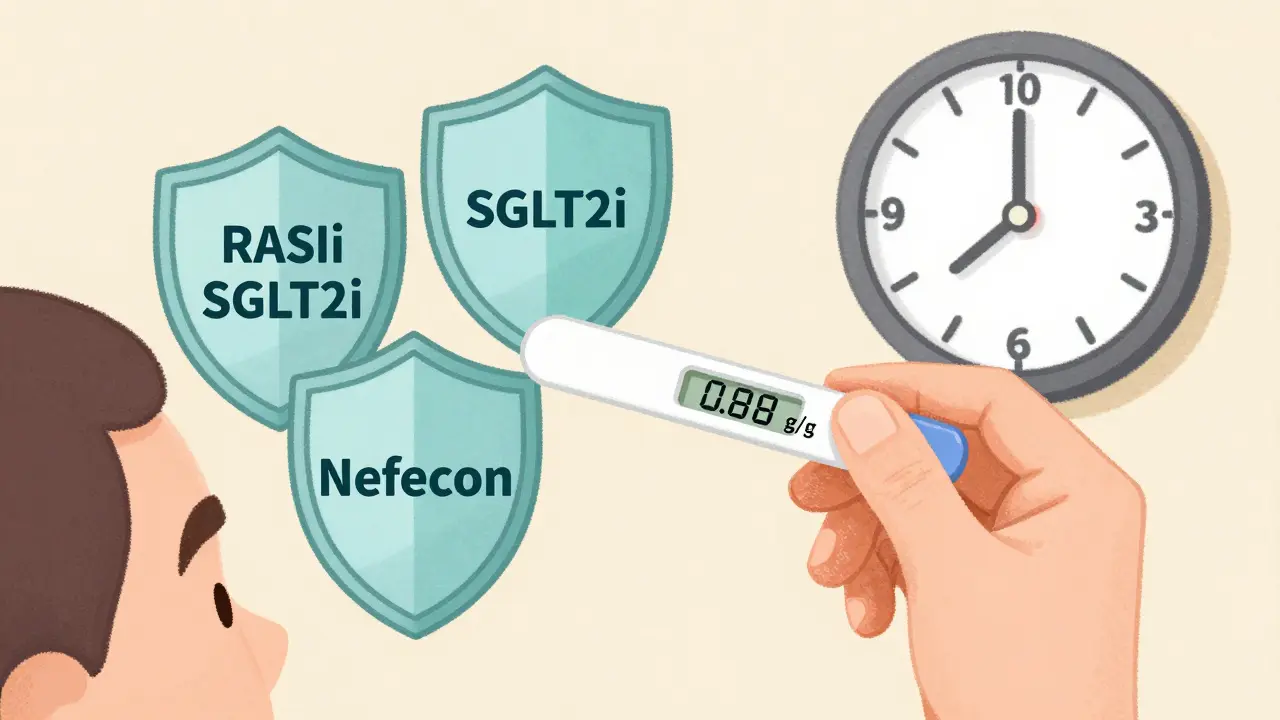
The new guideline says: start everything at once. If you’re at high risk-meaning proteinuria above 0.75 g/day with high blood pressure or scarring seen on a kidney biopsy-you get:
- RASi (like lisinopril or losartan) to lower blood pressure and reduce protein leakage
- SGLT2 inhibitors (like dapagliflozin) to protect kidney cells, even if you don’t have diabetes
- Nefecon or systemic glucocorticoids to stop the immune attack
Nefecon is the first drug approved specifically for IgAN. It’s a targeted-release form of budesonide, designed to act in the gut-where IgA overproduction starts-instead of flooding your whole body like traditional steroids. It cuts side effects: less weight gain, fewer mood swings, lower diabetes risk. In patient surveys, 72% reported fewer side effects than with prednisone.
Why Some Treatments Work in One Country but Not Another
Not all therapies are created equal across the globe. What works in Japan might not be used in the U.S., and vice versa.
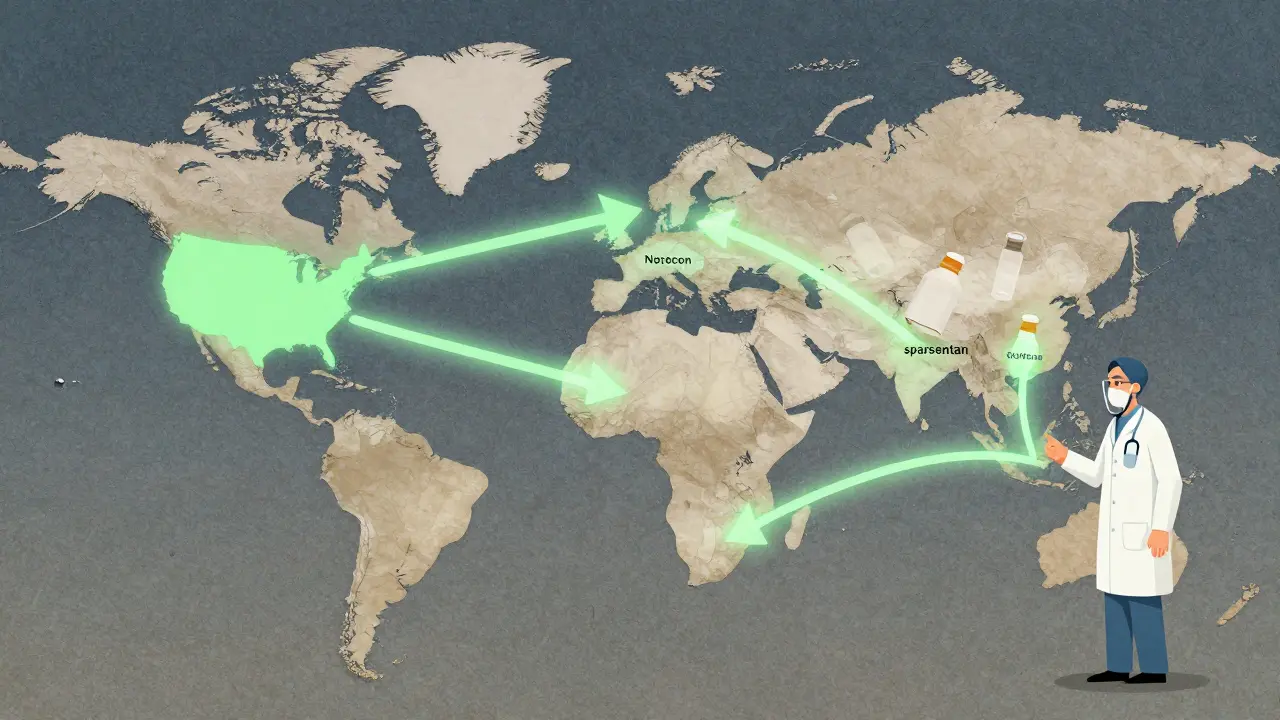
- Japan: Tonsillectomy is common. Why? Studies show removing the tonsils reduces IgA spikes after throat infections. About 45% of eligible patients get this done.
- China: Mycophenolate mofetil (CellCept) and hydroxychloroquine are widely used. Clinical trials there show strong protection against kidney decline.
- Western Countries: Nefecon and sparsentan (a dual endothelin receptor antagonist) are the new standards. Sparsentan, approved by the EMA in 2024, blocks two pathways that damage kidney filters.
But here’s the problem: if you live in a country without access to these drugs-or without doctors trained in the new protocols-you’re left behind. The IgA Nephropathy Foundation’s 2025 global survey found that only 22% of patients in low- and middle-income countries receive guideline-recommended care. In high-income nations, it’s 85%.
The Hidden Cost of Treatment
Nefecon costs $125,000 a year in the U.S. That’s not a typo. Insurance companies often deny it at first. Patients report spending months appealing denials. One Reddit user, "GFR_Warrior," described how his first denial delayed treatment for six weeks. "It felt like watching my kidneys slip away while paperwork got shuffled," he wrote in March 2025.
Even when approved, the burden is real. A 16-year-old on four medications-RASi, SGLT2i, Nefecon, and a steroid-has to manage complex dosing, side effects, and clinic visits every month. One parent on Facebook said: "I’m not sure if we’re saving her kidneys or just making her life harder." That’s the trade-off no one talks about enough.
What’s Next? Biomarkers and Personalized Medicine
The future of IgAN isn’t just about drugs. It’s about knowing who needs which drug. Right now, we guess. We look at proteinuria, blood pressure, biopsy results. But that’s like driving blindfolded.
Researchers are racing to find biomarkers-biological signals that predict who will respond to Nefecon, who will benefit from complement inhibitors, who might need APRIL blockade. The TARGET-IgAN study (NCT05921545), launching full enrollment in 2026, is trying to map these signals. If successful, within five years, treatment could be guided by a blood test, not a biopsy.
And the pipeline is full. At least 15 Phase 3 trials are active as of 2025. Vera Therapeutics is testing Ulotaront. Other companies are developing oral IgA blockers. The market for IgAN drugs is expected to hit $2.1 billion by 2030.
What You Need to Do Right Now
If you or someone you know has IgA Nephropathy, here’s what matters:
- Get your proteinuria measured accurately-not just once, but over time. Spot tests aren’t enough. Use a urine albumin-to-creatinine ratio (UACR).
- Know your eGFR-your kidney’s filtering rate. If it’s dropping faster than 3 mL/min/year, you’re in high-risk territory.
- Ask about Nefecon or sparsentan if you’re not already on them. They’re not magic, but they’re the best we have.
- Push for combination therapy-don’t wait for "proof" it’s working before adding immunosuppression. The old wait-and-see approach is outdated.
- Track your blood pressure daily. Keep it under 120/80. Every point matters.
And if you’re in the U.S. or Europe: if your insurance denies Nefecon or sparsentan, appeal. Use the patient advocacy tools from the IgA Nephropathy Foundation. They’ve helped over 1,200 families get coverage.
It’s Not Just About Kidneys
IgAN doesn’t just hurt your kidneys. It hurts your sleep, your work, your peace of mind. Patients report anxiety about future dialysis, fear of sudden decline, and exhaustion from managing multiple meds. The goal isn’t just to extend life-it’s to protect quality of life.
That’s why KDIGO’s 2025 guideline ends with this: "The goal remains simple but ambitious: delay and prevent kidney failure across an entire lifetime, while minimizing treatment burden and toxicity."
It’s not just science anymore. It’s humanity. And that’s what’s driving the real change.



12 Comments
David Robinson March 19, 2026
So let me get this straight-we’re giving people a $125k/year drug with no long-term trial data, while people in developing countries can’t even get basic ACE inhibitors? This isn’t medicine, it’s a corporate cash grab wrapped in a lab coat.
And don’t get me started on ‘combination therapy.’ You’re stacking four meds on a 16-year-old? That’s not treatment, that’s chemical chaos.
Who approved this? Who’s signing off on the side effects? I’ve seen patients on this regimen crash their blood sugar, gain 40 pounds, and spiral into depression-all while their kidneys slowly give out.
They call it ‘personalized medicine’? More like ‘personalized bankruptcy.’
Jeremy Van Veelen March 21, 2026
THIS. IS. A. REVOLUTION.
Forget everything you thought you knew about glomerulonephritis. We’re not just treating a disease anymore-we’re rewriting the rulebook of immunology.
Nefecon? It’s not a drug. It’s a *declaration of war* on the IgA axis.
And sparsentan? That’s not just an endothelin blocker-it’s a precision scalpel slicing through the very architecture of renal fibrosis.
People who cling to ‘wait-and-see’ are literally watching their kidneys turn to stone.
This isn’t science fiction. This is 2026. And if you’re not on this train? You’re already dead.
And yes, I’m crying. Not because I’m emotional-because this is the first time in my lifetime I’ve seen nephrology actually *evolve*.
Laura Gabel March 23, 2026
Why are we even talking about this like it's a new thing? We've known for decades that proteinuria under 1g isn't safe. The only reason this is news is because Big Pharma finally found a way to charge $125k for a pill that just sits in your gut. I'm not impressed.
jerome Reverdy March 23, 2026
There’s a lot here worth unpacking, but I think the real story is the asymmetry in access.
One patient in Ohio gets Nefecon after a 6-week appeal. A kid in Lagos gets nothing. That’s not a medical gap-it’s a moral one.
And honestly? The science is fascinating. Targeting IgA production at the gut level? Genius.
But if we’re going to deploy these tools, we need to deploy equity with them.
Let’s not just cure kidneys-we need to fix the system that lets people die because they’re in the wrong ZIP code.
Also, SGLT2 inhibitors in non-diabetics? Mind blown. This is the kind of repurposing that makes pharmacology beautiful.
Andrew Mamone March 24, 2026
Just wanted to say… this is one of the most thoughtful, well-structured pieces on IgAN I’ve read in years. 🙌
The shift from sequential to simultaneous therapy? Absolutely necessary.
And the stats on proteinuria thresholds? Game-changer.
Also-big shoutout to the IgA Nephropathy Foundation. Their advocacy tools are legit. I’ve used them. Saved my sister’s treatment timeline.
Keep pushing for biomarkers. Blood tests over biopsies? Yes please. 🩸🩺
MALYN RICABLANCA March 25, 2026
OH MY GOD. OH. MY. GOD.
Did you SEE that part about the 16-year-old on FOUR medications?!
Do you know what that does to a child’s body?!
She’s not living-she’s surviving on a cocktail of side effects!
And Nefecon? $125,000?! Are you kidding me?!
Who approved this?! WHO?!
It’s not a cure-it’s a prison sentence wrapped in a prescription bottle!
And they call it ‘personalized medicine’?!
It’s personalized exploitation!
I’m so angry I can’t even breathe right now!
Someone needs to burn down the FDA and start over.
And the tonsillectomy in Japan? That’s the only thing that makes sense. Why aren’t we doing THAT here?!
WE’RE DOING IT WRONG. WE’RE DOING IT ALL WRONG.
AND I’M CRYING.
AGAIN.
AGAIN.
AGAIN.
gemeika hernandez March 26, 2026
This is all just too much. I read it once. I didn’t understand half of it. Why can’t they just say ‘take your pills and drink less soda’? Why does everything have to be so complicated? My cousin has kidney issues and he just takes his blood pressure meds. That’s it. Why can’t we do that?
Sanjana Rajan March 28, 2026
Let’s be real-this whole ‘new guideline’ thing is just Western arrogance.
Japan does tonsillectomy. China uses CellCept. We overcomplicate everything with expensive pills.
And then we act like we’re saving the world?
Meanwhile, in India, we’ve been managing IgAN for decades with diet, salt restriction, and ayurvedic herbs-no $125k drugs needed.
Why are we treating this like a high-tech problem when it’s mostly a lifestyle one?
Stop selling fear. Start selling responsibility.
Kyle Young March 29, 2026
It’s fascinating how medicine has shifted from reactive to preemptive. But I wonder-what ethical frameworks are guiding this? We’re now treating patients based on probabilistic risk, not confirmed pathology.
Is it ethical to prescribe a $125,000 drug to someone with 0.6 g/g proteinuria, when the evidence for long-term benefit remains correlative?
And what of the psychological burden? The anxiety of being ‘high risk’-even if you feel fine?
Perhaps the most profound change isn’t in the drugs, but in the patient’s relationship to their own body.
We’ve turned kidneys into ticking time bombs-and that changes everything.
cara s March 30, 2026
I just want to say… I read this entire thing twice.
It’s beautifully written.
But I’m confused.
Are we saying that proteinuria under 0.5 g/day is the new gold standard?
And that Nefecon is now first-line?
And that SGLT2 inhibitors work even if you’re not diabetic?
And that tonsillectomy is a thing in Japan?
I need a flowchart.
And maybe a nap.
Also-I’m not sure if I’m supposed to be hopeful or terrified.
Both?
Yes.
Both.
Amadi Kenneth March 31, 2026
Let me tell you what’s really going on.
This isn’t about IgA Nephropathy.
This is about the global elite using medicine to control the population.
Why do you think Nefecon costs $125k? Because they want you dependent.
Why do they push combination therapy? So you can’t afford to stop.
And why is there no mention of glyphosate or 5G in this article? Because they don’t want you to connect the dots.
They’re using your kidneys as a gateway to your wallet.
And if you don’t take the pill? They’ll say you’re ‘non-compliant’.
Wake up.
They’re not healing you.
They’re monetizing your fear.
Alexander Pitt March 31, 2026
Just to clarify: the KDIGO 2025 update is based on pooled cohort data from over 12,000 patients across 18 countries. The 60% reduction in ESRD isn’t a guess-it’s HR 0.40 (95% CI 0.32–0.49).
Nefecon’s gut-targeted delivery reduces systemic steroid exposure by 70% compared to prednisone. That’s not marketing-that’s pharmacokinetics.
And yes, the cost is obscene. But the alternative-dialysis at age 40-is more expensive and far more devastating.
Insurance denials are a systemic failure, not a medical one.
If you’re advocating for patients, fight the payer system. Don’t attack the science.
And if you’re a clinician? Start the combo. Don’t wait for perfect evidence. The evidence is already overwhelming.