
When you’ve tried diets, exercise, and medications - and still can’t lose the weight - bariatric surgery becomes a real option. Two procedures dominate the field: gastric bypass and sleeve gastrectomy. Both help people with severe obesity lose weight, but they work in very different ways. Choosing between them isn’t just about which one loses more weight. It’s about your health, your lifestyle, and what you’re willing to live with for the rest of your life.
How Each Surgery Changes Your Body
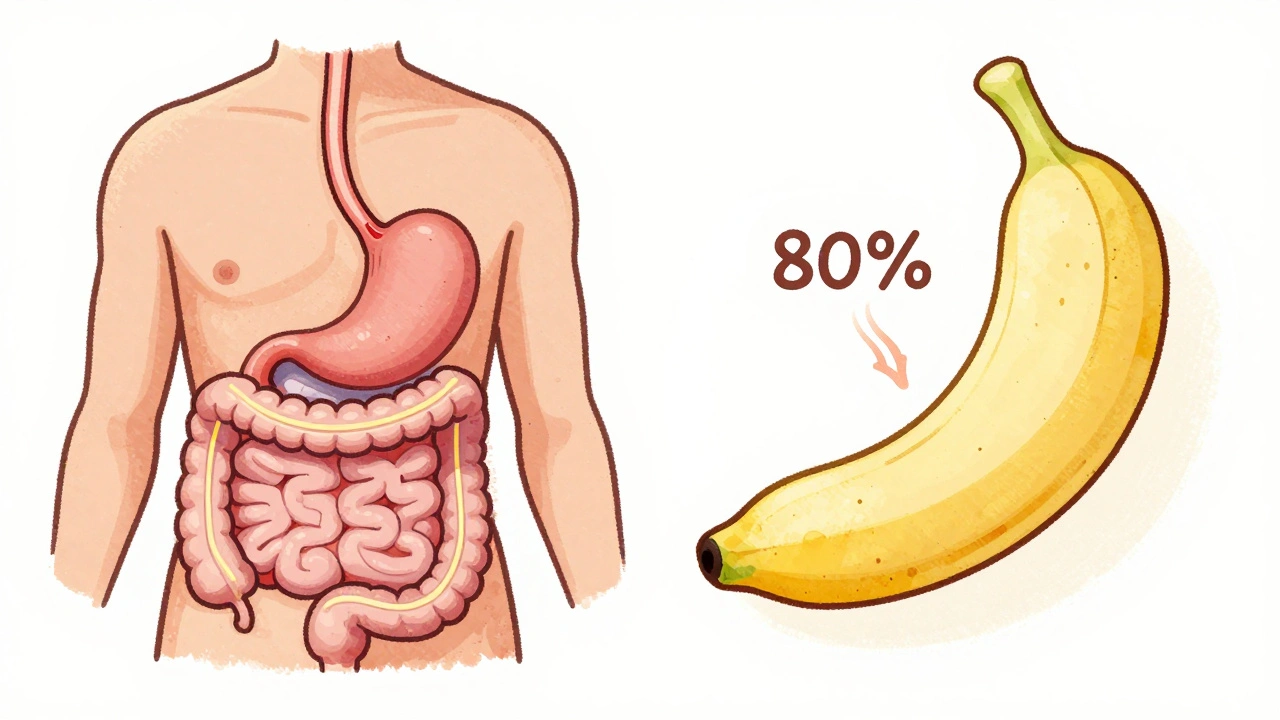
Gastric bypass, or Roux-en-Y gastric bypass, doesn’t just shrink your stomach. It reroutes your digestive system. Surgeons create a small pouch - about the size of a golf ball - from the top of your stomach. Then they connect that pouch directly to a lower part of your small intestine, skipping most of your stomach and the first section of your intestine. This means food doesn’t mix with digestive juices from the bypassed areas. That’s the malabsorptive part. It’s why you lose more weight, but also why you need lifelong vitamins.
Sleeve gastrectomy is simpler. About 80% of your stomach is removed. What’s left is a long, narrow tube - like a banana - holding just 2 to 5 ounces. It doesn’t reroute anything. It just limits how much you can eat at once. The part of your stomach that produces hunger hormones (ghrelin) is removed, so you feel less hungry. No intestine is cut or bypassed. That’s why recovery is usually easier.
Weight Loss: Speed and Scale
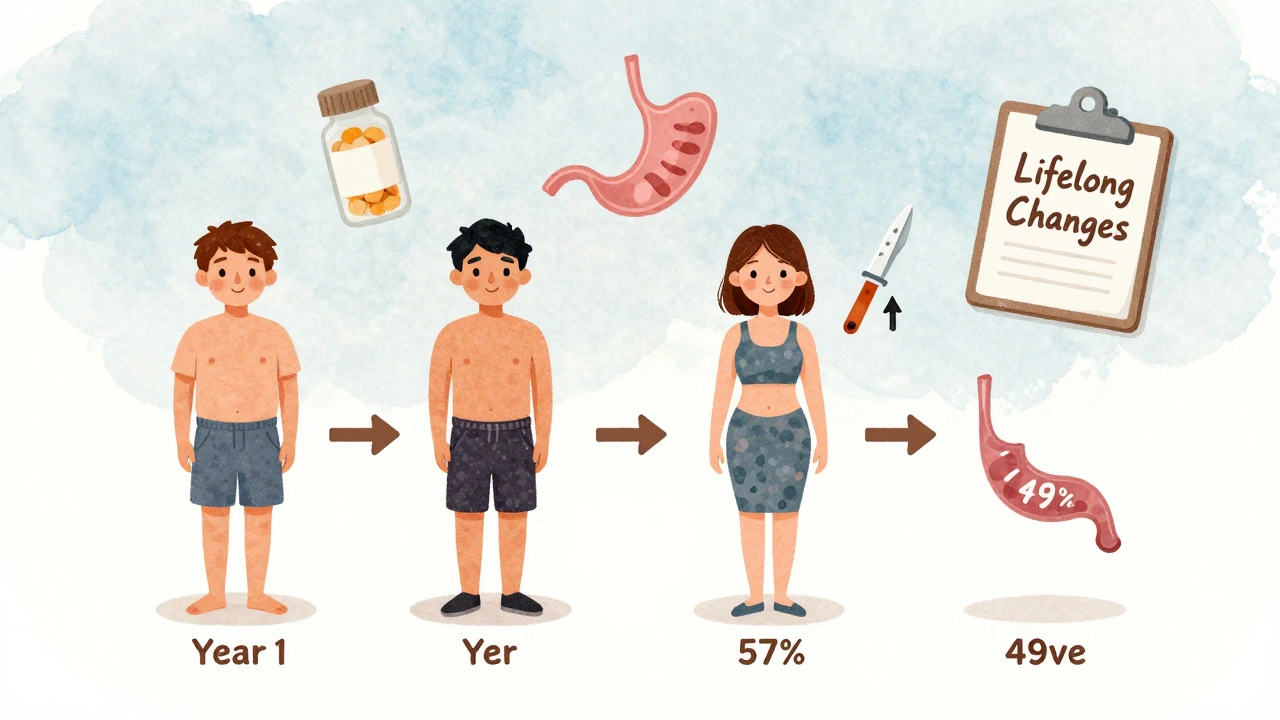
Both procedures lead to major weight loss, but the numbers differ. In the first year, gastric bypass patients typically lose 60-80% of their excess weight. Sleeve gastrectomy patients lose 60-70% over the same period. At the five-year mark, studies show gastric bypass patients keep losing slightly more - around 57% of excess weight compared to 49% for sleeve patients.
That difference matters if you have type 2 diabetes. Gastric bypass improves blood sugar control more often and more dramatically. One study found that 80% of patients with diabetes saw their condition go into remission after bypass, versus about 60% after sleeve. That’s because bypass changes gut hormones faster and more deeply. It’s not just about eating less - it’s about how your body responds to food.
But speed isn’t everything. Some people prefer the slower, steadier drop of the sleeve. It feels more natural. There’s less shock to the system. And if you’re worried about sudden changes in how you feel after eating, that matters.
Risks and Complications
Every surgery has risks. But the types of risks differ.
Gastric bypass has higher short-term risks. You’re more likely to have leaks, infections, or blood clots right after surgery. Long-term, you’re at higher risk for nutritional deficiencies - especially in vitamin B12, iron, calcium, and folate. That’s because your body can’t absorb them the way it used to. You’ll need blood tests twice a year and lifelong supplements. Some people develop anemia or osteoporosis if they skip their vitamins.
Sleeve gastrectomy is safer in the first year. Fewer complications. Fewer hospital readmissions. But it has its own problems. About 1 in 10 sleeve patients develop new or worse acid reflux. And over time, the stomach can stretch. That’s why about 5% of sleeve patients need a second surgery - usually to turn the sleeve into a bypass. That’s called a revision. It’s more complex than the first surgery.
A 2022 study of over 95,000 patients found that sleeve gastrectomy had a 33% lower risk of death at five years than gastric bypass. That’s a big deal. But it also found that sleeve patients were more likely to need another operation down the line.
Life After Surgery
Recovery time is similar - about 2 to 4 weeks. But what happens after that is very different.
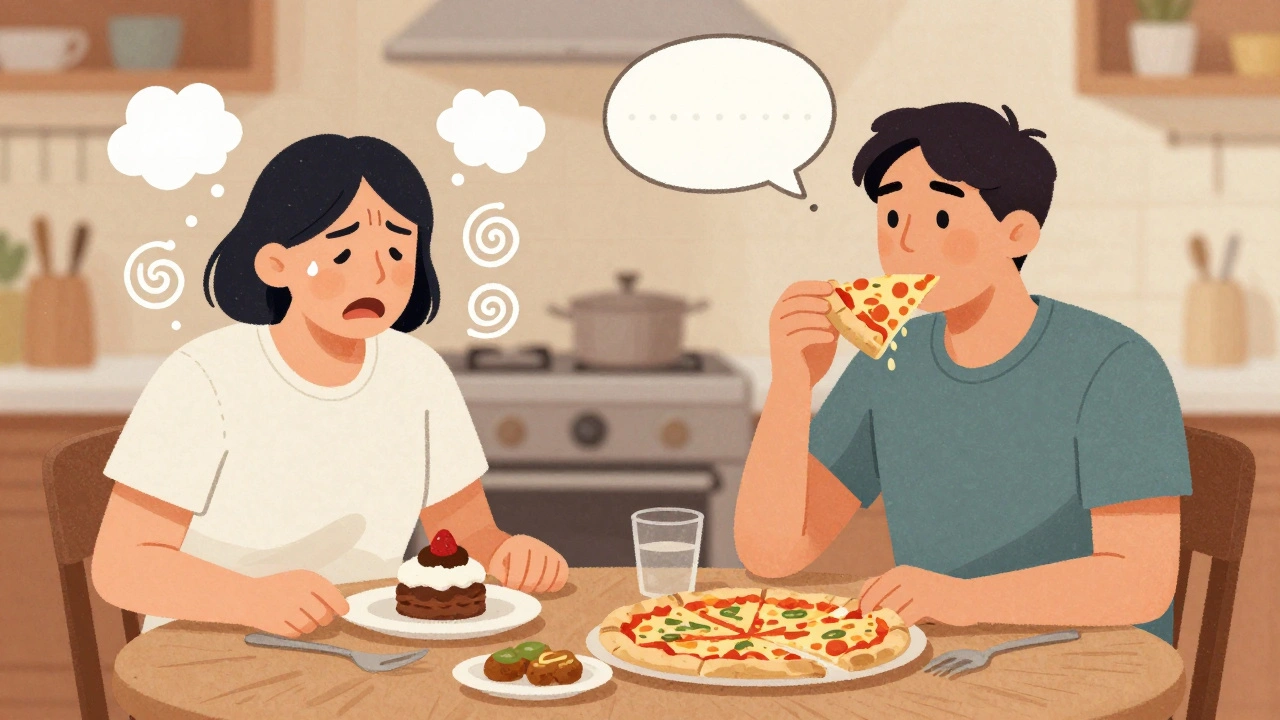
Gastric bypass patients often feel full faster and stay full longer. But they also face “dumping syndrome.” That’s when sugary or fatty foods move too quickly into the intestine. Symptoms include nausea, sweating, dizziness, and diarrhea. It happens in 50-70% of bypass patients. It’s unpleasant, but it also acts as a natural deterrent. You learn to avoid sweets fast.
Sleeve patients don’t get dumping syndrome. But they often report more hunger. The stomach is smaller, but it still makes hunger signals. Some people say they feel “always a little hungry.” That’s why long-term success depends on behavior - not just surgery.
Dietary rules are stricter after bypass. You can’t eat large meals. You can’t drink with meals. You have to chew slowly. But after sleeve, you can eat more normal portions - just not as often. Many sleeve patients say they can eat pizza or burgers again, just in smaller amounts.
Cost and Insurance
Sleeve gastrectomy costs about 25% less than gastric bypass. In Australia, out-of-pocket costs (after insurance) are around $14,500 for sleeve versus $19,300 for bypass. That’s a real difference for people paying part of the bill.
Insurance usually covers both if your BMI is 40 or higher, or 35 with conditions like diabetes or high blood pressure. Some insurers, like UnitedHealthcare, now require a BMI of 45. You’ll also need proof you’ve tried other weight-loss methods for at least six months. A psychological evaluation is standard for both.
Why More People Choose Sleeve
In 2022, 63% of all bariatric surgeries in the U.S. were sleeve gastrectomies. Only 27% were gastric bypass. That’s a huge shift from 15 years ago, when bypass was the most common.
Why? Because sleeve is simpler, safer, and cheaper. Surgeons prefer it. Patients prefer it. It doesn’t require lifelong malabsorption. There’s no rerouting. No dumping syndrome. No complex vitamin schedules.
But here’s the catch: the long-term data isn’t as strong. While sleeve patients lose weight fast, more of them regain it over time. That’s why revision surgeries are rising. And that’s why some doctors still recommend bypass for younger patients or those with severe diabetes.
Which One Is Right for You?
There’s no one-size-fits-all answer. But here’s how to think about it:
- Choose gastric bypass if you have type 2 diabetes, high blood pressure, or other metabolic conditions you want to reverse quickly. If you’re willing to take vitamins for life and avoid sugar completely, bypass gives you the best shot at lasting results.
- Choose sleeve gastrectomy if you want a simpler surgery with fewer long-term supplements. If you’re worried about complications or don’t want to deal with dumping syndrome, sleeve is the safer bet - as long as you’re ready to stick with healthy eating forever.
Neither surgery is a magic fix. Both require lifelong changes. You have to eat differently. Move more. See your doctor regularly. The surgery just gives you a tool. How you use it determines the outcome.
What’s Next?
Surgeons are now testing hybrid procedures - like a mini-bypass or a sleeve with a bypass section - to get the best of both. Early results are promising. But right now, the choice is still between these two.
If you’re considering surgery, talk to a bariatric specialist. Ask for your personal risk profile. See your lab results. Understand what your body needs. Don’t choose based on what your friend did. Choose based on what your health requires.
Weight loss surgery isn’t the end of your journey. It’s the beginning of a new one. Make sure you’re ready for the long haul.
Which surgery leads to more weight loss: gastric bypass or sleeve gastrectomy?
Gastric bypass typically leads to more weight loss over time. Studies show patients lose 57% of excess weight at five years with bypass, compared to 49% with sleeve. Gastric bypass also has higher rates of diabetes remission and better control of metabolic conditions. However, sleeve patients lose weight faster in the first six months, and many achieve excellent results - especially if they stick to lifestyle changes.
Is sleeve gastrectomy safer than gastric bypass?
Yes, sleeve gastrectomy is generally safer in the short term. It has lower rates of complications like leaks, infections, and nutritional deficiencies. A 2022 study of over 95,000 patients found a 33% lower risk of death at five years with sleeve compared to bypass. However, sleeve patients are more likely to need a second surgery later on, especially if they regain weight or develop severe reflux.
Do I need to take vitamins for life after bariatric surgery?
You will need lifelong vitamins after gastric bypass because it reduces nutrient absorption. You’ll need B12, iron, calcium, and folate, with blood tests twice a year. After sleeve gastrectomy, you still need supplements - especially B12 and iron - but the risk is lower. Most sleeve patients need annual blood tests and basic multivitamins. Skipping supplements can lead to anemia, nerve damage, or bone loss.
Can I eat normally after sleeve gastrectomy?
You can eat most foods after sleeve gastrectomy, but in smaller portions. You won’t have dumping syndrome like bypass patients, so you can eat sugar and fat - but you’ll still feel full quickly. Many people return to eating pizza, pasta, or burgers, but only in small amounts. The key is chewing slowly, avoiding liquids with meals, and not snacking between meals. Overeating can stretch the sleeve and lead to weight regain.
What is dumping syndrome, and does it happen with sleeve gastrectomy?
Dumping syndrome happens when food moves too quickly from the stomach into the small intestine. It causes nausea, cramps, sweating, dizziness, and diarrhea - usually after eating sugary or fatty foods. It affects 50-70% of gastric bypass patients. It does NOT happen with sleeve gastrectomy because the stomach isn’t bypassed. That’s one reason many patients choose sleeve - they don’t have to fear sudden, uncomfortable reactions to food.
How long is the recovery time for each surgery?
Recovery time is similar for both: 2 to 4 weeks. Most people go home after 1 day in the hospital. You’ll start with liquids, then purees, then soft foods over 4-6 weeks. Gastric bypass patients often have stricter dietary rules during recovery because of the rerouting. Sleeve patients usually have fewer restrictions and can transition to solid foods faster. Both require avoiding heavy lifting for 6 weeks.
Can I get pregnant after bariatric surgery?
Yes, but you should wait 12 to 18 months after surgery. Rapid weight loss can affect fertility and fetal development. After that, pregnancy is often healthier - many women see improvements in PCOS, insulin resistance, and high blood pressure. But you’ll need close monitoring and extra nutrients, especially iron and folic acid. Gastric bypass patients may need higher doses of vitamins during pregnancy due to malabsorption.
Is bariatric surgery covered by insurance in Australia?
In Australia, Medicare covers part of the cost if you meet criteria: BMI of 40 or higher, or BMI of 35 with obesity-related conditions like diabetes or sleep apnea. Private health insurance may cover more, but you’ll still have out-of-pocket costs. Most insurers require proof of prior weight-loss attempts and psychological clearance. Costs vary by hospital and surgeon, but out-of-pocket expenses typically range from $10,000 to $18,000 after insurance.
Do I need to change my diet forever after surgery?
Yes. Both surgeries require lifelong dietary changes. You’ll eat smaller meals, chew slowly, avoid sugary drinks, and prioritize protein. After gastric bypass, you must avoid sugar entirely to prevent dumping. After sleeve, you can eat sugar but overeating leads to discomfort and weight regain. Neither surgery works without behavior change. Food is no longer just about hunger - it’s about health.
What happens if I regain weight after sleeve gastrectomy?
Weight regain after sleeve gastrectomy is common - about 15% of patients experience it within five years. If your sleeve stretches or your habits slip, you may need a revision. The most common revision is turning the sleeve into a gastric bypass. This is more complex than the first surgery and carries higher risks. That’s why long-term follow-up with a dietitian and surgeon is critical. Prevention - through consistent eating and activity - is better than revision.





11 Comments
patrick sui December 2, 2025
Man, I've seen so many people go for sleeve because it's 'easier'... but then they hit the 2-year plateau and wonder why their diabetes came back. Bypass isn't just a tool-it's a lifestyle reboot. 🤷♂️
Declan O Reilly December 3, 2025
ive been on both sides of this-did sleeve 5 yrs ago and regret nothing. no dumping, no crazy vitamin schedules, just smaller meals and more sleep. life’s too short to be scared of pizza 🍕
Nnaemeka Kingsley December 5, 2025
bro, if you got diabities and want it gone, go bypass. sleeve good for weight but diabities? nah. i seen cousin do sleeve, lost 80lbs, but sugar back in 2 years. bypass changed his life. no joke.
Kshitij Shah December 5, 2025
Oh wow, so the ‘simpler’ option is the one that turns you into a snack-happy ghost who keeps needing revisions? Cool. I’ll just keep eating my 3rd slice of cake then. 🙃
Matt Dean December 7, 2025
If you’re choosing sleeve because you don’t want to take vitamins, you’re not ready for surgery. You’re ready for a mirror and a reality check. This isn’t a weight-loss app-it’s a life-or-death procedure. Get serious.
Walker Alvey December 8, 2025
So let me get this straight-surgery is fine as long as you don’t have to change your relationship with food? That’s not a medical decision. That’s a delusion with a surgeon’s signature.
Adrian Barnes December 8, 2025
The data is unequivocal: gastric bypass confers superior metabolic outcomes, reduced long-term mortality from obesity-related comorbidities, and greater durability of weight loss. The preference for sleeve is a function of patient aversion to responsibility, not clinical efficacy. This is not a preference-it is a failure of self-awareness.
Declan Flynn Fitness December 8, 2025
Just wanna say-sleeve worked for me, but only because I started walking 10k steps a day and stopped drinking soda. Surgery doesn’t fix laziness. It just gives you a head start. 💪
Michelle Smyth December 10, 2025
How quaint. You’re all treating this like a consumer choice between two smartphones. But it’s not. It’s a permanent alteration of your physiology with lifelong implications. And yet, you’re all just scrolling through TikTok videos of ‘post-op pizza’ like it’s a lifestyle brand. 🤦♀️
Conor Forde December 10, 2025
They say sleeve has a 5% revision rate… but what they don’t tell you is that 80% of those revisions are because people forgot they’re not a goddamn buffet now. I did sleeve. Then I did a ‘snack attack’ on a whole lasagna. Now I’m on the table again. Don’t be me.
Matt Dean December 11, 2025
Of course you did. And now you’re blaming the surgery. The surgery didn’t fail you-you failed the surgery. You didn’t want to change. You wanted a magic button. That’s not a medical problem. That’s a character flaw.