
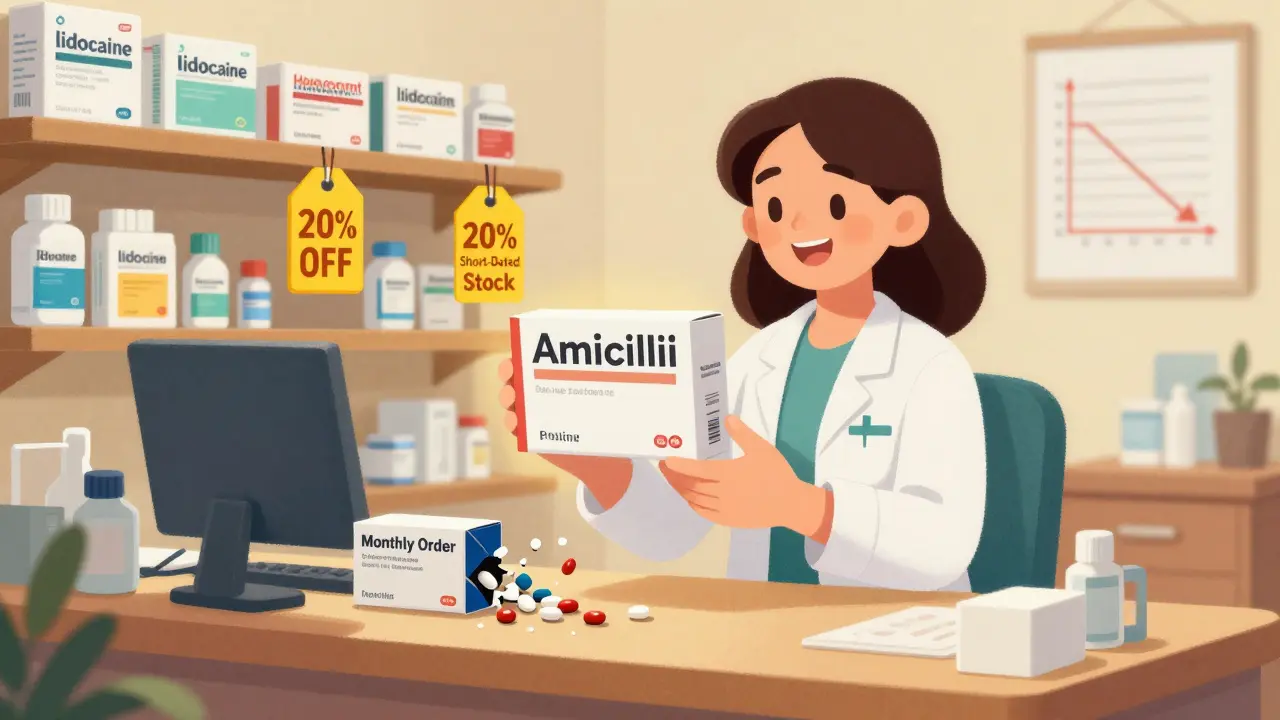
When you walk into a clinic or urgent care center, you might not think about how much the medications cost the provider. But for healthcare practices, the price of generic drugs can make or break their bottom line. That’s where bulk purchasing comes in. Buying large quantities of off-patent medications isn’t just a cost-cutting trick-it’s a strategic move that can slash expenses by 20% or more, especially for high-use drugs like antibiotics, lidocaine, and saline solutions.
Why Bulk Buying Works for Generic Drugs
Generic drugs are the backbone of modern healthcare. In the U.S., they make up over 90% of all prescriptions filled. Yet they account for just about 25% of total drug spending. Why? Because manufacturers and distributors have built pricing systems that reward volume. The more you buy, the more you save. The Hatch-Waxman Act of 1984 laid the groundwork for this system by creating a fast-track approval process for generics. Since then, the market has evolved into a complex web of manufacturers, wholesalers, pharmacy benefit managers (PBMs), and secondary distributors. Each layer offers discounts, but not all are created equal. For example, if a clinic buys 1,000 units of amoxicillin at once, they might get a 10% discount off the invoice. But if they order 10,000 units? That jumps to 20-30%. These aren’t hypothetical numbers. A Texas urgent care center cut its injectable medication costs by 20% in just two months by switching from monthly to quarterly bulk orders.How the Discounts Actually Work
There are three main ways providers get savings on generics:- Direct volume discounts - Offered by manufacturers or primary wholesalers when you hit a minimum order size. Usually 5-15% for 1,000+ units.
- Rebates - These are the most common, especially through PBMs. They’re paid after the fact based on how much you buy. Rates can hit 15-40% for generics, but here’s the catch: PBMs often keep a big chunk. Only 50-70% of those rebates make it back to the provider.
- Multi-state purchasing pools - States like Texas and Ohio team up to buy in bulk. The National Medicaid Pooling Initiative and Sovereign States Drug Consortium have helped participating states save 3-5% compared to going it alone.
Who’s Getting the Best Deals?
Not all buyers get the same savings. The channel you use makes a huge difference. Primary wholesalers-McKesson, Cardinal Health, AmerisourceBergen-control 85% of the market. But they typically offer only 3-8% discounts to small practices. Why? Their model is built on volume across thousands of customers, not deep savings for individual clinics. Secondary distributors like Republic Pharmaceuticals focus on niche buyers: urgent cares, dermatology clinics, podiatrists. They offer 20-25% savings by cutting out middlemen and working directly with manufacturers. They also specialize in short-dated stock and don’t lock you into rigid formularies. State Medicaid programs that join multi-state pools see 3-5% savings. Single-state programs? Just 1-2%. That’s because pooling gives them bargaining power. Think of it like a Costco membership-buying together means you get lower prices.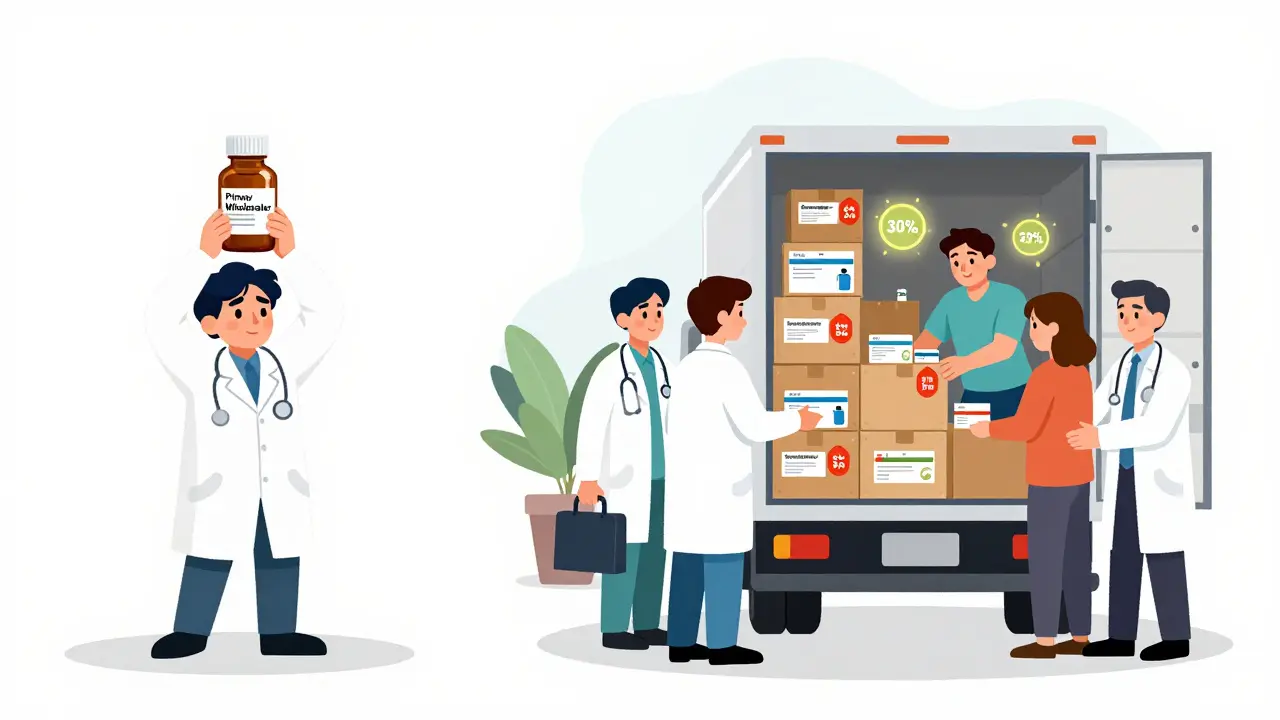
What Drugs Save the Most?
Bulk purchasing doesn’t work for everything. It’s most effective for high-volume, low-cost generics that are used regularly:- Lidocaine (injectable)
- Amoxicillin, azithromycin, ciprofloxacin
- Hydrocortisone cream
- Normal saline (0.9% sodium chloride)
- Metformin, atorvastatin, levothyroxine (for pharmacies)
Real-World Savings: What Clinics Are Saying
Clinics that switched to bulk purchasing don’t just report numbers-they tell stories. A Florida medical director said: “Switching some of our purchasing to Republic gave us options we didn’t have before. No allocations, no games-just the inventory we needed at prices that make sense.” On Reddit, healthcare admins in r/healthcareadmin shared that after shifting 30-40% of their generic orders to secondary distributors, their monthly drug bills dropped 15-20%. One practice saved $1,200 a month on just three antibiotics. Even patients benefit. New point-of-sale systems now automatically apply bulk-negotiated prices at the pharmacy counter. Patients filling prescriptions for metformin or atorvastatin are seeing out-of-pocket costs drop 30-50% without needing discount cards or coupons.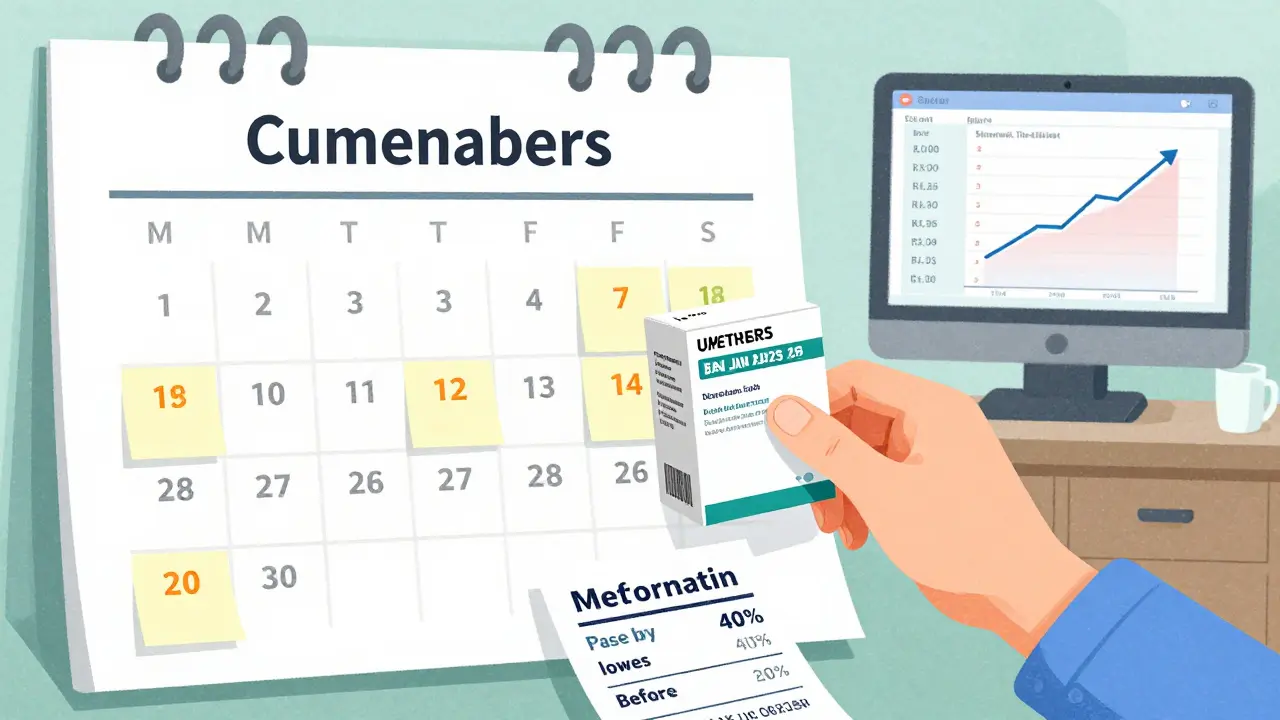
What Goes Wrong? Common Pitfalls
Bulk purchasing isn’t magic. There are real challenges:- Inventory waste - If you buy too much short-dated stock and don’t use it before expiration, you lose money. One survey found 28% of providers had issues with expired inventory.
- Upfront costs - Buying 10,000 units at once means a bigger cash outlay. A 2023 MGMA analysis showed practices needed 15-25% more working capital to handle bulk orders.
- Minimum order requirements - Some distributors force you to buy 5,000 units of a drug you only use 800 of per month. That’s 35% of urgent care centers’ biggest complaint.
- System integration - If your electronic health record (EHR) doesn’t sync with your new supplier, you’re stuck manually tracking orders. That adds hours of work.
What’s Changing in 2026?
The rules are shifting. The Inflation Reduction Act is forcing Medicare to negotiate prices for 10 high-cost drugs in 2026-with discounts of 38-79% off list prices. That’s going to ripple through the entire system. PBMs are also changing. As of January 2024, the top three PBMs now integrate bulk discounts directly into pharmacy checkout systems. No more separate discount cards. Just lower prices at the register. The FTC is cracking down on price manipulation. There are 17 active investigations into drug pricing practices. And by 2027, experts predict secondary distributors will either merge with primary wholesalers or become even more specialized. The bottom line? Bulk purchasing isn’t going away. It’s becoming smarter.How to Start
If you’re a clinic owner, pharmacist, or administrator looking to cut costs:- Identify your top 15-20 most-used generic medications.
- Calculate your monthly usage and annual spend on those drugs.
- Reach out to one secondary distributor (like Republic Pharmaceuticals) and ask for a quote on bulk and short-dated stock options.
- Start with one drug-say, amoxicillin or lidocaine-and order 2-3 months’ supply in bulk.
- Track your inventory weekly for the first 60 days. Adjust order sizes based on actual use.
- Once you’re comfortable, expand to 3-5 more drugs.
Is bulk purchasing safe for generic drugs?
Yes, absolutely. Generic drugs are required by the FDA to meet the same quality, strength, and purity standards as brand-name drugs. Buying in bulk doesn’t change that. Even short-dated stock is safe to use as long as it’s within its labeled expiration date. The only risk is waste-if you don’t use it before it expires.
Can small clinics benefit from bulk purchasing?
Yes. You don’t need to be a hospital. Urgent cares, dermatology clinics, and even solo practices have saved 15-25% by switching to secondary distributors who specialize in small-batch bulk orders. The key is focusing on high-use drugs and avoiding minimum order traps.
Do I need special software to manage bulk purchases?
Not necessarily, but it helps. Many providers use simple spreadsheets to track expiration dates and usage rates. More advanced clinics integrate with EHR systems that auto-reorder based on usage. The goal is to avoid over-ordering and prevent waste. Even a basic calendar reminder system can make a big difference.
Why don’t all clinics use bulk purchasing?
Many don’t know it’s an option. Others are locked into contracts with primary wholesalers or think it’s too complicated. Some fear cash flow issues or inventory waste. But those who try it-starting small and tracking results-almost always see savings within the first quarter.
How does bulk purchasing affect patient costs?
It can lower out-of-pocket costs for patients. When clinics and pharmacies buy generics cheaper, they often pass those savings on. New point-of-sale systems now apply negotiated discounts automatically at the counter, so patients pay less for metformin, atorvastatin, and other common generics-even without coupons.
Large-scale procurement of generics isn’t about buying more. It’s about buying smarter. The money saved doesn’t just help clinics stay open-it helps patients afford the medicines they need.



8 Comments
Sangeeta Isaac January 20, 2026
so like... i just bought 2000 units of amoxicillin last week bc my buddy at Republic said ‘hey, this stuff expires in 6 months but it’s still good’ and now my closet looks like a pharmacy exploded. also, my cat is now on antibiotics. no regrets.
Alex Carletti Gouvea January 22, 2026
you people are crying about saving a few bucks on generics while China makes 80% of them. we’re outsourcing our health to communist factories and calling it ‘smart procurement.’ this isn’t innovation, it’s surrender.
Philip Williams January 23, 2026
While the economic rationale for bulk purchasing is sound, the operational complexities often outweigh the benefits for small practices. The increased working capital requirements, inventory management burdens, and risk of expiration-related losses necessitate a structured, data-driven approach. Without robust forecasting tools and dedicated personnel, bulk procurement may inadvertently exacerbate financial strain rather than alleviate it.
Ben McKibbin January 24, 2026
Let’s be real - the real win here isn’t the 20% discount on lidocaine, it’s the fact that this system finally lets clinics stop being middlemen for PBMs who skim 60% of the rebate. Secondary distributors are the unsung heroes of primary care. And short-dated stock? Genius. If it’s not expired, it’s not waste - it’s opportunity. The system’s broken, but people are patching it with grit and spreadsheet magic.
Uju Megafu January 25, 2026
THIS IS WHY AMERICA IS DYING. You’re all proud of buying expired drugs from shady distributors while real doctors in Nigeria can’t even get basic antibiotics. You’re saving $1200 a month on amoxicillin but your patients still can’t afford insulin. You’re not saving healthcare - you’re just playing Monopoly with people’s lives.
Stephen Rock January 26, 2026
short-dated stock is just corporate waste laundering. if you’re not tracking expiration dates like a hawk you’re just funding the next drug shortage. also why are we still using spreadsheets in 2025
Dee Monroe January 27, 2026
It’s funny how we treat medicine like a commodity when it’s the very thing that holds our fragile human existence together. Buying in bulk feels like a clever hack, but underneath it all - it’s just us trying to stretch a broken system thin with duct tape and hope. Maybe one day we’ll stop treating health like a budget spreadsheet and start treating it like the sacred, messy, beautiful thing it is. But until then, I’ll take the 25% off the saline and quietly cry into my EHR log.
Jarrod Flesch January 28, 2026
Been doing this for 3 years in my clinic in Melbourne - switched to a Aussie secondary distributor (not the big boys) and now we save 22% on the usual suspects. Short-dated stock? We use it all. Just label the boxes with neon tape and put ‘USE ME BEFORE [DATE]’ on the fridge. Also, a simple Google Calendar alert for expiries saves more than any fancy software. 🙌