
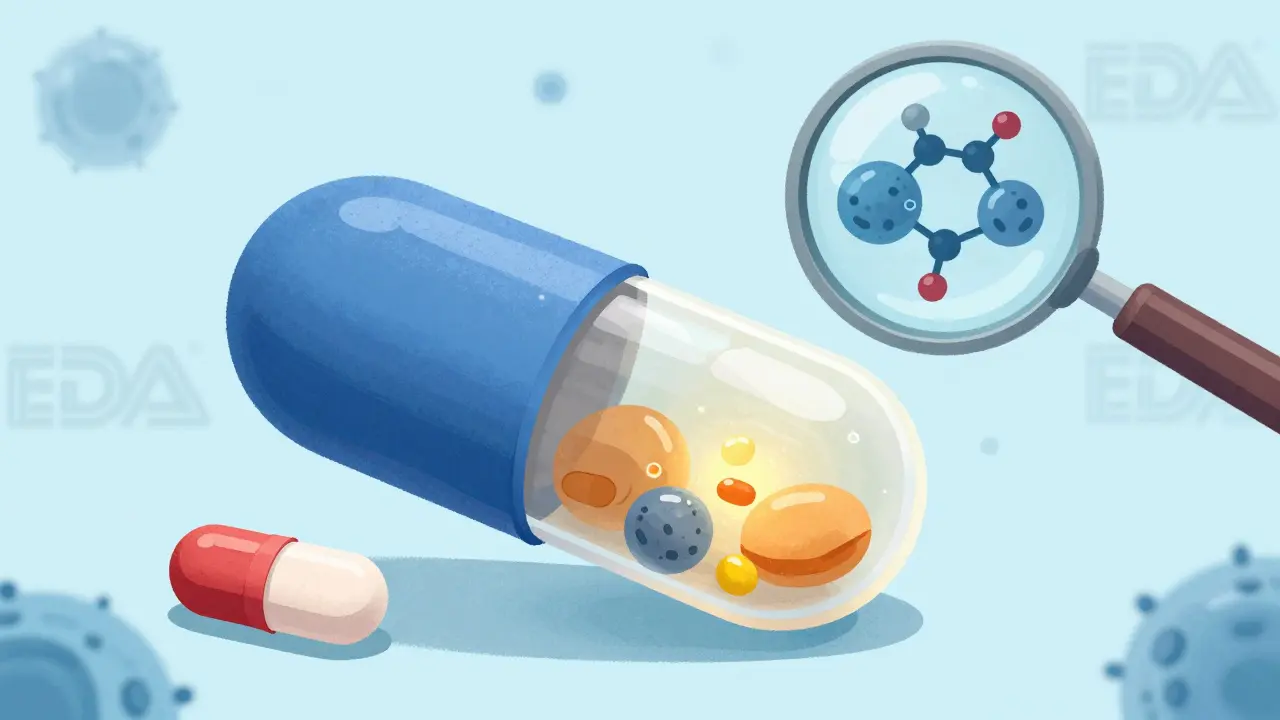
Not all generic drugs are created equal. While you might think a generic version of a brand-name drug is just a cheaper copy, that’s not always true. Some generics - called complex generic drugs - are far harder to make, test, and get approved than the simple pills you’ve been taking for years. These aren’t just minor tweaks. They’re advanced formulations like liposomal injections, long-acting injectables, inhalers with precise dosing, and peptide-based therapies. And getting them through the FDA? It’s a marathon with no finish line in sight.
What Makes a Generic Drug "Complex"?
A simple generic drug, like generic lisinopril or metformin, has a single active ingredient, a straightforward chemical structure, and a standard tablet or capsule form. The FDA can compare it directly to the brand-name version using blood tests - if the body absorbs it the same way, it’s approved. Complex generics break that mold. They might contain:- Peptides or polymeric compounds that trigger immune responses
- Liposomes - tiny fat bubbles that carry drugs to specific tissues
- Long-acting injectables that release medication over weeks or months
- Drug-device combos like inhalers, auto-injectors, or transdermal patches
Why the FDA Struggles to Approve Them
The FDA’s standard tool for approving generics is the Abbreviated New Drug Application (ANDA). It’s designed for simple drugs. But complex generics don’t fit neatly into that box. For example, take a long-acting injectable that releases a drug over 30 days. Traditional blood tests can’t capture how the drug behaves over time. You need specialized studies - multiple sampling points, complex modeling, and sometimes even animal studies - just to prove it works like the brand. That’s expensive. That’s time-consuming. And the FDA doesn’t always have clear rules on what’s enough. The agency has tried to fix this. Under GDUFA II (2017), they created the Pre-ANDA Meeting Program, where companies can meet with FDA scientists months before submitting an application. By 2023, over 1,200 of these meetings had been held. They also published over 160 Product-Specific Guidelines (PSGs) in 2019 alone, trying to spell out exactly what data is needed for each complex product. But even with these tools, approval rates are low. Between 2015 and 2023, the FDA approved only about 15 complex generic drugs. Meanwhile, over 1,000 simple generics got the green light in the same period.The Science Behind the Hurdles
Developing a complex generic isn’t just about copying a formula. It’s like reverse-engineering a Swiss watch without the blueprint. A 2021 review of 24 global studies found six major challenges:- Formulation (17 studies): Replicating the exact mix of ingredients, especially in liposomes or nanoparticles, is nearly impossible without knowing the brand’s proprietary process.
- Analytical (19 studies): How do you measure something that’s invisible? Liposomes, for instance, can’t be analyzed with standard lab tools. You need advanced techniques like cryo-electron microscopy or dynamic light scattering.
- Clinical (18 studies): For drugs that work slowly, you can’t just check blood levels at one point. You need to track patients for weeks - and prove they get the same benefit, not just the same concentration.
- Process & Quality (17-19 studies): Even small changes in manufacturing temperature or mixing speed can alter the drug’s behavior. These are called Critical Process Parameters and Critical Quality Attributes. If you don’t control them perfectly, your generic might not work.
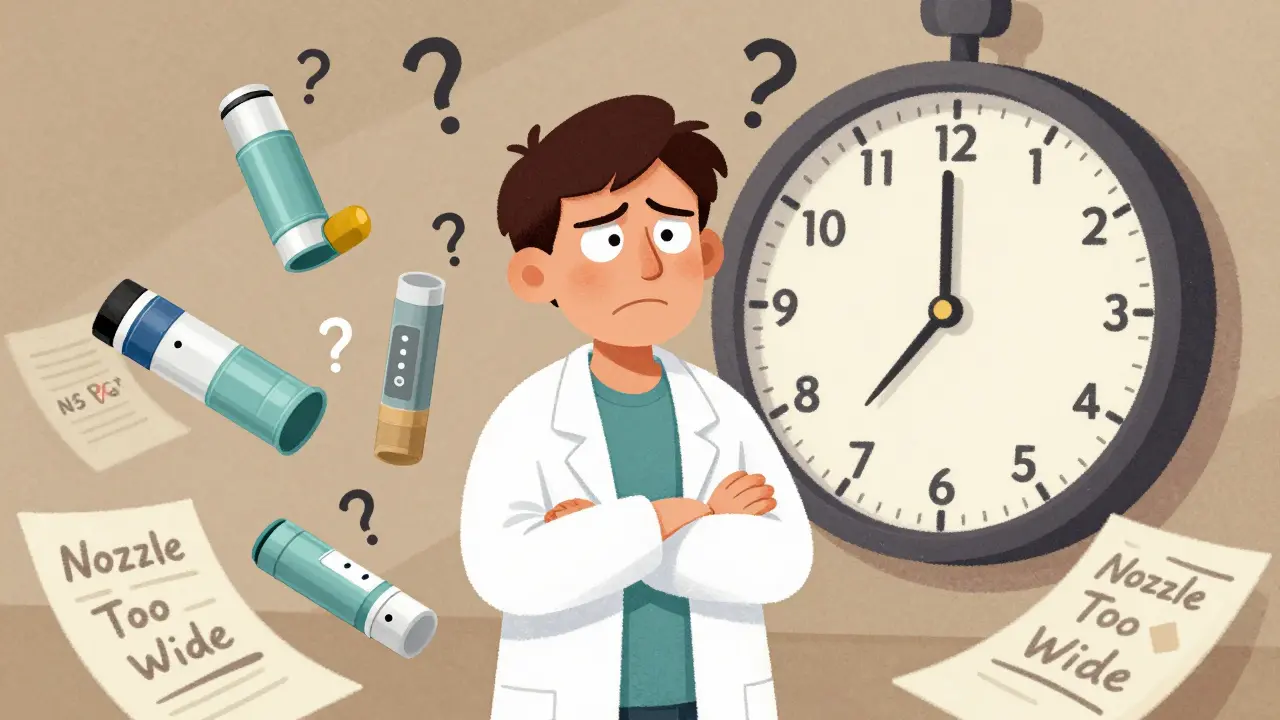
- Regulatory (21 studies): The rules aren’t always clear. One company spent three years trying to get approval for a generic inhaler - only to be told the nozzle’s shape, not the drug, was the problem.
Cost and Time: The Hidden Barriers
Developing a simple generic can cost $1-3 million and take 2-3 years. A complex generic? It can cost $20-50 million and take 5-7 years. Many companies walk away before they even submit an application. Why? Because the risk is too high. You could spend millions, then get rejected because the FDA decided the device’s color mattered more than the drug’s performance. Or you might get stuck waiting for guidance that never comes. And even when you do get approved, the market might not reward you. If five other generics are already on the shelf, adding a sixth doesn’t lower prices much. The real savings come when the first complex generic enters - but that’s the hardest one to get.Global Differences Make It Worse
The U.S. isn’t the only place with these problems - but it’s one of the most transparent. In China, the National Medical Products Administration (NMPA) requires local clinical trials and a local legal agent. That can add 1-2 years to approval. Brazil’s ANVISA demands certification of every lab and clinical site following ICH guidelines - a process that can take over a year just to start. Meanwhile, the EU has its own set of complex rules. So a company trying to launch a global product has to navigate five different regulatory systems - each with different expectations, timelines, and hidden requirements.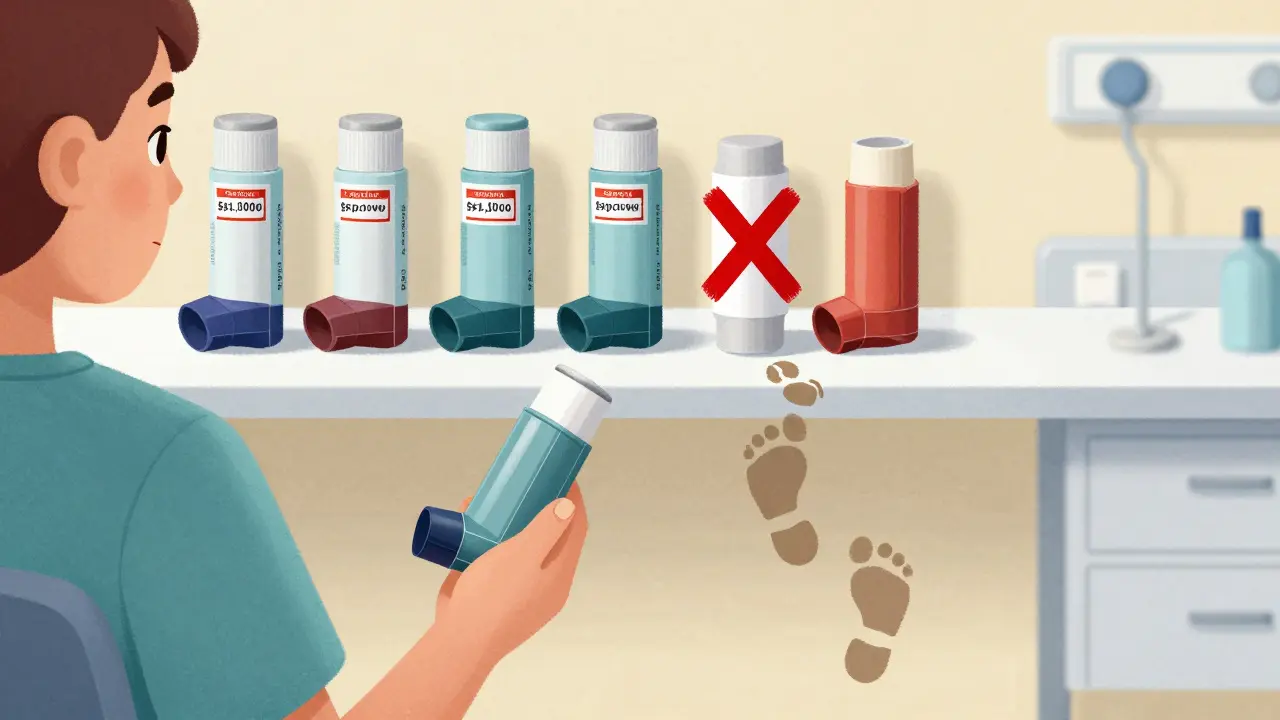
What’s Being Done to Fix It?
The FDA knows the system is broken. In January 2023, they promised to review most original generic applications within 10 months - a big improvement from the 31-month average in 2012. They’ve hired 128 new reviewers and are investing in AI and machine learning tools to speed up data analysis. They’re also pushing for Quality by Design (QbD) - a method where manufacturers build quality into the product from the start, not test for it at the end. That reduces surprises during review. Some experts believe AI could cut development time by 20-30% by 2027. Machine learning models can predict how a liposome will behave based on its size and composition - something that used to take months of lab work. But progress is slow. The FDA admits complex generics will remain a "high-priority, high-challenge" category for years to come.Who Loses When These Drugs Don’t Get Approved?
Patients. Especially those with chronic conditions who need long-acting injectables, inhalers, or pain management therapies. Take bupivacaine - a painkiller used after surgery. The brand-name version costs over $1,000 per dose. The generic, once approved, dropped the price to under $200. But it took nearly a decade to get there. Thousands of patients paid more than they should have during that time. Or consider inhalers for asthma and COPD. Many patients can’t afford the brand-name versions. But if a generic inhaler fails approval because the mouthpiece is 0.2mm wider, those patients are stuck. The system isn’t designed to ask: "Which drugs are patients actually missing?" Right now, the FDA approves generics based on what companies submit - not what patients need most.What’s Next?
By 2028, complex generics could make up 25% of the $250 billion global generics market. That’s because over $75 billion in branded complex drugs are set to lose patent protection in the next few years. But unless the FDA, manufacturers, and regulators around the world work together - with clearer rules, better tools, and patient input - most of that potential will stay locked away. The good news? The pieces are starting to come together. Better guidance. More meetings. New science. But it’s still a race against time - and patients are still waiting.Why are complex generic drugs harder to approve than regular generics?
Complex generics involve advanced formulations like liposomes, long-acting injectables, or drug-device combos that behave differently in the body. Unlike simple pills, you can’t prove they work the same just by checking blood levels. You need specialized tests, detailed manufacturing controls, and sometimes entirely new ways to measure bioequivalence - all of which take more time, money, and scientific expertise.
What’s the difference between an ANDA and a 505(b)(2) application?
An ANDA is the standard path for simple generics - you prove your product is bioequivalent to the brand. A 505(b)(2) is a hybrid path used when you can’t use the ANDA route - often because the drug has changed form, delivery method, or dosage. You can rely on some existing data, but you still need new studies. Many complex generics can’t use ANDA at all, so companies turn to 505(b)(2), which is longer and more expensive.
How long does it take to get a complex generic approved by the FDA?
It typically takes 5-7 years from start to finish, compared to 2-3 years for a simple generic. The review process itself can take 2-4 years after submission, especially if the FDA requests more data or if the application is incomplete. Many companies spend years in pre-submission meetings just to understand what’s needed.
Why don’t more companies make complex generics?
The cost and risk are too high. Developing one can cost $20-50 million with no guarantee of approval. Many applications get rejected over minor technical issues - like the shape of an inhaler nozzle - that have little clinical impact. With low approval rates and uncertain returns, many companies choose to focus on simpler generics instead.
Are there any success stories with complex generic approvals?
Yes. The first major success was the generic version of bupivacaine liposome injectable, approved in 2019. It required the FDA and manufacturer to create a brand-new method to prove bioequivalence, since traditional tests didn’t work. That approval showed progress is possible - but it took years of collaboration and innovation. Only about 15 complex generics have been approved since 2015.
What role do Product-Specific Guidelines (PSGs) play?
PSGs are the FDA’s way of telling manufacturers exactly what data they need for each complex drug. Before PSGs, companies were guessing. Now, there are over 1,700 available, with more added every year. They reduce uncertainty, cut review times, and help avoid costly rejections. But not every complex product has a PSG yet - and when one doesn’t exist, approval becomes much harder.
Can AI help speed up complex generic approval?
Yes. AI and machine learning are being used to predict how a drug will behave based on its chemical and physical properties. This helps manufacturers design better products from the start and reduces the need for trial-and-error testing. Early estimates suggest AI could cut development time by 20-30% by 2027, especially for liposomal and nanoparticle drugs.




13 Comments
Samantha Hobbs December 29, 2025
My cousin’s on a long-acting injectable for bipolar and the brand costs $1,200 a shot. When the generic finally came out? $180. She cried. Not because she was happy-because she’d been skipping doses for two years just to make it last. This isn’t science. It’s a moral failure.
James Hilton December 30, 2025
So the FDA approves 1,000 simple generics but only 15 complex ones? Bro. We’re letting people die because someone’s worried about a nozzle being 0.2mm off. 🤡
Ellen-Cathryn Nash December 30, 2025
I used to work in pharma compliance. Let me tell you-this isn’t bureaucracy. It’s sabotage disguised as caution. Companies spend millions on liposome tech, then get rejected because the FDA didn’t like the color of the vial label. No one’s asking: ‘Does this save lives?’ They’re asking: ‘Did we check box 7B?’
And don’t get me started on the ‘Product-Specific Guidelines.’ They’re like a treasure map drawn by someone who’s high. Half of them contradict each other. The other half don’t exist.
AI? Cute. But you can’t train a model on data that doesn’t exist. If the FDA won’t release the specs for the original drug, how’s anyone supposed to reverse-engineer it? It’s like trying to bake a cake from a photo of the finished product… and the recipe’s been burned.
And yet somehow, the same agency approves 50 new cancer drugs a year with half the scrutiny. Double standards don’t just exist here-they’re the entire business model.
Patients aren’t asking for miracles. They’re asking for a shot. Literally. And we’re making them wait five years because someone’s afraid of a nanoparticle being 12nm instead of 11.8.
It’s not innovation. It’s institutional cowardice wrapped in a white coat.
Bradly Draper January 1, 2026
I just want my mom to be able to afford her inhaler. That’s it. No fancy science. No patents. Just let her breathe.
Celia McTighe January 2, 2026
This is so heartbreaking 😭 I work with asthma patients every day. Some of them use their inhalers like oxygen tanks. When the generic doesn’t come? They just… stop. And then they end up in the ER. It’s not just money-it’s dignity. 💙
ANA MARIE VALENZUELA January 3, 2026
Let’s be real: this isn’t about science. It’s about Big Pharma protecting their turf. The brand-name companies pay lobbyists to keep the FDA’s standards vague. They know if you make the rules too clear, generics will crush them. So they make it a maze. And patients? They’re the ones lost in it.
That ‘15 approved complex generics’ stat? That’s not a win. That’s a crime scene.
And don’t give me that ‘Quality by Design’ nonsense. If quality was the goal, we’d have had this solved in 2010. But we didn’t. Because profit > people. Always.
AI won’t fix this. Only a revolution will. And we’re running out of time.
Kelsey Youmans January 5, 2026
While the regulatory challenges surrounding complex generic drug approval are undeniably multifaceted, it is imperative to recognize that the foundational principles of bioequivalence and pharmaceutical equivalence must remain uncompromised in order to safeguard public health. The FDA’s cautious approach, though burdensome, is a necessary bulwark against substandard therapeutics that may compromise clinical outcomes. A rush to approval without rigorous analytical validation could precipitate a public health crisis of unprecedented scale.
Hakim Bachiri January 5, 2026
Y’all act like the FDA’s some kind of villain… but if you think they’re letting just ANYTHING through, you’re delusional. I’ve seen what happens when generics are rushed-patients get sick. Not ‘maybe’ sick. ACTUALLY sick. I’m not saying the system’s perfect-but it’s not broken. It’s protecting you from people who want to cut corners to make a buck.
And don’t even get me started on how some of these ‘complex’ generics are just knockoffs of knockoffs. You think the brand spent $50M on R&D? Half of that was lawyers. The rest was marketing. The generic makers? They just want to copy the label and sell it for 90% off. That’s not innovation. That’s greed.
Also, AI? Please. You think a machine can understand the difference between a 10nm and 12nm liposome? Nah. That’s why we still need humans. And scientists. Not TikTok activists.
oluwarotimi w alaka January 5, 2026
USA got the money but not the brains. India and China make better generics than you. Why? Because they don’t waste time with fancy machines and meetings. They just make it. And it works. You think the FDA cares about patients? Nah. They care about lawsuits. And patents. And who donated to their last campaign.
Meanwhile, my cousin in Lagos gets his HIV meds for $2 a month. Made in India. Same drug. Same result. But you? You pay $1,000 because your government is scared of a tiny nozzle.
Colonial mindset. Still alive. Still killing.
sonam gupta January 6, 2026
India makes 80% of the world’s generics and you think we cant make a liposome
USA is scared of competition
Stop lying to yourselves
Gran Badshah January 7, 2026
Bro I’m from India and we make these complex generics every day. The FDA doesn’t reject them because they’re bad. They reject them because they don’t want to admit we’re better at this than them.
My uncle’s company made a generic inhaler. FDA said the nozzle was wrong. We changed the nozzle. They said the packaging was wrong. We changed the packaging. Then they said the ink on the box was too dark. We changed the ink. Took 4 years. Cost $30M. Got approved. Now it’s sold in 12 countries.
You think this is science? Nah. It’s racism with a lab coat.
Sydney Lee January 7, 2026
It is profoundly disingenuous to frame this as a matter of ‘patient access’ when the underlying issue is a systemic failure of regulatory science to evolve alongside pharmaceutical innovation. The notion that ‘complex generics’ are being unfairly obstructed is a red herring; the truth is that the pharmacokinetic and pharmacodynamic profiles of these formulations are inherently non-equivalent unless rigorously validated-something that cannot be achieved through expedient or superficial means. To conflate bureaucratic delay with malice is not only intellectually lazy-it is dangerously reductive. The FDA’s mandate is not to facilitate market competition; it is to ensure that every molecule that enters the human body is demonstrably safe and effective. If that requires five years, so be it. The alternative is a graveyard of unverified therapeutics.
James Hilton January 9, 2026
Wow. Sydney just wrote a 500-word essay titled ‘Why I Hate Patients.’ Congrats. 🎉