
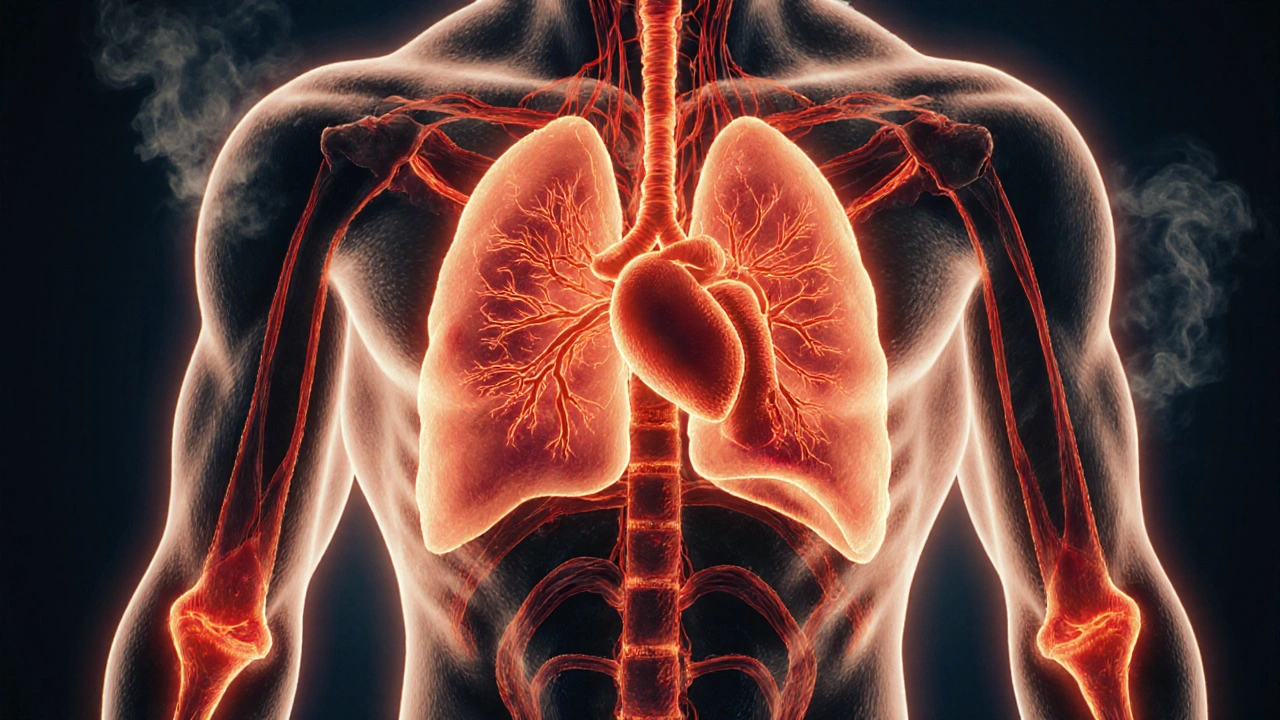
When your joints ache and your breath gets short for no clear reason, it’s easy to blame one thing-maybe arthritis, maybe a cold. But for some people, these two problems aren’t separate. They’re linked. Pulmonary arterial hypertension (PAH) and rheumatoid arthritis (RA) often show up together, and when they do, the risks go up fast. This isn’t just a coincidence. It’s biology.
What Happens When RA Affects the Lungs
Rheumatoid arthritis is known for destroying cartilage in the hands and knees. But it doesn’t stop there. RA is a full-body autoimmune disease. That means your immune system turns on your own tissues. And over time, it can attack the lungs, the heart, even the blood vessels.
One of the most dangerous outcomes is pulmonary arterial hypertension. In PAH, the small arteries in your lungs become thick, stiff, or blocked. Your heart has to work harder to push blood through them. That extra strain slowly weakens the right side of your heart. Without treatment, it can lead to heart failure.
Studies show that between 5% and 12% of people with RA develop PAH. That’s far higher than in the general population, where PAH affects less than 1 in 100,000 adults. The risk jumps even more if you’ve had RA for over 10 years, or if you have severe joint damage, lung scarring, or high levels of certain antibodies like anti-CCP.
Why RA Leads to PAH: The Biological Link
It’s not just about inflammation. The same immune cells that attack your joints also swarm your lung blood vessels. They release chemicals like TNF-alpha and interleukin-6 that cause blood vessel walls to thicken. Over time, this narrows the space for blood to flow.
Another factor is lung fibrosis. Many RA patients develop interstitial lung disease (ILD), where scar tissue builds up in the lungs. That scar tissue squeezes the nearby arteries, making them work harder. In some cases, it’s hard to tell whether PAH comes from direct vessel damage or from the lungs being physically compressed by scar tissue.
And then there’s the medication angle. Some RA drugs-like methotrexate or cyclophosphamide-can cause lung damage in rare cases. While these drugs help control joint pain, they might also speed up lung changes that lead to PAH. It’s a balancing act doctors have to manage carefully.
Who’s Most at Risk?
Not everyone with RA gets PAH. But certain patterns show up again and again:
- Women over 50 with long-standing RA
- People with high levels of rheumatoid factor or anti-CCP antibodies
- Those with visible lung scarring on CT scans
- Patients who have trouble breathing during light activity, like walking to the kitchen
- People whose RA is hard to control with standard treatments
One 2023 study from the European Respiratory Journal followed 1,200 RA patients for five years. Those with the highest inflammation markers had a 7 times greater chance of developing PAH compared to those with low inflammation. The message is clear: uncontrolled RA doesn’t just hurt your joints-it can silently damage your heart and lungs.
How Doctors Spot PAH in RA Patients
Here’s the problem: PAH starts quietly. Early symptoms-like tiredness, shortness of breath during normal tasks, or swelling in the ankles-look a lot like RA fatigue or aging. Many patients wait months, even years, before getting tested.
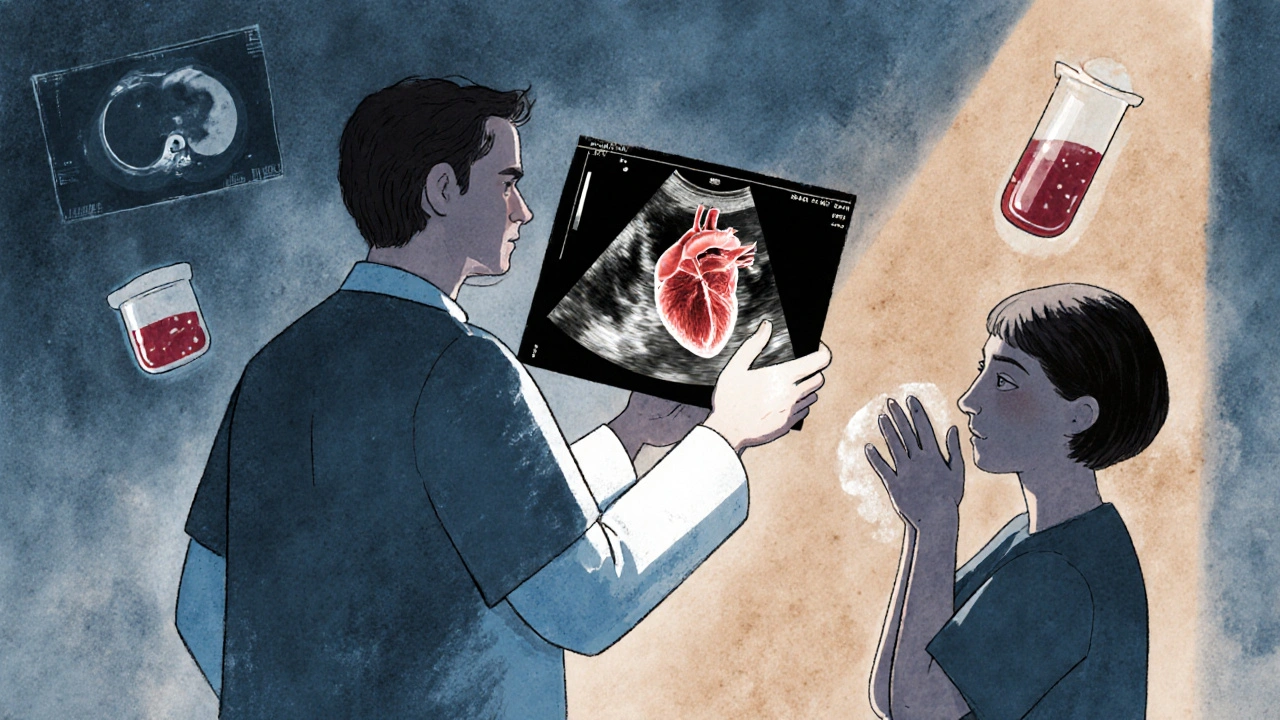
Doctors use a few key tools to catch PAH early:
- Echocardiogram-This ultrasound of the heart gives the first clue. If the right ventricle looks strained or the pulmonary pressure is above 35 mmHg, PAH is suspected.
- Right heart catheterization-This is the only way to confirm PAH. A thin tube is inserted into the lung artery to measure pressure directly. It’s invasive, but it’s the gold standard.
- Lung function tests-These check for scarring or reduced oxygen exchange.
- Chest CT scan-Looks for signs of lung fibrosis, which often goes hand-in-hand with PAH in RA.
Experts now recommend that RA patients with unexplained breathlessness-especially if they’ve had the disease for more than five years-get screened with an echocardiogram. Early detection saves lives.
Treatment: Managing Two Diseases at Once
Treating PAH in someone with RA isn’t like treating either disease alone. You can’t just give PAH meds and hope the RA doesn’t get worse.
PAH-specific drugs like bosentan, ambrisentan, or riociguat help open up the lung arteries. But they don’t touch the root cause: the autoimmune attack. That’s where RA treatments come in.
Biologics like rituximab or tocilizumab have shown promise in reducing both joint damage and lung complications. Some studies suggest that when RA inflammation drops, PAH pressure improves too. That’s why controlling RA aggressively is part of PAH treatment.
But caution is needed. Some RA drugs, like methotrexate, can worsen lung damage. Others, like mycophenolate, are safer for the lungs. Doctors now choose RA medications based on lung health-not just joint pain.
Oxygen therapy and pulmonary rehab also help. Walking programs, breathing exercises, and avoiding high altitudes can make a real difference in daily life.
What You Can Do to Protect Your Lungs
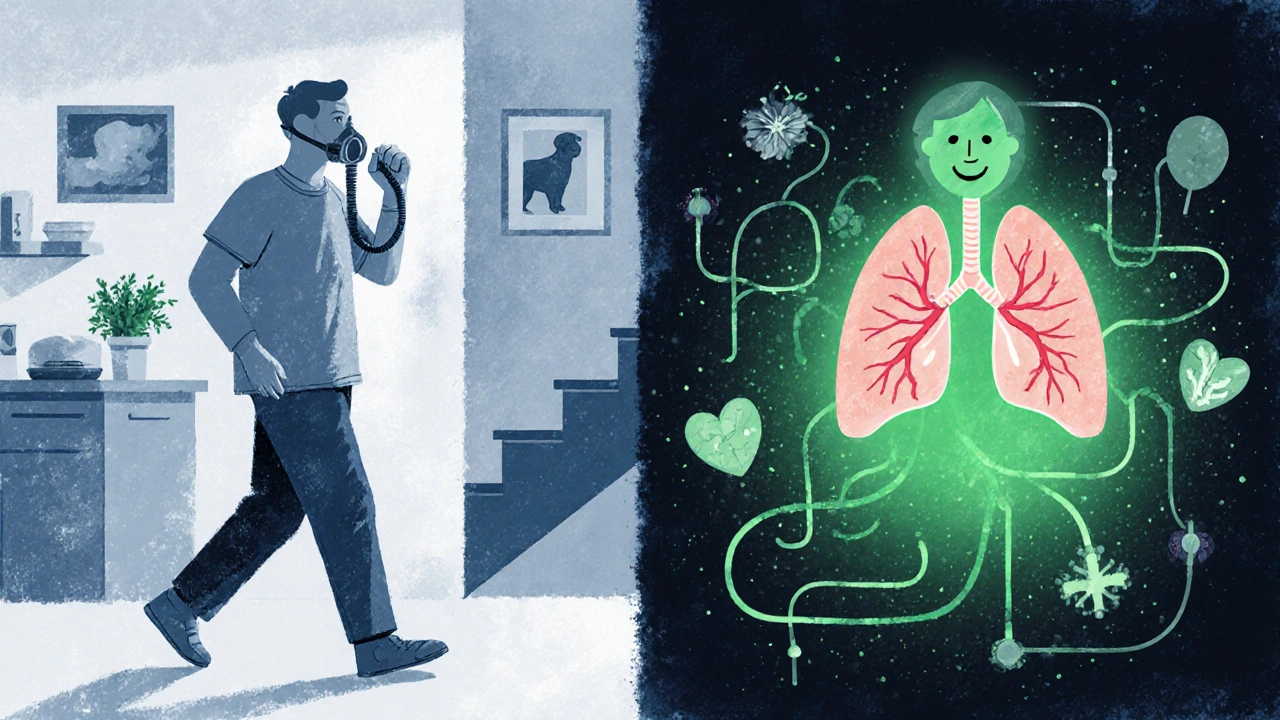
If you have RA, here’s what actually works:
- Get regular lung checks-ask for an echocardiogram every 1-2 years if you’re over 50 or have severe RA
- Stop smoking-no exceptions. Smoking doubles the risk of lung damage in RA
- Track your breathing-note if you’re getting winded faster than before
- Watch for swelling in legs or ankles-it’s often the first sign your heart is struggling
- Keep RA under control-follow your treatment plan, even when joints feel okay
Don’t wait for symptoms to get bad. PAH moves slowly, but once it’s advanced, treatment options shrink. The goal isn’t just to live longer-it’s to live better, with more breath, more energy, more freedom.
What’s New in Research
Scientists are now looking at blood markers that predict PAH before symptoms appear. One promising test measures levels of endothelin-1, a protein that tightens blood vessels. High levels in RA patients could signal early PAH.
Another area of focus is gene patterns. Researchers found that RA patients who develop PAH often share certain immune system genes linked to blood vessel repair. That could lead to genetic screening down the line.
And new drugs are coming. In 2024, a Phase 3 trial showed that a new oral drug called sotatercept reduced lung pressure by 25% in RA-related PAH patients. It’s not yet approved, but it’s a big step forward.
Can rheumatoid arthritis cause pulmonary arterial hypertension?
Yes. Rheumatoid arthritis is an autoimmune disease that can attack blood vessels in the lungs, leading to pulmonary arterial hypertension (PAH). Up to 12% of RA patients develop PAH, especially those with long-standing, severe disease or lung scarring. It’s not a side effect-it’s a direct complication of the immune system’s attack on the body.
What are the early signs of PAH in someone with RA?
Early signs include unusual shortness of breath during light activity (like walking or climbing stairs), unexplained fatigue, swelling in the ankles or legs, and a fast heartbeat. These often get mistaken for RA fatigue or aging. If you notice these symptoms getting worse over months, ask for an echocardiogram.
Is PAH treatable if you have RA?
Yes, but it requires a dual approach. PAH-specific medications like bosentan or riociguat help open lung arteries, while controlling RA with the right biologics (like rituximab or tocilizumab) reduces the root cause. Stopping smoking, doing pulmonary rehab, and monitoring oxygen levels also improve outcomes. Early detection is key-treatment works best before heart damage sets in.
Should all RA patients be screened for PAH?
Not everyone, but high-risk patients should be. If you’ve had RA for more than 5 years, have severe joint damage, lung scarring on a CT scan, or unexplained breathlessness, you should get an echocardiogram every 1-2 years. Screening is simple, non-invasive, and can catch PAH before it becomes life-threatening.
Can PAH be reversed in RA patients?
In early stages, yes-partially. When RA inflammation is brought under control with the right drugs, lung pressure can drop. Some patients see improvements in breathing and exercise ability. But once the heart muscle is permanently damaged, reversal isn’t possible. That’s why catching PAH early matters more than anything.
What Comes Next
If you have RA and are worried about your lungs, talk to your rheumatologist. Ask if you’ve been screened for PAH. If you’ve been told your breathlessness is just "part of aging," push back. It’s not. The connection between RA and PAH is real, serious, and treatable-if caught in time.
The best defense? Know your numbers. Track your symptoms. Don’t ignore the quiet signs. Your joints might be the first to complain-but your lungs might be the ones that need saving.





9 Comments
malik recoba November 19, 2025
man i had no idea ra could mess with your lungs like that. i thought it was just stiff knuckles and sore knees. my aunt had ra and she kept saying she was just getting old-turns out she was struggling to breathe because her arteries were getting clogged. scary stuff.
Sarbjit Singh November 20, 2025
so true 😔 i saw my uncle go through this… ra + paht = double whammy. doc said his lungs were like old rubber bands. now he’s on oxygen at night. pls get checked if you’ve had ra for years. not worth waiting till you can’t walk to the fridge 🙏
Angela J November 21, 2025
you ever wonder if big pharma knows about this but hides it? why else would they push methotrexate so hard when it literally eats your lungs? and why don’t they screen everyone? something’s fishy. i bet they profit more from treating heart failure than preventing it.
Sameer Tawde November 23, 2025
screen early. stay active. quit smoking. that’s it. no magic pills, just discipline. your lungs don’t care about your pain meds-they care about oxygen. protect them like your job depends on it.
Kevin Jones November 24, 2025
the endothelial dysfunction cascade triggered by chronic IL-6/TNF-alpha dysregulation is the true pathogenic nexus-autoimmunity doesn’t just target synovium, it remodels pulmonary vasculature via apoptotic signaling and neointimal proliferation. this isn’t comorbidity. it’s systemic autoinflammation manifesting in the right ventricle.
Premanka Goswami November 25, 2025
they’re lying. the government and big pharma are suppressing the real cause: 5G towers and chemtrails are weakening our endothelial lining. that’s why it’s worse in cities. and don’t get me started on vaccines-they’re designed to trigger anti-CCP antibodies. the data’s hidden in plain sight.
Alexis Paredes Gallego November 25, 2025
so let me get this straight-you’re telling me doctors are just now figuring out that an autoimmune disease might affect organs OTHER than joints? what a shocker. next you’ll tell me sugar causes diabetes. meanwhile, my cousin died of PAH in 2021 and they told her it was "just anxiety." classic.
Saket Sharma November 26, 2025
the only viable approach is aggressive biologic intervention-rituximab > methotrexate. any rheumatologist who still prescribes MTX to a patient with lung fibrosis is negligent. this isn’t opinion. it’s clinical consensus. if your doc isn’t monitoring your echo every 12 months, find a new one.
Shravan Jain November 27, 2025
It is imperative to note that the temporal correlation between rheumatoid arthritis duration and the incidence of pulmonary arterial hypertension does not necessarily imply causation. One must consider confounding variables, including but not limited to: age-related vascular remodeling, environmental exposures, and iatrogenic factors. The current literature remains observational and lacks prospective, randomized, controlled validation. Therefore, while the association is statistically significant, its clinical causality remains epistemologically ambiguous.