
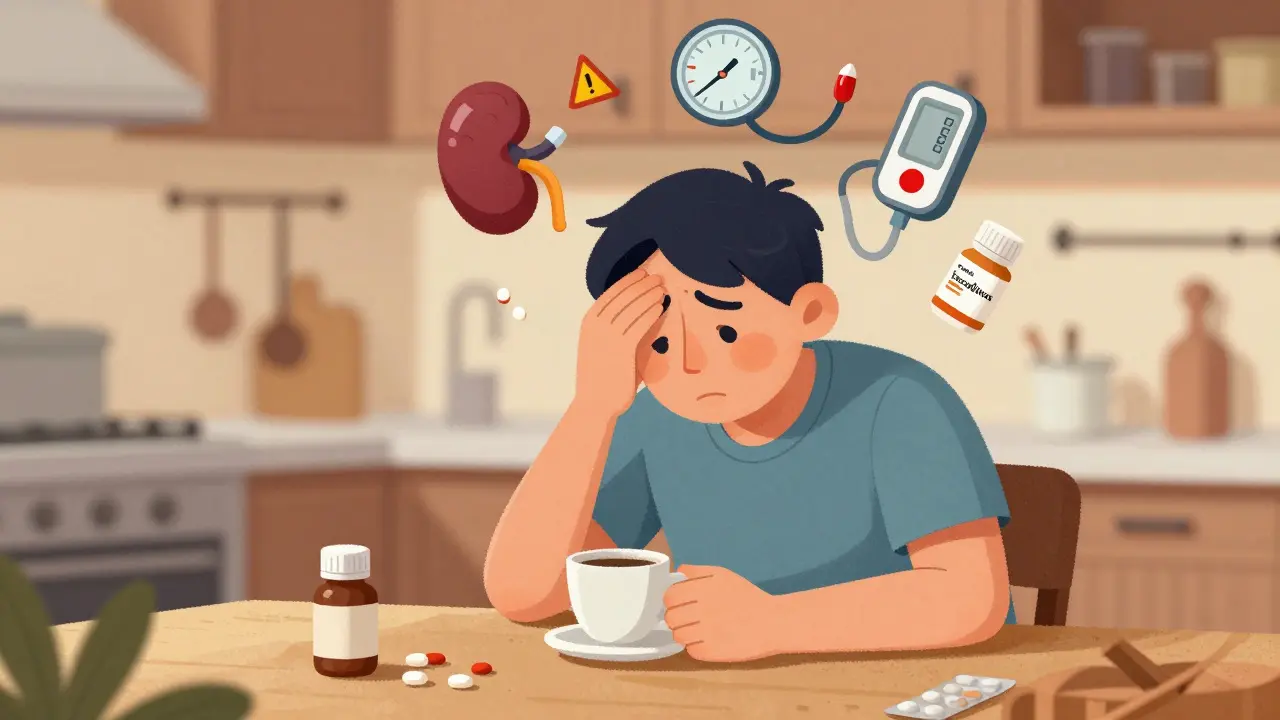
When someone gets a kidney, liver, or heart transplant, their body sees the new organ as a threat. To stop rejection, doctors prescribe powerful drugs called calcineurin inhibitors - mainly cyclosporine and tacrolimus. These drugs save lives, but they come with a long list of side effects that can change how you feel every day. Many patients don’t realize how common or serious these effects can be until they’re already living with them.
How Calcineurin Inhibitors Work
Cyclosporine and tacrolimus don’t just weaken the immune system - they target a very specific part of it. Both block an enzyme called calcineurin, which T-cells need to activate and attack foreign tissue. By doing this, they stop the immune system from rejecting a transplanted organ. This precision is why they’ve been the backbone of transplant care for decades. But that same precision also makes them dangerous when they affect other parts of the body.
Nephrotoxicity: The Biggest Threat
Every patient on these drugs faces the risk of kidney damage. In fact, 25% to 75% of users show signs of acute kidney injury within the first few months. This isn’t always obvious. You might not feel sick, but your blood tests will show rising creatinine levels. That’s because these drugs tighten the blood vessels leading into your kidneys, reducing blood flow.
Long-term use is even more concerning. About 10% to 30% of patients develop permanent scarring in the kidney tissue - a condition called interstitial fibrosis. A major 2009 study found that chronic exposure to calcineurin inhibitors caused 38% of late kidney graft failures. That’s why doctors now aim for the lowest possible dose that still prevents rejection. Trough levels for tacrolimus are typically kept between 5-10 ng/mL, and for cyclosporine between 100-200 ng/mL. Going higher increases risk without improving outcomes.
Neurotoxicity: Tremors, Parkinsonism, and Brain Fog
Tacrolimus is far more likely than cyclosporine to cause neurological problems. Up to 70% of patients on tacrolimus develop hand tremors - a fine, uncontrollable shaking that makes writing, eating, or holding a cup difficult. Cyclosporine causes tremors in only 10% to 25% of users.
But tremors are just the tip of the iceberg. In rare but devastating cases, tacrolimus can trigger parkinsonism - stiffness, slow movement, and balance problems that mimic Parkinson’s disease. One 2022 case report described a kidney transplant patient who developed severe parkinsonism just two weeks after starting tacrolimus. Symptoms vanished within two weeks of switching to cyclosporine - only to return months later, even on cyclosporine. This shows how deeply these drugs can affect the brain.
Even without full-blown parkinsonism, many patients report brain fog, trouble concentrating, and sleep disturbances. A 2023 study at UCSF found that 15% to 20% of tacrolimus users had subtle cognitive decline within three months. That’s why some transplant centers now do formal neurocognitive testing at baseline and again after 90 days.
Diabetes Risk: Tacrolimus vs. Cyclosporine
If you’re on tacrolimus, your risk of developing new-onset diabetes after transplant is 15% to 30%. For cyclosporine, it’s only 5% to 15%. Why? Tacrolimus directly damages insulin-producing beta cells in the pancreas by blocking the calcineurin-NFAT pathway. This isn’t just about sugar levels - it’s about lifelong medication, diet changes, and risk of heart disease.
Doctors now recommend starting SGLT2 inhibitors (like dapagliflozin) at the first sign of high blood sugar in tacrolimus users. A 2021 trial showed this cut diabetes progression by 38%. It’s not just about controlling glucose - these drugs also protect the heart and kidneys.
Other Common Side Effects
Both drugs cause high blood pressure in 50% to 70% of patients. That’s why most transplant patients are on at least two blood pressure medications. They also lower magnesium levels in 40% to 60% of users - leading to muscle cramps, irregular heartbeat, and fatigue. Magnesium supplements are often needed long-term.
High potassium (hyperkalemia) is another frequent problem. It can cause dangerous heart rhythms if not caught early. Regular blood tests every month are standard.
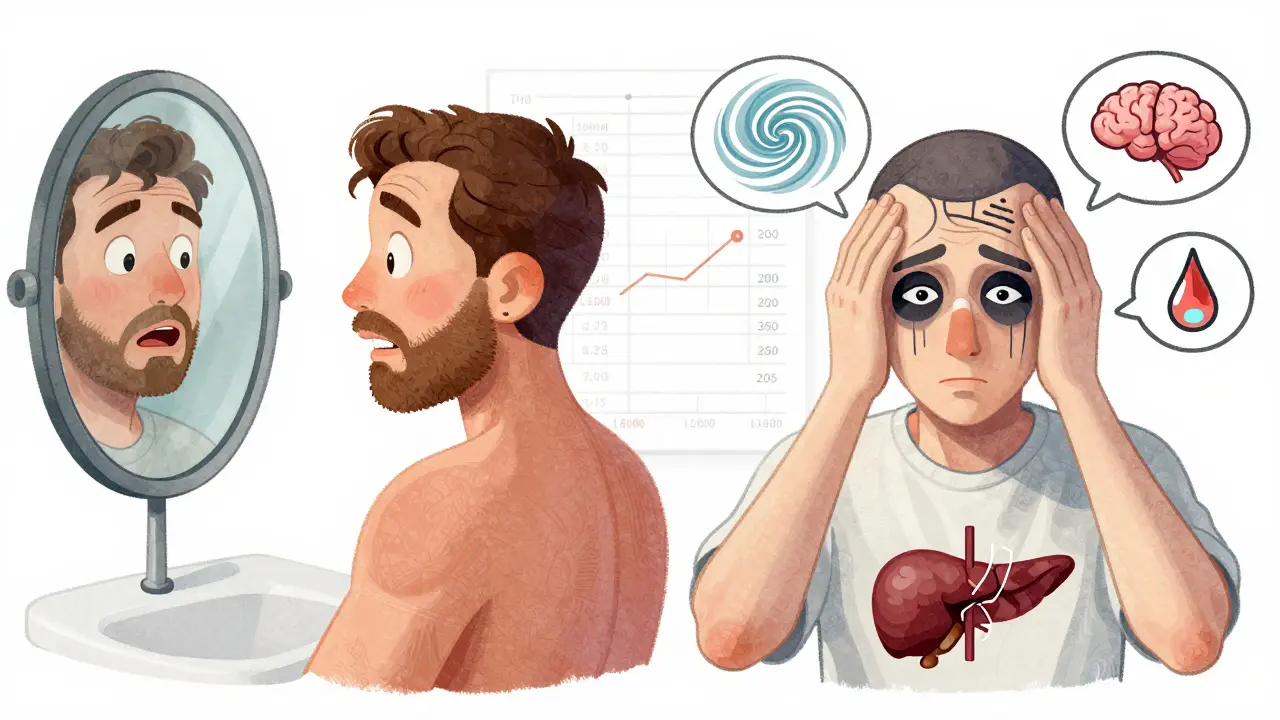
Cyclosporine has unique cosmetic side effects. About 20% to 30% of users grow excessive hair - on the face, arms, back. Up to 25% develop swollen, bleeding gums (gingival hyperplasia). These aren’t life-threatening, but they affect self-esteem. Many patients feel embarrassed or anxious about their appearance.
Tacrolimus, on the other hand, causes more stomach issues. Nausea affects 30% to 45% of users versus 15% to 25% on cyclosporine. Diarrhea is also more common - 25% to 40% versus 10% to 20%. These problems can make it hard to eat, gain weight, or even leave the house.
Real Patient Experiences
Surveys from transplant patient groups paint a clearer picture than clinical data alone. On the American Transplant Foundation’s forum, 68% of 1,245 people said they experienced moderate to severe side effects from tacrolimus. Tremors were the #1 complaint (72%), followed by sleep problems (65%) and managing diabetes (48%).
On Reddit’s r/transplant community, cyclosporine users often posted about hirsutism - 42% mentioned it. Tacrolimus users, by contrast, wrote far more about tremors (67%) and brain fog. One user wrote: “I can’t hold my coffee cup without spilling it. I stopped going to work because I was too embarrassed.”
A 2022 study using the Transplant Effect Questionnaire found that CNI-related side effects lowered quality-of-life scores by 15 to 22 points on a 100-point scale. That’s a massive drop - comparable to living with severe arthritis or chronic heart failure.
And here’s something striking: a 2023 survey by the National Kidney Foundation found that 78% of patients would gladly switch to a different medication - if it worked just as well but caused fewer side effects.

Monitoring and Management
You can’t just take these drugs and hope for the best. Regular blood tests are non-negotiable. In the first month, you’ll likely get blood drawn twice a week. Once stable, monthly checks are standard. Your doctor will watch:
- Renal function (creatinine, eGFR)
- Trough levels of the drug
- Magnesium and potassium levels
- Fasting blood sugar and HbA1c
- Blood pressure
If tremors start, lowering the tacrolimus dose from 8-10 ng/mL to 3-5 ng/mL often helps. In one 2023 case series, 78% of patients saw tremors disappear within four weeks. That’s not a fluke - it’s a proven strategy.
For patients with severe neurotoxicity or diabetes, switching to mTOR inhibitors like sirolimus or everolimus is common. These drugs don’t affect calcineurin, so they avoid these side effects. They’re not perfect - they can cause mouth ulcers and high cholesterol - but for many, they’re a better trade-off.
The Future: Moving Beyond CNIs
Doctors aren’t just accepting these side effects anymore. New options are emerging. In 2021, the FDA approved voclosporin - a newer calcineurin inhibitor with 30% less hypertension than cyclosporine. It’s already being used for lupus nephritis.
Better yet, CNI-free regimens are gaining ground. The 2023 CONVERT trial showed that belatacept - a drug that works completely differently - matched tacrolimus in preventing rejection after three years. But patients on belatacept had better kidney function and far fewer metabolic problems.
At UCSF, researchers are testing early CNI withdrawal in low-risk transplant patients. Early results show 89% graft survival with 40% fewer side effects. The European Medicines Agency now recommends CNI minimization for half of all maintenance patients by 2025.
The goal isn’t just to keep the organ alive anymore. It’s to help people live well - without tremors, without diabetes, without constant worry.
What This Means for You
If you’re on cyclosporine or tacrolimus, your side effects aren’t normal - they’re predictable. And they’re manageable. Talk to your transplant team about:
- Your drug levels - are you on the lowest effective dose?
- Are you being monitored for diabetes and magnesium?
- Could switching drugs help your tremors or high blood sugar?
- Are you a candidate for a CNI-sparing regimen?
You’re not just a transplant recipient. You’re a person. And you deserve to feel like one.
Are cyclosporine and tacrolimus the same thing?
No. Both are calcineurin inhibitors used to prevent organ rejection, but they’re chemically different. Cyclosporine is a cyclic peptide, while tacrolimus is a macrolide. Tacrolimus is more potent, requires lower doses, and has a higher risk of neurotoxicity and diabetes. Cyclosporine is more likely to cause hirsutism and gum swelling. They’re not interchangeable without careful monitoring.
Can you stop taking calcineurin inhibitors?
Some patients can, but only under strict medical supervision. In low-immunological-risk transplant recipients - those with minimal history of rejection - doctors are increasingly using CNI-sparing protocols. This means switching to drugs like belatacept or mTOR inhibitors after the first few months. Stopping without a plan can lead to acute rejection and organ loss. Never adjust or stop these drugs on your own.
Which has fewer side effects: cyclosporine or tacrolimus?
It depends on what side effect you’re worried about. Tacrolimus has higher rates of tremors, diabetes, and gastrointestinal issues. Cyclosporine causes more cosmetic problems like hair growth and swollen gums. Both cause kidney damage, high blood pressure, and low magnesium. Neither is “better” overall - the choice depends on your health history, risk of rejection, and tolerance of specific side effects.
How often should blood levels be checked?
During the first month after transplant or after a dose change, blood levels are checked at least twice a week. Once stable, most patients switch to monthly checks. Trough levels (taken just before the next dose) are the standard measurement. For tacrolimus, aim for 5-10 ng/mL. For cyclosporine, 100-200 ng/mL. Levels outside this range increase rejection or toxicity risk.
Do these drugs cause permanent damage?
Yes, in some cases. Long-term use can cause irreversible kidney scarring (interstitial fibrosis), which contributes to late graft failure. Neurological damage like parkinsonism may improve after stopping the drug, but not always completely. Diabetes caused by tacrolimus often becomes permanent. That’s why doctors now prioritize minimizing exposure rather than maximizing dose.
Are there alternatives to cyclosporine and tacrolimus?
Yes. Belatacept (a costimulation blocker) is now used in CNI-free regimens with similar graft survival and better kidney function. mTOR inhibitors like sirolimus and everolimus are used for patients with severe neurotoxicity or diabetes. Newer CNIs like voclosporin are approved for lupus nephritis with fewer side effects. The choice depends on your immune risk, organ type, and side effect profile.






15 Comments
Marie Fontaine February 9, 2026
I'm on tacrolimus and honestly? Tremors ruined my life. I used to play guitar. Now I can't even hold a spoon. But hey, at least I'm alive, right? 🤷♀️
Brandon Osborne February 10, 2026
This post is so full of medical jargon it's laughable. People need to stop whining about side effects and just be GRATEFUL they're alive. You think your tremors are bad? Try living with a failing organ. You're lucky you even have a chance.
Joseph Charles Colin February 12, 2026
Trough levels matter more than people realize. Tacrolimus at 6 ng/mL vs 9 ng/mL isn't just a number - it's the difference between tolerable tremors and full-on parkinsonian rigidity. Most docs don't titrate aggressively enough. If your neuro symptoms are bad, ask for a level check before assuming it's 'just aging'.
Simon Critchley February 14, 2026
The 2023 CONVERT trial data is *chef's kiss* - belatacept isn't just an alternative, it's the future. Graft survival? Same. Kidney function? Better. Diabetes? Halved. Why are we still clinging to CNIs like they're holy relics? We're in 2024, not 2004.
Karianne Jackson February 15, 2026
I had cyclosporine and my gums swelled so bad I looked like I had a permanent mouth full of gum. I stopped smiling in photos. It was so embarrassing. I didn't tell anyone for months.
Random Guy February 15, 2026
so like... i got a kidney. then i got a tremor. then i got diabetes. then i got a new kidney. now i got a new tremor. what's next? a tattoo that says 'i regret this'?
Tatiana Barbosa February 16, 2026
I work in transplant nursing and let me tell you - the biggest barrier to better outcomes isn't the drugs, it's the lack of patient education. Most people don't know what 'trough level' means, or that magnesium supplements aren't optional. We need more proactive monitoring, not just reactive fixes. And yes, switching to belatacept is life-changing for low-risk patients - it's not a last resort, it's a first-line option waiting to be used.
Andrew Jackson February 16, 2026
The decline in American healthcare standards is evident in how we treat transplant patients. We've replaced discipline with appeasement. Instead of demanding compliance and resilience, we coddle patients with 'quality-of-life' metrics. This isn't medicine - it's therapy disguised as science. You don't get a second chance at life to complain about a little tremor.
Kathryn Lenn February 17, 2026
You ever wonder if the FDA really tested these drugs long-term? Or if they're just pushing them because Big Pharma owns the patents? I read somewhere that the original trials were funded by companies that make the blood tests too. Coincidence? I think not.
Elan Ricarte February 18, 2026
Let’s be real - these drugs are just slow poison with a side of hope. We call it ‘transplant’ but it’s really a lifetime subscription to side effects. And don’t even get me started on how doctors act like you’re lucky to be alive when you’re basically a lab rat with a heartbeat.
Camille Hall February 18, 2026
To anyone on these meds: you’re not alone. I’ve been on tacrolimus for 8 years. The brain fog? Real. The sleepless nights? Real. But I found a support group, started yoga, and learned to celebrate tiny wins - like holding a coffee cup without spilling. It’s not perfect, but it’s mine. And I’m still here.
Tori Thenazi February 20, 2026
Wait... so if I switch from tacrolimus to cyclosporine, I’ll get hairy arms but not diabetes? That’s not a trade-off - that’s a horror movie. What if they just... stopped making these drugs? Would we all just die? Or is there a secret cure they’re hiding?
John Watts February 22, 2026
I’m from Kenya and came to the US for my transplant. The care here is incredible - but the side effects? Unspoken. No one told me about the hirsutism. No one told me about the tremors. I felt so isolated. If you’re new to this, find your community. Reddit, Facebook groups, local meetups - they saved my sanity.
John Sonnenberg February 22, 2026
I’ve been on cyclosporine for 11 years. My gums are a disaster. My blood pressure? Always up. My magnesium? Always low. I’ve had 17 blood draws this month alone. I don’t sleep. I don’t travel. I don’t eat out. I’m not living - I’m existing. And they call this progress?
Angie Datuin February 23, 2026
I just wanted to say thank you for writing this. I’ve been too scared to talk about my tremors. I thought I was the only one. Reading this made me feel less alone.