
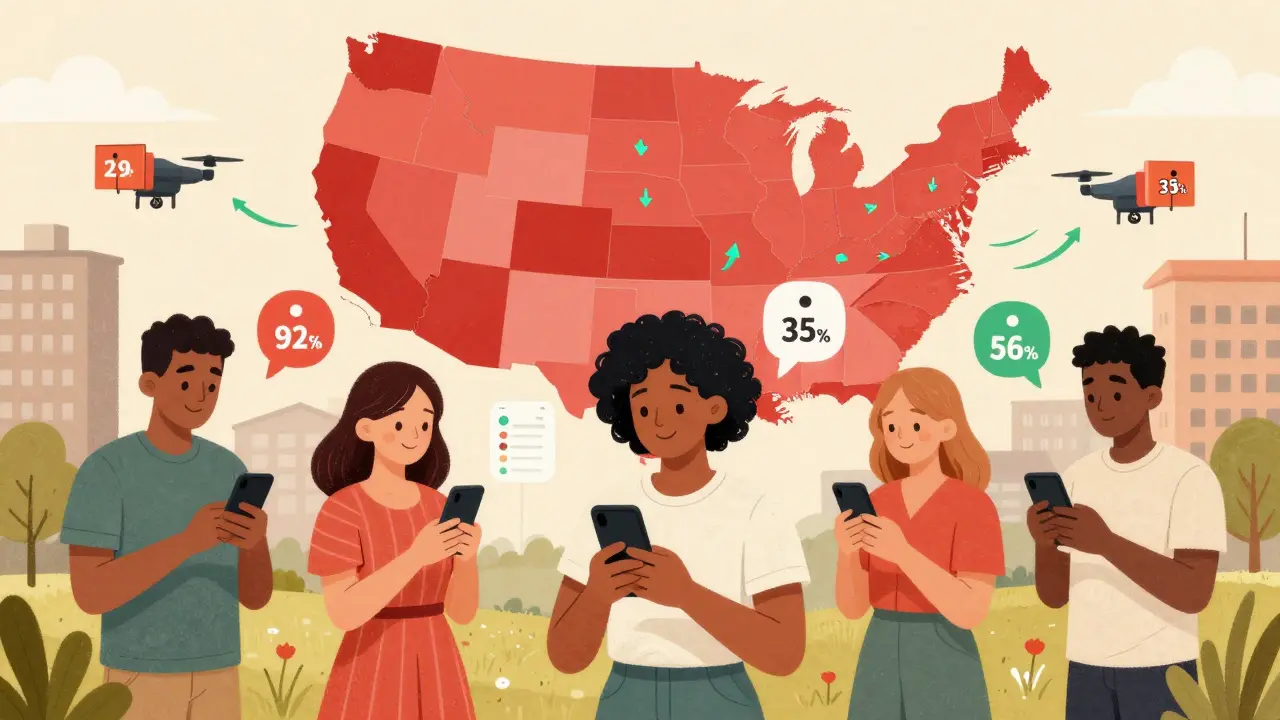
By 2025, getting your generic meds won’t mean driving to the corner pharmacy, waiting in line, and hoping your insurance covers the price. It’ll mean tapping an app, getting a text when your pills are out the door, and knowing exactly how much you saved-all before lunch. The future of digital pharmacy isn’t coming. It’s already here, and it’s reshaping how millions access the cheapest, most common drugs they rely on every day.
How digital pharmacy is fixing the broken system
For years, generic medications have been the backbone of affordable healthcare in the U.S., making up 90% of all prescriptions filled. But the system to deliver them? Broken. Long waits, confusing pricing, pharmacy deserts in rural towns, and inconsistent counseling left patients stranded. Digital pharmacy fixes this by stitching together telehealth, AI, and same-day logistics into one seamless flow. Take CVS Health’s digital platform. It cuts prescription processing from 48 hours to just 5.2 hours. That’s not magic-it’s automation. AI predicts demand based on local flu outbreaks, seasonal allergies, or even weather patterns. If a heatwave hits Texas, the system knows people will need more antihistamines and electrolyte tablets. Inventory shifts automatically to fulfillment centers nearby. No more running out of metformin in Ohio because it’s sitting in a warehouse in Arizona. And the savings? Real. According to GoodRx’s 2024 report, digital platforms save patients an average of 22.7% on generic drugs compared to retail pharmacies. For someone on a monthly blood pressure med, that’s $80+ saved every month. Add in the $17.30 per prescription saved on gas and time for rural patients, and the math is undeniable.What’s driving the change? AI and automation
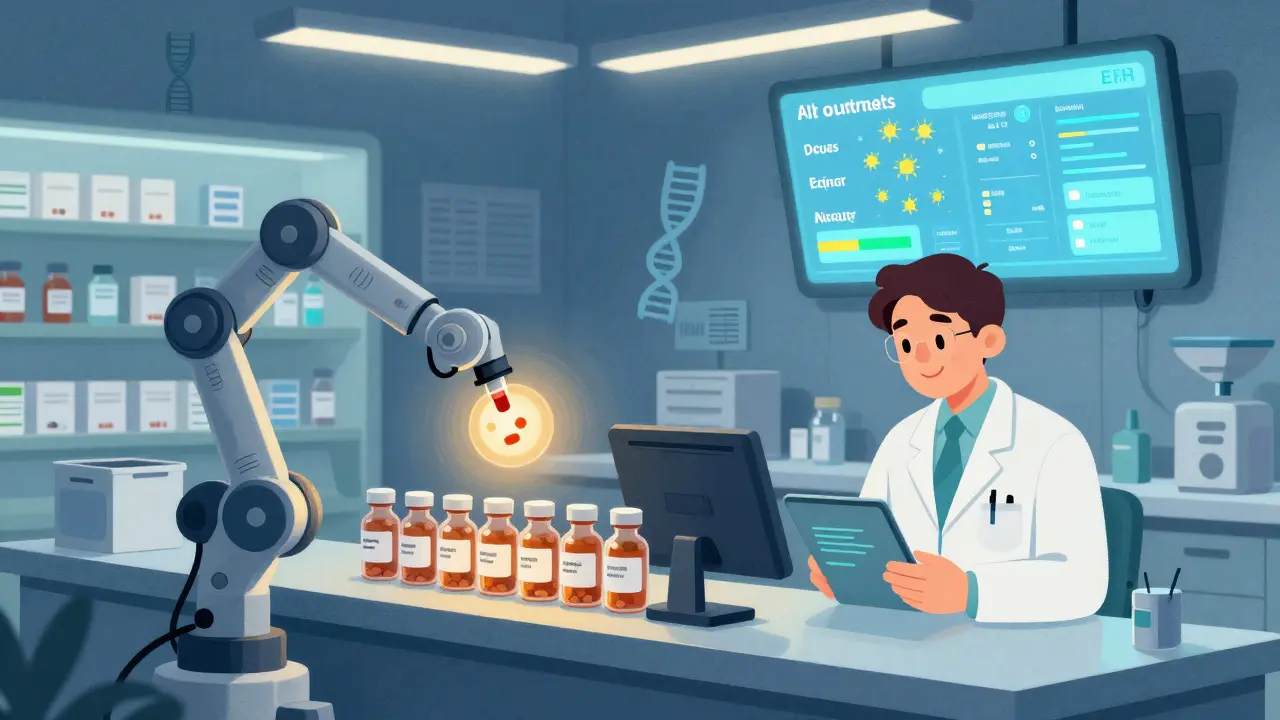
At the heart of this shift is artificial intelligence-not the sci-fi kind, but the quiet, behind-the-scenes kind that does the heavy lifting. AI algorithms now predict medication demand with 89.7% accuracy. They don’t just guess. They analyze historical data, insurance claims, local ER visits, even social media trends about side effects. Platforms like Truepill process over 10,000 prescriptions daily. Each one goes through a digital triage: insurance verification, drug interaction check, therapeutic equivalence review-all in under 90 seconds. That’s faster than most pharmacies can print a label. The biggest win? Prior authorization. Used to take 3-5 days. Now, AI handles 52.3% of these reviews for generic meds by 2025, cutting approval time from 72 hours to under 4. That means patients don’t wait days to start their meds. For someone with diabetes, that’s the difference between stable blood sugar and a hospital visit.Who’s winning in the market?
The digital pharmacy space isn’t one player-it’s three distinct models fighting for your prescription.- Integrated retailers: CVS Health (28.4% market share), Walgreens, and Walmart are using their physical stores as fulfillment hubs. You order online, pick up in-store, or get same-day delivery from the store down the street.
- Pure digital players: Ro, Honeybee Health, and Blink Health operate without physical locations. They’re lean, fast, and laser-focused on price transparency. Blink Health, for example, shows you the exact cash price before you click “buy.” No surprises.
- Amazon Pharmacy: At 19.7% share, Amazon leverages its logistics empire. Prime members get free two-day shipping on generics. It’s not just cheaper-it’s predictable.
Where it still falls short
Digital pharmacy isn’t perfect. And if you think it’s ready for everyone, you’re missing the cracks. First, complexity. 94.2% of single-generic prescriptions go through flawlessly. But when you’re on five meds? Error rates jump to 8.7%. A 2023 JAMA study found digital platforms struggle with multi-drug regimens. One patient got levothyroxine with the wrong filler ingredient because the AI swapped it without checking thyroid antibody levels. Twenty-one-seven people were affected. The FDA issued a safety alert. Second, the elderly. 24% of seniors 65+ say they can’t use digital pharmacy apps. Buttons are too small. Text is too faint. The voice assistant doesn’t understand their accent. AARP’s 2023 survey found only 22.7% of seniors use these services-compared to 68.4% of people under 44. Third, insurance chaos. 41.3% of negative reviews on Trustpilot cite “insurance coordination issues.” You pick your drug, click buy, and the system says “coverage denied.” Why? Because the pharmacy’s system didn’t sync with your insurer’s formulary. It happens. And when it does, you’re stuck waiting for a human to fix it.What’s next? Personalization and pharmacogenomics
The next leap isn’t speed. It’s precision. By 2026, 74% of digital pharmacy platforms will use pharmacogenomic data-your DNA-to pick the right generic. Not all metformin is the same. Not all sertraline works the same. Your body metabolizes drugs differently based on your genes. AI will soon match your genetic profile to the generic version most likely to work for you, not just the cheapest one. Imagine this: You get a home DNA kit from your doctor. A week later, your digital pharmacy app suggests a specific brand of lisinopril because your CYP2C9 gene variant makes you a slow metabolizer. The generic still costs $5. But now, it’s the one that won’t make you dizzy. This isn’t sci-fi. The University of Florida is training all new pharmacists in AI-driven therapeutic substitution by fall 2024. They’re learning how to teach algorithms to recognize when a “therapeutically equivalent” generic isn’t right for a specific patient.The human factor: Why pharmacists still matter
Some fear AI will replace pharmacists. It won’t. It’ll change their role. Instead of counting pills, pharmacists are becoming care coordinators. They’re reviewing AI flags, calling patients who missed refills, explaining why a substitute was chosen, and answering questions about side effects-all through video chats or secure messaging. But here’s the catch: 37.8% of users say they miss personalized counseling. One Reddit user wrote: “Saved $83/month, but when they auto-substituted a generic my insurance didn’t cover, I had no one to call.” The best digital pharmacies now offer live pharmacist chat during checkout. CVS Health’s first-contact resolution rate is 92%. Smaller startups? Only 67%. That gap is widening. Patients don’t just want cheap pills. They want someone who understands their life.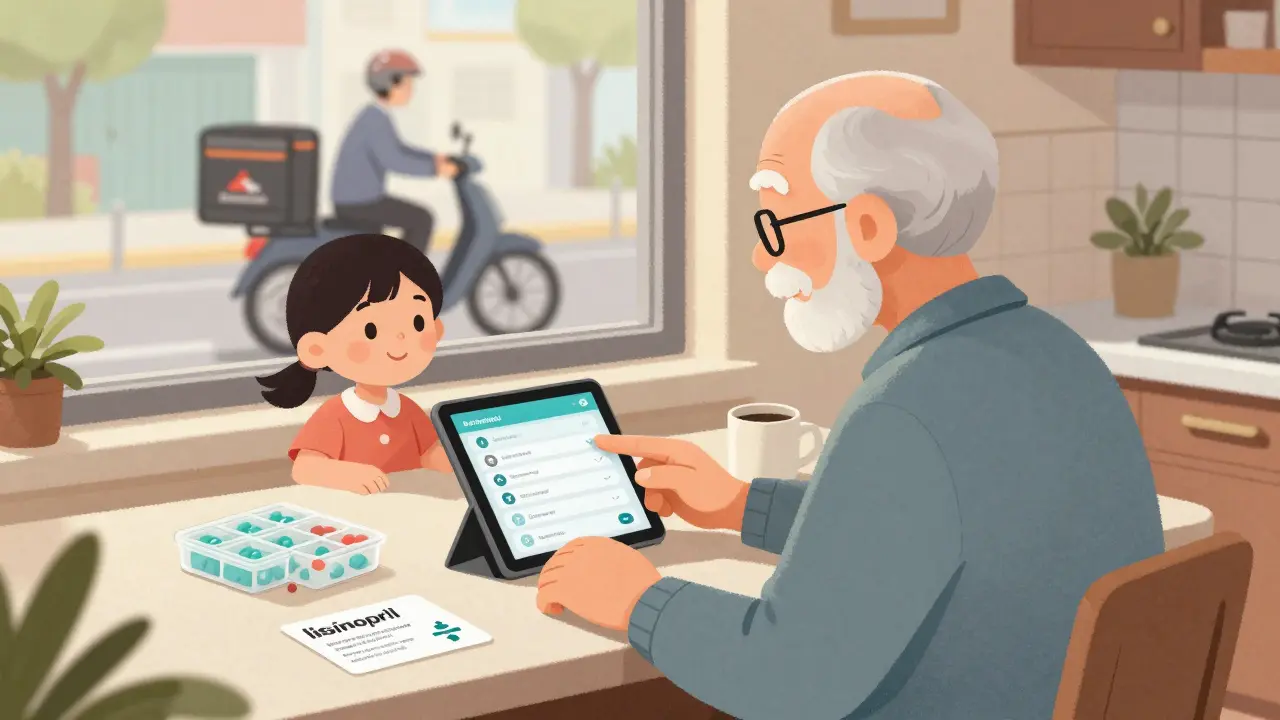
Regulation is catching up
The law is scrambling to keep pace. Right now, 28 states require the pharmacist filling your prescription to be licensed in your state. That’s a nightmare for national platforms. One platform got fined $2 million in 2023 for filling a prescription in California for a patient in Texas-because the pharmacist wasn’t licensed there. The FDA’s 2023 Digital Health Innovation Plan is starting to standardize things. New rules require AI systems to log every substitution decision, explain why it was made, and flag potential risks. States like California and New York are passing laws that force digital pharmacies to disclose if a generic substitution was made without patient consent. And cybersecurity? A ticking time bomb. In 2023, 378 pharmacy data breaches exposed 14.2 million patients. Digital platforms made up 63% of those. HIPAA compliance isn’t optional anymore. AES-256 encryption, multi-factor authentication, and regular audits are now baseline requirements.Who benefits the most?
The winners? Three groups.- Chronic disease patients: Diabetics, hypertensives, and asthma sufferers. One CVS Health patient lowered their A1C by 1.8 points in six months just by getting consistent refills on time. No missed appointments. No pharmacy closed on Sundays.
- Rural communities: 36.7 million Americans live in pharmacy deserts. For them, digital delivery isn’t a luxury-it’s a lifeline. Delivery times are slower (38 hours vs. 12 in cities), but it’s still better than driving 70 miles.
- Insurers and employers: Reduced ER visits, better adherence, lower costs. A 28% increase in adherence for chronic meds means fewer complications. That’s billions saved.
What you should do now
If you’re taking generics, here’s how to get ahead:- Check if your insurer partners with a digital pharmacy. Many offer discounts or free shipping.
- Use GoodRx or Blink Health to compare prices before you buy. Cash prices are often lower than insurance copays.
- Ask for pharmacist chat during checkout. Don’t skip it.
- Set refill reminders. Most apps let you auto-renew, but make sure the substitution settings are on “no” unless you trust the AI.
- If you’re over 65, ask a family member to help set up the app. Or call the pharmacy. Many still offer phone-based ordering.
Are digital pharmacies safe for generic medications?
Yes, when they follow FDA and state regulations. Leading platforms use AI to check for drug interactions, verify therapeutic equivalence, and flag potential risks. But errors happen-especially with complex regimens. Always review substitution notices and ask your pharmacist if you’re unsure. The FDA has issued safety alerts for auto-substitution errors in the past, so stay informed.
Can I use digital pharmacy if I’m over 65?
You can, but it may take some help. About 24% of seniors report difficulty using apps due to small text, confusing menus, or lack of voice support. Many digital pharmacies offer phone ordering or family account access. Ask if they have a “caregiver mode” or if you can set up automatic refills with a phone call option. Don’t assume it’s too hard-just ask for support.
Why does my digital pharmacy switch my generic brand?
It’s usually about cost. Generic drugs have the same active ingredient but different fillers or coatings. Pharmacies and insurers pick the cheapest version that’s “therapeutically equivalent.” But equivalence doesn’t mean identical for every body. Some people react differently to fillers. Always check the label and ask your pharmacist if the new version could affect you-especially for drugs like thyroid meds or blood thinners.
Do digital pharmacies accept Medicare Part D?
Most do, but reimbursement rules are changing. CMS cut mail-order reimbursement rates by 8.2% in 2024, so some platforms now require higher copays or push cash prices instead. Always confirm coverage before ordering. Some platforms like CVS and Walgreens have better Medicare integration than pure digital startups.
How do I know if a digital pharmacy is legitimate?
Look for VIPPS (Verified Internet Pharmacy Practice Sites) certification. Check if they require a valid prescription from a U.S. licensed provider. Avoid sites that sell without a prescription or ship from overseas. Legit platforms will show their physical address, pharmacy license number, and have a live pharmacist you can contact. If it feels too good to be true, it probably is.
Will AI replace pharmacists in the future?
No-it will change their role. AI handles routine checks, refills, and prior auth. Pharmacists now focus on complex cases, patient education, and counseling. The best digital pharmacies hire pharmacists to be available for video chats or messaging. Their value isn’t counting pills-it’s understanding your life, your side effects, and your fears.


8 Comments
Lindsey Kidd December 22, 2025
OMG YES 😭 I’ve been using Blink Health for my metformin and it’s a GAME CHANGER. Saved me $90 this month alone. No more driving 20 mins in the rain just to get a 30-day supply. Also, the app lets me pick which generic I get-no more surprise fillers that make me feel weird. 🙌
Austin LeBlanc December 23, 2025
Let me guess-you’re one of those people who thinks tech fixes everything. You’re saving $80 a month but your grandma’s still calling the pharmacy at 7 a.m. because the app froze. AI doesn’t know when your cousin just died and you’re too sad to refill. This isn’t progress-it’s abandonment wrapped in a Shopify theme.
niharika hardikar December 25, 2025
While the operational efficiencies of digital pharmacy platforms are undeniably compelling from a supply-chain optimization perspective, the epistemological implications of algorithmic therapeutic substitution remain profoundly concerning. The conflation of bioequivalence with clinical equivalence constitutes a categorical error in pharmacovigilance. Furthermore, the absence of state-licensed pharmacists in the fulfillment pipeline constitutes a regulatory arbitrage that undermines the foundational tenets of pharmaceutical ethics.
Rachel Cericola December 26, 2025
Look, I get it-digital pharmacies are convenient. But let’s not pretend they’re flawless. I’m a pharmacist, and I’ve seen the fallout. A patient on warfarin got switched to a generic with a different filler that altered absorption. INR spiked. She ended up in the ER. The AI didn’t flag it because it only checked the active ingredient. That’s not ‘efficiency’-that’s negligence. And yes, I’ve talked to 37-year-old patients who don’t know how to use an app but are being pushed into these systems because ‘it’s cheaper.’ We need guardrails, not just faster delivery. Pharmacists aren’t obsolete-we’re the last line of defense against automation gone wrong. If you’re on multiple meds, ask for a pharmacist consult. Don’t trust the algorithm. Ask for the human. And if they don’t offer it? Switch platforms. Your life isn’t a cost center.
Blow Job December 27, 2025
My dad’s 72 and he uses CVS’s phone-order system. No app. Just calls, talks to a real person, gets his pills delivered. They even call him back to check if he’s feeling okay. That’s care. Not some robot pushing the cheapest pill. If tech can’t do that, it’s not helping-it’s just cutting corners.
Christine Détraz December 29, 2025
I think the real win here isn’t the speed or the savings-it’s that people who used to skip doses because it was too hard to get their meds are now staying on track. My neighbor with diabetes told me she hasn’t missed a refill since she started using Honeybee. That’s the quiet victory. We can fix the glitches-wrong fillers, elderly usability, insurance syncs-but we can’t undo the lives saved by consistent access. Let’s keep improving, not just complaining.
John Pearce CP December 29, 2025
It is an affront to national sovereignty and public health integrity that foreign logistics conglomerates-operating under opaque regulatory frameworks-are now dispensing life-sustaining medications to American citizens without adequate oversight. The erosion of state licensing requirements, the outsourcing of pharmaceutical accountability to algorithmic entities, and the commodification of human health through corporate supply chains represent a systemic failure of governance. This is not innovation. It is privatization of the commons under the guise of convenience.
EMMANUEL EMEKAOGBOR December 30, 2025
While the technological advancements described are indeed impressive, I must respectfully note that in many developing regions, even basic digital infrastructure remains inaccessible. The assumption that all patients can engage with app-based systems overlooks the digital divide that persists globally. Perhaps the true innovation lies not in replacing the pharmacy, but in adapting the model to serve both the tech-savvy and the technologically marginalized-through hybrid systems, community outreach, and low-bandwidth solutions. Care should never be a privilege of connectivity.