

Every year, thousands of people end up in the emergency room because of something they didn’t even think was a big deal: a vitamin, a herbal pill, or an OTC painkiller they took without telling their doctor. It’s not that they’re hiding anything. Most just assume their provider already knows - or that it doesn’t matter. But here’s the truth: over-the-counter medications and dietary supplements can interact with your prescriptions in ways that are dangerous, even deadly. And if you don’t tell your provider exactly what you’re taking, they can’t protect you.
Why This Matters More Than You Think
In 2022, the FDA recorded over 1,000 serious adverse events linked to dietary supplements. Fifty-two of those were fatal. Many of these cases involved people who were already on prescription drugs - like blood thinners, heart medications, or antidepressants - and didn’t realize their fish oil, St. John’s Wort, or green tea extract was making those drugs behave unpredictably. The problem isn’t just supplements. OTC medicines like ibuprofen, antihistamines, or acid reducers can also cause problems. A 2021 study in JAMA Internal Medicine found that nearly one in four hospital patients had a potential interaction between their prescription and something they took without a prescription. Over 7% of those were severe enough to require emergency treatment. And here’s the kicker: only 36% of people who take supplements tell their doctor. Meanwhile, 89% report their prescription drugs. Why? Because most providers don’t ask. A 2022 study showed that over half of patients who didn’t disclose supplement use said their doctor never brought it up.What Counts as a Supplement (and What Doesn’t)
Not everything you take from the shelf is the same. The FDA draws a clear line between two types of products:- OTC medicines - like Tylenol, Advil, or allergy pills - have a Drug Facts label. These are regulated like drugs. They must prove safety and effectiveness before sale.
- Dietary supplements - like multivitamins, omega-3s, turmeric, or ashwagandha - have a Supplement Facts label. These don’t need FDA approval before hitting the shelf. Manufacturers only need to prove they’re safe after someone gets hurt.
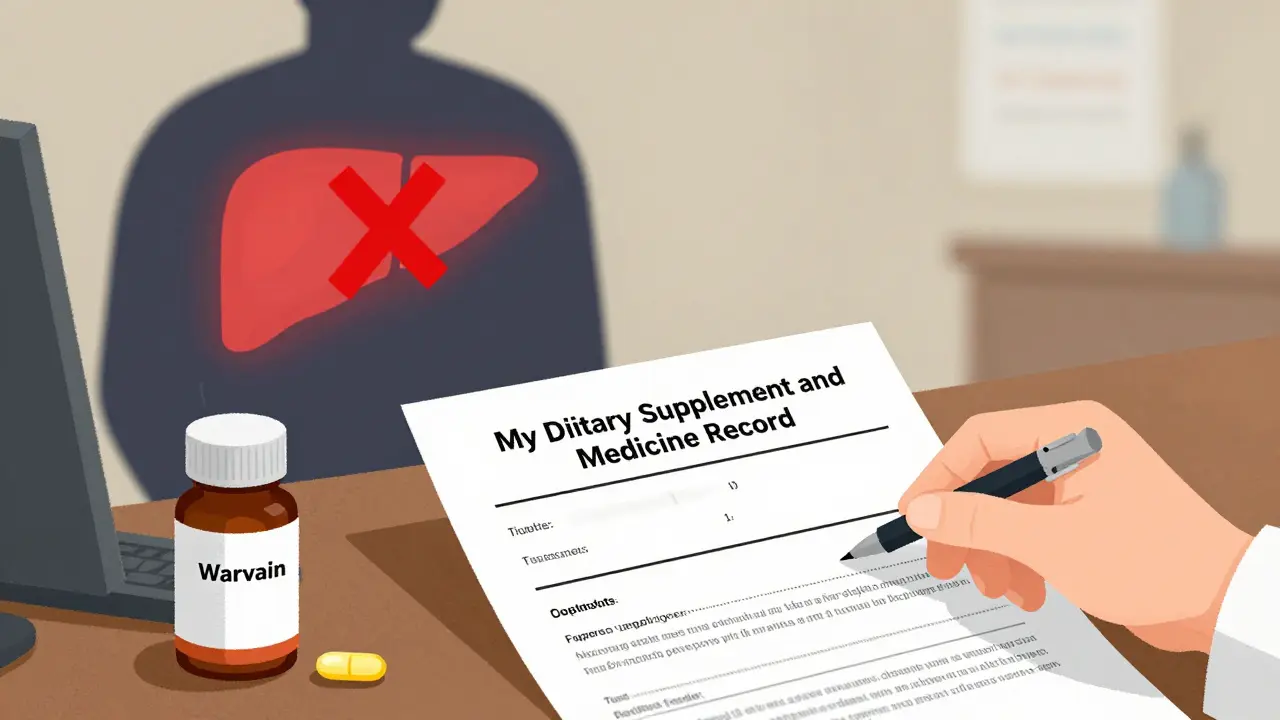
The Exact Details Your Provider Needs
Don’t say “I take a multivitamin.” That’s not enough. Don’t say “I take fish oil.” That’s still too vague. Your provider needs to know:- The exact product name - not just “vitamin D.” Say “Nature Made Vitamin D3 5000 IU Softgels.”
- The dosage - not “once a day.” Say “1,000 mg of omega-3 twice daily.”
- The frequency - “every morning,” “only when I have a headache,” “three times a week.”
- Why you take it - “for joint pain,” “my doctor said to,” “I read it helps sleep.”
Why Written Lists Beat Talking
Verbal lists are unreliable. You forget. You downplay. You think it’s “not a big deal.” A 2020 study across 12 clinics found that patients who used a written list had 64% fewer documentation errors than those who just talked. Here’s how to make it work:- Keep a running list on your phone or in a notebook.
- Update it every time you start, stop, or change a product.
- Bring it to every appointment - even if it’s just a checkup.
- Ask your provider: “Can you check this against my other meds?”
Who Should Ask - And How Often
You might think your doctor should be the one asking. But studies show pharmacists are better at catching supplement interactions. A 2021 study found pharmacists identified 3.2 times more potential risks than physicians during medication reviews. That’s why it’s smart to talk to your pharmacist too. When you pick up a prescription, ask: “Could this interact with anything I’m taking?” Bring your list. They’re trained to spot these things. And don’t wait for your annual visit. If you start a new supplement, tell your provider right away. If you feel odd - dizziness, nausea, bruising easily - it might be your supplement. Don’t wait. Call.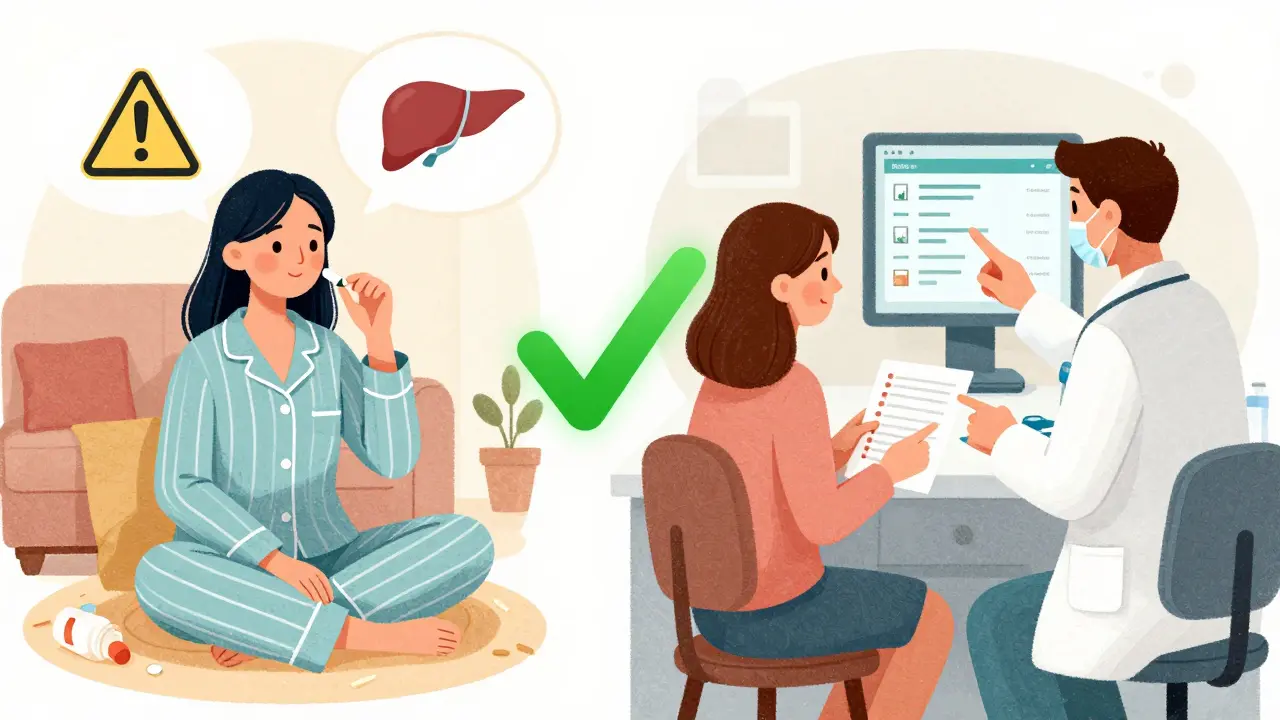
Real Stories - What Happens When You Don’t Tell
In 2019, a 45-year-old woman in Ohio died from liver failure. She’d been taking kava for anxiety and was on an antipsychotic. Her doctors never knew about the kava. The autopsy was the first time anyone found out. On the flip side, a 68-year-old woman in Texas was on warfarin for a blood clot. She was taking 1,000 mg of fish oil daily - thinking it was “heart healthy.” She didn’t mention it. One day, she started bleeding internally. Her doctor only found out because she brought her list. The dose was adjusted. She avoided a life-threatening bleed. These aren’t rare. They’re predictable. And they’re preventable.What You Can Do Today
Here’s your action plan:- Make your list - write down every pill, capsule, powder, or drop you take. Include OTC meds, vitamins, herbs, and even teas.
- Check labels - look for “Supplement Facts” vs. “Drug Facts.” Know what’s in each one.
- Bring it every time - doctor visits, ER trips, pharmacy pickups.
- Ask the question - “Do you want to know what else I’m taking?”
- Update it - every time you change something.
What’s Changing - And What’s Coming
The FDA is pushing for better tracking. By 2024, supplement makers may have to report adverse events within 15 days (down from 30). In 2025, all major electronic health record systems are expected to have standardized supplement fields - meaning your list could auto-populate into your chart. But until then, the system is still broken. Technology won’t fix this alone. People will. And that starts with you.Do I really need to tell my doctor about my daily multivitamin?
Yes. Even a simple multivitamin can interact with prescription drugs. For example, vitamin K can reduce the effectiveness of blood thinners like warfarin. High doses of vitamin E or C can affect kidney function or interfere with chemotherapy. Always disclose everything - even if it seems harmless.
Can herbal supplements really cause liver damage?
Absolutely. Kava, comfrey, green tea extract, and even some weight-loss supplements have been linked to severe liver injury. The American Liver Foundation reports that 60% of supplement-related liver cases involve people who didn’t tell their doctor. Natural doesn’t mean safe - especially when mixed with other medications.
Why do pharmacists catch more interactions than doctors?
Pharmacists are trained to review every medication you take - including OTC and supplements - during every refill. They use databases that flag over 14,000 known interactions. Doctors often have only minutes per patient and may not have access to the same tools. That’s why bringing your list to the pharmacy is just as important as bringing it to your doctor.
What if my provider says supplements are useless or a waste of money?
That’s their opinion. Your job is to share the facts - what you’re taking and why. Even if they don’t support it, they still need to know to avoid dangerous interactions. You can say: “I understand your view, but I’m taking this for X reason. Can you check if it’s safe with my other meds?”
Are there apps or tools to help track supplements?
Yes. The NIH offers a free printable form called “My Dietary Supplement and Medicine Record.” Many pharmacies also have digital medication trackers. Apps like MyTherapy or Medisafe let you log supplements and set reminders. The key is consistency - not the tool. Use whatever works for you.
I only take supplements occasionally. Do I still need to mention them?
Yes. Even occasional use can be risky. For example, taking a single high-dose vitamin A supplement before surgery can increase bleeding risk. Or using turmeric before a dental procedure can interfere with clotting. Frequency doesn’t eliminate risk - context does. Always disclose.





9 Comments
Jonathan Ruth February 15, 2026
Let me get this straight - we’re now treating supplements like they’re nuclear codes? I take a multivitamin and fish oil because my grandma lived to 98 and swore by them. You want me to write a thesis every time I walk into a doctor’s office? Nah. I’ll keep my list on a napkin. If your doc can’t handle ‘vitamin D’ and ‘omega-3,’ they ain’t cut out for 2024.
Philip Blankenship February 17, 2026
Man, I love this post. I used to think my turmeric and magnesium were just ‘good vibes’ - until I got a weird rash after starting a new blood pressure med. My pharmacist caught it before my doctor even did. Now I keep a little notebook in my wallet. I update it every time I buy something new - even if it’s just a zinc gummy from the gas station. It’s not about trust, it’s about being smart. And yeah, I bring it to the pharmacy too. They’re the real MVPs.
Sam Pearlman February 19, 2026
Okay but why are we pretending this is a new problem? My cousin took St. John’s Wort with Zoloft and ended up in ICU. No one asked. No one cared. Now we got a 12-page PDF and a ‘form’? This is just corporate wellness theater. The real issue? Doctors don’t wanna know. They’re too busy billing. Pharmacies? They’re just trying to sell you more supplements. This whole thing is a distraction. Stop making people feel guilty. Just fix the system.
Steph Carr February 21, 2026
Y’all are acting like this is a medical emergency and not a cultural one. We live in a world where ‘natural’ is a marketing term and ‘I read it on Instagram’ is a medical history. I love that the NIH made a form - but let’s be real, it’s not the form that’s broken. It’s the idea that health is a checklist. I take ashwagandha because I’m stressed. My doctor doesn’t need to know the brand. She needs to know I’m not sleeping. Maybe we should be talking about burnout instead of vitamin labels?
Geoff Forbes February 21, 2026
Oh, so now we’re treating OTC meds like prescription drugs? This is why America is collapsing. You can’t regulate common sense. I take ibuprofen for headaches. I take vitamin C because I’m a grown adult who doesn’t want to die of scurvy. Do I need a spreadsheet? A barcode scanner? A signed affidavit? Jesus. Next they’ll ask for my blood type before I buy a bandaid.
Oliver Calvert February 22, 2026
As a pharmacist in the UK I see this daily. People think ‘herbal’ = ‘harmless’ and then get shocked when their warfarin stops working. The key is consistency. I don’t care if you use a notebook, app, or sticky note. Just be consistent. And yes, bring it to the pharmacy. We’re trained for this. We’ve got databases that flag 14k+ interactions. Your GP? They’ve got 8 mins per patient. Don’t wait for them to ask. Ask us.
Kancharla Pavan February 23, 2026
This is why the West is dying. People think they know better than doctors. You take supplements because you believe in ‘energy’ and ‘vibrations’? You don’t know what’s in those pills. The FDA doesn’t regulate them. You’re gambling with your liver. Your kidneys. Your life. No one is forcing you to tell your doctor. But if you die because you were too lazy to write down ‘Nature Made Vitamin D3 5000 IU,’ don’t blame anyone but yourself. You are responsible for your own ignorance.
PRITAM BIJAPUR February 25, 2026
❤️ This post changed my life. I used to think my ‘daily multivitamin’ was harmless. Then I found out it had vitamin K - which messed with my blood thinner. I cried. I felt stupid. But now? I have a little note on my fridge. Every morning I check it. I update it. I bring it. And guess what? My doctor smiled and said, ‘Finally, someone who gets it.’ You’re not overcomplicating health. You’re owning it. 🙌 Keep going. You’re doing amazing.
Dennis Santarinala February 25, 2026
Just one sentence: I brought my list to my ER visit last month - they had it in the system before I even sat down. I felt seen. I felt safe. Thank you for this.