
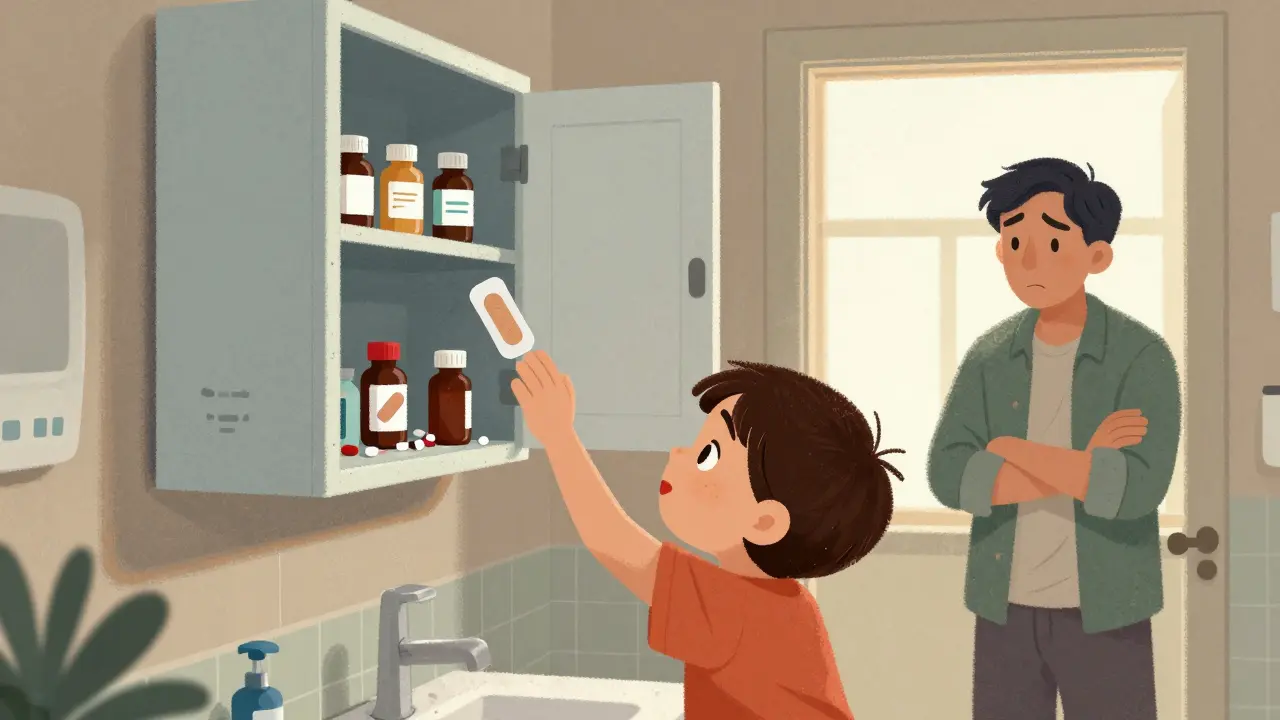
Every year, thousands of overdoses happen not because someone took too much, but because the wrong person found the medicine. A child. A teenager. A guest in the house. A relative who didn’t know what they were taking. This isn’t rare. It’s common. And it’s preventable.
Why Storage Matters More Than You Think
Most people think if they’re taking a prescription safely, they’re doing their part. But that’s only half the story. The real danger isn’t in taking the pill-it’s in leaving it where someone else can reach it. The CDC says 53% of people who misuse opioids get them from friends or family members’ medicine cabinets. That’s not street dealers. That’s your uncle’s painkillers sitting on the nightstand. Or your teenager finding Grandma’s fentanyl patches in the bathroom cabinet.
Children aren’t the only risk. Teens are curious. Visitors might be struggling. Even well-meaning adults can accidentally take the wrong pill when they’re in a hurry. In 2020, over 16,000 overdose deaths in the U.S. came from prescription opioids alone. Almost all of them could have been avoided with simple, secure storage.
What Counts as a High-Risk Medication?
Not all pills need the same level of security. But these are the ones that do:
- Opioids - oxycodone, hydrocodone, morphine, fentanyl patches
- Benzodiazepines - alprazolam, diazepam, clonazepam
- Barbiturates - phenobarbital
- Stimulants - Adderall, Ritalin (especially if prescribed for ADHD)
These drugs are powerful. Even one extra pill can be deadly. Fentanyl patches, for example, can kill a child if they lick or chew one. And if someone takes more than prescribed, even if they’re used to opioids, their body can shut down.
The Gold Standard: Locked, Original, and Out of Reach
The CDC, FDA, and DEA all agree on three non-negotiable rules:
- Keep them in the original container - The label has the name, dosage, and warnings. If you transfer pills to a pill organizer or a random bottle, you lose that safety net. Studies show 40% fewer accidental ingestions when pills stay in their original packaging.
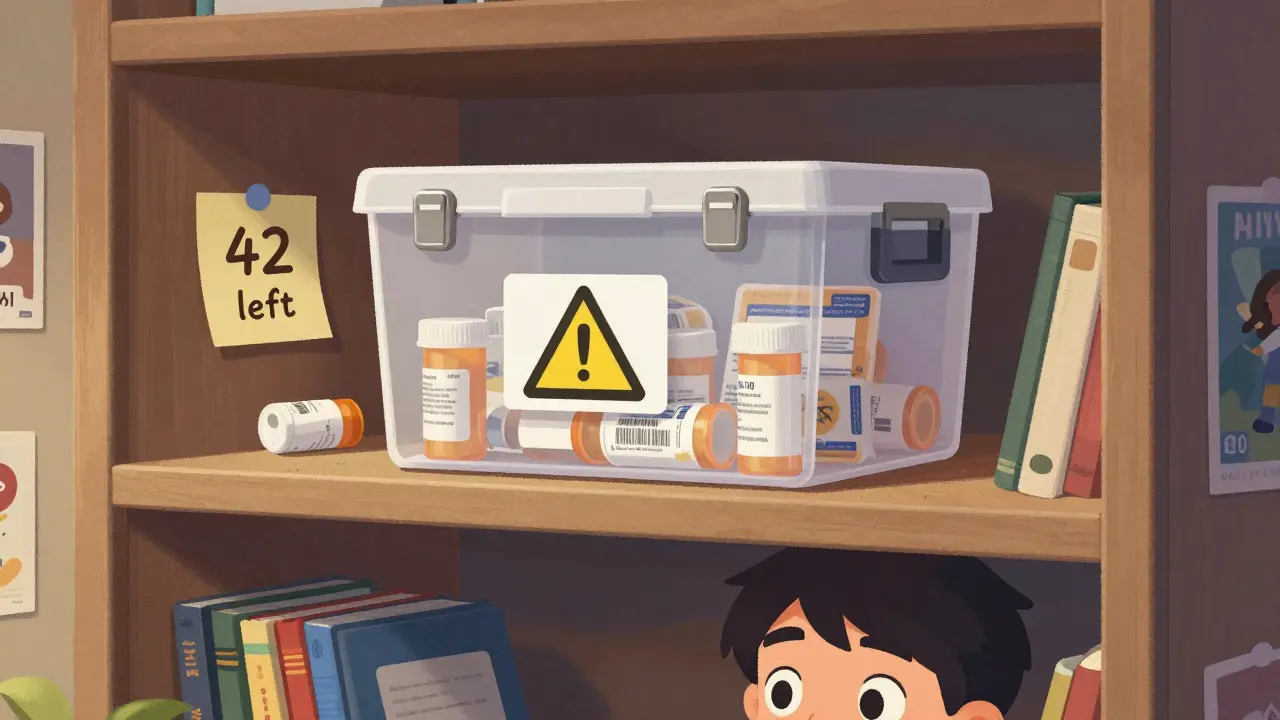
- Lock them up - A locked cabinet, box, or safe. Not just a closed drawer. Not just a high shelf. A lock that requires a key, combination, or biometric scan. Locked storage reduces accidental access by 87%, according to the Journal of the American Medical Association Pediatrics.
- Store them high and away - Kids can climb. They can pull drawers out. They can stand on chairs. Store medications at least 4 feet off the ground. That’s above the reach of most children under 6. Avoid nightstands, kitchen counters, and bathroom vanities.
Simple, right? But here’s the hard truth: only 23% of U.S. households with children actually use locked storage. Most people think, “I’ll just keep them on the top shelf.” That’s not enough.
What Kind of Lockbox Should You Use?
You don’t need a safe. You don’t need to spend hundreds. But you do need something that works.
- Basic lockbox ($15-$30) - A plastic or metal box with a key or combination lock. Look for one rated to ANSI Grade 2 standards - meaning it can resist forced entry for at least 10 minutes. Brands like Med-ic Safe and SafeGuard are widely available at pharmacies and online.
- Biometric lockbox ($80-$150) - Uses a fingerprint to open. Great if you have arthritis or trouble with keys. Some models also log who opened it and when.
- Smart dispensers (Hero Health, MedMinder) - These automatically dispense pills at the right time, track usage, and send alerts if someone tries to open it early. But they’re expensive ($99-$149), and only 3% of users have them. They’re useful for complex regimens, not just storage.
Don’t buy a lockbox that’s too hard to open. If you can’t get into it quickly when you need your pill, you won’t use it. Look for models with emergency access codes or easy-release mechanisms.
What About Child-Resistant Caps?
Yes, they’re required by law. But they’re not foolproof. Kids as young as 3 can open them with enough time and persistence. The Poison Prevention Packaging Act of 1970 was a start - but it’s not enough.
Here’s what you need to do:
- Always twist and push down to close the cap. Don’t just snap it shut.
- Never leave the cap off while you’re counting pills.
- If you have trouble opening them due to arthritis or mobility issues, ask your pharmacist for an easy-open version. Many pharmacies offer them - just ask.
One woman in Sydney told me she stopped using her pain meds because she couldn’t open the caps. So she kept them in a drawer. That’s not safe. There are alternatives. Talk to your pharmacist. Don’t sacrifice safety for convenience.
What If You Can’t Afford a Lockbox?
Cost is a real barrier. A 2021 study found 41% of low-income households can’t afford even a $15 lockbox. But there are options.
- Ask your pharmacy - Some, like CVS and Walgreens, give away free lockboxes to patients on high-risk medications. Ask when you pick up your prescription.
- Check with local health departments - In Australia, many community health centers offer free or discounted storage solutions through overdose prevention programs.
- Use a locked suitcase or tool box - If you have one, use it. Just make sure it’s not in a place a child can access. A locked toolbox on a high shelf is better than a pill bottle on the nightstand.
Don’t let cost stop you. The price of a lockbox is nothing compared to the cost of an ER visit - or worse.
Track What You Have
One of the most overlooked steps? Keeping track of how many pills are left.
Write it down. Every day. Just a quick note: “42 tablets left at 8:00 AM.” You don’t need an app. A sticky note on the fridge works. But if you notice pills missing - even one - that’s a red flag. Someone might be taking them.
Some people use digital trackers like the Hero Health app. But paper is fine. The point isn’t tech - it’s awareness.
What About Disposal?
Don’t flush pills. Don’t throw them in the trash. Don’t save them “just in case.”
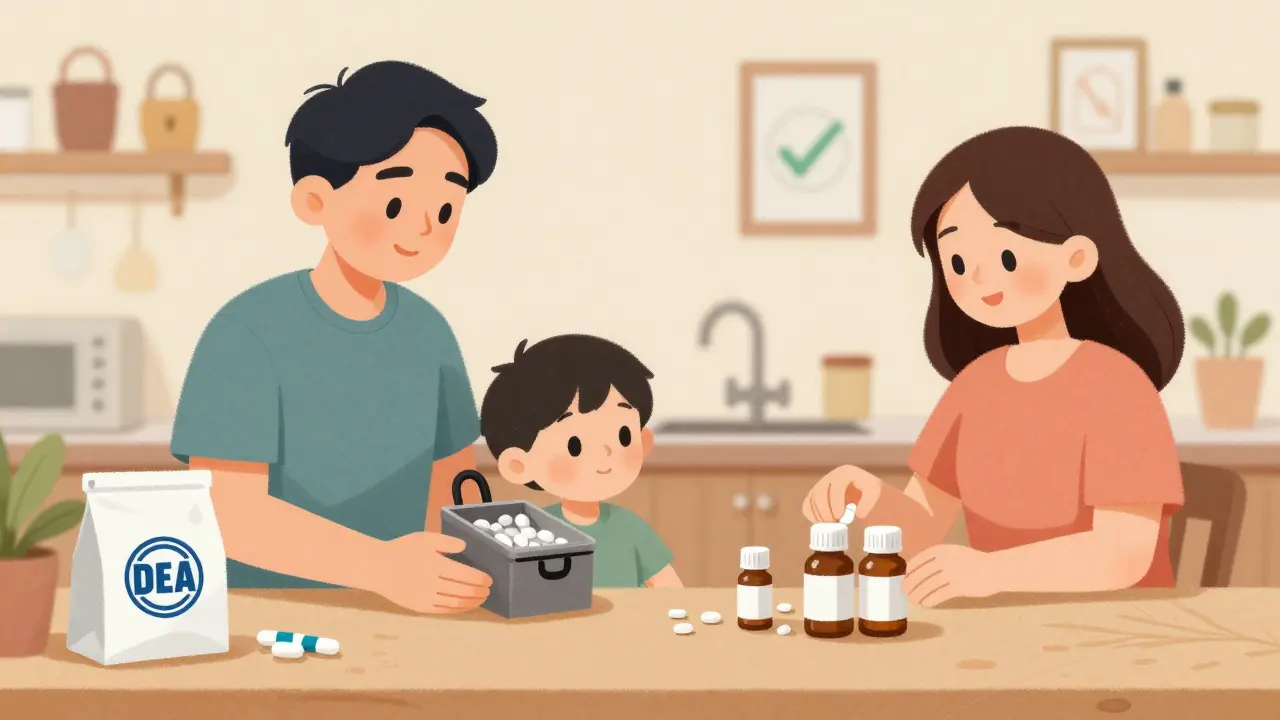
Use a drug take-back program. In Australia, the National Drug Take Back Day happens twice a year - April and October. You can drop off unused meds at participating pharmacies or police stations. In the U.S., there are over 14,600 authorized collection sites.
If you can’t wait for a take-back day, mix pills with coffee grounds or cat litter in a sealed container. Throw it in the trash. That makes them unappealing and unusable.
What If Someone Already Took a Pill?
If you suspect someone - especially a child - has taken a medication that isn’t theirs, call immediately. In Australia, dial 13 11 26 (Poison Information Centre). In the U.S., call 1-800-222-1222.
Don’t wait for symptoms. Don’t assume they’re fine. Time matters. Narcan (naloxone) can reverse opioid overdoses, but only if you have it and use it fast. Keep Narcan in your home if you’re storing opioids. It’s available without a prescription in many places.
Real Stories, Real Consequences
A father in Sydney kept his oxycodone in his nightstand. His 16-year-old found them. Took one. Overdosed. He survived because his sister had Narcan. He didn’t know his dad had pills. No one told him to lock them up.
A grandmother in Melbourne kept her fentanyl patches in the bathroom cabinet. Her 3-year-old granddaughter pulled one off and stuck it on her arm. She stopped breathing. She was hospitalized for days.
These aren’t outliers. They’re routine.
What Your Doctor Should Tell You
Doctors are supposed to talk to you about safe storage every time they prescribe opioids or other high-risk meds. But a 2021 study found they only do it 37% of the time.
Don’t wait for them to bring it up. Ask: “How should I store this?” “Do I need a lockbox?” “Can you give me one?”
If they say, “Just keep it out of reach,” push back. That’s not enough. You deserve better advice.
It’s Not Just About You
Storing your meds safely doesn’t just protect you. It protects your kids. Your neighbors. Your friends. Your community.
Every unsecured pill is a potential overdose waiting to happen. Locking them up isn’t paranoia. It’s responsibility. It’s the single most effective step you can take to prevent a tragedy.
You don’t need to be perfect. You just need to start. One lockbox. One nightstand cleared. One conversation with your family. That’s enough to change everything.
Can I just keep my pain meds in the medicine cabinet?
No. Medicine cabinets are one of the most dangerous places to store high-risk medications. They’re easily accessible, often unlocked, and frequently in reach of children. Even if it’s on a high shelf, someone can stand on a chair or pull down the door. Use a locked container instead.
What if I have arthritis and can’t open child-resistant caps?
Ask your pharmacist for an easy-open version. Many pharmacies offer special caps that are easier to twist open but still secure. Some lockboxes also come with push-button or code access, so you don’t have to fumble with small locks.
Is it safe to store medications in the fridge?
Only if the label says so. Most pills should be stored at room temperature (68-77°F). Refrigeration can damage some medications or cause condensation that ruins labels. Always check the instructions. If unsure, ask your pharmacist.
How do I dispose of expired or unused high-risk meds?
Use a drug take-back program. In Australia, check with your local pharmacy or police station for drop-off locations. In the U.S., visit the DEA’s website for authorized collection sites. If no program is available, mix pills with coffee grounds or cat litter in a sealed container and throw them in the trash. Never flush them.
Can I use a regular lockbox from the hardware store?
Yes - as long as it’s secure, has a lock, and keeps the meds out of reach. A small metal toolbox or locked suitcase works fine. The goal isn’t to buy a branded product - it’s to make sure no one else can access the pills. Look for something sturdy and tamper-resistant.
Should I tell my family where the meds are stored?
Yes - but only with trusted adults who need to know, like a spouse or caregiver. Make it clear the box is locked for safety, not secrecy. Explain why it’s important. This helps prevent accidental access and reduces stigma around safe storage.
What if my child finds the lockbox?
If the lockbox is properly secured (ANSI Grade 2 or higher), it should resist forced entry. But if your child opens it, call poison control immediately. Then reassess your storage. Consider upgrading to a biometric lock or one with a more complex code. Also, talk to your child about why the box is locked - not to scare them, but to teach them that some medicines are dangerous.
Are there free lockboxes available?
Yes. Many pharmacies, hospitals, and public health departments offer free lockboxes to patients on high-risk medications. In Australia, contact your local community health center. In the U.S., CVS and Walgreens have given away over 150,000 lockboxes through partnerships with medication safety programs. Just ask.
Storing high-risk medications safely isn’t complicated. It’s not about being perfect. It’s about being intentional. One lock. One box. One conversation. That’s all it takes to stop a tragedy before it starts.

14 Comments
Michael Dillon December 26, 2025
Let’s be real - most people who don’t lock up their meds are just lazy. Not dangerous. Not negligent. Just lazy. And yeah, I get it - you’re tired, you’re busy, you’ve got three kids and a dog that steals socks. But if you’re prescribing opioids, you’re not just a patient. You’re a public health node. Stop treating safety like an optional add-on.
Oluwatosin Ayodele December 27, 2025
Why is this only about the US? In Nigeria, we don’t have lockboxes. We have mothers who hide pills in rice containers. We have cousins who steal painkillers because they think it’ll make them ‘stronger.’ No one talks about cultural context. Lockboxes are a luxury. Awareness isn’t. Teach people why it matters - not just how to buy a box.
Gary Hartung December 27, 2025
Oh wow. Another ‘safe storage’ PSA. How very… responsible. I mean, really - are we now policing medication like it’s a nuclear launch code? Next they’ll mandate biometric locks on aspirin. Did you know 78% of accidental ingestions happen in homes with NO prescribed opioids? Maybe the real issue is societal decay - not your cousin’s nightstand.
And don’t even get me started on the ‘free lockbox’ propaganda. CVS giving away plastic boxes? That’s not prevention - that’s corporate virtue signaling. They want you to think you’re doing your part so you’ll keep buying their overpriced generics.
Also - why is no one talking about the fact that Narcan is now being distributed like candy? We’re not fixing the problem. We’re just making overdoses less fatal. That’s not safety. That’s enabling.
And don’t even get me started on the ‘ask your doctor’ line. Doctors don’t know anything. They’re just order-takers for Big Pharma. They prescribe because they’re incentivized. They don’t care about your lockbox.
And what about the people who need their meds at 3 AM? What if you have arthritis? What if you’re a single parent? What if your child is autistic and opens everything? You don’t get to solve this with a $30 box and a guilt trip.
Also - why is the article so long? Did you copy-paste a CDC pamphlet and call it journalism? I’m not impressed.
And why is everyone so eager to lock things up? What’s next - locked doors on water bottles? Locked cabinets on sugar? Are we turning homes into psychiatric wards?
And why is the tone so condescending? Like I’m some irresponsible monster for not having a biometric safe? I’m not the problem. The system is.
And who wrote this? Someone who’s never had to choose between rent and a $150 smart dispenser? You’re not helping. You’re preaching.
And why is there no mention of mental health? People don’t steal pills because they’re curious. They steal because they’re hurting. Lockboxes don’t fix depression.
And why is the article so… clinical? Like it’s written by a robot who read 17 NIH studies and then took a 3-hour nap?
And why do we keep pretending this is about ‘safety’ and not control? Because the real fear isn’t overdose - it’s addiction. And we’re terrified of people who might use these drugs to feel better.
So yeah. Lock your pills. But don’t pretend you’re saving the world. You’re just avoiding a conversation.
Sophie Stallkind December 28, 2025
Thank you for this comprehensive and meticulously researched guide. The emphasis on original packaging, locked storage, and proper disposal aligns with the highest standards of pharmaceutical safety practice. I particularly appreciate the reference to the Journal of the American Medical Association Pediatrics - such empirical evidence must be prioritized in public health messaging. I will be sharing this with my hospital’s pharmacy committee for potential distribution to at-risk patients.
Linda B. December 29, 2025
Lockboxes? Really? Did you know the DEA has been quietly pushing this since 2018 to create dependency on proprietary products? That’s why they’re pushing ‘ANSI Grade 2’ - it’s not about safety. It’s about control. They want you to buy their branded boxes so they can track usage. Every time you open that lockbox, your fingerprint is logged. Your data is sold. Your habits are monetized. And you think you’re being safe? You’re being surveilled.
And don’t even get me started on Narcan. It’s not a lifesaver. It’s a placebo for guilt. They give it out so you feel better about storing opioids at home. It’s psychological armor. You’re not preventing overdoses - you’re just making yourself feel less guilty.
Also - why is this only about opioids? What about alcohol? What about cigarettes? Why are we locking pills but not liquor? Because the government doesn’t profit from your liquor cabinet.
And who decided fentanyl patches are the new boogeyman? They’re medically necessary for cancer patients. This fearmongering is pushing people away from real pain management. You’re not helping. You’re terrifying.
And why is the article so… one-sided? No mention of harm reduction. No mention of safe use. Just lock it up. Like we’re all criminals waiting to happen.
And why is there no data on how many lockboxes are stolen? Or broken into? Or bypassed by kids with screwdrivers? You think a $15 box stops a determined 12-year-old? Please.
And why are we ignoring the fact that most overdoses happen in homeless populations? Who owns lockboxes? The rich. The poor get left behind. This isn’t safety. It’s classism dressed as care.
And why is there no mention of the fact that the CDC’s 53% statistic is based on surveys - not forensic data? It’s a guess. A very convenient guess.
And why is no one talking about the fact that pharmaceutical companies pushed these drugs on doctors for decades? Now they’re blaming the patient for not locking them up? That’s not justice. That’s scapegoating.
And why is the tone so… authoritarian? Like we’re all potential drug dealers? I’m not a criminal. I’m a person. And I’m tired of being treated like one.
Bailey Adkison December 30, 2025
Child-resistant caps are a scam. They don’t work. And the law that mandates them is outdated. If you can’t open them, you shouldn’t be taking them. That’s not a safety issue - it’s a design failure. Stop pretending the system works. It doesn’t.
Carlos Narvaez December 31, 2025
Lockboxes are a Band-Aid. The real issue is overprescribing. Fix the supply, not the storage.
Katherine Blumhardt December 31, 2025
OMG I JUST REALIZED MY MOM KEPT HER OXYCODONE IN THE BATHROOM CABINET 😭 I’M SO SCARED RIGHT NOW I’M CRYING AND I JUST CALLED HER AND SHE SAID ‘IT WAS ON THE TOP SHELF’ LIKE THAT’S ENOUGH?? I’M GOING TO BUY A LOCKBOX RIGHT NOW AND I’M TELLING EVERYONE ON INSTAGRAM BECAUSE THIS IS A CRISIS 😭💔 #MedicationSafety #DontBeLikeMyMom
Christopher King December 31, 2025
This isn’t about storage. This is about control. We’ve turned medicine into a weapon. We’ve turned parents into wardens. We’ve turned homes into prisons. We’re so afraid of addiction that we’ve forgotten how to trust people. What’s next? Locked cabinets on vitamins? Locked doors on coffee? We’re not saving lives - we’re eroding autonomy. And the people who benefit? The lockbox manufacturers. The pharmaceutical companies. The bureaucrats who get grants to push this. Not the patient. Not the family. Not the person in pain.
And why is no one asking why these drugs are even in homes? Why are we letting people walk out of the pharmacy with 30 pills? Why not 7? Why not 1? Why do we assume everyone needs a month’s supply? That’s not medicine. That’s inventory.
And why is the article so quiet on the fact that most overdoses happen because people are self-medicating trauma? Lockboxes don’t heal childhood abuse. They just hide the pills.
And why are we pretending this is about children? Most accidental ingestions are by adults - elderly relatives, visitors, caregivers. We’re blaming the wrong people. We’re protecting the wrong targets.
And why is there no mention of the fact that 60% of opioid users get their pills from friends? That’s not storage. That’s social dynamics. You can’t lock up a friendship.
And why is the tone so… moralistic? Like if you don’t have a biometric safe, you’re a bad person? I’m not a bad person. I’m a human being trying to manage chronic pain. And I’m tired of being judged for it.
And why is this article so long? Did you write it in a vacuum? Did you forget that people have attention spans? This isn’t a textbook. It’s a Reddit post. Stop treating us like idiots.
And why is there no mention of the fact that many people can’t afford these lockboxes? You talk about cost barriers - then you recommend a $150 biometric device. That’s not helpful. That’s tone-deaf.
And why is there no mention of harm reduction? No mention of supervised use? No mention of needle exchanges? No mention of safe consumption sites? We’re so obsessed with locking things up that we forgot to help people.
This isn’t safety. It’s performance.
Mussin Machhour December 31, 2025
Just did this last week - got a $20 lockbox from Walmart, put my dad’s pain meds in there, told the whole family: ‘This isn’t secret. It’s safe.’ My 8-year-old asked why it’s locked and I said ‘Because some things hurt even when they’re good.’ She nodded. We didn’t talk about it again. But now she knows not to touch it. That’s all it takes.
Ben Harris January 2, 2026
Lockboxes? Please. The real problem is that people are too lazy to have a conversation. My uncle had a box. But he never told his grandkids why it was locked. So they thought it was a treasure chest. They opened it. Took the pills. One died. The box didn’t fail. The silence did.
Stop buying boxes. Start talking.
Terry Free January 4, 2026
Let’s not pretend this is about safety. This is about stigma. We’re locking up opioids because we’re ashamed of people who need them. We’d never lock up insulin. Or asthma inhalers. But opioids? Oh no - that’s a moral failure. So we hide them. We criminalize them. We turn families into prison guards. And then we pat ourselves on the back for being responsible.
It’s not about storage. It’s about shame.
Jason Jasper January 6, 2026
I’m a nurse. I’ve seen kids grab pills off nightstands. I’ve seen grandparents take the wrong bottle. I’ve seen teenagers take a pill because they thought it was ‘just a headache med.’ This guide isn’t perfect. But it’s necessary. Don’t overthink it. Just lock it. And talk about it. That’s all.
Gary Hartung January 7, 2026
And yet - you’re all still missing the point. The real tragedy isn’t the overdose. It’s the silence. The fear. The shame. The fact that we’d rather lock up a pill than talk to someone who’s hurting. That’s the real epidemic.