
Have you ever felt that excruciating pain in your back or side and wondered why? Kidney stones are not just an uncomfortable nuisance; they are a medical reality for millions of people worldwide. If you have been diagnosed with Kidney Stones hard deposits of minerals and salts that form inside your kidneys. Specifically, the most common type involves a chemical compound called Calcium Oxalate a mineral crystal formed when calcium binds with oxalic acid in the urine. This accounts for roughly 70% to 80% of all stone cases according to recent clinical guidelines.
The fear of recurrence is real-statistically, if you've had one, there is a 50% chance another will appear within five years. But here is the good news: unlike many chronic conditions, kidney stones are largely preventable with precise adjustments to your daily habits. You do not need to overhaul your entire life, but you do need to follow the numbers. Today, we are going to look exactly at what those numbers mean for your fluid intake and food choices so you can stop the cycle forever.
The Core of Prevention: Hydration Targets
Water is the first line of defence, and I cannot stress this enough. It sounds simple, but most patients get the math wrong. We often think we are drinking enough because we sip throughout the day, but we fail to measure the result. Your goal isn't just "drinking water"; your goal is producing urine.
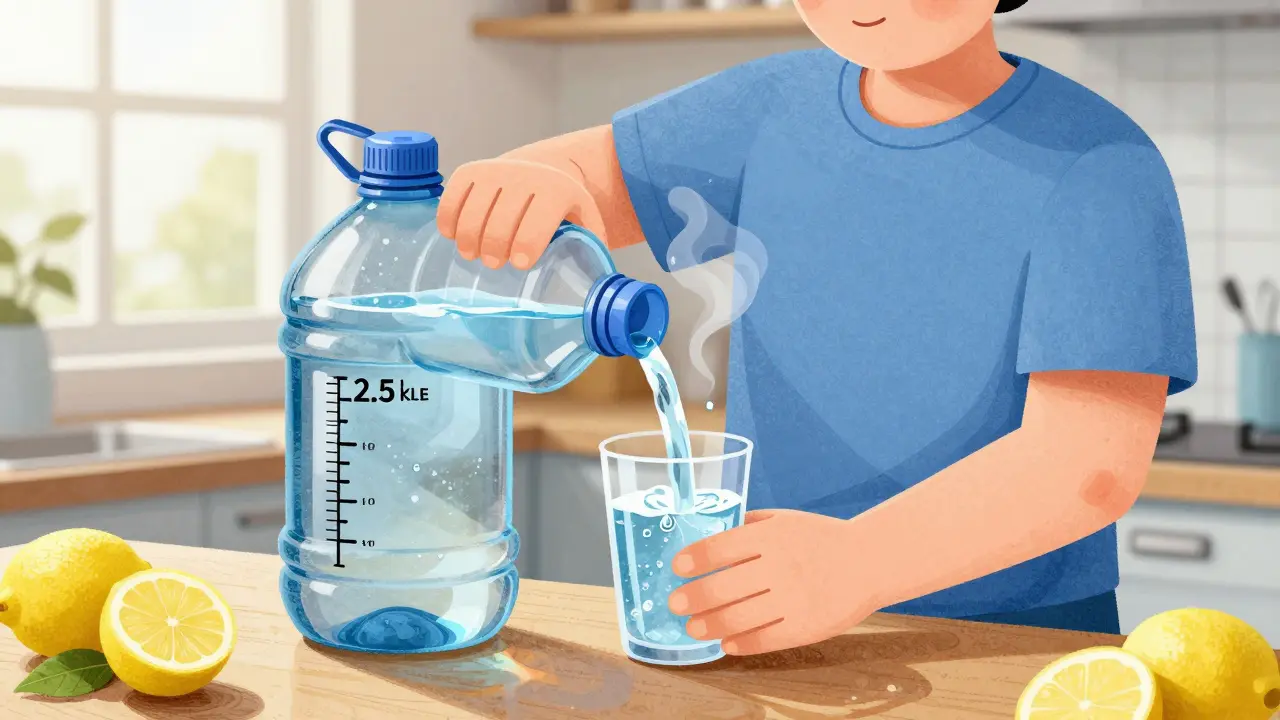
Hydration Goals daily fluid intake volumes designed to maintain high urine output. According to evidence reports from the National Institutes of Health, you need to aim for a total urine volume of more than 2.5 liters per day. To achieve this, most adults need to consume approximately 2.5 to 3.0 liters of fluid total. Think of it as a daily quota. If you live in a dry climate or sweat heavily during exercise, you need to increase this number.
Why does this matter? Concentrated urine allows crystals to form. Dilute urine washes them out before they can grow large enough to cause pain. A meta-analysis published in the Clinical Journal of the American Society of Nephrology showed that people producing over 2.0 liters of urine daily cut their risk of recurrence by half compared to those producing less than 1 liter. Here is the practical breakdown:
- Morning: Drink a large glass of water immediately after waking to replace overnight losses.
- With Meals: Keep a bottle nearby and sip consistently rather than chugging once.
- Evening: Stop heavy intake two hours before bed to avoid sleep disruption, but ensure you finish your target early evening.
Does what you drink matter? Yes. While water is king, coffee and beer actually offer some protection due to diuretic properties that increase urine volume. Conversely, grapefruit juice is risky. Research in the Nurses' Health Study found it increases risk, likely due to low levels of potassium and high acidity. In the UK, the NHS specifically advises avoiding fizzy drinks like cola because phosphoric acid can interfere with urine chemistry. Instead, add fresh lemon juice. Adding half a cup of lemon juice concentrate diluted in your daily water can boost urine citrate levels significantly.
| Beverage Type | Effect on Stones | Recommendation |
|---|---|---|
| Water | Protective | Primary source (2.5-3.0 L) |
| Lemon Juice | Highly Protective | Add to water for Citrate |
| Coffee/Beer | Slightly Protective | Moderate consumption okay |
| Grapefruit Juice | Risky | Avoid completely |
| Fizzy Drinks (Cola) | Risky | NHS advises avoidance |
Navigating the Calcium Paradox
This is the part that confuses almost everyone. When doctors mention "stones," patients assume they must remove calcium from their diet. This is dangerously incorrect. Dietary Calcium essential mineral obtained through food sources like dairy and greens. Actually eating too little calcium makes stones worse.
Here is the mechanism: Oxalate (found in plants) travels through your gut. If you do not eat enough calcium, oxalate floats freely and gets absorbed into your blood, eventually ending up in your kidneys where it forms a stone. If you eat calcium *with* oxalate-rich foods, they bind together in your stomach. Your body excretes this bound mass safely in your stool, never reaching the kidney.
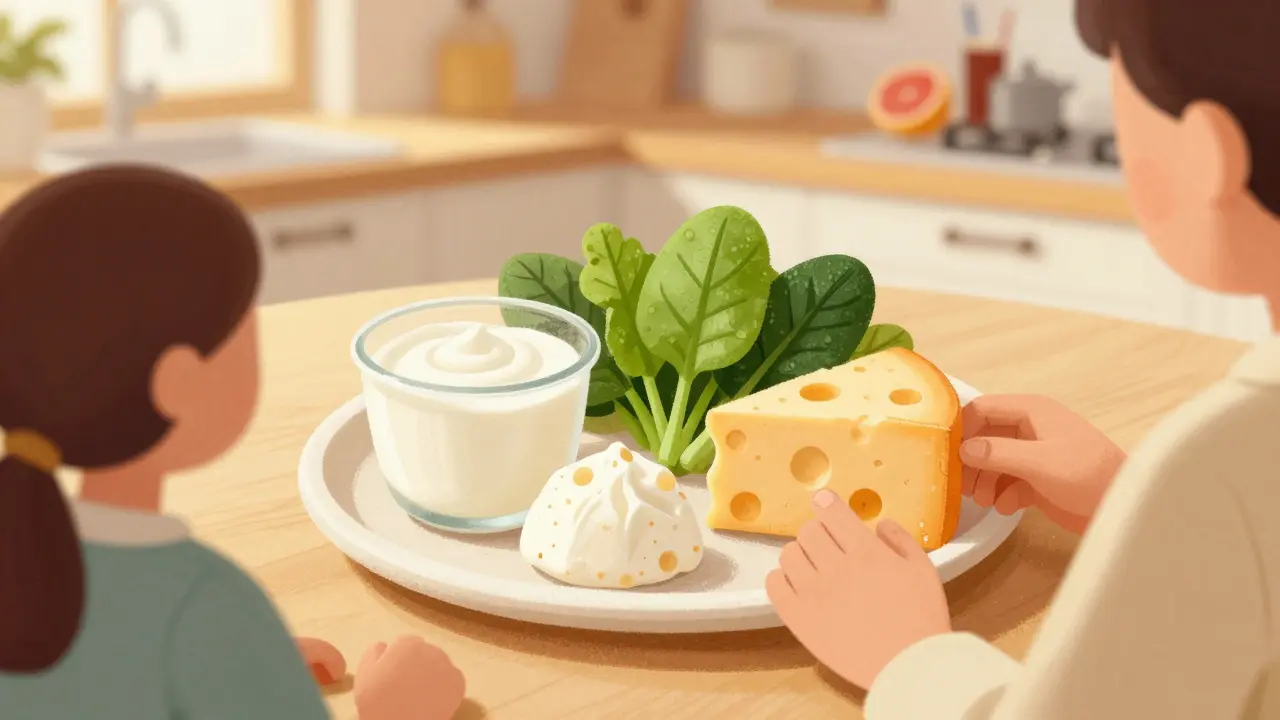
You should aim for 1,000 to 1,200 mg of calcium daily from food sources. This equates to roughly three servings of dairy or non-dairy alternatives rich in calcium. Think yogurt, milk, or cheese. However, do not take calcium pills with meals unless specifically prescribed by your urologist, as supplements can spike urinary calcium differently than food does. A study in the Annals of Internal Medicine noted that calcium supplements taken alone could increase stone risk by up to 20%.
Managing Oxalate Intake
While calcium helps block oxalate, you still want to manage how much oxalate enters your system. High-oxalate foods should be eaten sparingly and always paired with calcium. Foods like spinach, rhubarb, almonds, and beetroot contain very high amounts. For example, half a cup of cooked spinach contains nearly 750 mg of oxalate-this is a massive load compared to other vegetables.
It isn't necessary to eliminate these foods entirely, as they provide vital nutrients. Instead, practice "food pairing." Never eat a bowl of spinach salad on its own. Eat it with a grilled cheese sandwich or alongside a yogurt dessert. This maximizes binding in the digestive tract.
Another hidden source is Vitamin C supplementation. The Office of Dietary Supplements warns that taking more than 1,000 mg of Vitamin C a day can trigger your body to produce excess oxalate. Stick to getting Vitamin C from natural fruits, not tablets, unless you have a deficiency diagnosed by a doctor.
Sodium and Protein: The Hidden Factors
You might think salt is fine, but sodium drives calcium out of your bones and into your urine. Every extra 1,000 mg of sodium you eat correlates with a significant increase in urinary calcium. The American Heart Association recommends capping this at 2,300 mg per day. Read labels; a single fast-food meal can exceed this limit instantly.
Animal protein is another factor. Red meat and processed meats increase uric acid and lower citrate in the urine. Try to keep animal protein under 30% of your total calories, which is roughly 75g of meat per day for an average person. Plant proteins are generally easier on the kidneys. Fish and chicken can be enjoyed in moderation, but prioritize legumes and nuts (watching the oxalate content of certain nuts).
Medication and Medical Interventions
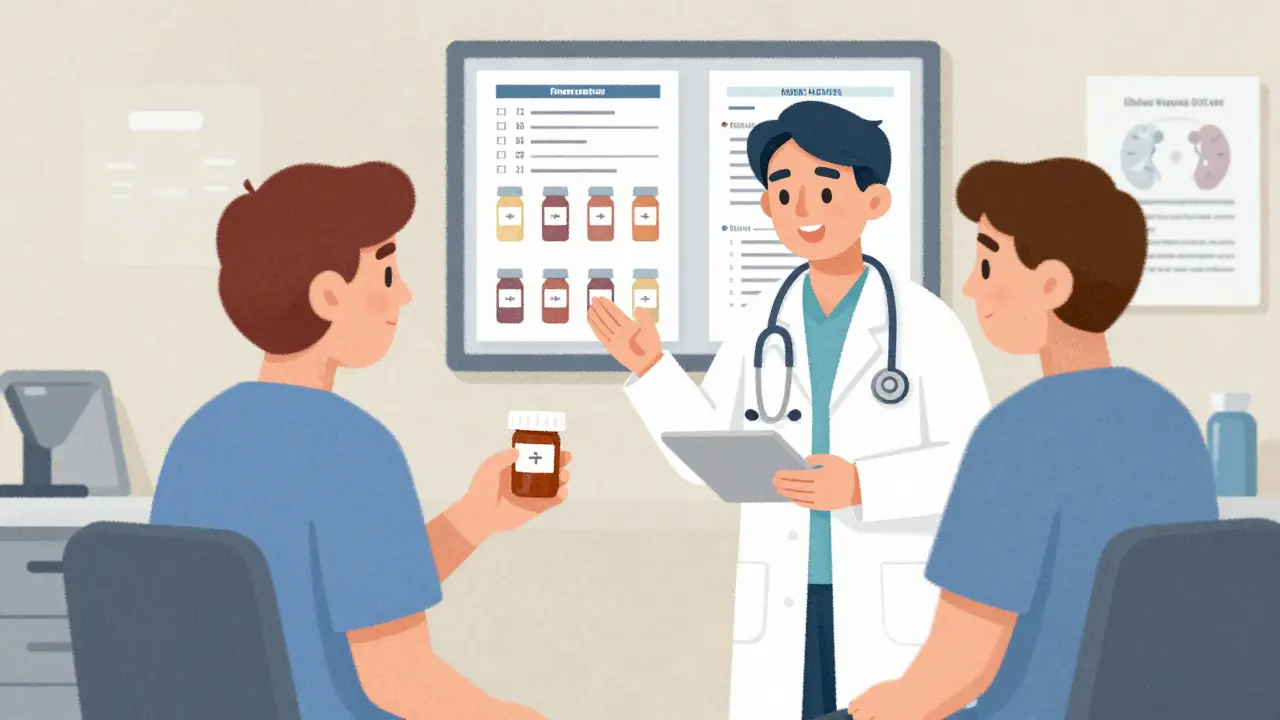
If diet and hydration aren't enough, medication can help. Doctors often prescribe Thiazide Diuretics prescription medications like Hydrochlorothiazide that reduce calcium excretion. Drugs like hydrochlorothiazide can reduce stone recurrence by 30% to 50%. They work by making the kidneys hold onto calcium instead of flushing it into urine. These require monitoring because low potassium can become an issue, which ironically hurts stone prevention.
For patients with low urine citrate, Potassium Citrate supplement used to raise urine pH and citrate levels to inhibit crystal formation. is the gold standard. It raises the alkalinity of the urine, making it harder for stones to crystallize. This is usually 10 to 20 mEq taken twice a day. Always consult your specialist before starting supplements, as self-prescribing can lead to electrolyte imbalances.
Testing and Monitoring Progress
How do you know if it's working? Guessing is not an option for prevention. You need a 24-hour urine test. This collects everything you pass for a full day. It measures five key chemistries: volume, calcium, citrate, oxalate, and sodium.
Targets look like this:
- Volume: Greater than 2.5 Liters
- Calcium: Less than 250 mg
- Oxalate: Less than 40 mg
- Citrate: Greater than 320 mg
If your urine volume is low, you drink more. If calcium is high despite normal diet, you may need thiazides. If citrate is low, you need lemon juice or potassium citrate. Without this test, you are adjusting blindly. Many experts recommend repeating this test every 12 months or after any major change in treatment.
Can I stop having kidney stones permanently?
While you cannot guarantee zero risk forever, adherence to hydration and diet protocols reduces recurrence rates drastically. Studies show consistent management keeps most patients stone-free long-term.
Is drinking more water alone enough?
Water is crucial, but diet plays an equal role. Without managing calcium and oxalate balance, simply drinking water may not prevent stones caused by dietary factors.
Which drinks should I avoid completely?
Avoid grapefruit juice, sugary sodas, and drinks high in fructose. Focus on water, tea, coffee, and citrus-infused beverages.
Do I need to take calcium supplements?
No, unless recommended. Getting calcium from food is safer than pills. Supplement calcium can increase stone risk if not timed correctly.
How often should I test my urine?
An initial 24-hour collection is needed to set a baseline. Follow-up testing is recommended annually or whenever symptoms return.




14 Comments
Hope Azzaratta-Rubyhawk April 2, 2026
You MUST hit the daily fluid targets. The math is clear: 2.5 liters of urine output translates directly to reduced stone risk. Most people sip water sporadically but never track their actual urine volume. Start measuring your daily output immediately. Morning hydration is non-negotiable-your body loses significant fluids overnight. Keep a bottle visible during meals; sipping consistently prevents concentrated urine. Evening intake matters too. Stop drinking two hours before sleep, but ensure you've met your quota earlier. Remember, coffee and beer contribute to diuresis, but grapefruit juice increases risk. Add lemon juice concentrate for citrate benefits. Your kidneys deserve precise care. Ignore vague advice-this protocol is evidence-based. Consistency is the only way to break recurrence cycles. Trust the science behind these numbers. Track your intake daily for accountability. Adjust volumes based on activity levels and climate conditions. Recurrence prevention demands disciplined action. Your effort determines outcomes. Follow the guidelines relentlessly.
Dipankar Das April 4, 2026
The emphasis on quantified urine output aligns perfectly with clinical protocols. As a healthcare educator, I stress systematic documentation of daily intake. Patients often underestimate cumulative hydration gaps. Utilize marked bottles calibrated in milliliters for accurate measurement. Medical literature confirms that unmonitored intake leads to suboptimal results. Furthermore, regional climate variations necessitate personalized adjustments. Indian monsoon periods require higher volumes compared to arid zones. Collaborate with nephrologists for individualized thresholds. Neglecting verification undermines preventive efforts. Rigorous adherence transforms statistical probabilities into tangible outcomes. Regular physician consultations validate protocol efficacy. Periodic urine analyses detect biochemical imbalances early. Preventive success hinges on unwavering commitment. Your dedication establishes sustainable habits.
sophia alex April 4, 2026
Ooooh, marked bottles?! 😂 Only true elites track milliliters like lab specimens 💅 Meanwhile normal humans just drink WATER until peeing like fountain statues 🌊✨ Stone-free status achieved through sheer willpower and designer glassware 😉 Why suffer under clinical drudgery when lifestyle elegance solves everything?! ✨🥂 Forget quotas-your vibe dictates prevention. 💖
Brian Shiroma April 5, 2026
Everyone's terrified of calcium like it's nuclear waste. Spoiler alert: Your gut isn't a chemistry lab. Eat yogurt with spinach salads instead of praying oxalate ghosts vanish. Doctors prescribing zero-calc diets are clueless. Supplements alone trigger stones? Shocking. Meanwhile most patients starve themselves of actual nutrients fearing imaginary demons. The real villain is processed cheese, not cheese itself. Sarcasm aside: Pair wisely. Food wins. Always. Don't get trapped in dogmatic fear-mongering. Balance trumps extremism every time. Your stomach knows what to do better than panic-driven Google searches. Real food beats algorithm anxiety.
Rachelle Z April 7, 2026
SOMEONE SAID SPINACH SALADS WITH YOGURT!!! 🙌🙌🙌 Finally someone gets FOOD SYNERGY right!! 🥣💪🍓 STOP demonizing NUTRIENTS blindly!!! Your colon appreciates CALCIUM-OXALATE DYNAMICS WAY more than TikTok ever explained!! 😤🧠 P.S.: Spinach lovers unite!! 🎉👯♀️ #TeamRealFoodOverFearmongering 🚫🔮⚡
Branden Prunica April 8, 2026
This changes EVERYTHING. My cousin avoided spinach after one doctor visit. Now she's pale & constipated. The irony?! Oxalate fears created worse problems. We need revolution. Not restrictions. Life's too short for nutrient purges. I threw away my almond flour stash yesterday. Regrets? None. Embrace whole foods. Even spinach deserves redemption.
Will Baker April 9, 2026
Of course everyone praises lemon juice. Convenient narrative for health influencers selling squeezers. Meanwhile coffee drinkers live past ninety-nine naturally. Science says citrus helps? Sure. But correlation isn't causation. Grapefruit avoidance feels arbitrary. Just consume moderation. Your liver filters toxins anyway. Hydration myths persist because panic sells products. Laugh at the buzzwords. True wellness comes from trusting innate biology, not trend-chasing. Question authority. Drink what pleases you. Stones form regardless of lemon infusions.
Dee McDonald April 11, 2026
Your skepticism fuels progress BUT facts matter! Studies show citrate genuinely inhibits crystallization. Dismissing evidence delays recovery. Motivation requires truth! Hydrate strategically, not haphazardly. Lemon zest provides measurable protection. Coffee offers modest aid-but prioritize water. Moderation exists WITHIN parameters, not outside them. Challenge complacency. Push boundaries intelligently. Your health demands informed choices. Ignoring data costs lives. Advocate scientifically-backed methods. Change narratives proactively. Victory follows discipline. Stay relentless. Knowledge empowers action. Never settle for ignorance.
HARSH GUSANI April 12, 2026
India has ZERO stone crisis due to AYURVEDA 🇮🇳🌿 Western medicine pushes unnecessary meds. Lemon juice = scammy supplement. Traditional wisdom suffices. Stop believing pharma propaganda. Our spices prevent crystals naturally. Curry leaves > potassium citrate pills. Colonies still trust outdated labs. Reject globalized fear-mongering. Proudly eat turmeric-infused dal daily. Strength through tradition. 💪🛡️#BoycottWesternMyths
simran kaur April 13, 2026
24-hour urine collection? Classic surveillance tactic. Labs manipulate citrate readings for profit. Big Pharma profits from lifelong prescriptions. Natural healers know stones dissolve via fasting. Testing traps you in dependency. Independent clinics offer safer alternatives. Don't trust institutional data. Protect yourself from medical industrial complex. Their targets serve shareholders, not patients. Awakening required.
Jenna Carpenter April 14, 2026
Hahah u r clueless! Urine tests R essential!!! U can't avoid stones w/o data. Fasting sounds dangerous lol. Only gullible ppl fall for conspiracy theories. Doctors aren't evil! Follow protocols properly. Or suffer consequences. Typical denier mentality 🙄✋
Goodwin Colangelo April 14, 2026
Hey Jenna, testing's important but balance matters. Fasting isn't recommended for stone prevention. Evidence supports structured monitoring. Your concerns valid though-overreliance happens. Work with trusted providers. Knowledge reduces fear. Let's focus on actionable steps together. Collaboration yields better outcomes than distrust. Stay open to verified methods. You got this! 💪
Rob Newton April 15, 2026
Data irrelevant without patient autonomy.
The Charlotte Moms Blog April 16, 2026
NEVER IGNORE HYDRATION!!! Water is NON-NEGOTIABLE!!! Kidney function COLLAPSES WITHOUT IT!!! Parents MUST enforce fluid quotas!!! Children suffer FROM dehydration!!! Sodium intake DESTROYS families!!! Protein excess HURTS innocents!!! Beware supplements!!! Consult doctors ALWAYS!!! Prevention REQUIRES ACTION NOW!!!