
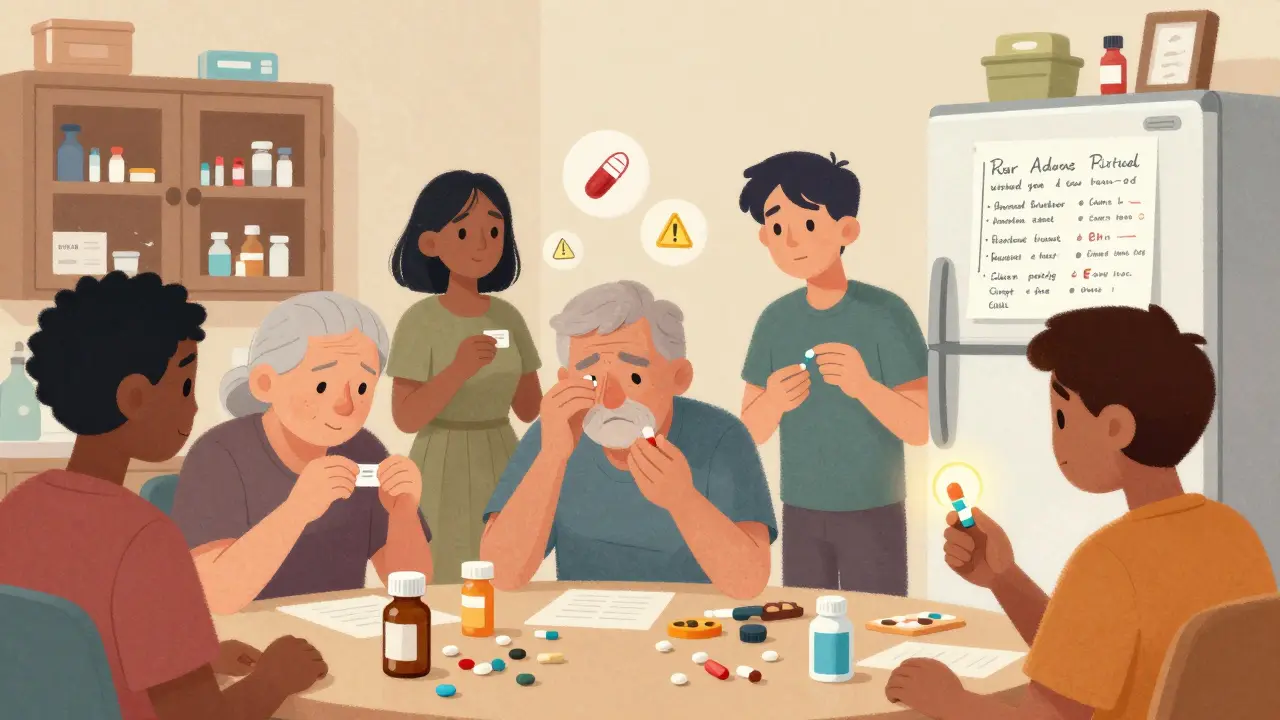
Every year, more than 1.5 million people in the U.S. are harmed by medications they took exactly as prescribed. That’s not a typo. These aren’t overdoses or illegal drugs-they’re mistakes made with pills, injections, and patches that doctors ordered and pharmacies filled. And most of these errors are preventable.
It’s easy to assume that if a doctor writes a prescription and a pharmacist hands you the bottle, you’re safe. But the truth is, medication safety isn’t just about the system. It’s about what you do, what you ask, and what you watch for. The numbers don’t lie: 1 in 20 patients worldwide experience harm from medications. In hospitals alone, medication errors cause at least 7,000 deaths each year. That’s more than car accidents or gun violence in some years.
What Exactly Counts as a Medication Error?
A medication error isn’t just taking the wrong pill. It’s taking the right pill at the wrong time. It’s taking twice the dose because the label was unclear. It’s mixing a new prescription with an old one you forgot you were still taking. It’s not realizing your blood pressure medicine interacts with the over-the-counter cold pill you grabbed at the gas station.
The most dangerous errors happen with four types of drugs:
- Antibiotics - responsible for about 20% of all medication-related harm
- Antipsychotics - 19%, especially risky for older adults
- Cardiovascular drugs - 15%, like blood thinners and beta-blockers
- CNS drugs - 16%, including sleep aids, antidepressants, and painkillers
IV medications are the most error-prone in hospitals. One study found nearly half of all IV doses given in nursing homes and hospitals had some kind of mistake-wrong dose, wrong speed, wrong drug. And when it comes to fake or substandard drugs, the problem is growing fast. In the U.S., 1 in 3 counterfeit drug seizures happen here. In 2023, the DEA seized over 80 million fake pills laced with fentanyl. Many of these were sold as oxycodone or Xanax, but they were deadly.
Who’s Most at Risk?
It’s not just the elderly, though they’re hit hardest. Older adults take an average of four to five prescription drugs daily. That increases the chance of harmful interactions. In Australia, doctors cut inappropriate antipsychotic use in seniors by 11% between 2016 and 2021-because they realized how dangerous it was.
But young people are in danger too. Nearly 9 million Americans aged 12 and older misused prescription painkillers in 2021. Four million misused stimulants like Adderall. Social media makes it easier than ever to buy fake pills disguised as prescription meds. Fentanyl is now the leading cause of death for Americans between 18 and 45.
And it’s not just about misuse. A Reddit thread analyzing over 1,200 patient posts found that 68% of people were confused about their dosage instructions. Twenty-two percent didn’t know what side effects to expect. That’s not patient error-that’s a communication failure.
Where Do Mistakes Happen?
Most people think errors happen in hospitals. They do-but not as often as you’d think. The biggest problem is at home.
Between 2% and 33% of patients make mistakes with their medications outside the clinic. That’s because:
- Labels are too small or printed in tiny font
- Doctors use abbreviations like “QD” (daily) instead of writing “once a day”
- Patients don’t understand why they’re taking a drug
- They’re taking five different meds from five different doctors
- They skip doses because they feel fine
- They double up because they forgot
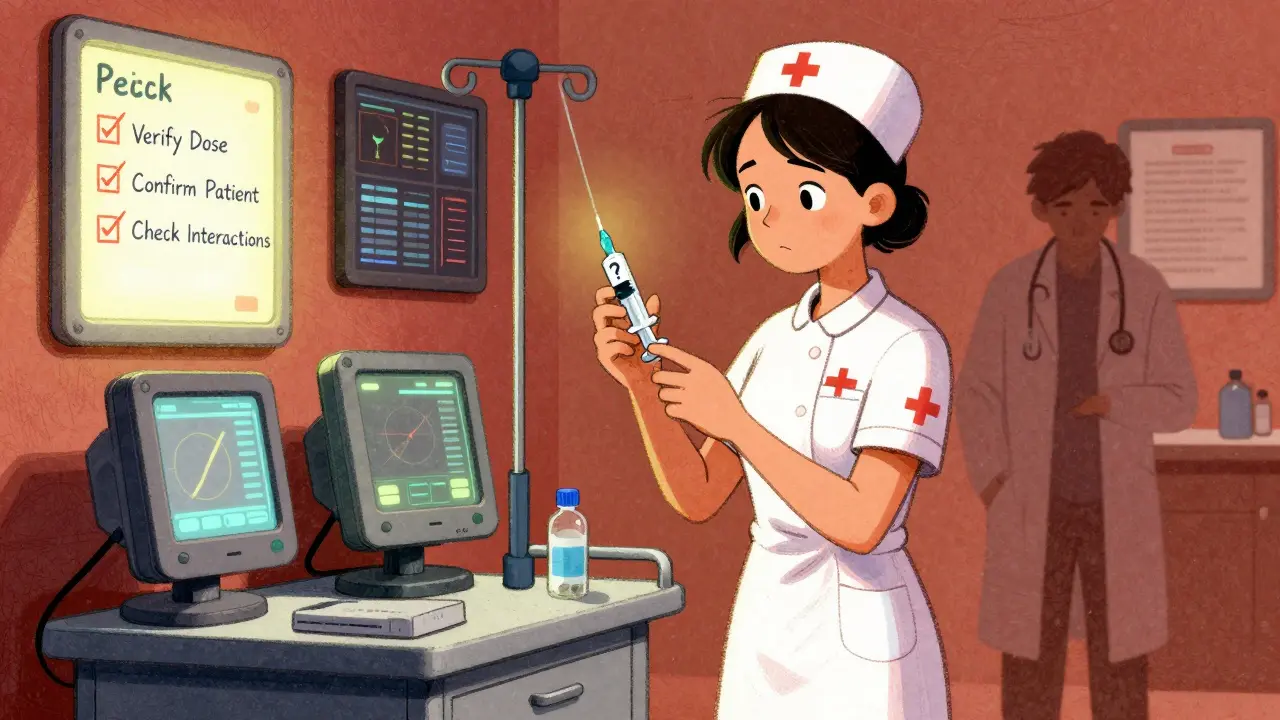
Nurses make mistakes too. One study found error rates between 16% and 44% among nurses giving meds. But here’s the key: experts say 90% of these aren’t about laziness or carelessness. They’re about system failures. Overworked staff. Poorly designed tech. Confusing packaging. No time to double-check.
Dr. Donald Berwick, a former head of Medicare, put it simply: “Most medication errors are system failures, not individual failures.” That means blaming the nurse or the patient misses the point. The system needs fixing.
What’s Being Done to Fix This?
More than 130 countries have launched national plans to cut medication harm by 50% by 2026, as part of the WHO’s “Medication Without Harm” campaign. Australia is leading the way.
They’ve seen:
- 11% drop in antipsychotic use for seniors
- 10% fewer hospital visits for insulin errors
- 37% drop in opioid deaths since 2018-thanks to real-time prescription tracking
The U.S. is trying too. Medicare now tracks 16 safety metrics for 2025, including:
- How many seniors are on high-dose opioids
- How many people with dementia are getting antipsychotics
- Whether diabetics are taking their insulin
But the biggest threat now isn’t old-school errors. It’s fake drugs. The FDA’s REMS program tries to control high-risk meds. The EU requires tamper-proof packaging. But online pharmacies? Still a wild west. A single Instagram ad can lead you to a site selling counterfeit Adderall laced with fentanyl. No license. No oversight. No safety.
What You Can Do Right Now
You can’t fix the system overnight. But you can protect yourself today. Here’s what works:
- Keep a live list of every medication you take-including vitamins, supplements, and OTC drugs. Update it every time something changes. Bring it to every appointment.
- Use one pharmacy for all your prescriptions. That way, the pharmacist can spot interactions. If you switch pharmacies, ask them to check for conflicts.
- Ask these three questions for every new drug: “What is this for?” “How do I take it?” “What side effects should I watch for?” Don’t accept “It’s just to help you feel better.”
- Check the pill before you swallow it. If it looks different from last time-color, shape, markings-ask the pharmacist. Counterfeit pills look real. But they’re not.
- Never mix meds without asking. Even “natural” supplements like St. John’s Wort can make your blood thinner dangerous.
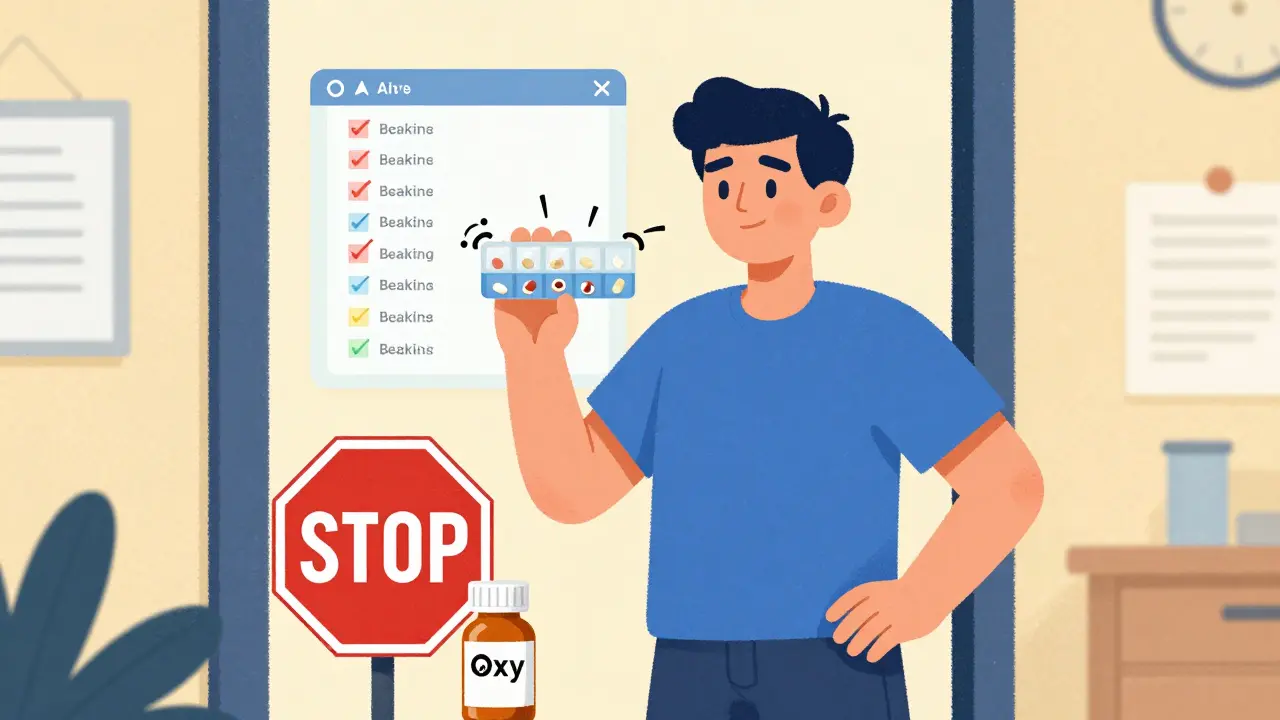
- Use pill organizers with alarms. If you forget doses, you’re at risk. And if you take too much, you’re at risk too.
The Australian Health Commission calls this the “5 Moments for Medication Safety”: when you start a new drug, when you add one, when you move between care settings (like hospital to home), when you’re on high-risk meds, and when you review everything every six months.
When to Worry
Not every side effect is dangerous. But some signs mean you need help right away:
- Sudden confusion or memory loss
- Unexplained bruising or bleeding
- Severe dizziness or fainting
- Rash, swelling, or trouble breathing
- Heart palpitations or chest pain
- Extreme fatigue or nausea that won’t go away
If you’re on a blood thinner, diabetes medicine, or heart drug and you feel “off,” don’t wait. Call your doctor or go to urgent care. Don’t assume it’s just aging or stress.
What’s Coming Next
AI tools are being tested to catch errors before they happen. One study says smart systems could cut mistakes by 30% by 2027. They’ll compare your meds, check for interactions, and even remind you when to refill. But until then, you’re still your best defense.
Medication safety isn’t about trusting the system. It’s about being part of it. You’re not just a patient-you’re a partner in your care. And when you speak up, ask questions, and stay informed, you’re not just protecting yourself. You’re helping fix the system for everyone else too.
How common are medication errors?
Globally, about 1 in 20 patients (5%) experience harm from medication errors. In the U.S., over 1.5 million people are injured each year, and at least 7,000 die in hospitals alone due to preventable mistakes.
What are the most dangerous medications?
Antibiotics cause the most harm overall (20%), followed by antipsychotics (19%), cardiovascular drugs (15%), and central nervous system drugs like painkillers and sleep aids (16%). IV medications have the highest error rate in hospitals, with nearly half of doses having some kind of mistake.
Can fake drugs really kill me?
Yes. In 2023, the DEA seized over 80 million counterfeit pills laced with fentanyl. Many were sold as oxycodone or Xanax. Fentanyl is 50 to 100 times stronger than morphine, and even a tiny amount can stop your breathing. Most of these pills come from unregulated online sellers, not pharmacies.
Why do I keep making mistakes with my meds at home?
It’s not your fault. Many prescriptions come with unclear labels, confusing instructions, or multiple drugs that interact. Nearly 70% of patient questions online are about dosage confusion. Taking five or more meds daily increases your risk of errors by 300%. Use a pill organizer, keep a written list, and always ask your pharmacist to explain.
Should I trust my doctor’s prescription?
Yes-but ask questions. Doctors don’t always know what else you’re taking. They might not know about your supplements or over-the-counter meds. Always tell them everything. If a new drug feels wrong or has scary side effects, ask: “Is this really necessary?” “Are there safer options?” “What happens if I don’t take it?”
How can I tell if my pill is fake?
Counterfeit pills often look identical to the real thing. But if the color, shape, or imprint changes from your last refill, ask your pharmacist. Fake pills may have a different taste, dissolve too fast, or cause sudden side effects. Never buy pills from social media, Instagram, or unverified websites-even if they say “FDA-approved.”
What should I do if I think I had a medication error?
Call your doctor or pharmacist immediately. If you have symptoms like trouble breathing, chest pain, confusion, or severe dizziness, go to the ER. Don’t wait. Report the error to the FDA’s MedWatch program online-it helps track patterns and prevent future harm.
Final Thought: You’re Not Just a Patient
You’re the only person who takes your pills every day. You’re the one who notices when something feels off. You’re the one who can catch a mistake before it becomes a crisis. Don’t wait for the system to fix itself. Start with your list. Ask your questions. Know your meds. Your life depends on it.


11 Comments
Radhika M December 16, 2025
Just started using a pill organizer with alarms after my mom had a bad reaction mixing blood pressure meds with ibuprofen. Simple fix, huge difference. If you’re on more than 3 meds, do this. It’s not fancy, but it saves lives.
Sachin Bhorde December 16, 2025
Bro i been takin my antipsychotic for 5 yrs n never knew it could cause tardive dyskinesia till i read this. Pharmacist never told me. Now i got a list n i ask every time. Yall need to do the same. No shame in askin. They get paid to explain.
Jonathan Morris December 17, 2025
Let’s be real - this whole ‘medication safety’ campaign is a distraction. The real problem is the FDA’s failure to regulate online pharmacies. 80 million fake pills? That’s not incompetence - that’s collusion. The same agencies that let fentanyl flood the streets are now selling you ‘safety tips’ like it’s a public service announcement. Wake up.
CAROL MUTISO December 19, 2025
Oh wow, so we’re supposed to be superheroes now? Juggle five meds, decode pharmacy labels written in ancient Latin, memorize every possible interaction, and still be vigilant enough to spot a counterfeit pill that looks identical to the real one? Meanwhile, my doctor’s office still uses fax machines and my insurance won’t cover the pill organizer because ‘it’s not medically necessary.’ Thanks for the pep talk, but I’ll take my chances with the chaos.
Nishant Desae December 20, 2025
Man i read this whole thing n felt so seen. I’m 68, take 7 meds, and my wife keeps the list cause i forget half the time. Last month i almost took my blood thinner twice cause the bottle looked different - turns out the pharmacy switched brands. I didn’t know that was a thing. Now i check every time. I don’t trust the system, but i trust my wife n my little notebook. If you’re on meds, find your person. Someone who’ll ask the dumb questions so you don’t have to.
Pawan Chaudhary December 22, 2025
Hey everyone - I used to think meds were just pills you swallow. Now I realize they’re like keys to a car you didn’t build. You gotta know how they work, even if you didn’t install them. Start small: write down one thing you don’t understand. Ask one question. You don’t need to be an expert. Just be curious. That’s half the battle.
Philippa Skiadopoulou December 23, 2025
The data presented is compelling, yet the emphasis on individual responsibility is misplaced. Systemic failures - underfunded pharmacies, fragmented EHRs, lack of standardized labeling - are the root causes. Patient education is necessary but insufficient. Policy reform must precede behavioral expectations.
Joe Bartlett December 25, 2025
UK’s been doing this for years. Pharmacies review all your meds every 6 months. No charge. No hassle. Just done. We don’t need apps or alarms. We need people who care. Simple.
Jigar shah December 25, 2025
Interesting that the WHO targets 50% reduction by 2026, but no country has a unified digital prescription registry. How can you track interactions if prescriptions are siloed across 50+ EHR systems? The real bottleneck isn’t patient awareness - it’s interoperability. We’re putting bandaids on a hemorrhage.
amanda s December 26, 2025
THIS IS WHY WE NEED TO BAN ALL FOREIGN PHARMACEUTICALS. 80 MILLION FAKE PILLS? THAT’S CHINA AND INDIA. THEY’RE KILLING OUR KIDS. OUR DOCTORS AREN’T DOING ENOUGH. OUR GOVERNMENT IS ASLEEP. WE NEED A NATIONAL EMERGENCY. THIS IS A WAR.
Michael Whitaker December 27, 2025
While I appreciate the sentiment behind the piece, one must acknowledge that the burden of medication safety is being unfairly externalized onto the patient, who, by virtue of their non-expert status, is structurally incapable of bearing such responsibility. The professionalization of care has been eroded, and now the consumer is expected to function as a de facto clinical pharmacist - a role for which they are neither trained nor compensated. This is not empowerment; it is institutional abandonment dressed in motivational language.