
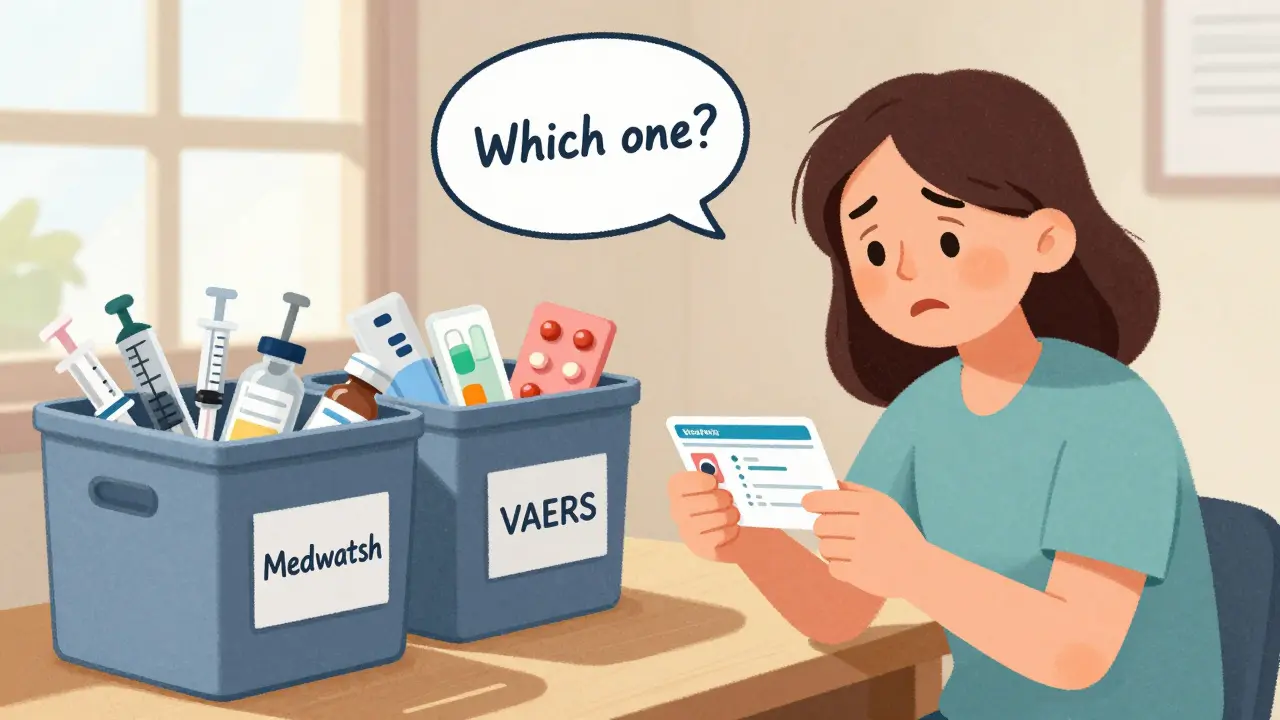
MedWatch vs VAERS Reporting Checker
Which Reporting System Should You Use?
This tool will help you determine the correct system to report a side effect for medications or vaccines.
Every year, millions of people take medications or get vaccinated. Most of them go fine. But sometimes, something goes wrong. A rash shows up. A fever won’t break. A person ends up in the hospital. When that happens, someone needs to report it-not just for that one person, but to protect everyone else too. That’s where MedWatch and VAERS come in. They sound similar, but they’re not the same. Confusing them can mean your report gets lost, ignored, or worse-delayed.
What is MedWatch?
MedWatch is the FDA’s system for tracking problems with drugs, medical devices, dietary supplements, and other non-vaccine products. If you took a new blood pressure pill and started having chest pains, or if your insulin pump stopped working mid-use, you’d report that through MedWatch. It’s not just for doctors. Patients, caregivers, pharmacists, and even family members can file a report.
The FDA uses these reports to spot patterns. Maybe ten people in different states report the same rare side effect from a new antibiotic. That’s a signal. It doesn’t mean the drug definitely caused it-but it’s enough to trigger deeper investigation. The FDA might then review clinical data, contact the manufacturer, or even issue a safety alert.
Manufacturers are required by law to report serious side effects to MedWatch. Hospitals and pharmacies that use medical devices must report too. But the system still relies heavily on voluntary reports from the public. That’s why your report matters-even if you’re not sure what caused the problem.
What is VAERS?
VAERS is the Vaccine Adverse Event Reporting System. It’s run jointly by the CDC and FDA, but it’s only for vaccines. If you got the flu shot and felt dizzy for three days, or if your child developed a high fever after the MMR vaccine, that goes to VAERS-not MedWatch.
Unlike MedWatch, VAERS accepts reports from anyone: parents, teachers, nurses, even people who aren’t medical professionals. You don’t need proof that the vaccine caused the reaction. You just need to report what happened, when, and what vaccine was given. The system is built for speed. It’s designed to catch rare or unexpected problems early, especially with new vaccines.
VAERS collects details like the vaccine lot number, the date of vaccination, the person’s age, and any other medicines they were taking. Serious events-like hospitalizations, paralysis, or death-are flagged for follow-up. CDC and FDA staff may reach out to the doctor or hospital to get medical records.
Why You Can’t Report a Vaccine to MedWatch
This is a common mistake. If you try to report a vaccine reaction to MedWatch, it will either be rejected or forwarded to VAERS-delaying the process. The systems are kept separate for a reason.
VAERS is built around vaccine-specific data. It tracks which vaccine brand, dose, and lot number was given. It knows the standard timing of side effects after each shot. MedWatch doesn’t have that structure. It’s built for pills, patches, implants, and diagnostic tools-not needles and immunizations.
Also, VAERS is tied to other CDC systems like the Vaccine Safety Datalink (VSD), which links to millions of electronic health records. That lets experts compare rates of side effects in vaccinated vs. unvaccinated people. MedWatch doesn’t have that kind of deep data integration for vaccines.
Bottom line: If it’s a vaccine, use VAERS. If it’s anything else-a pill, a cream, a hearing aid, a glucose monitor-use MedWatch.
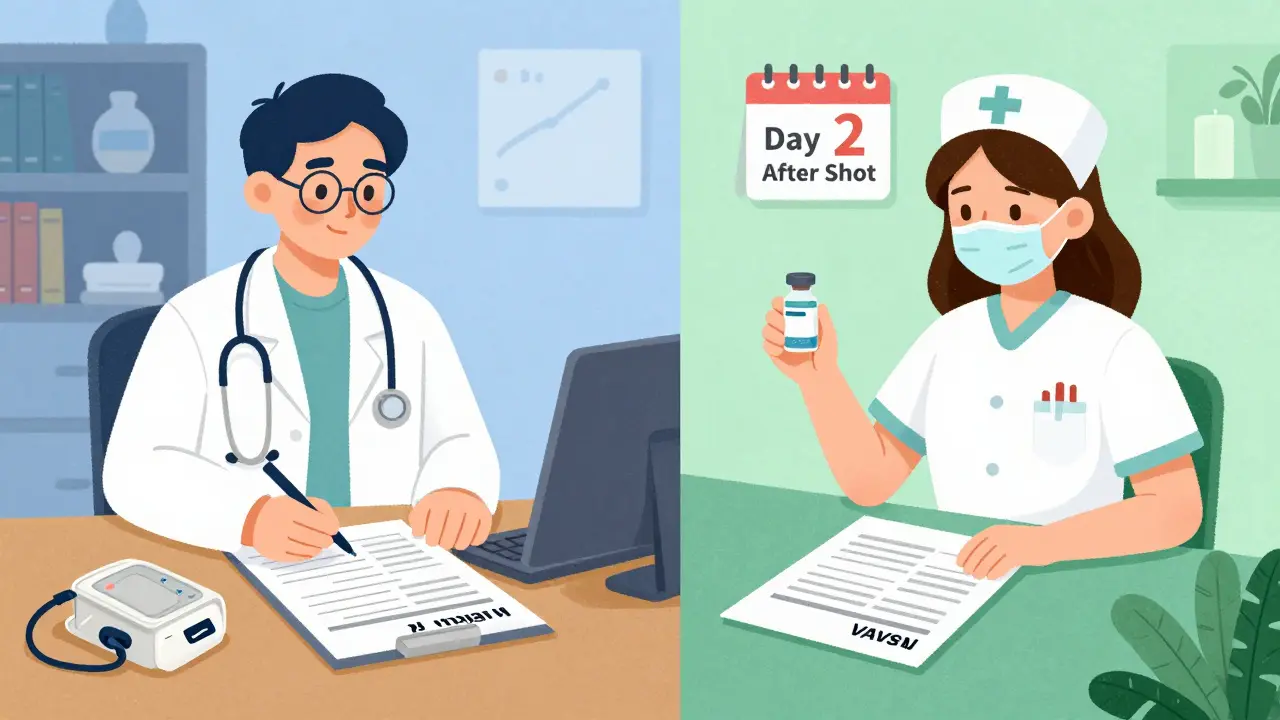
How Reporting Works in Practice
Reporting is simple, but the forms are different.
For MedWatch, you go to the FDA’s MedWatch page. You fill out Form 3500. You describe the problem, the product, when it happened, and your contact info. You can file online or download a PDF. If it’s a life-threatening event, call the FDA at 1-800-FDA-1088.
For VAERS, you go to vaers.hhs.gov. The form asks for the same kind of info-but it adds vaccine-specific questions: What brand? What dose? When was it given? Did the person have prior reactions? You can file online or mail a paper form.
Both systems let you report anonymously. But if you leave your contact info, they might follow up with questions. That helps them understand the full picture.
One thing to remember: You don’t need to be a doctor. You don’t need to prove causation. You just need to report what happened. A parent who noticed their child started having seizures two days after the HPV shot? That’s a report. A senior citizen who had a bad reaction to a new blood thinner? That’s a report. Both are vital.
What These Systems Can’t Do
People often think if 100 people report the same side effect, the product must be dangerous. That’s not how it works.
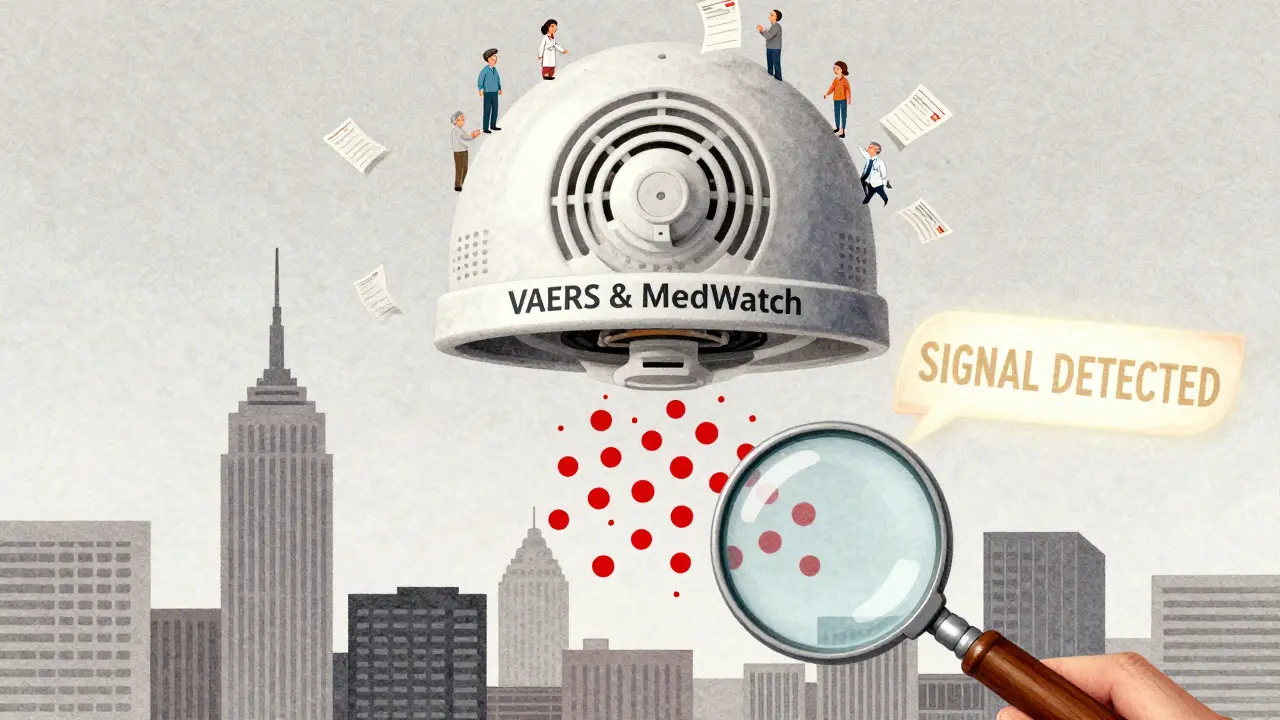
VAERS and MedWatch are early-warning systems, not proof of harm. They’re like smoke alarms. They don’t tell you if there’s a fire-they tell you to check.
Underreporting is a huge issue. Experts estimate that fewer than 1% of actual side effects get reported. Why? People forget. They don’t know where to report. They assume it’s “just a coincidence.”
Also, reports can be biased. If a vaccine gets negative press, more people might report minor symptoms like headaches or fatigue. That doesn’t mean the vaccine caused them-it just means more people are looking.
Neither system can tell you whether a specific person’s reaction was caused by the product. Only controlled studies can do that. That’s why VAERS data is always checked against VSD or CISA. MedWatch reports are paired with clinical trial data and post-market studies.
What Happens After You Report?
After you submit a report, it goes into a database. No one calls you back unless they need more info. But here’s what happens behind the scenes:
- Reports are grouped by product, side effect, and timing.
- Algorithms look for spikes-like 50 reports of heart palpitations after a new drug launched last month.
- If a signal is strong enough, FDA scientists dig deeper. They check medical records, compare rates in large populations, and sometimes require the manufacturer to run new safety studies.
- If a pattern is confirmed, the FDA might update the drug label, issue a warning, or even pull the product.
For vaccines, VAERS signals often lead to CDC reviews. In 2021, VAERS flagged a small number of myocarditis cases after mRNA vaccines in young males. That didn’t mean the vaccines were unsafe-it meant they needed to study it further. Within months, the CDC updated its guidance to recommend longer intervals between doses for certain groups.
That’s how these systems save lives. Not by proving guilt, but by spotting patterns too small for clinical trials to catch.
Real Examples That Changed Guidelines
MedWatch flagged a spike in liver damage linked to a popular weight-loss supplement in 2023. After reviewing reports, the FDA issued a warning and later banned the ingredient.
VAERS reported unusual cases of Guillain-Barré syndrome after the 2023 flu shot. The CDC reviewed the data, confirmed a small increased risk in adults over 65, and updated the vaccine recommendations to include a note for older patients.
These weren’t big headlines. But they were quiet, critical corrections-made possible because someone took five minutes to report what happened.
What to Do If You Experience a Side Effect
If you or someone you care about has a bad reaction:
- See a doctor right away if it’s serious.
- Write down what happened, when, and what product was used.
- Check if it’s a vaccine or not.
- Go to VAERS.gov for vaccines. Go to MedWatch.FDA.gov for everything else.
- Fill out the form-even if you’re unsure.
You don’t need to be an expert. You don’t need to know the science. You just need to be the person who noticed something unusual. That’s the first step in making sure no one else has to go through it.
Common Myths About Reporting
- Myth: Only doctors can report. Truth: Anyone can. Patients, parents, caregivers-your report counts.
- Myth: If I report, I’ll get sued or blamed. Truth: Reports are confidential. You can’t be identified unless you choose to be.
- Myth: If nothing happened to me, why report? Truth: Reporting isn’t about you. It’s about the next person who takes the same drug or vaccine.
- Myth: VAERS proves vaccines are dangerous. Truth: VAERS can’t prove causation. It only flags questions that need more study.
Can I report a side effect if I’m not sure it was caused by the drug or vaccine?
Yes. Both MedWatch and VAERS are designed to collect reports even when the cause is uncertain. You don’t need proof. If you noticed a problem after taking a medication or getting a vaccine, report it. The systems are meant to catch early signals, not confirm blame.
What if I report to the wrong system?
If you accidentally send a vaccine report to MedWatch, the FDA will usually forward it to VAERS. But it can take days or weeks. To avoid delays, always check: if it’s a vaccine, use VAERS. If it’s anything else, use MedWatch. It saves time and ensures the right team reviews your report.
Do I need a doctor’s note to report?
No. You don’t need a doctor’s note, medical records, or proof of diagnosis. You just need to describe what happened, when, and what product was involved. The systems are built for public input-your observation matters.
Are these systems reliable?
They’re not perfect. Underreporting is common, and reports can be incomplete. But they’re the best early-warning tools we have. When combined with other systems like the CDC’s Vaccine Safety Datalink, they’ve helped catch serious safety issues before they became widespread. They’re not proof-but they’re the first alarm.
How long does it take for a report to lead to action?
There’s no set timeline. Some signals trigger reviews within weeks. Others take months or years. It depends on how many similar reports come in and how serious the reaction is. A single report rarely leads to change-but 50 reports of the same issue? That’s when the FDA takes notice.
These systems don’t make headlines. But they’re quietly keeping millions safer. Every report you file adds to a safety net that catches problems no clinical trial ever could. You don’t need to be a scientist. You just need to pay attention-and speak up.




10 Comments
Robin Keith January 30, 2026
It’s fascinating-really, profoundly so-to consider how these systems, MedWatch and VAERS, operate not as judicial bodies, but as ambient sentinels in the vast, chaotic ecosystem of human biology and pharmaceutical intervention… You see, we’re not merely reporting symptoms; we’re contributing to a collective unconscious of medical awareness, a kind of digital somatic memory that transcends individual experience. Every rash, every dizzy spell, every unexplained fever-these are not isolated incidents, they’re whispers in the dark, and the system listens. And yet, we’re conditioned to dismiss them as ‘coincidence,’ as if the body doesn’t have its own language, its own way of screaming when something’s wrong. So when you file that report, even if you’re unsure, even if you feel foolish-you’re not just being cautious; you’re participating in a sacred, silent covenant between strangers who will never meet but whose lives are now entangled by the quiet act of documentation. That’s power. That’s responsibility. That’s humanity, in its most unglamorous, essential form.
Kristie Horst January 31, 2026
How delightfully ironic that we’ve built a system where the most critical medical surveillance tools rely entirely on the goodwill of people who don’t understand medicine.
And yet, we still expect patients to be both victims and data-entry clerks.
Imagine if your car’s airbag failed-you’d report it. But if your body fails after a vaccine? You’re supposed to ‘fill out a form’ like you’re submitting a grocery list.
It’s not just broken-it’s insulting.
Megan Brooks February 1, 2026
I appreciate how clearly this was laid out. I work in public health outreach, and I can’t tell you how many times I’ve had to correct someone who tried to report a vaccine reaction to MedWatch.
The confusion isn’t just inconvenient-it delays critical data collection.
I always tell people: if it came from a needle, go to VAERS. If it came from a bottle, go to MedWatch.
Simple. Clear. And honestly? More people need to hear that.
Paul Adler February 3, 2026
This is one of those posts that doesn’t get enough attention because it’s not flashy.
But it’s vital.
I’ve had two family members react badly to meds-one to a new statin, another to a flu shot. Both times, I didn’t know where to report.
This cleared it up completely.
Thank you for taking the time to explain the difference so thoroughly.
People need this.
Doug Gray February 3, 2026
So… let me get this straight.
VAERS = vaccines.
MedWatch = everything else.
And if you mess up? They forward it.
So… why not just merge them?
It’s not like the data is *that* different.
Just saying.
Also, I’ve never filed a report. But I’ve seen people do it.
It’s like… digital witchcraft?
¯\_(ツ)_/¯
paul walker February 5, 2026
Yesss!! This is so important!! I told my aunt to report her rash after the shingles shot and she said ‘nah, it’s probably just stress’-I was like NOOOOOO!! You gotta report it!! Even if you’re not sure!!
It’s not about you-it’s about the next person!!
Pls share this!!
Frank Declemij February 5, 2026
VAERS and MedWatch serve distinct functions. Confusing them undermines data integrity. Reporting a vaccine to MedWatch introduces noise into a system not designed to handle vaccine-specific metadata such as lot numbers, administration timing, or immunization history. The separation is intentional, methodologically sound, and necessary for signal detection. Misreporting delays public health responses. Always use the correct system.
DHARMAN CHELLANI February 7, 2026
Why do we even bother?
These systems are just PR tools.
Big pharma owns the FDA.
VAERS? A joke.
People report. Nobody cares.
They’ll ban a supplement after 500 reports.
But a drug that kills 5000? Still on the market.
Wake up.
kabir das February 8, 2026
Oh my GOD, I had NO IDEA… I reported my daughter’s fever after the MMR shot to MedWatch last year… I thought it was all the same… I feel so stupid…
But… what if they didn’t forward it?
What if it got lost?
How do we even know they’re not ignoring half of these reports?
I’m crying now…
LOUIS YOUANES February 9, 2026
Just report to VAERS for everything. Who cares what the system says. It’s all the same anyway.