
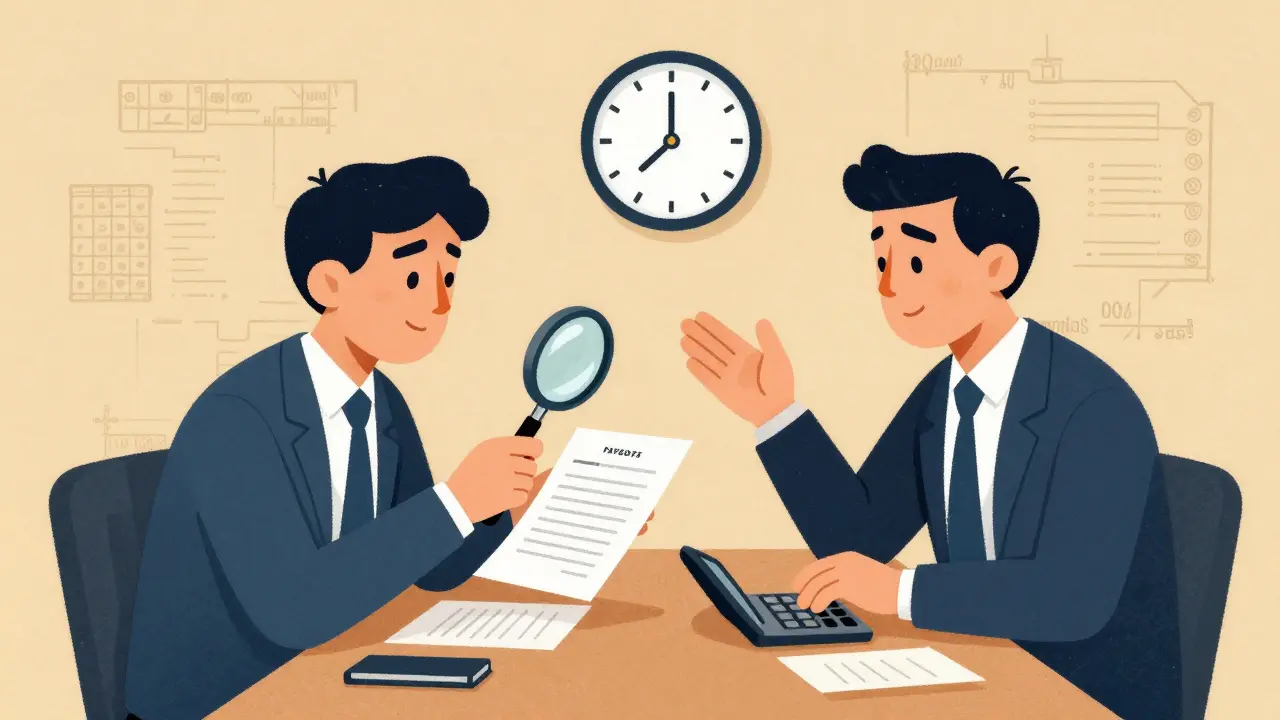
When two companies are locked in a patent dispute, they’re not just fighting over legal rights-they’re fighting over time, money, and market control. Most people think patent battles end in courtrooms with dramatic verdicts. But the truth? Patent settlement happens far more often than trial. In fact, 85.7% of patent disputes in the U.S. between 2010 and 2020 ended before a judge ever ruled. That’s not luck. It’s strategy.
Why Settle Instead of Fight?
Going to trial on a patent case costs between $3 million and $5 million on average. Even if you win, you’ve spent years and millions just to get back to where you started. For companies that make products-phones, drugs, medical devices-time is more valuable than money. Every month a product is delayed or pulled from shelves because of a lawsuit means lost sales, broken partnerships, and eroded customer trust. That’s why companies prefer to settle. It’s not about giving up. It’s about controlling the outcome. A settlement lets you decide the terms: how much to pay, how long a license lasts, whether you can keep selling your product, or if you need to redesign it. You trade uncertainty for predictability.The Anatomy of a Patent Settlement
Successful patent negotiations don’t happen by accident. They follow a clear structure. First, both sides assess their patent portfolios. They don’t look at all 500 patents they own-they pick 3 to 15 that matter most. These are the ones tied to products in the market, the ones with strong claims, and the ones that could be challenged. Next comes the claim chart. This isn’t legal jargon for lawyers alone. It’s a side-by-side map showing exactly how one company’s product uses the other’s patented technology. If you’re accused of infringing a patent on a heart monitor algorithm, the claim chart shows your code, your circuit design, and where it matches the patent’s claims. If the match is weak, you’ve got leverage. Then there’s validity analysis. A patent isn’t sacred. In fact, nearly 38% of patents asserted in court are later invalidated-either by the USPTO or a judge. Companies spend $150,000 to $300,000 before even sitting down at the negotiation table to find the weak spots in the other side’s patents. If you can prove a patent shouldn’t have been granted in the first place, you flip the power dynamic.How Settlements Actually Work
There are three main ways companies settle:- Lump-sum payments: One company pays the other a single amount, often between $1 million and $10 million, to walk away. Common in cases involving non-practicing entities (patent trolls) who don’t make products.
- Royalty agreements: The infringing company pays a percentage of sales-usually 1.5% to 5%-for the right to keep using the technology. This is standard in telecom and pharma, where products sell for years.
- High-low settlements: Both sides agree on a minimum and maximum payout. If the court rules one way, the higher amount is paid. If it rules the other way, the lower amount applies. This reduces risk for both sides and works best when companies have real business relationships.
Cross-Licensing: The Silent Winner
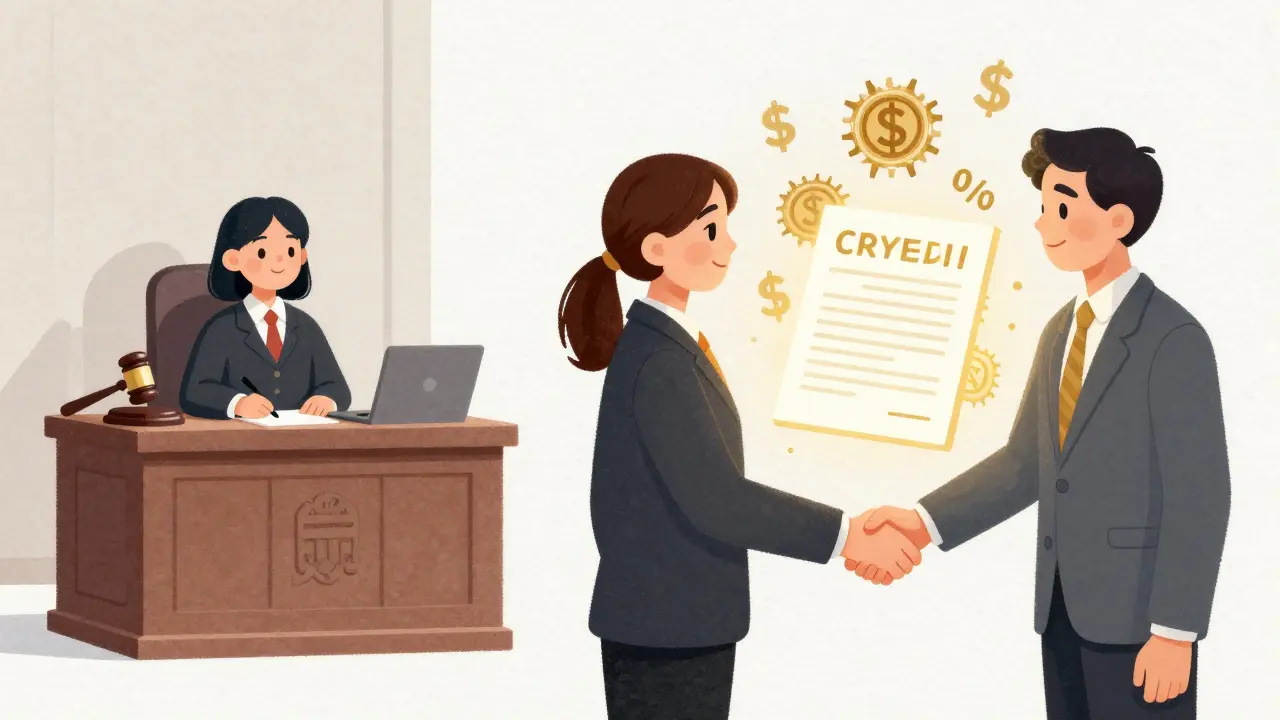
In industries like semiconductors, medical devices, and 5G tech, companies rarely fight to the end. They trade patents. Apple and Qualcomm, Ericsson and Samsung, Medtronic and Boston Scientific-they all have cross-licensing deals. Each side lets the other use their patents in exchange for access to the other’s tech. These deals aren’t just about avoiding lawsuits. They’re about innovation. Intel’s 2018 settlement with MEDIATEK didn’t just end a dispute-it led to a joint project developing 5G chips. The savings in R&D costs? Over $200 million. That’s the real win: turning a legal battle into a partnership.What Can Go Wrong
Not every settlement works. One big problem? The anchoring effect. If a company starts by asking for $50 million, even if that’s unrealistic, the other side often ends up paying more than they would’ve if the first offer was $10 million. Studies from the University of Chicago show plaintiffs who ask for 3x their target get 28% more. Another trap is ignoring FRAND rules. If a patent is part of a technical standard-like Wi-Fi or Bluetooth-the owner must license it fairly. Qualcomm got fined €242 million by the European Commission for refusing to license its SEP patents to competitors on fair terms. Companies that ignore this risk not just lawsuits, but government penalties. And then there’s the rise of AI in patent analysis. Tools like PatentSight can scan thousands of patents in days instead of weeks. But they still miss nearly 19% of key prior art. Human experts are still needed to spot the subtle connections AI can’t see.
What’s Changing Now
New tools are reshaping how settlements happen. The USPTO’s Patent Evaluation Express (PEX) program lets companies get a non-binding opinion on patent validity in weeks, not years-and for 60% less than a full post-grant review. Already, 17% of new settlements use PEX to avoid costly battles. In Europe, the Unified Patent Court (UPC), launched in June 2023, is changing the game. Before, companies had to sue in each country separately. Now, one ruling covers 17 countries. That’s made cross-border settlements rise by 22% in just six months. And soon, smart contracts on blockchain could automate royalty payments. IBM and Microsoft are testing systems that adjust payments automatically based on real-time sales data. No more audits. No more disputes over quarterly reports. Just code doing what it’s told.Who Wins and Who Loses
Big companies with 1,000+ patents settle 89% of their disputes. Small companies? Only 63%. Why? Because big firms can afford the long game. They have teams of lawyers, patent analysts, and economists. They can wait out a lawsuit. Small firms often can’t. That’s why patent trolls target them-they know the cost of defending a case could bankrupt them. But the real winners? Companies that treat patents like business assets, not legal weapons. They don’t just defend their IP-they use it to build partnerships, enter new markets, and accelerate R&D. The best patent strategy isn’t about winning lawsuits. It’s about avoiding them altogether.What You Need to Know Before You Negotiate
If you’re a company facing a patent challenge, here’s what to do:- Don’t panic. Most cases settle. You have time.
- Get your patent portfolio audited. Find your weak spots and theirs.
- Calculate your bottom line. What’s the cost of losing? What’s the cost of settling?
- Know your alternatives. Can you redesign the product? Can you license from someone else?
- Prepare to give something up. Successful settlements always involve trade-offs-extended license terms, access to your tech, or agreeing to drop your own claims.
What percentage of patent disputes end in settlement?
About 85.7% of patent disputes in the U.S. between 2010 and 2020 were settled before trial, according to a Stanford Law School study of 10,000 cases. Most happen after the Markman hearing but before summary judgment.
How much do patent settlements usually cost?
Settlement amounts vary widely. For non-practicing entities (patent trolls), the median is around $1.2 million. For disputes between competitors, it’s closer to $8.7 million. Royalty rates typically range from 1.5% to 5% of product sales.
What is a high-low settlement?
A high-low settlement sets a minimum and maximum payout before trial. If the court rules in favor of one party, they get the higher amount. If the other side wins, they get the lower amount. It reduces risk for both parties and works best when companies have mutual business interests.
Can patents be invalidated during a settlement?
Yes. Nearly 38.4% of patents asserted in litigation are later invalidated in whole or in part during post-grant review. Companies often use this threat as leverage during negotiations. The USPTO’s Patent Evaluation Express program now makes this faster and cheaper.
Why do big companies settle more than small ones?
Big companies have more resources-legal teams, patent analysts, and financial buffers. They can afford to wait out a case. Small companies often can’t. As a result, large firms with over 1,000 patents settle 89% of disputes, while small entities settle only 63%.
What’s the role of FRAND in patent settlements?
FRAND stands for Fair, Reasonable, and Non-Discriminatory. If a patent is part of a technical standard (like Wi-Fi or 5G), the owner must license it to anyone on FRAND terms. Violating this can lead to antitrust fines, as seen when Qualcomm was fined €242 million by the European Commission.



14 Comments
Michael Bond December 26, 2025
85.7% settle? That’s not surprising. Court is a money pit. Better to cut a deal and get back to building stuff.
jesse chen December 28, 2025
Wow, this is so well-explained... I never realized how much strategy goes into patent settlements... It’s not just about who’s right, it’s about who can move first... And the high-low model? Genius... I mean, it’s like insurance for litigation risk...
Angela Spagnolo December 28, 2025
i think the cross-licensing thing is underappreciated... like, apple and qualcomm? they’re not enemies, they’re partners in disguise... i’m just saying... maybe we should stop seeing patents as weapons...?
Sarah Holmes December 30, 2025
How dare you suggest that patent litigation is inefficient? This is the bedrock of innovation! Without the threat of billion-dollar lawsuits, companies would just steal each other’s ideas like common thieves! The system works because it terrifies them into compliance!
Kuldipsinh Rathod December 31, 2025
in india we see this all the time - small pharma companies get crushed by big ones with deep pockets. it’s not fair. settlement isn’t strategy, it’s survival for us.
SHAKTI BHARDWAJ December 31, 2025
LOL 85.7% settle?? yeah right!! all these big corps are just hiding their theft behind ‘settlements’!! and FRAND? pfft!! they use it as a shield to steal even MORE!! this whole system is rigged by silicon valley elites!!
Matthew Ingersoll January 1, 2026
The cross-licensing model in semiconductors is the quiet engine of global tech progress. It’s not glamorous, but without it, your phone wouldn’t exist. The real innovation isn’t in courtrooms - it’s in the handshake after the lawyer leaves.
carissa projo January 2, 2026
There’s something deeply poetic about turning a legal war into a collaborative dance - like two dancers who started shoving each other, then realized they could create something beautiful if they just stopped fighting and moved together. That’s what cross-licensing is. Not victory. Not defeat. Harmony.
josue robert figueroa salazar January 3, 2026
Patent trolls are parasites. Settlements are just paying ransom. And the 85.7% stat? That’s not strategy. That’s cowardice.
david jackson January 3, 2026
Let me tell you something - I used to work at a startup that got hit with a patent suit over a simple UI animation. We didn’t have $3 million. We didn’t even have $300,000. They demanded 5% of our revenue for five years. We had to shut down. And now? That same animation is in every major app. The patent holder? Made $40 million in royalties. We got nothing. So don’t talk to me about ‘strategy.’ This isn’t business. It’s predation.
Jody Kennedy January 4, 2026
YES! This is the energy I needed today! The PEX program? Game changer. AI tools? Cool, but still need humans to catch the sneaky stuff. We’re not just fighting patents - we’re fighting outdated systems. Let’s build better tools, not just bigger lawsuits!
christian ebongue January 4, 2026
So you spent $300k to prove their patent is invalid… then settled for $2M? Congrats. You just paid to lose. Classic.
Joanne Smith January 6, 2026
That comment about AI missing 19% of prior art? Spot on. I’ve seen algorithms flag ‘prior art’ that’s a 1987 patent for a toaster. Meanwhile, the real prior art is buried in a Soviet-era journal no one indexed. Humans still matter. Especially the ones who read old journals for fun.
Prasanthi Kontemukkala January 7, 2026
Small companies need mentorship, not just legal advice. If someone with experience could walk them through portfolio audits or help them spot weak patents in the other side’s stack, maybe fewer would fold. It’s not just about money - it’s about access to knowledge.