
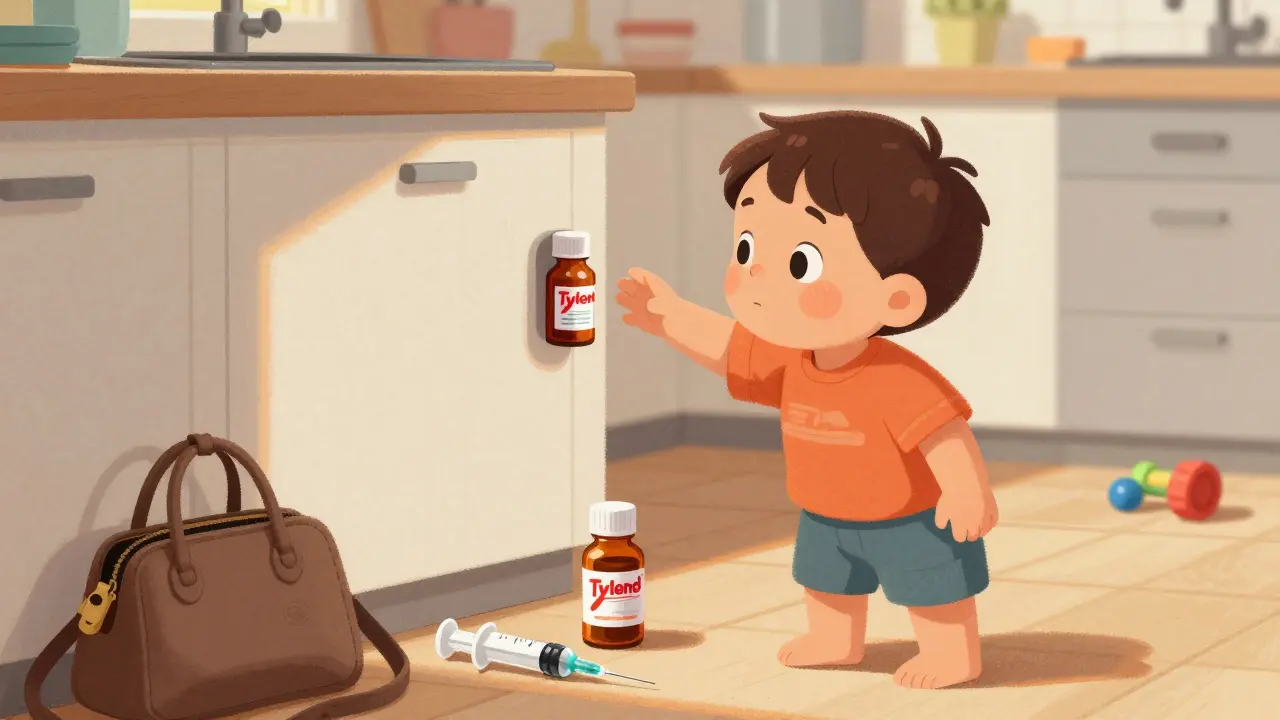
When a child accidentally swallows too much medicine, it can turn into a medical emergency in minutes - even if they seem fine at first. Every year, over a million children under six in the U.S. are exposed to medications they weren’t supposed to take. Many of these cases happen at home, where medications are left within reach, or when caregivers mix up dosing instructions. The signs of pediatric medication overdose aren’t always obvious, and waiting to see if symptoms develop can be deadly. Knowing what to look for and when to call poison control could save a child’s life.
What Counts as a Medication Overdose in Kids?
A pediatric medication overdose isn’t just about swallowing a whole bottle. It can happen with just one extra pill, a teaspoon too much liquid, or combining two medicines that both contain the same active ingredient. Children’s bodies are smaller and still developing, so they process drugs differently than adults. A dose that’s safe for a teenager might be toxic for a two-year-old.
According to the American Academy of Pediatrics, children under five account for nearly half of all medication exposures reported to poison control centers. The most common culprits? Acetaminophen (Tylenol), cough and cold syrups, ADHD medications like Adderall or Ritalin, and opioid painkillers - including fentanyl, which is sometimes found hidden in other pills.
One of the biggest mistakes caregivers make is thinking, “It’s just a little extra.” But even a small amount of fentanyl can stop breathing in a child. And acetaminophen - a drug many parents trust because it’s sold over the counter - can silently damage the liver for hours before symptoms show up.
Key Signs of Medication Overdose by Type
Not all overdoses look the same. The symptoms depend heavily on what the child took. Here’s what to watch for based on the most common substances involved.
Acetaminophen (Tylenol)
This is the number one cause of pediatric poisoning. The scary part? A child might seem perfectly fine for 12 to 24 hours after swallowing too much. By then, liver damage is already underway. Early signs include:
- Nausea or vomiting
- Loss of appetite
- Abdominal pain - especially on the right side
- Unusual tiredness or confusion
Later signs - which mean the liver is failing - include yellowing skin or eyes (jaundice), dark urine, and bleeding from the gums or nose. The Cleveland Clinic says N-acetylcysteine (NAC), the antidote, is 100% effective if given within 8 hours of ingestion. After 16 hours, its effectiveness drops to 40%. That’s why you can’t wait.
Opioids (Painkillers, Fentanyl, Heroin)
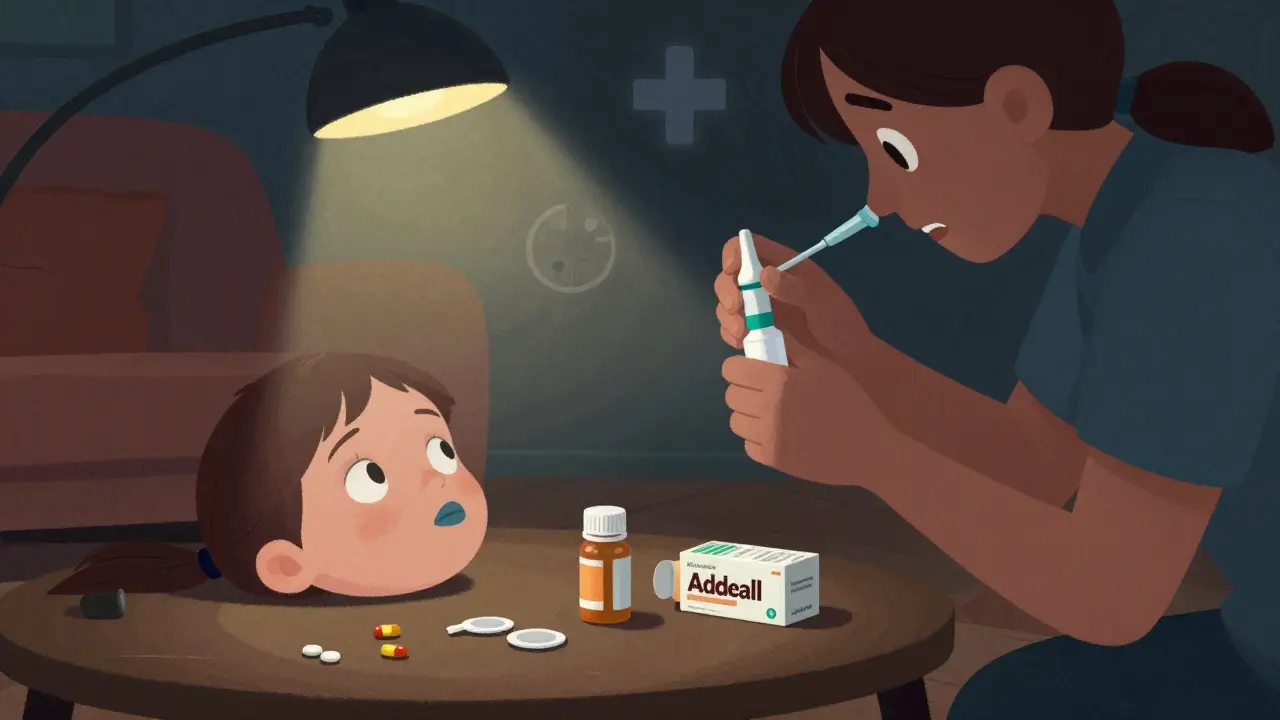
Fentanyl is especially dangerous because it’s 50 to 100 times stronger than morphine. A child might ingest it by accident if a pill looks like candy or if it’s mixed into another medication. Signs of opioid overdose include:
- Pinpoint pupils - pupils that shrink to tiny dots
- Unresponsiveness - shaking or shouting won’t wake them
- Slow, shallow, or stopped breathing
- Cold, clammy skin
- Lips or fingernails turning blue or gray
- Gurgling or snoring sounds - like they’re drowning
If you see these signs, call 911 immediately. If naloxone (Narcan) is available, give one dose right away. Wait 2-3 minutes. If there’s no improvement, give a second dose. Don’t wait for EMS to arrive.
Stimulants (ADHD Medications)
Overdosing on Adderall, Ritalin, or similar drugs can trigger a medical crisis. These medications speed up the nervous system. Too much can cause:
- Severe agitation or panic
- High fever (over 104°F)
- Rapid heartbeat or chest pain
- Seizures
- Hallucinations or paranoia
- Loss of coordination or slurred speech
Children may also vomit, have diarrhea, or complain of headaches. In extreme cases, these overdoses can lead to stroke or heart attack. Even if the child seems calm, high blood pressure and heart strain can build silently.
Cough and Cold Medicines
These often contain antihistamines, decongestants, or dextromethorphan. When given in excess - especially in liquid form - they can cause:
- Extreme drowsiness or unconsciousness
- Fast or irregular heartbeat
- Blurred vision or hallucinations
- Seizures
- Difficulty breathing
Many parents don’t realize that cold medicines and pain relievers often contain the same ingredients. Giving both at the same time is a common cause of accidental overdose.
When to Call Poison Control - Not 911
You don’t need to wait for symptoms to appear. If you suspect your child swallowed any medication that wasn’t meant for them - even if they seem fine - call Poison Control immediately. The number is 1-800-222-1222. It’s free, confidential, and available 24/7.
Poison Control experts can:
- Identify the substance and its risk level
- Advise whether to monitor at home or go to the ER
- Give step-by-step instructions for what to do next
- Connect you with local poison specialists
They also have a free online tool called webPOISONCONTROL that works for non-emergency cases. You answer a few questions, and it gives you real-time guidance based on your child’s age, weight, and the substance involved.
When to Call 911 - Right Now
Some situations are too urgent to wait for a phone call. Dial 911 immediately if your child has:
- Stopped breathing or is gasping for air
- Is unresponsive - no reaction to shaking, shouting, or pinching
- Is having seizures or uncontrollable shaking
- Has blue or gray lips, face, or fingernails
- Has swelling in the face, tongue, or throat
- Is vomiting violently or can’t swallow
In these cases, every second counts. While you wait for help:
- Check if they’re breathing. If not, start rescue breathing.
- If you have naloxone and suspect opioids, give one dose.
- Keep them on their side to prevent choking.
- Do NOT give them water, food, or syrup to induce vomiting - this can make things worse.
What to Do Before Help Arrives
Don’t panic, but act fast. Here’s what to do while waiting for Poison Control or EMS:
- Check responsiveness. Gently shake their shoulder and shout their name. If no response, move to step two.
- Look for breathing. Watch their chest. If they’re not breathing or breathing very shallowly, start rescue breathing.
- Find the medication. Grab the bottle or container. Don’t throw it away. Emergency teams need to know what was taken.
- Call 911 or Poison Control. If you’re unsure, call Poison Control first. They’ll tell you if you need to call 911.
- Don’t try to treat them yourself. No syrup, no milk, no salt water. Only trained professionals should give antidotes.
How to Prevent Medication Overdoses
Most pediatric overdoses are preventable. Here’s what works:
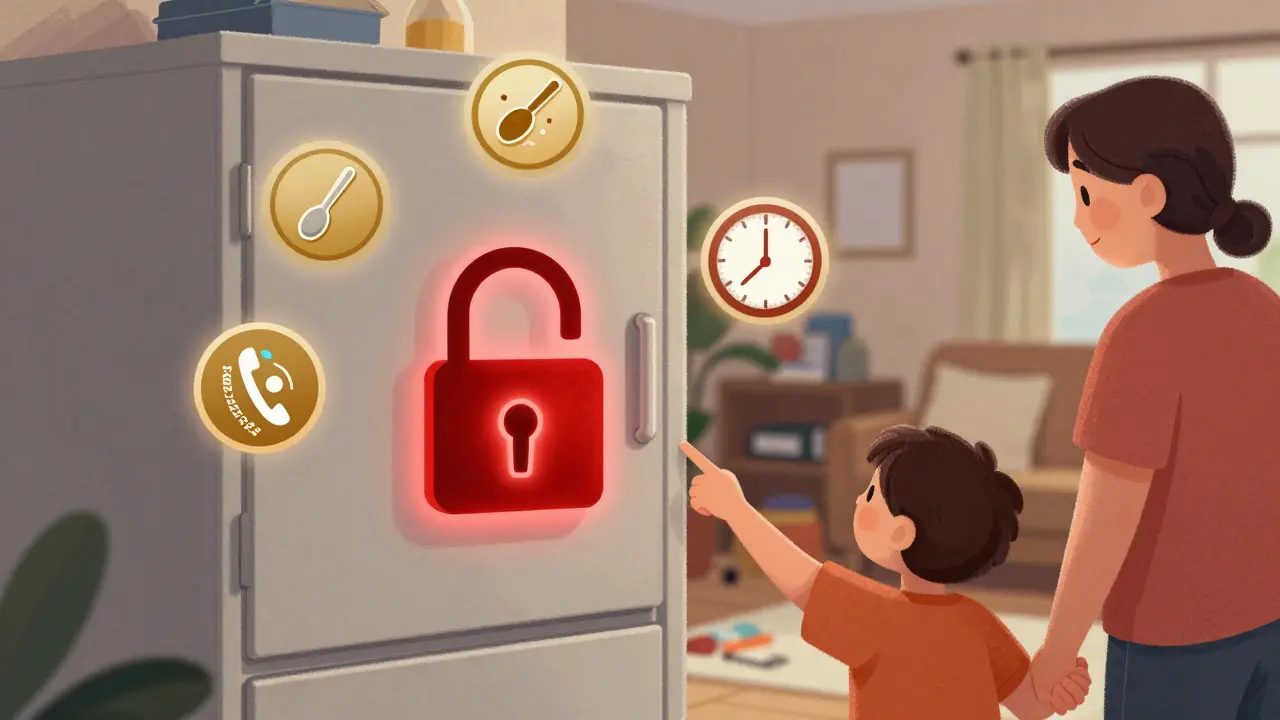
- Lock it up. Store all medications - even vitamins - in a locked cabinet, not on counters or in purses. The CDC says 60% of poisonings happen at home.
- Use child-resistant caps properly. They’re not foolproof. Always close them tightly after each use.
- Never call medicine “candy.” Kids mimic what they hear. Saying “This is like candy” teaches them to seek out pills.
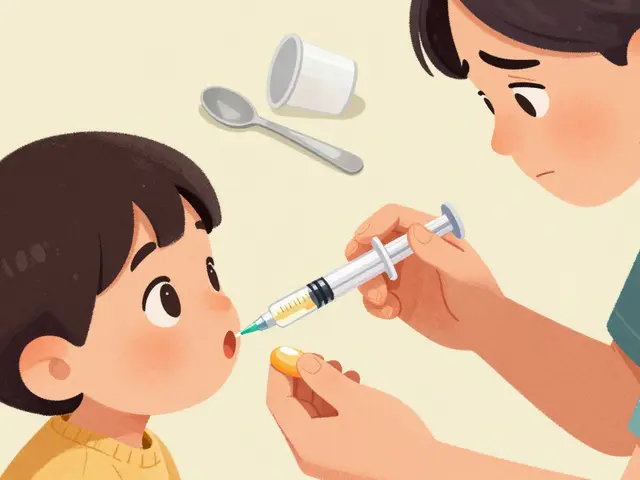
- Use one measuring tool. Never use a kitchen spoon. Use the syringe or cup that came with the medicine. Many overdoses happen because caregivers use different spoons.
- Check labels for duplicates. About 70% of acetaminophen overdoses happen when two products - like cold medicine and pain relievers - both contain it. Always read the “Active Ingredients” section.
- Dispose of old meds. Don’t keep expired or unused pills. Many pharmacies offer free take-back programs.
Why Timing Is Everything
The window for saving a child after a medication overdose is narrow. For acetaminophen, the antidote works best within 8 hours. For opioids, naloxone must be given before breathing stops. For stimulants, high blood pressure can lead to stroke within minutes.
Waiting to see “if they get worse” is the most dangerous mistake. By the time symptoms appear, internal damage may already be irreversible. That’s why Poison Control recommends calling even if the child seems fine.
Remember: You don’t need to be certain. If you have even a gut feeling that something’s wrong, pick up the phone. The experts at Poison Control have handled millions of cases. They’ve seen everything. They won’t judge. They’ll help.
What should I do if my child swallowed medicine but seems fine?
Call Poison Control at 1-800-222-1222 immediately. Many medications, like acetaminophen or fentanyl, cause no visible symptoms for hours - but damage is already happening inside the body. Waiting to see if they get sick is risky. Poison Control experts can tell you whether to monitor at home or go to the hospital based on the substance, amount, and your child’s weight.
Can I use a kitchen spoon to measure liquid medicine?
No. Kitchen spoons vary widely in size - a teaspoon can hold anywhere from 3 to 7 milliliters. Medicines are dosed precisely by weight. Always use the measuring syringe, cup, or dropper that came with the medication. Using the wrong tool is one of the most common causes of accidental overdose in children.
Is it safe to give my child Naloxone (Narcan) if I think they overdosed on opioids?
Yes - and you should. Naloxone is safe, even if the child didn’t take opioids. It won’t harm them if they didn’t ingest an opioid. If your child is unresponsive, not breathing, or has pinpoint pupils, give one dose of naloxone right away. Wait 2-3 minutes. If there’s no improvement, give a second dose. Then call 911. Naloxone is available without a prescription in many places and can be kept at home.
How common is acetaminophen overdose in kids?
Acetaminophen is the leading cause of pediatric medication poisoning. In 2022, over 129,000 cases involved children under 6, according to the American Association of Poison Control Centers. Most happen because caregivers give multiple medicines - like cold syrup and Tylenol - that both contain acetaminophen. The FDA now requires unit-dose packaging and clearer labeling to reduce this, but the risk remains high.
Are child-resistant caps enough to keep kids safe?
No. While child-resistant caps help, they’re not foolproof. About 20% of poisonings still happen even when caps are used. Children as young as 18 months can learn to open them. The safest approach is storing all medications in a locked cabinet, out of sight and reach - not just relying on the cap.


11 Comments
Amadi Kenneth March 16, 2026
They say 'call Poison Control' like it's some magic fairy wand... but have you seen how long it takes to get through? I called last year when my nephew got into my wife's ADHD meds-waited 22 minutes on hold while his pupils turned into pinpricks. Meanwhile, the ER was full of people who 'just thought it was a cold.' Poison Control doesn't send ambulances. They give you bullet points. What if you're in a rural area? Who's really protecting these kids? I think Big Pharma wants us scared so we'll keep buying naloxone kits... and they're overpriced.
Shameer Ahammad March 17, 2026
It is utterly irresponsible to suggest that parents rely on 'Poison Control' as a first line of defense. The very notion that one should call a hotline rather than immediately proceed to a medical facility is dangerously negligent. In India, where healthcare infrastructure is already strained, such advice could prove fatal. The correct protocol is clear: if there is ANY suspicion of ingestion, proceed directly to the nearest emergency department with the container in hand. No waiting. No calling. No 'webPOISONCONTROL'-this is not a customer service issue. It is a physiological emergency.
Alexander Pitt March 18, 2026
Acetaminophen toxicity is silent because the liver doesn't have pain receptors. That's why the 8-hour window matters. NAC works because it replenishes glutathione, which detoxifies NAPQI-the toxic metabolite. If you wait until vomiting or jaundice appears, you're already in stage 2 of liver injury. The CDC data shows 78% of pediatric acetaminophen overdoses occur because parents didn't realize Tylenol and NyQuil both contain it. Always check the active ingredients. Never assume. Always read the label. It's not complicated. It's biology.
Manish Singh March 20, 2026
Man, I grew up in a household where medicine was just... there. On the counter. In Mom’s purse. We thought it was normal. Now I have two kids and I’ve got a locked cabinet with a digital lock. Even the vitamins. Even the ibuprofen. I used to think that was overkill. Now? I check the cabinet twice a day. And I don’t let anyone else in the house-no babysitters, no relatives-unless they know the code. It’s not paranoia. It’s parenting. The world’s full of pills that look like candy. Our kids don’t know the difference. We have to be the filter.
Nilesh Khedekar March 22, 2026
lemme tell u sumfin... i saw a video on tiktok where a kid ate 3 adderall pills and was fine. just sat there smilin. so like... maybe the whole 'overdose' thing is hype? i mean, kids are tougher than we think. my cousin did a whole bottle of melatonin and woke up 12 hrs later with a headache. no biggie. maybe we're overreacting? poison control sounds like a corporate scam. why not just watch and wait? if they're not dead in 2 hrs, they're probably okay? lol
Robin Hall March 23, 2026
The entire premise of this article is dangerously flawed. Poison Control, while well-intentioned, operates under a framework of liability avoidance rather than clinical urgency. Their protocols are based on population averages, not individual physiology. A child weighing 18kg who ingests 200mg of acetaminophen is not the same as one weighing 22kg. The algorithmic nature of webPOISONCONTROL ignores metabolic variation, genetic polymorphisms in CYP enzymes, and comorbid conditions. This is not a checklist. It is a biochemistry crisis. Emergency departments must be the first and only response.
Suchi G. March 25, 2026
I just want to say... I lost my little brother when I was 12. He was 4. Took two of my mom's blood pressure pills. She thought he was just sleepy. We waited. We watched. We thought he'd wake up. He didn't. They said it was 'too late' by the time they got to the hospital. I still dream about it. I still cry when I see kids playing with pill bottles. I know you're trying to help. I know you're scared too. But please... if you even think something's wrong... call 911. Don't call Poison Control first. Don't wait. Don't hope. Just call. Please. For all the kids who don't get a second chance.
Andrew Muchmore March 25, 2026
Lock your meds. Use child-resistant caps. Read labels. Don't use kitchen spoons. Call 911 if breathing stops. That's it. No fluff. No theory. Just action. If you're reading this, you're already ahead of 80% of parents. Keep going.
Paul Ratliff March 27, 2026
my kid once swallowed a whole bottle of gummy vitamins. looked like candy. we panicked. called poison control. they said 'he'll be fine, just watch for loose stools.' turned out they were right. point is: not every ingestion is a crisis. sometimes it's just a tummy ache. don't let fear make you overreact. but yeah... lock stuff up. duh.
SNEHA GUPTA March 28, 2026
There’s a deeper layer here, isn’t there? We treat medicine like a tool, but children experience it as mystery. A pill isn’t just a molecule-it’s a symbol of power, control, safety, or danger, depending on who hands it to them. We lock cabinets, yes, but we also need to talk to our kids about why some things are sacred and others are forbidden. The real prevention isn’t just physical-it’s cultural. We’ve normalized medicine as casual, as interchangeable, as ‘just a little extra.’ That’s not a parenting issue. That’s a societal one. When did we stop teaching reverence for the body’s boundaries?
Gaurav Kumar March 29, 2026
Finally, someone speaks sense! 😊 In India, we’ve known this for decades. Our grandmothers locked away all medicines in brass boxes. No exceptions. No 'web tools.' No 'hotlines.' Just discipline. The West has turned healthcare into a service industry-call, wait, click, get advice. We don’t have time for that. We act. We lock. We watch. We teach. And we don’t apologize for being strict. A child’s life isn’t a survey. It’s a sacred trust. If you’re not locking your meds, you’re not parenting-you’re gambling. 🇮🇳