
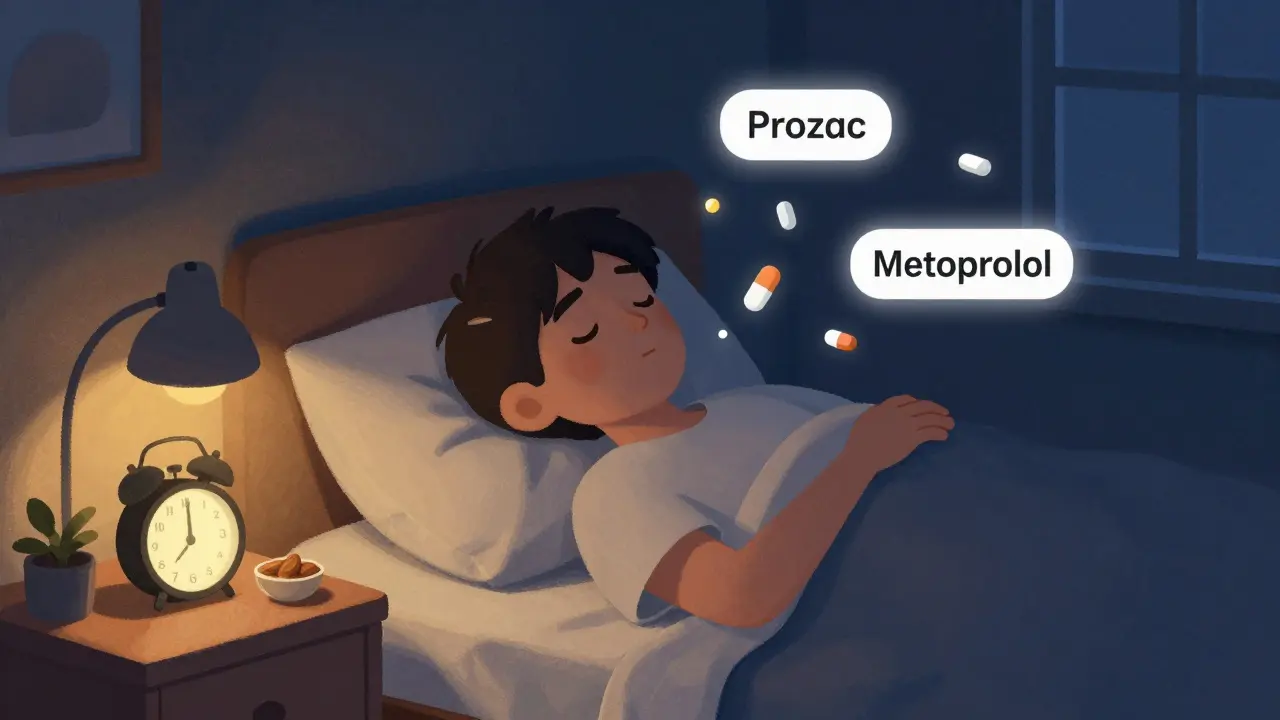
When your medication is keeping you awake-or making you groggy all day-it’s not just annoying. It’s dangerous. You’re not alone. Millions take pills for depression, high blood pressure, or insomnia, only to find their sleep is worse than before. The problem isn’t you. It’s the medication. But here’s the good news: you don’t have to keep living like this. sleep hygiene isn’t just a buzzword. It’s a proven, drug-free way to fix what your pills broke.
Why Your Medication Is Ruining Your Sleep
Not all meds affect sleep the same way. Some make you wired. Others turn your brain into a fog machine. Fluoxetine (Prozac), for example, is a stimulant in disguise. Even though it’s meant for depression, it can stop you from falling asleep. Meanwhile, paroxetine (Paxil), another antidepressant, does the opposite-it makes you sleepy. Same class, totally different effects. That’s why blanket advice like “just take it at night” doesn’t work. Beta blockers like metoprolol and atenolol, used for high blood pressure and heart conditions, cut your body’s natural melatonin by nearly 40%. Melatonin is your sleep signal. Less of it? Your brain doesn’t know when to shut down. Even worse, sleep meds themselves cause next-day problems. In one study of 1,200 people, 68% felt groggy, 55% struggled to focus, and 42% had memory gaps. That’s not just tiredness. That’s impaired thinking. And if you’re driving or operating machinery, it’s a real risk. Benzodiazepines and Z-drugs like zolpidem (Ambien) have half-lives longer than six hours. That means they’re still in your system when you wake up. Studies show their effect on coordination is like having a blood alcohol level of 0.05%-the legal limit in many countries. The FDA slapped a black box warning on these drugs after reports of people sleep-driving, sleep-eating, or even sleep-calling 911-all while fully unconscious.What Sleep Hygiene Actually Means (And Why It Works)
Sleep hygiene isn’t about fancy pillows or lavender sprays. It’s a set of science-backed habits that reset your body’s internal clock. Developed in the 1980s by Dr. Peter Hauri at Mayo Clinic, it’s now the first-line recommendation from the American Academy of Sleep Medicine. And here’s the kicker: it works even when meds are messing with your sleep. The goal isn’t to stop your meds. It’s to outsmart their side effects. You’re not fighting your medication-you’re working around it. Think of it like adjusting your thermostat when the heater’s broken. You don’t replace the heater. You layer blankets, close drafts, and keep the room warm another way.Fix Your Wake Time First (Yes, Really)
Most people think bedtime matters most. It doesn’t. Your wake time does. If you sleep in on weekends because you were up all night on meds, you’re training your brain to stay confused. That’s why the most effective fix is a fixed wake time-within 30 minutes, every single day. Even on vacation. Even if you only slept two hours. A 2022 JAMA Internal Medicine study found that people who stuck to a consistent wake time improved their sleep efficiency by over 58% in just four weeks. Why? Because your circadian rhythm-your body’s 24-hour clock-thrives on predictability. No matter what your meds are doing, your body learns: “This is when we wake up.” Once that’s locked in, falling asleep gets easier.Light Is Your Secret Weapon
Light controls melatonin. And if your beta blocker is already cutting melatonin production, you need to compensate. Start your day with 30 minutes of bright light-ideally 10,000 lux. That’s the intensity of sunlight on a clear morning. You don’t need to go outside. A light therapy box works fine. Then, after 8 p.m., shut it all down. No phone. No TV. No laptop. Blue light from screens blocks the last of your melatonin. Even dim lights can interfere. Use red or amber bulbs in your bedroom. If you need to get up at night, use a nightlight, not the overhead. One study showed that eliminating blue light after 8 p.m. improved sleep onset by 31% in people on sleep-disrupting meds.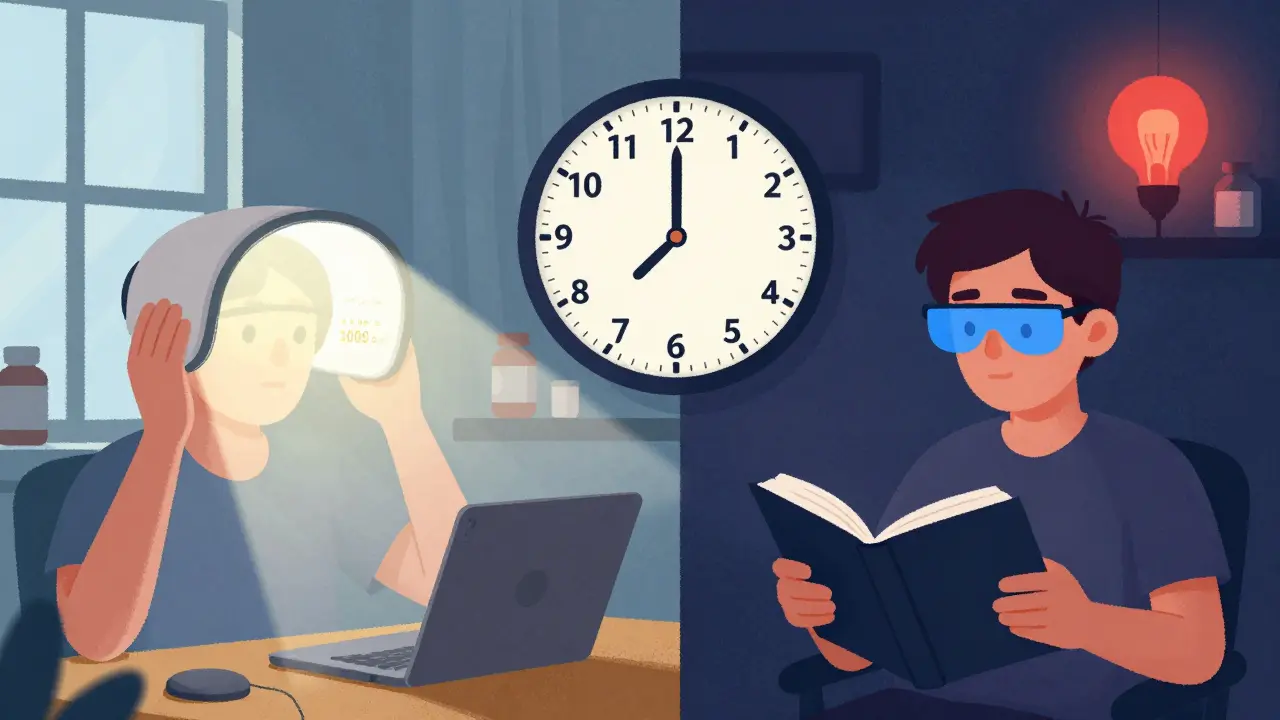
When and How to Take Sleep Meds (If You Must)
If your doctor says you need zolpidem or eszopiclone, timing is everything. These drugs work fast. But if you take them at 10 p.m. and don’t sleep until 11, you’re asking for a hangover. The FDA recommends taking them only when you can get 7 to 8 hours of uninterrupted sleep. That means no taking it on a night you have to wake up early. Also, create a buffer. Don’t take your sleep med right before bed. Wait at least 2 hours after your last activity. If you eat dinner at 7, don’t take the pill until 9. Why? Because eating, scrolling, or even thinking about sleep builds up “sleep pressure.” If you take the med too early, your brain isn’t ready-and the drug doesn’t work right. You end up with side effects without the benefit.What You Eat Matters More Than You Think
Some foods make medication side effects worse. Aged cheese, cured meats, and soy sauce contain tyramine. That’s fine if you’re not on blood pressure meds. But if you are, tyramine can spike your blood pressure-and disrupt your sleep. It’s a double whammy. On the flip side, magnesium helps. Almonds, spinach, black beans, and pumpkin seeds are rich in it. A 2020 study in Nutrients found that taking 500 mg of magnesium daily reduced insomnia severity by 34.7 points on a standard scale. That’s almost as good as some sleep meds-but without the grogginess.Exercise Isn’t the Enemy-Timing Is
You’ve heard “exercise helps sleep.” But if you’re on stimulant meds like antidepressants or ADHD drugs, working out too close to bed can backfire. A 2001 study from the University of Pennsylvania found that exercising within 4 hours of bedtime made insomnia worse in people on these meds. The fix? Move earlier. Even a 20-minute walk after lunch helps. It doesn’t have to be intense. Just get your body moving. The key is to let your core temperature drop naturally before bed. Exercise raises your temperature. If you do it too late, your body stays warm-and you stay awake.Why Sleep Hygiene Beats More Pills
The American College of Physicians says CBT-I (cognitive behavioral therapy for insomnia) should be the first treatment for chronic insomnia-not pills. Why? Because long-term use of sleep meds increases dementia risk by 1.83 times. A 2015 study of nearly 90,000 people found that those who took sleep meds for years had a 138% higher chance of developing dementia. Meanwhile, digital CBT-I programs like Sleepio show that 71% of users reduce next-day impairment from meds within six weeks. That’s not a miracle. It’s behavior change. You’re not curing the side effect. You’re managing it. And you’re doing it without adding more chemicals to your system.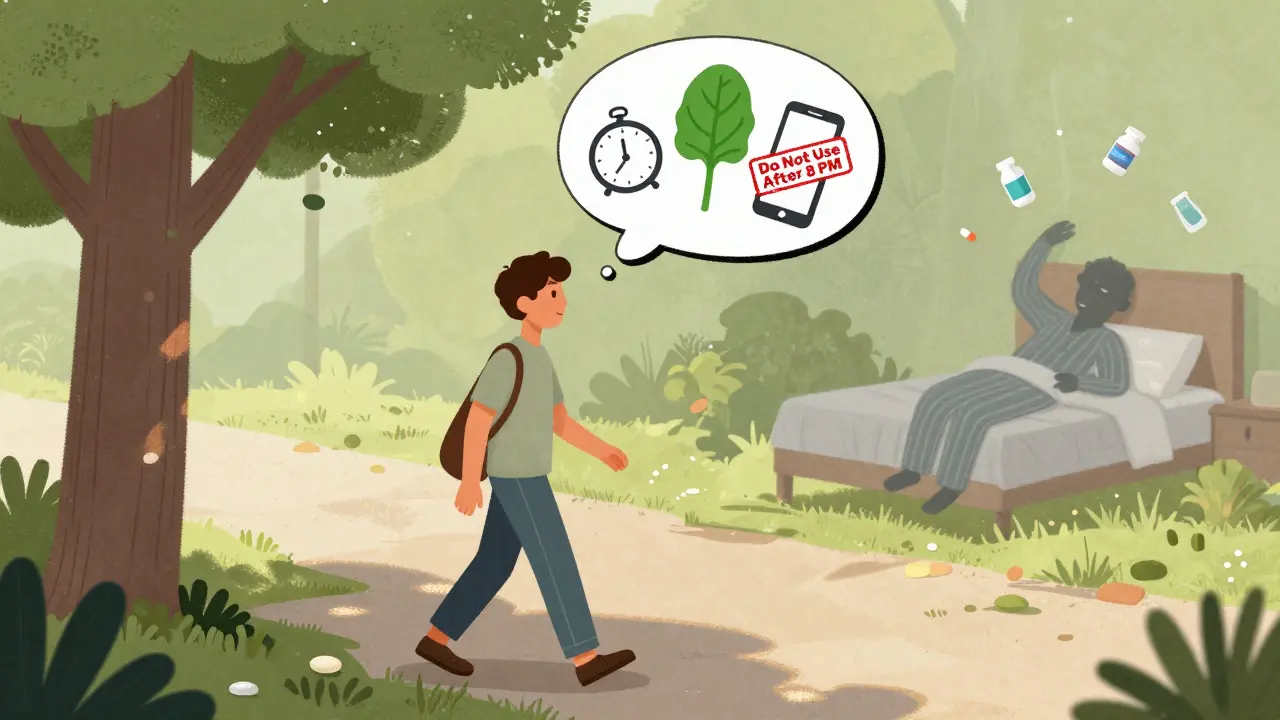
What’s Changing Right Now
The tide is turning. Since 2019, prescriptions for sleep meds have dropped 22.4% in the U.S. Why? Black box warnings. Patient lawsuits. And growing awareness. Now, 28 states require doctors to document sleep hygiene education before prescribing long-term sleep meds. The European Medicines Agency limits benzodiazepines to 4 weeks max. Apple’s iOS 17 Health app now tracks your meds and flags which ones are likely to disrupt sleep. It gives you personalized tips-like when to take your pill or how to adjust your light exposure. In trials, users who followed these tips saw a 41% drop in sleep complaints. The National Institutes of Health just invested $14.7 million to study sleep hygiene in older adults-because seniors are 3.2 times more likely to suffer severe side effects from sleep meds. They’re not just tired. They’re falling. Forgetting. Getting confused.Where to Start Today
You don’t need to overhaul your life. Pick one thing and stick with it for 21 days. That’s how long it takes for a habit to stick.- Start with your wake time. Set an alarm. Every day. No exceptions.
- Turn off all screens by 8 p.m. Use a dim red bulb if you need light.
- Take your sleep med only if you can sleep 7-8 hours. And wait at least 2 hours after your last activity.
- Snack on almonds or spinach at dinner. Skip the aged cheese.
- Walk after lunch. Not after dinner.
When to Talk to Your Doctor
Don’t stop your meds on your own. But do bring this up at your next appointment. Say: “I’m trying to improve my sleep without adding more drugs. Can we review which meds might be affecting my rest?” Ask about alternatives. Is there a non-sedating antidepressant? A different blood pressure med? A lower dose? Sometimes, switching brands or timing makes all the difference. And if your doctor pushes back? Ask for a referral to a sleep specialist. CBT-I is covered by most insurance now. It’s not experimental. It’s standard care.Final Thought
Sleep isn’t broken because you’re taking meds. It’s broken because the system is. We’ve been taught to fix sleep with more pills. But the real fix is simpler: consistency, light, timing, and food. You don’t need to be perfect. Just consistent. Your body will thank you.Can sleep hygiene replace my sleep medication entirely?
Sleep hygiene won’t always replace medication, but it can reduce your reliance on it. Many people find they need lower doses or take meds only on bad nights. For chronic insomnia, CBT-I (a form of sleep hygiene) is the first-line treatment recommended by the American College of Physicians. If your meds are causing more harm than good, talk to your doctor about tapering off while building stronger sleep habits.
Why does taking my sleep pill at night still leave me groggy in the morning?
Many sleep meds have long half-lives, meaning they stay in your system for hours. Zolpidem and temazepam can linger for 6-12 hours. If you don’t get a full 7-8 hours of sleep, the drug is still active when you wake up. That’s why timing matters. Only take it when you can sleep uninterrupted. Also, avoid alcohol-it makes the hangover worse.
Is it safe to take magnesium with my blood pressure medication?
Yes, magnesium is generally safe with most blood pressure meds and may even help lower blood pressure slightly. But if you have kidney disease or take certain diuretics, you should check with your doctor first. Magnesium can build up in your system if your kidneys aren’t working well. For most people, 200-400 mg daily from food or supplements is safe and helpful for sleep.
Can blue light from my phone really stop me from sleeping if I’m on beta blockers?
Absolutely. Beta blockers already lower your natural melatonin by up to 37%. Blue light from screens suppresses the rest of it. That’s a double hit to your sleep signal. Even dim screen light after 8 p.m. can delay sleep onset by 20-30 minutes. Use night mode, red filters, or just put the phone away. Your brain needs darkness to reset.
How long does it take for sleep hygiene to work when meds are involved?
Most people notice small improvements in 7-10 days-like falling asleep faster or waking up less. But real, lasting change takes 21 days of consistency. The biggest wins come from fixing your wake time and light exposure. Those two habits reset your body clock faster than any pill. Don’t expect miracles overnight. Do expect better mornings after three weeks.
Are there any apps that help with sleep hygiene when taking meds?
Yes. Apple’s iOS 17 Health app now flags medications linked to sleep disruption and gives personalized tips based on FDA data. Apps like Sleepio and Somryst offer guided CBT-I programs proven to reduce next-day fog from sleep meds. Many are covered by insurance now. Look for ones that let you log your meds and track how they affect your sleep each night.
What if I can’t stick to a fixed wake time because of shift work?
Shift work makes sleep hygiene harder, but not impossible. Your goal isn’t a fixed time-it’s consistency within your schedule. If you work nights, wake up at the same time after each shift-even if it’s 3 p.m. Use bright light right after waking, and wear blue-blocking glasses before your next shift. Keep your sleep environment dark and quiet. It’s not ideal, but it’s better than chaos.
Can I drink alcohol to help me sleep if I’m on medication?
No. Alcohol might make you drowsy at first, but it fragments sleep later in the night. It also increases the risk of side effects from sleep meds and depressants. For people on beta blockers or antidepressants, alcohol can cause dangerous drops in blood pressure or worsen depression. It’s not worth the risk. Skip it.



13 Comments
Matthew Hekmatniaz January 1, 2026
Been on Prozac for years and this hit home. I thought I was just a bad sleeper until I read about the melatonin suppression. Started waking up at 6:30 every day no matter what - even after a rough night. Within two weeks, the fog lifted. Didn’t stop the med, just stopped fighting my body.
Light therapy box was a game changer. Bought one off Amazon for $50. Used it while drinking coffee. No more 2 p.m. crashes.
Also stopped eating soy sauce with dinner. Weird, but my sleep got deeper. Who knew tyramine was lurking in my stir-fry?
Liam George January 2, 2026
They don’t want you to know this but the FDA knows sleep meds are designed to keep you dependent. Big Pharma doesn’t profit from ‘sleep hygiene’ - it’s free. That’s why they push benzodiazepines and Z-drugs. The black box warnings? Cover-your-ass PR. The real agenda? Keep you doc-hopping while they sell you the next pill.
They even funded that ‘CBT-I is effective’ study - paid researchers at Mayo. Wake up. Your circadian rhythm isn’t broken. Your system is. They want you medicated, not empowered.
And don’t get me started on Apple’s Health app. That’s surveillance disguised as help. They’re tracking your meds to sell ads to pharma. You’re the product.
sharad vyas January 3, 2026
I live in India, take blood pressure medicine daily. This article made me think. We don’t talk about sleep here. We just suffer. I tried waking up at same time every day. Even on weekends. It felt strange at first. But now I feel like I’m not running on empty anymore.
Also started eating almonds. Small thing. But my wife says I’m less grumpy in the morning. Maybe it’s the magnesium. Maybe it’s just the routine.
Thank you for writing this. Not many people understand how medicine can steal your rest.
Dusty Weeks January 4, 2026
bro i just took ambien at 11 and woke up at 4am and drove to 7eleven to buy nachos 😭 i didnt even remember doing it. now im scared to sleep. also i think my dog is judging me.
light thing worked tho. put a red bulb in my room. no more doomscrolling. i miss tiktok but my brain is quieter. 🙏
Sally Denham-Vaughan January 6, 2026
OMG YES. I was on Paxil and thought I was just ‘a heavy sleeper’ - turns out I was just unconscious. Started the wake-time thing and now I’m actually awake in the morning. Like, truly awake.
Also, I started walking after lunch. Not because I wanted to, but because I read it. Now I look forward to it. It’s my quiet time. No phone. Just birds and my thoughts.
And no, I didn’t stop my meds. I just stopped letting them run my life. Huge difference.
Bill Medley January 6, 2026
Consistency in wake time is the foundational element of circadian entrainment. Light exposure post-awakening reinforces zeitgeber signaling. Avoidance of blue light after 20:00 mitigates melatonin suppression. Magnesium supplementation augments GABAergic activity. These are evidence-based interventions, not lifestyle trends.
Richard Thomas January 7, 2026
I’ve been thinking a lot about this lately - not just the meds, but the way we’ve outsourced our sleep to pharmaceuticals. We’re told to fix a broken rhythm with another chemical, instead of asking why the rhythm broke in the first place.
It’s like if your car’s engine was knocking, and instead of checking the oil, you just bought a louder radio to drown it out.
I started doing the 30-minute morning light thing. Didn’t believe it would work. But after two weeks, I realized I hadn’t reached for an extra cup of coffee in the afternoon. That’s when I knew - it wasn’t the caffeine I needed. It was the light.
And the magnesium? I took it for three weeks and didn’t wake up once in the middle of the night. Not because I was tired. Because my body finally knew how to rest.
Paul Ong January 8, 2026
Wake up at the same time every day. No exceptions. Even if you slept 2 hours. Even if you’re on vacation. Even if you’re hungover. Just do it.
Put the phone away after 8. Use a red bulb.
Take your pill only if you can sleep 8 hours. No half measures.
Walk after lunch. Not after dinner.
That’s it. No magic. No new drugs. Just show up for yourself.
Do this for 21 days. Then come back and thank me.
Andy Heinlein January 8, 2026
you guys are gonna laugh but i tried the almond thing and now i dream about being a squirrel 😆
jk i swear i feel better. like less foggy. not cured but better. and i actually looked forward to my morning walk yesterday. who knew i could like walking without a podcast?
also i told my dr about this and she was like ‘wow you actually read the whole thing’ lol. i think she’s gonna start recommending it to others. progress!
Ann Romine January 10, 2026
I’ve been on beta blockers for 12 years. Never knew they cut melatonin. I thought I was just aging. This article made me feel seen.
I bought a red nightlight. I don’t use my phone after 8. I take magnesium. It’s small. But for the first time in years, I woke up without that heavy dread of another foggy day.
Thank you for writing this. Not just the facts - but the tone. Like you actually get it.
Austin Mac-Anabraba January 11, 2026
Let’s be honest: most people who follow ‘sleep hygiene’ are just avoiding accountability. They’d rather blame their meds than admit they stay up until 2 a.m. scrolling Instagram. This article is a sugar-coated excuse for poor discipline.
And magnesium? A placebo with a fancy label. The only thing that fixes sleep is willpower. Stop looking for external fixes. Fix your mindset. Then your body will follow.
Phoebe McKenzie January 11, 2026
I CAN’T BELIEVE PEOPLE ARE STILL BUYING THIS ‘SLEEP HYGIENE’ CRAP. It’s 2024. You think a red bulb and almonds are going to fix what Big Pharma has engineered? You’re being manipulated. The system wants you to think you’re in control while they quietly replace your meds with ‘lifestyle’ nonsense so they don’t have to pay for real treatment.
And don’t even get me started on Apple’s Health app. That’s not a tool - it’s a trap. They’re harvesting your sleep data to sell to insurers. You think they care about your rest? They care about your premiums.
Stop being a sheep. Demand real solutions. Not glittery hacks.
gerard najera January 11, 2026
Fixed wake time. Morning light. No screens after 8. That’s the trifecta.