
When you hear biologics exclusivity, a legal protection that blocks generic versions of complex biologic drugs from entering the market for a set number of years. Also known as biologic data exclusivity, it’s not a patent—it’s a separate clock that starts when the FDA approves the drug. This system was built to encourage innovation, but it also keeps prices high for patients who need life-saving treatments like rheumatoid arthritis meds, cancer therapies, or insulin. Unlike regular pills, biologics are made from living cells, so they’re harder to copy. That’s why the FDA doesn’t call the copies "generic"—they’re called biosimilars, highly similar versions of biologic drugs that undergo strict testing to prove they work the same way. But even after biosimilars get approved, they can’t hit the market right away because of exclusivity rules.
Under U.S. law, the original maker of a biologic gets 12 years of market protection. That means no biosimilar can be sold for 12 years after the first approval, even if it’s ready sooner. Some countries have shorter terms, like 5 to 8 years, but in the U.S., that 12-year window is the norm. During that time, drugmakers can raise prices without fear of competition. Patients end up paying thousands per month for drugs that could cost a fraction of that once biosimilars arrive. And while some biosimilars have finally entered the market—like those for Humira or Enbrel—they’re still not as widely used as they could be, partly because of complex pricing deals and pharmacy restrictions.
The system also affects how doctors prescribe. Many patients are stuck on a brand-name biologic simply because their insurance won’t cover the biosimilar, or their doctor isn’t familiar with switching. That’s where FDA exclusivity, the regulatory framework that defines how long biologics are protected before biosimilars can be approved plays a big role. It’s not just about patents—it’s about paperwork, clinical data, and legal barriers that keep cheaper options off shelves. Meanwhile, patients with chronic conditions like Crohn’s, multiple sclerosis, or diabetes are left waiting, often for years, before they can access affordable alternatives.
What you’ll find in the posts below are real-world stories and facts about how drug protection rules shape your health choices. From how medication guides warn about biologic side effects, to how insurance handles biosimilar switches, to how missed doses or interactions can become more dangerous when you’re stuck on an expensive drug—these articles show the human side of policy. You’ll see how biologics exclusivity isn’t just a legal term—it’s a daily reality for millions trying to stay healthy while juggling cost, access, and safety.
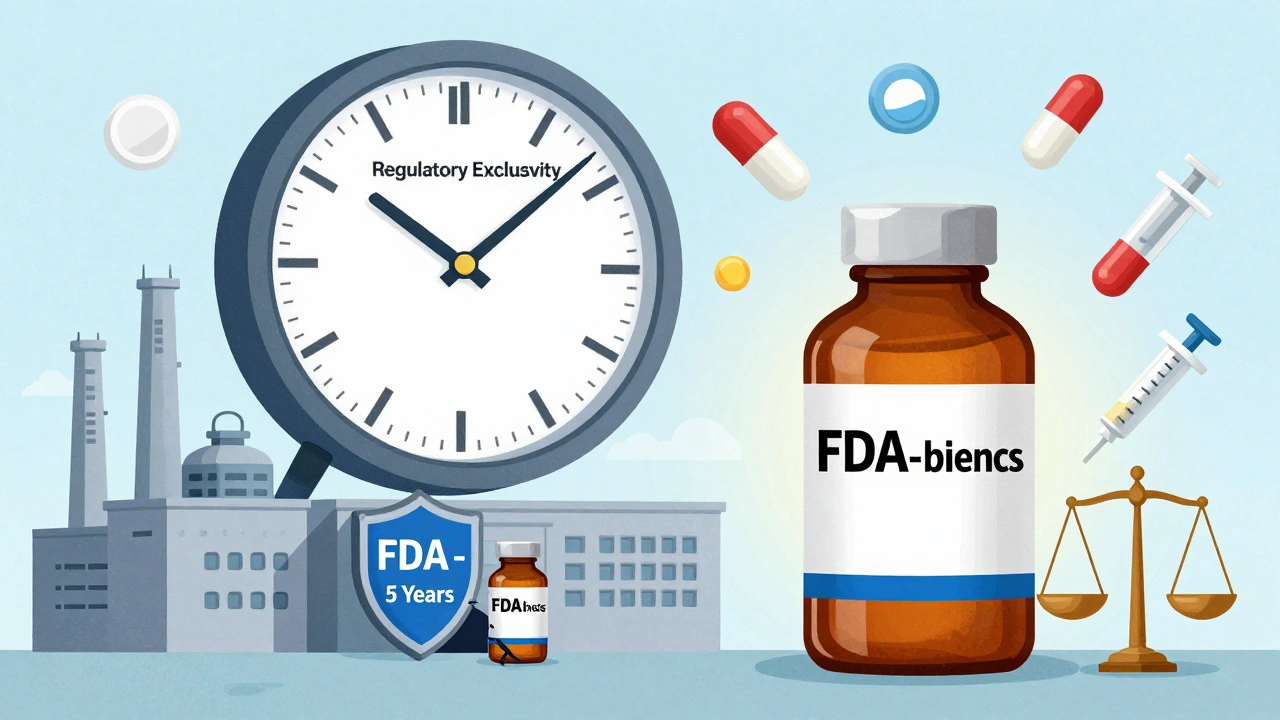
Regulatory exclusivity gives drug makers legal protection from generic competition without relying on patents. It includes 5, 7, or 12-year blocks depending on the drug type and is a major reason why some medications stay expensive for over a decade.
Read more