
When your kidneys can’t filter waste properly—like in chronic kidney disease, a long-term condition where kidney function gradually declines. Also known as CKD, it doesn’t just let toxins build up. It throws off the balance of electrolytes, minerals in your blood that control nerve and muscle function, fluid balance, and pH. These imbalances aren’t just numbers on a lab report—they can cause muscle cramps, irregular heartbeat, confusion, or even sudden cardiac arrest.
High potassium, a key electrolyte that regulates heart rhythm. levels are one of the most dangerous risks in CKD. Your kidneys normally remove extra potassium, but when they fail, it builds up fast. Even small changes can be deadly. Low sodium, the mineral that helps control fluid levels and blood pressure. can happen too, especially if you’re on diuretics or drinking too much water. And then there’s calcium, critical for bones and nerve signaling. and phosphorus, a mineral that works with calcium but can harden blood vessels if unchecked. In CKD, phosphorus rises because kidneys can’t clear it, which pulls calcium out of your bones. That’s why many people with CKD end up with weak bones and calcified arteries.
These problems don’t happen overnight. They creep in slowly, often without clear symptoms until something serious happens. That’s why regular blood tests are non-negotiable. But knowing the risks is only half the battle. What you eat, what meds you take, and how you manage fluid intake all play a role. Some medications—like certain blood pressure drugs or diuretics—can make electrolyte shifts worse. Others, like phosphate binders or potassium-lowering resins, are used specifically to fix them. And it’s not just about pills. Diet changes matter just as much: avoiding high-potassium foods like bananas and potatoes, or limiting processed foods loaded with sodium.
What you’ll find in the posts below isn’t theory. It’s real-world advice from people managing CKD and the side effects that come with it. You’ll see how medication timing affects electrolyte levels, how common drugs like losartan-hydrochlorothiazide interact with your minerals, and why even over-the-counter antacids can mess with your balance. There’s also guidance on reading medication guides, spotting hidden risks, and making smart choices when you’re juggling multiple conditions. This isn’t just about kidneys—it’s about keeping your whole body working right when your kidneys can’t do it alone.
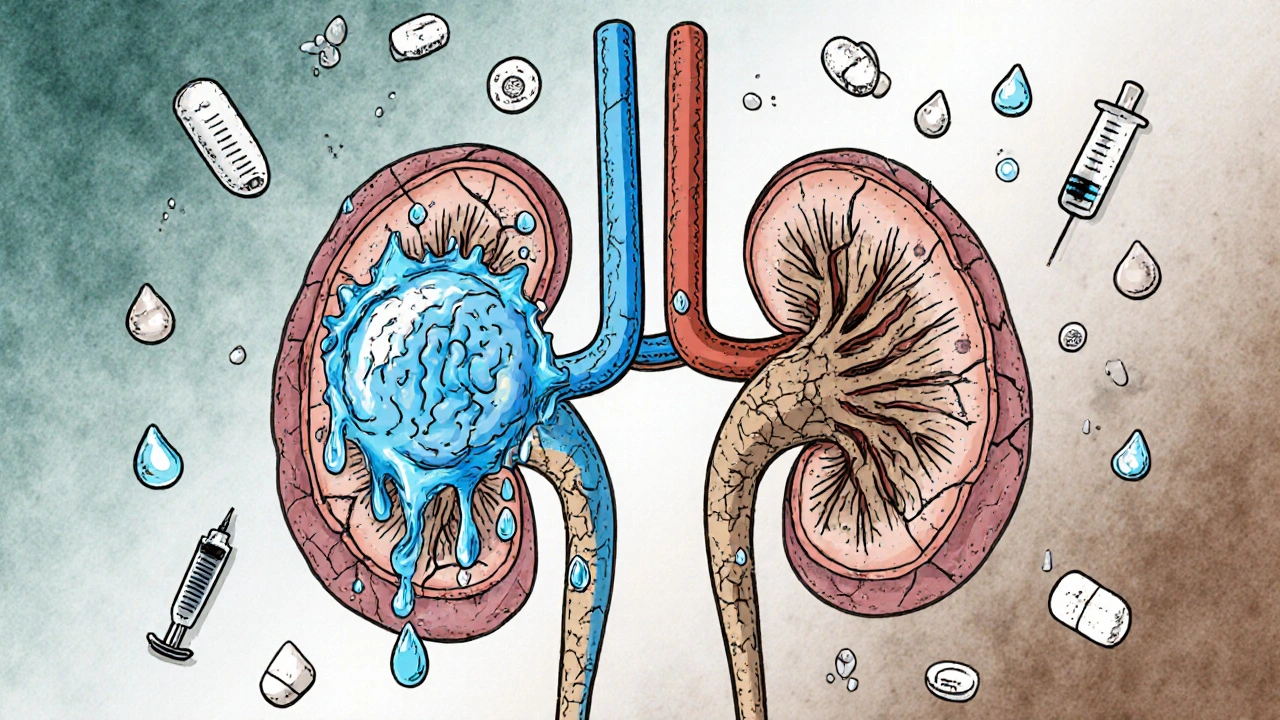
Hyponatremia and hypernatremia are life-threatening sodium imbalances common in kidney disease. Learn how reduced kidney function disrupts sodium balance, why standard treatments can be dangerous, and what actually works to protect your health.
Read more