
When your body doesn’t have enough insulin, it starts breaking down fat for energy—and that produces diabetic ketoacidosis, a life-threatening condition where blood becomes too acidic due to high levels of ketones. Also known as DKA, it most often hits people with type 1 diabetes, but it can also occur in type 2 diabetes under stress, illness, or missed insulin doses. This isn’t just high blood sugar—it’s your body screaming for help.
Ketones, acidic molecules released when fat is burned instead of glucose build up fast when insulin is missing. Without insulin, glucose stays in your blood instead of feeding your cells. Your body panics, burns fat, and floods your bloodstream with ketones. That’s when your blood pH drops, and you start vomiting, breathing fast, or feeling confused. High blood sugar, typically above 250 mg/dL is a warning sign, but DKA can happen even if your sugar isn’t sky-high—especially if you’re sick or dehydrated. Many people don’t realize they’re in danger until they’re already in the ER.
What makes DKA so dangerous isn’t just the numbers—it’s how quickly it can sneak up. A missed insulin shot, an infection like the flu, or even stress can trigger it in hours. People with diabetes who skip insulin because they’re afraid of low blood sugar, or who can’t afford their meds, are at higher risk. And if you’re caring for someone with diabetes, knowing the early signs—dry mouth, fruity breath, nausea, extreme thirst, or confusion—could save their life.
There’s no magic fix. DKA needs medical care—fluids, insulin, and electrolyte balance. But you can prevent it. Check your ketones when your blood sugar is over 240 mg/dL, especially if you’re sick. Don’t wait for vomiting to start. Use a simple urine strip or blood ketone meter. Talk to your doctor about having a sick-day plan. Keep fast-acting insulin on hand. And if you ever feel like you’re drowning in your own breath, don’t wait—get help now.
Below, you’ll find real-world advice from people who’ve been there. From spotting hidden triggers to understanding how infections or missed doses turn into emergencies, these posts give you the tools to act before it’s too late.
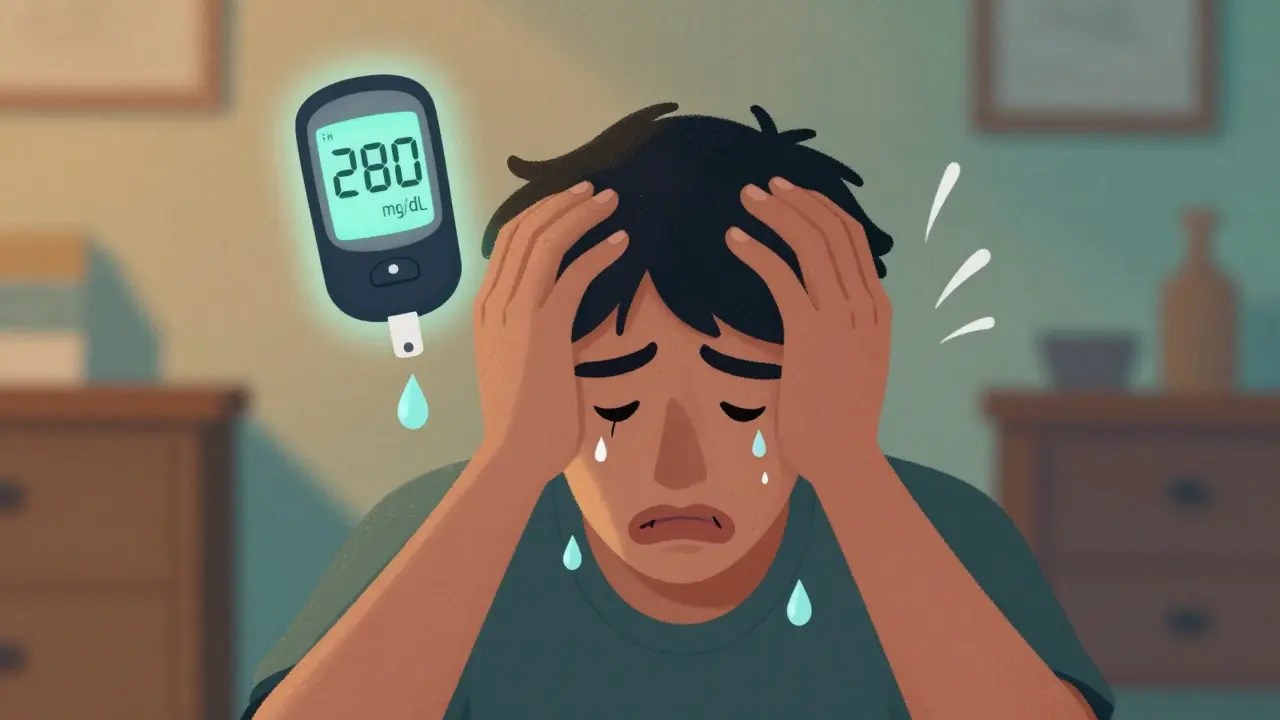
Learn the warning signs of high blood sugar, how to recognize diabetic emergencies like DKA and HHS, and what steps to take immediately to prevent life-threatening complications.
Read more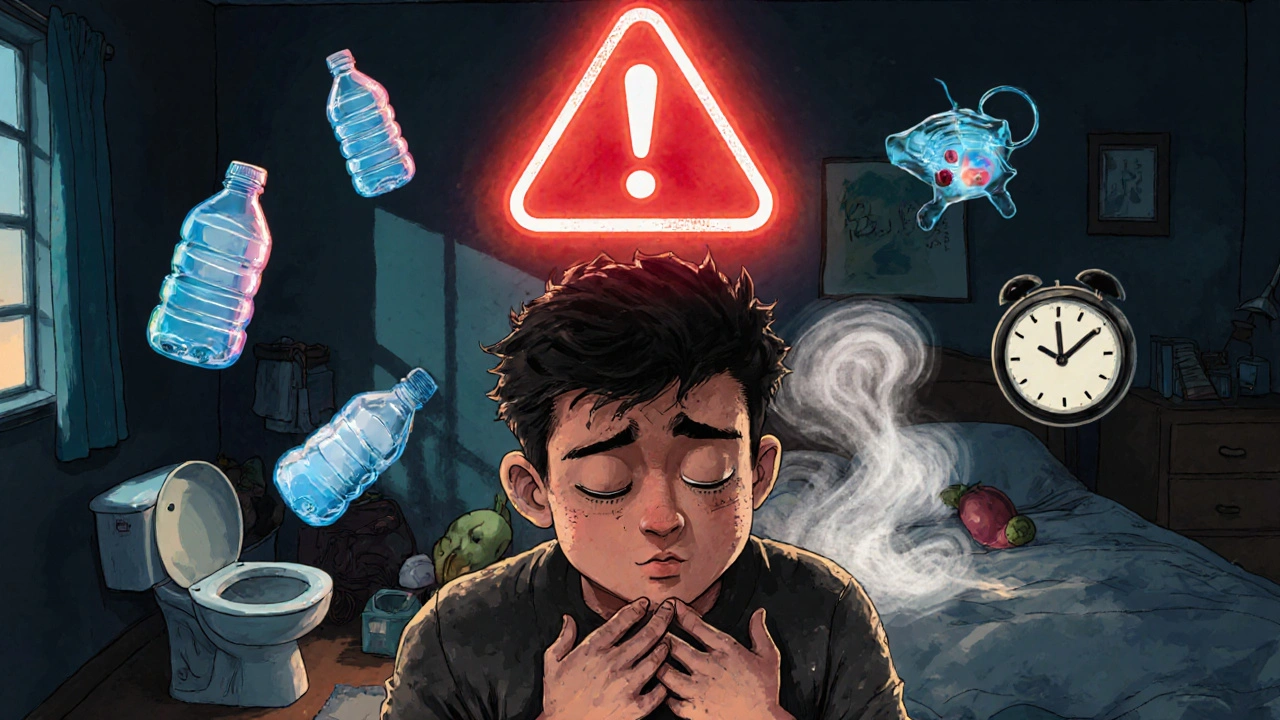
Diabetic ketoacidosis is a life-threatening emergency caused by insulin deficiency. Learn the warning signs-like fruity breath, vomiting, and confusion-and what happens during hospital treatment. Early action saves lives.
Read more