
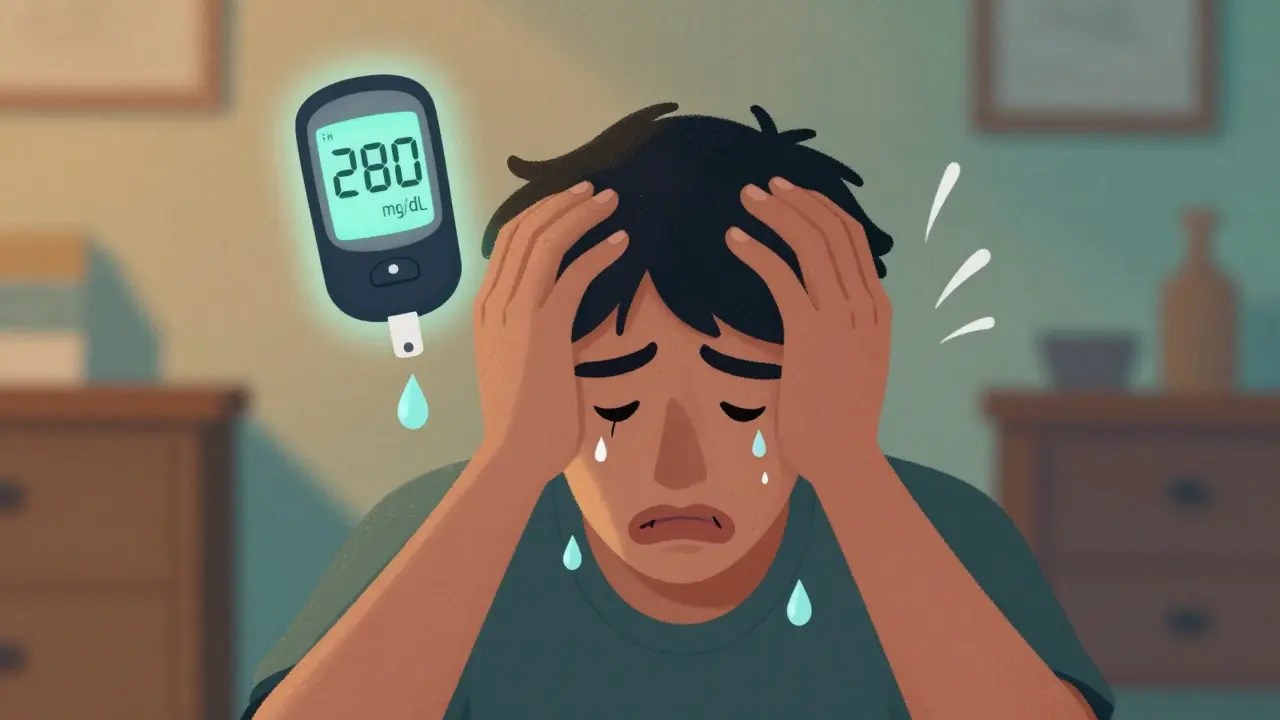
When your blood sugar climbs too high, your body doesn’t just feel off-it starts shutting down. You might think it’s just fatigue, thirst, or a bad day. But if your glucose is above 250 mg/dL and you’re ignoring the signs, you could be one step away from a life-threatening emergency. Hyperglycemia isn’t just a number on a meter. It’s a warning signal your body is screaming for help.
What High Blood Sugar Actually Feels Like
Most people don’t notice high blood sugar until it’s already severe. Early symptoms are easy to brush off. You’re drinking more water than usual-not because it’s hot, but because your kidneys are trying to flush out excess sugar. You’re peeing every hour, even at night. Your mouth feels dry, no matter how much you drink. That’s polyuria and polydipsia-classic signs of blood sugar above 180 mg/dL. Then comes the brain fog. You can’t focus at work. You forget where you put your keys. You feel sluggish, even after sleeping. That’s not laziness. That’s your brain starving for fuel. Glucose is flooding your bloodstream, but without enough insulin, your cells can’t use it. So your body starts breaking down fat for energy, which leads to another red flag: unexplained weight loss. You’re eating normally, but dropping pounds. That’s a major red flag, especially if you have type 2 diabetes. Blurred vision? That’s not just eye strain. High glucose swells the lens of your eye, warping your focus. It’s temporary-but if ignored, it can become permanent. Studies show 68% of people with uncontrolled diabetes report this symptom before seeking help. By then, it’s often too late for simple fixes.When It Turns Dangerous: DKA and HHS
If your blood sugar hits 250 mg/dL or higher, you’re in danger zone. Two emergencies can follow: diabetic ketoacidosis (DKA) and hyperosmolar hyperglycemic state (HHS). They’re both deadly, but they look and act differently. DKA mostly hits people with type 1 diabetes. Your body, starved of insulin, starts burning fat like crazy. That creates toxic acids called ketones. You’ll smell them-sweet, fruity breath, like nail polish remover. You’ll start breathing fast and deep, trying to blow off the acid. That’s Kussmaul breathing. You might feel nauseous, have stomach pain, or even vomit. Blood pH drops below 7.3. This isn’t just bad-it’s an ICU-level emergency. DKA kills 2-5% of adults who don’t get treated fast. HHS is worse. It mostly affects older adults with type 2 diabetes. Blood sugar soars past 600 mg/dL. Your body loses so much fluid through urine that you become severely dehydrated. You might not even feel thirsty anymore. Your skin is dry. Your heart races. You get confused, dizzy, or even start having seizures. Unlike DKA, there are few ketones-just extreme dehydration and brain dysfunction. HHS kills 15-20% of people who reach this stage. For those over 65, the death rate jumps to 22%. The difference? DKA comes on fast-within hours. HHS creeps in over days. You might think you’re just “getting older” or “coming down with something.” But if your blood sugar is over 500 mg/dL and you’re not yourself, you’re in a medical crisis.What to Do Right Now
If your blood sugar is above 240 mg/dL, don’t wait. Don’t hope it’ll go down on its own. Act immediately.- Test for ketones. Use a urine strip or a blood ketone meter. If ketones are moderate or high, you’re at risk for DKA.
- Take your fast-acting insulin. Most people need 0.1 units per kilogram of body weight every hour until levels drop. Never skip this step.
- Drink water-no sugar, no soda. Aim for 8-16 ounces every hour. Dehydration makes everything worse.
- Don’t exercise. Working out when ketones are present can push your sugar even higher.
- Call your doctor or go to the ER if your blood sugar stays above 300 mg/dL after two hours of insulin and fluids, or if you feel confused, nauseous, or have trouble breathing.
Why This Keeps Happening
You’re not failing. This isn’t about willpower. Hyperglycemia happens because of real, biological problems. The “dawn phenomenon” is a silent culprit. Between 4 and 8 a.m., your body releases stress hormones like cortisol and growth hormone. These naturally raise blood sugar to wake you up. But if you have diabetes, your body can’t counter it with enough insulin. That’s why many people wake up with sugar over 200 mg/dL-even if they ate nothing the night before. Insulin pump failures? They’re more common than you think. A clogged catheter, a disconnected tube, or a dead battery can send your sugar soaring in hours. One in five hyperglycemia emergencies in pump users is due to device issues. Illness is another big trigger. A cold, the flu, even a UTI can spike your blood sugar. Your body releases stress hormones to fight infection-and those hormones block insulin. You might need 20-50% more insulin during sickness. Most people don’t adjust. And then there’s insulin stacking. Taking extra insulin too soon because your sugar didn’t drop fast enough? That’s a recipe for a dangerous crash later. It’s the #1 mistake in pump users.How to Stop the Cycle
The good news? You can break this pattern. Continuous glucose monitors (CGMs) are the biggest game-changer. They don’t just tell you your sugar is high-they warn you it’s about to be. Dexcom’s G7, approved in early 2024, predicts high blood sugar 30 minutes in advance. Users report 31% fewer severe episodes. Education works. People who complete CDC-certified diabetes self-management programs cut their emergency visits by 42%. They learn how to adjust insulin for illness, how to read ketone strips, how to hydrate properly. Check your blood sugar every 4 hours when you’re sick or stressed. Don’t rely on how you feel. Feelings lie. Numbers don’t. Talk to your doctor about basal insulin adjustments if you’re consistently high in the morning. A 20-30% increase in your overnight basal rate can fix dawn phenomenon without extra shots. And if you’re struggling with access to insulin or CGMs-know you’re not alone. Black patients are 2.3 times more likely to have hyperglycemia emergencies because of cost and care barriers. Ask about patient assistance programs. Medicare now covers CGMs for most people with diabetes. Don’t let price stop you from staying safe.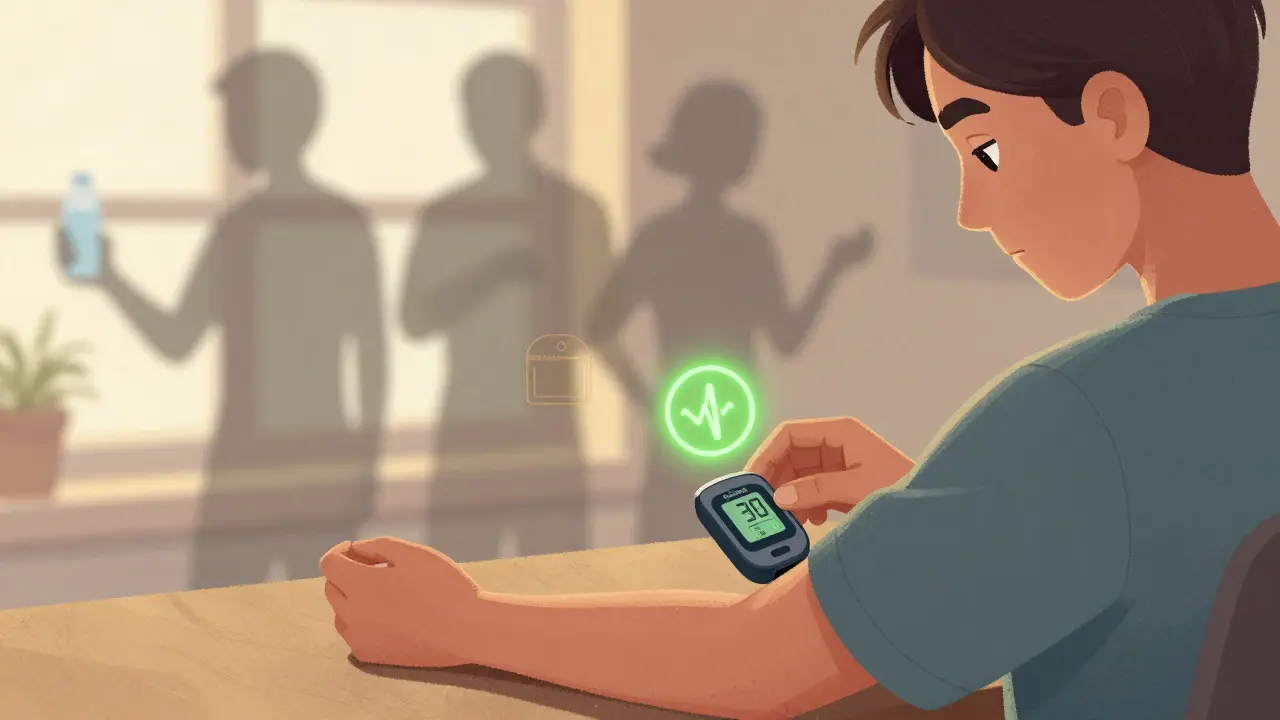
What Comes After the Emergency
Surviving a hyperglycemic crisis doesn’t mean you’re safe. Recovery takes weeks. Your body is damaged. Your kidneys, nerves, and blood vessels have been under extreme stress. Follow up with your endocrinologist. Get an A1C test. Review your insulin dosing. Check for gastroparesis-a condition where your stomach empties slowly, causing delayed insulin absorption. It’s behind nearly 19% of recurrent high blood sugar cases. Start tracking triggers. Use a simple log: time, sugar level, food, insulin, stress, illness. Patterns will emerge. You’ll start to see that every time you skip a meal, your sugar spikes. Or that your anxiety at work sends your numbers up. The goal isn’t perfection. It’s awareness. It’s catching it early. It’s knowing that a sugar of 260 mg/dL isn’t “just a little high”-it’s a signal that your system is breaking down.Real People, Real Stories
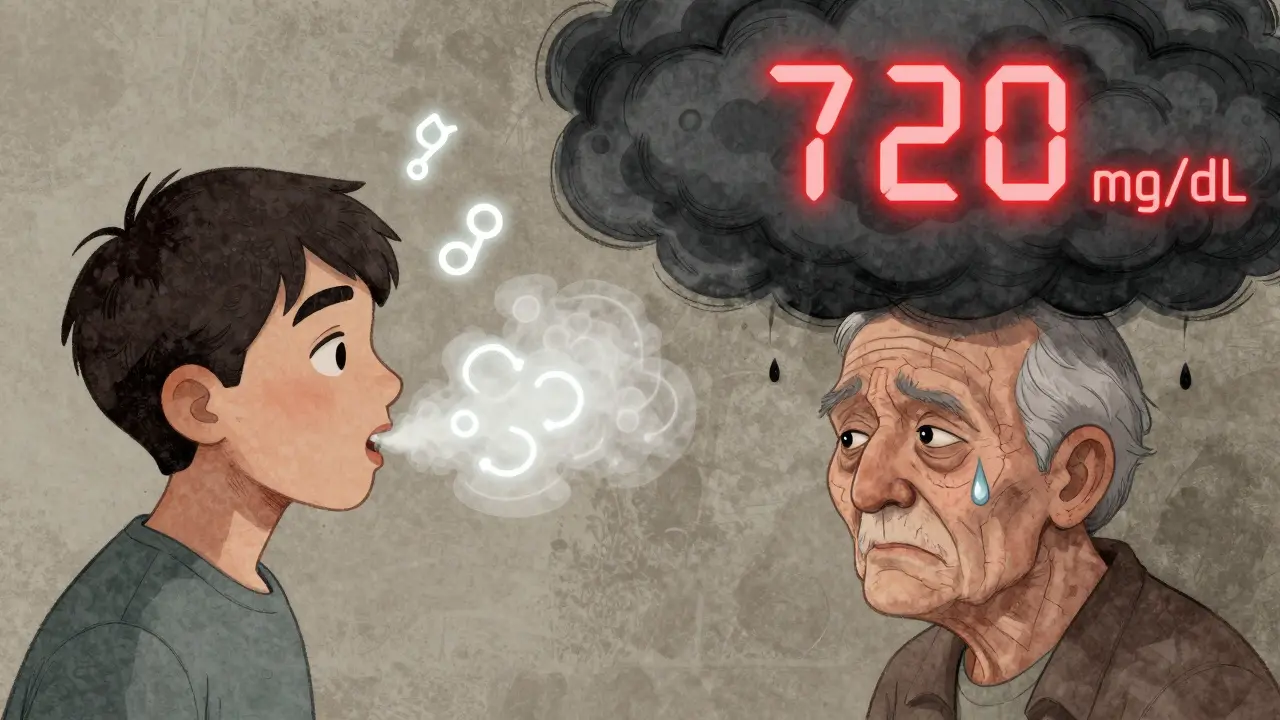
One man, 68, thought his confusion and dizziness were just aging. His sugar was 720 mg/dL. He was in a coma for three days. He survived, but lost kidney function. A teenager with type 1 diabetes skipped her insulin for a weekend party. Her ketones hit 5.2 mmol/L. She was rushed to the ER. She’s fine now-but she wears her CGM 24/7 and never misses a dose again. A woman in Ohio used her CGM’s alert to take insulin before her sugar hit 300. She avoided DKA. She says, “That beep saved my life. I used to think I was fine until I felt awful. Now I act before I feel anything.” You don’t need to wait until you’re sick to act. You don’t need to be perfect. You just need to know the signs-and act before it’s too late.What blood sugar level is considered hyperglycemia?
Hyperglycemia is generally defined as a blood glucose level above 180 mg/dL. Mild cases range from 180-250 mg/dL, moderate from 251-300 mg/dL, and severe hyperglycemia is above 300 mg/dL. Emergencies like DKA or HHS occur when levels exceed 250-600 mg/dL, depending on ketone presence and dehydration.
Can you have high blood sugar without having diabetes?
Yes. Stress from illness, infection, trauma, or surgery can cause temporary hyperglycemia. Certain medications like steroids, some antipsychotics, and beta-blockers also raise blood sugar. Conditions like Cushing’s syndrome or pancreatitis can lead to chronic high glucose even without type 1 or type 2 diabetes. But persistent high blood sugar should always be evaluated for underlying diabetes.
What’s the difference between DKA and HHS?
DKA (diabetic ketoacidosis) happens mostly in type 1 diabetes and involves high blood sugar, ketones, and acidosis. Symptoms include fruity breath, rapid breathing, nausea, and abdominal pain. HHS (hyperosmolar hyperglycemic state) occurs mostly in type 2 diabetes, with extremely high blood sugar (often over 600 mg/dL), severe dehydration, and little to no ketones. HHS causes confusion, weakness, and coma, and has a higher death rate than DKA.
How do I treat high blood sugar at home?
If your blood sugar is above 240 mg/dL, test for ketones. If ketones are low or absent, take your prescribed fast-acting insulin (usually 0.1 units/kg). Drink 8-16 oz of water every hour. Avoid exercise. Recheck your blood sugar every 2-4 hours. If it doesn’t drop after two doses of insulin, or if you feel nauseous, confused, or have trouble breathing, seek emergency care immediately.
When should I go to the ER for high blood sugar?
Go to the ER if your blood sugar is above 300 mg/dL and doesn’t come down after insulin and fluids, if you have moderate to high ketones, if you’re vomiting, confused, having trouble breathing, or feeling extremely weak. If you’re over 65 and showing signs of dehydration or altered mental status, don’t wait-call 911. HHS can be fatal without rapid treatment.
Can CGMs prevent hyperglycemia emergencies?
Yes. Continuous glucose monitors (CGMs) like the Dexcom G7 can predict high blood sugar up to 30 minutes before it happens. Users who rely on alerts reduce severe hyperglycemia episodes by 31%. CGMs help catch spikes early, allowing faster insulin correction and preventing progression to DKA or HHS. They’re especially helpful for people who don’t feel symptoms until it’s too late.
Why does my blood sugar spike in the morning?
This is called the dawn phenomenon. Between 4 and 8 a.m., your body naturally releases hormones like cortisol and growth hormone to prepare you for the day. These hormones raise blood sugar. If you have diabetes, your body can’t make enough insulin to counteract this rise. The result is high morning glucose-even if you didn’t eat. Adjusting your nighttime basal insulin dose can help fix this.
Is it safe to exercise when my blood sugar is high?
Only if your blood sugar is high but ketones are low. If your blood sugar is above 250 mg/dL and you have moderate or high ketones, do not exercise. Physical activity can cause your liver to release even more glucose, worsening the situation. Wait until your ketones are gone and your sugar is below 250 mg/dL before resuming activity.




10 Comments
Nelly Oruko January 13, 2026
It’s wild how the body screams before it collapses. I used to ignore thirst and fatigue like they were just ‘bad days.’ Now I check my CGM before coffee. That beep saved me from DKA last winter.
Stop waiting to feel awful. The numbers don’t lie.
And yes-dawn phenomenon is real. My basal got tweaked, and my fasting sugars dropped 50 points. No magic. Just science.
Pankaj Singh January 14, 2026
Typical medical propaganda. You act like high sugar is some cosmic punishment. People miss doses because insulin costs more than their rent. Stop shaming and fix the system.
Also, ‘take insulin every hour’? Who the hell does that? You think everyone has a pump and a PhD in endocrinology?
Scottie Baker January 15, 2026
Bro. I had a 720 reading last year. Thought I was just hungover. Woke up in the ER with a catheter in my arm and my mom crying. They said if I’d waited another hour, I wouldn’t be here.
Now I wear my CGM like a damn badge. Even at parties. Even when I’m drunk. I don’t care what you think. I’m alive because I listened to the machine, not my ego.
Don’t be that guy. You think you’re tough? You’re just a statistic waiting to happen.
Angel Molano January 15, 2026
If you don’t check your blood sugar when you’re sick, you deserve what happens. This isn’t hard. It’s not about willpower-it’s about basic responsibility.
Stop blaming the system. Start managing your disease.
Vinaypriy Wane January 16, 2026
I’ve seen this too many times…
People ignore the signs, because ‘it’s not that bad,’ or ‘I’ll fix it tomorrow.’
Then they end up in the hospital, confused, dehydrated, terrified.
And the worst part? They’re always surprised.
It’s not a surprise if you’ve read the symptoms. It’s not a surprise if you’ve been told. It’s just… avoidance.
Please. Don’t wait. Test. Hydrate. Call for help. It’s not weakness. It’s wisdom.
Diana Campos Ortiz January 17, 2026
My grandma almost died from HHS. She thought she was just ‘getting older.’ She didn’t know dehydration could make you forget your own name.
Now I check her sugars twice a day. I make sure she drinks water. I call her doctor if it’s over 250.
It’s not glamorous. But it’s life.
And yeah-CGMs are a game changer. My mom got one last year. She’s had zero ER trips since.
Jesse Ibarra January 18, 2026
Look, I’ve read this article 12 times. It’s beautiful. It’s poetic. It’s like a TED Talk written by a saint.
But here’s the truth no one says: the system is rigged. You think everyone can afford a Dexcom? That’s rich people medicine.
And don’t get me started on ‘just take insulin.’
Try getting a prescription filled when your copay is $400 and you work two jobs.
Stop preaching. Start fighting.
laura Drever January 18, 2026
fr tho. i just check my sugar when i feel like it. if it’s high, i drink water. if it’s low, i eat a cookie. problem solved.
why are we making this so complicated?
jefferson fernandes January 19, 2026
Thank you for writing this. So many people think diabetes is just ‘eating too much sugar.’
It’s not. It’s biology. It’s stress. It’s access. It’s trauma. It’s insurance.
If you’re reading this and you’re scared-don’t be. You’re not alone.
Find your community. Talk to your doc. Use the CGM. Call for help.
We’ve all been there. You don’t have to fix it all at once.
Just don’t stop trying.
And if you’re a provider? Listen. Not just to the numbers. To the person behind them.
Acacia Hendrix January 20, 2026
While the clinical framework presented is largely accurate, it lacks a nuanced discussion of the neuroendocrine modulation of gluconeogenesis in the context of circadian cortisol dynamics.
Moreover, the reliance on CGM data as a panacea is empirically questionable-correlation does not equate to causation in glycemic variability, and the G7’s predictive algorithm has a 17% false-positive rate per recent JAMA study.
Additionally, the conflation of DKA and HHS pathophysiology under a monolithic ‘emergency’ paradigm obscures critical distinctions in osmotic stress thresholds and renal compensatory mechanisms.
One must also interrogate the socioeconomic determinants of insulin non-adherence-not merely as access barriers, but as epistemic marginalization within clinical discourse.
Perhaps a systems biology approach, integrating microbiome-gut-brain axis modulation, would yield more sustainable outcomes than reactive insulin dosing.
Just saying.
-Acacia, MD, PhD, FACP