
When you hear drug exclusivity, a period during which the FDA blocks generic versions of a brand-name drug from entering the market. Also known as market exclusivity, it’s not the same as a patent — though they often overlap. This system gives drugmakers time to recoup research costs, but it also delays cheaper alternatives from reaching patients. If you’ve ever wondered why your prescription costs $300 one month and $20 the next, drug exclusivity is likely the reason.
Drug exclusivity comes in different forms. For example, orphan drug exclusivity, a 7-year period granted to drugs treating rare diseases affecting fewer than 200,000 Americans can delay generics even if the patent expires. Then there’s new chemical entity exclusivity, a 5-year period for entirely new active ingredients, and data exclusivity, where generic makers can’t use the brand’s clinical trial data to get approval. These rules aren’t just legal fine print — they directly impact whether you get a generic version of your blood pressure pill, antibiotic, or diabetes med.
Here’s what you need to know: when exclusivity ends, generics flood the market. That’s when prices drop — sometimes by 80% or more. But if you’re on a brand-name drug and your doctor says it’s "necessary," ask why. Is it because the generic doesn’t work? Or because the exclusivity period hasn’t ended yet? The 80-125% rule, the standard for bioequivalence that ensures generics perform like brand names means most generics are just as safe and effective. The difference is usually in the price, not the outcome.
Drug exclusivity also affects how quickly new treatments become affordable. For example, a breakthrough drug for a rare condition might have 7 years of exclusivity — great for the company, but tough for patients who can’t afford it. Meanwhile, common drugs like statins or blood thinners often lose exclusivity after 5 years, making them widely available as generics. That’s why some medications are easy to get cheaply, while others stay expensive for years.
When you look at posts about medication guides, drug interactions, or generic absorption rates, you’re seeing the real-world ripple effects of exclusivity. A patient on warfarin might not know their brand-name version is still under exclusivity, while someone else switches to a generic version of the same drug without realizing the timing mattered. Parents managing fever meds for kids, diabetics tracking their insulin, or people on thyroid meds all feel the impact — whether they know it or not.
What you’ll find below are real stories and clear explanations about how drug exclusivity shapes your access, your cost, and your health. From how long you wait for a generic to show up, to why your pharmacy sometimes switches your pill without warning, these posts cut through the noise. You’ll learn how to spot when exclusivity is protecting a company — and when it’s protecting your access to care.
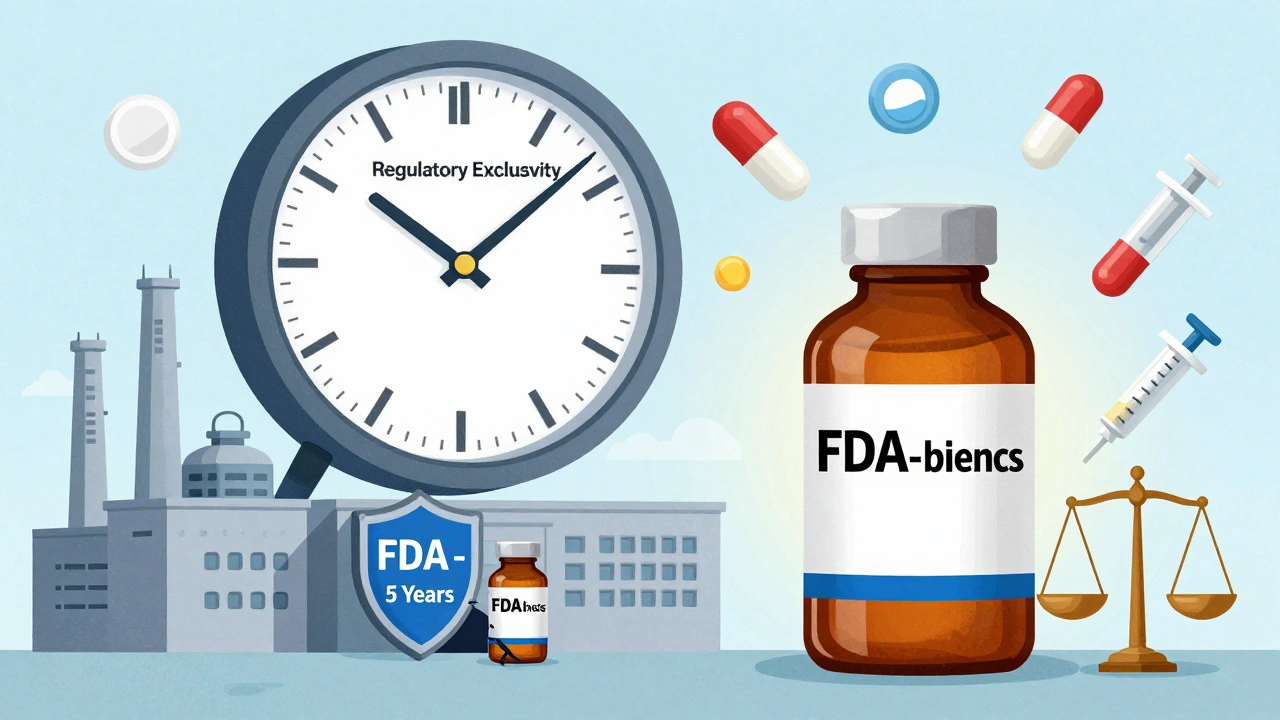
Regulatory exclusivity gives drug makers legal protection from generic competition without relying on patents. It includes 5, 7, or 12-year blocks depending on the drug type and is a major reason why some medications stay expensive for over a decade.
Read more