
When your body can’t handle a medication properly, drug toxicity, the harmful buildup of a drug in your system that causes damage. Also known as drug overdose or adverse drug reaction, it doesn’t always mean you took too much—it can happen at normal doses if your liver can’t process it, or if you mix it with something else. This isn’t rare. Thousands of people end up in emergency rooms every year because of it, often from combinations they thought were harmless.
Drug toxicity often shows up quietly. A headache that won’t go away, nausea that comes and goes, or a sudden change in how you feel after starting a new pill could be early signals. It’s not just about opioids or alcohol—common drugs like carbamazepine, a seizure and nerve pain medication that changes how your body breaks down other drugs, or even warfarin, a blood thinner that reacts dangerously with antibiotics and certain foods, can cause serious harm if not monitored. The same goes for acetaminophen, a common fever reducer that can wreck your liver if taken too often or with alcohol. These aren’t edge cases. They’re everyday risks.
What makes drug toxicity so dangerous is how easily it’s missed. You might think your new headache is just stress, not realizing it’s your body screaming because your kidneys can’t clear the antibiotic you’re taking. Or you might double up on painkillers because the first one didn’t work fast enough—only to trigger liver damage without even knowing it. The real danger isn’t just the drug itself—it’s the hidden interactions. Mixing alcohol with benzodiazepines? That’s a silent killer. Taking antacids with your antibiotic? It might not work at all. And if you’re on multiple prescriptions, especially as you get older, the chances of something clashing go up fast.
There’s no magic shield against drug toxicity, but you can build your own defense. Know your meds. Read the medication guides, FDA-required safety documents that explain serious risks in plain language. Ask your pharmacist if anything you’re taking could react badly. Track your doses. Use a shared calendar if you’re managing meds for someone else. And if something feels off—don’t wait. That weird flutter in your chest, the sudden confusion, the vomiting that won’t stop—those aren’t normal side effects. They’re red flags.
Below, you’ll find real stories and facts from people who’ve been there. From how to spot early signs of a dangerous reaction, to why some generic drugs are safer than others, to what happens when your body can’t handle a common painkiller. This isn’t theory. It’s what actually happens—and how to keep it from happening to you.
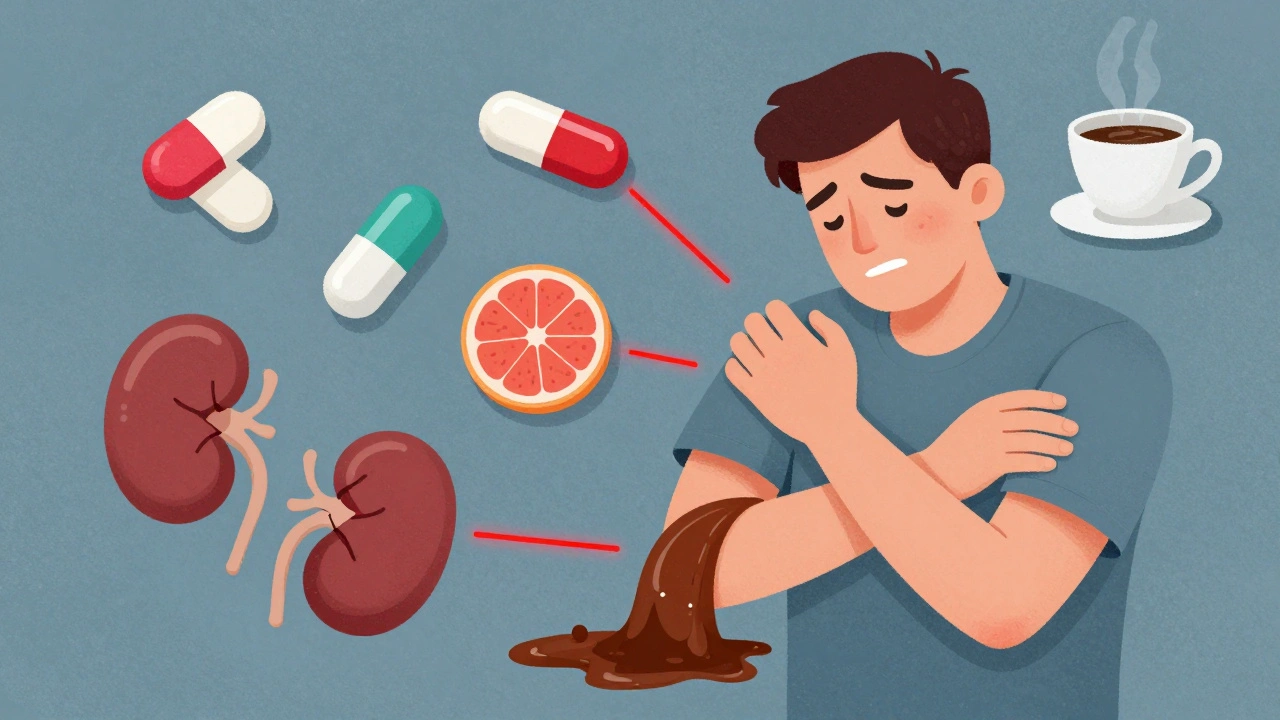
Rhabdomyolysis from medication interactions is a life-threatening muscle breakdown condition often triggered by common drug combos like statins and antibiotics. Learn the hidden risks, who's most vulnerable, and how to prevent it.
Read more