
When you hear about FDA exclusivity, a period of market protection granted by the U.S. Food and Drug Administration to brand-name drug makers, separate from patents. It's not a patent—it's a legal clock that starts ticking after a drug gets approved, and it blocks generics from entering the market even if the patent has expired. This rule exists to reward companies for investing in new treatments, but it also means you might pay more for years longer than you expect.
FDA exclusivity comes in different flavors. Orphan drug exclusivity, a seven-year period for drugs treating rare diseases affecting fewer than 200,000 Americans is one of the longest. New chemical entity exclusivity, five years for drugs with no active ingredient ever approved before is common for brand-new pills. Then there's pediatric exclusivity, an extra six months added if a company tests a drug in children. These aren’t just legal details—they directly impact how soon a cheaper generic version hits shelves.
Think about it: if a drug has both a patent and exclusivity, the patent might expire in 2025, but the exclusivity could keep generics out until 2030. That’s five extra years of high prices. And while patents are public and can be challenged in court, exclusivity is automatic—no lawsuits needed. That’s why some drugs stay expensive even when the science behind them is old. The FDA doesn’t decide if a drug is better—it just enforces the clock.
That’s why you’ll see articles here about generic drug absorption rates, medication guides, and drug interactions. Those topics all tie back to the same system: once exclusivity ends, generics flood in, and suddenly, how your body absorbs the drug, what warnings come with it, and whether it interacts with your other meds becomes the real focus. The FDA doesn’t control prices, but exclusivity gives manufacturers a head start—and that head start shapes what you pay, what you’re told, and how safe your meds really are.
Below, you’ll find real-world examples of how exclusivity affects everything from pediatric fever meds to cancer treatments and blood thinners. You’ll see how it connects to the paperwork you’re given, the timing of your refills, and why some drugs have no cheap alternatives—no matter how long they’ve been on the market.
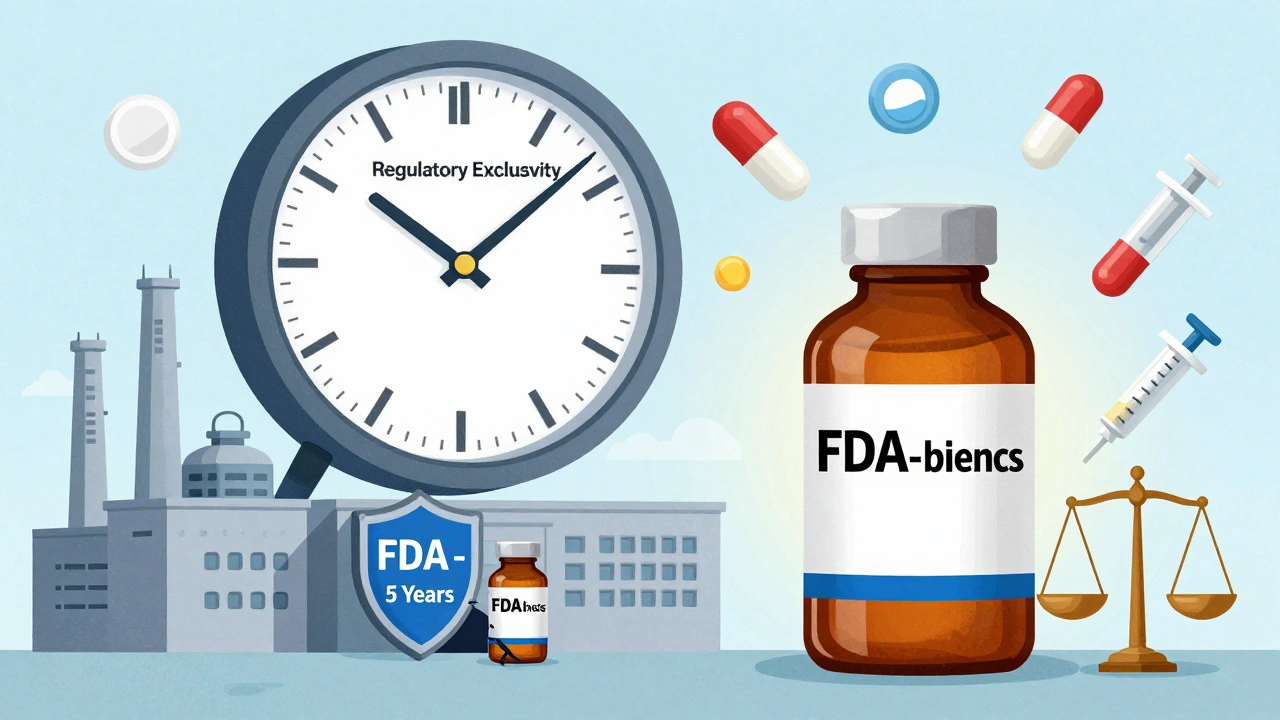
Regulatory exclusivity gives drug makers legal protection from generic competition without relying on patents. It includes 5, 7, or 12-year blocks depending on the drug type and is a major reason why some medications stay expensive for over a decade.
Read more