
When your blood sodium drops too low, you have hyponatremia, a condition where sodium levels in the blood fall below 135 mEq/L, disrupting fluid balance and nerve function. Also known as low sodium, it doesn’t always cause obvious symptoms at first—but when it does, it can be life-threatening. Sodium isn’t just table salt. It’s a key electrolyte that helps control fluid inside and outside your cells. When levels drop, water moves into cells, making them swell. In the brain, that swelling can cause confusion, seizures, or even coma.
Hyponatremia often shows up in people taking certain diuretics, medications that increase urine output, commonly used for high blood pressure or heart failure, like hydrochlorothiazide. It’s also linked to SSRIs, antidepressants that can cause the body to retain too much water, and drugs like tramadol, an opioid painkiller that affects hormone regulation and fluid balance. Even over-the-counter pain relievers and some antibiotics can throw off your sodium levels if you’re already at risk.
It’s not just about what you take. Hyponatremia can come from drinking too much water during exercise, kidney disease, heart failure, or adrenal problems. Older adults and people with chronic illnesses are most at risk. The tricky part? Many symptoms—headache, nausea, fatigue—are easy to blame on something else. That’s why it often goes undiagnosed until it’s serious.
What you’ll find here are real, practical guides from patients and doctors who’ve dealt with this. You’ll see how medications like losartan-hydrochlorothiazide can quietly affect sodium levels, why some people develop hyponatremia after starting an antidepressant, and how to spot the warning signs before emergency care is needed. We’ll also cover what to ask your doctor if you’re on multiple meds and feel off—not just tired, but confused, clumsy, or unusually nauseous. This isn’t about theory. It’s about knowing what to watch for, when to act, and how to protect yourself.
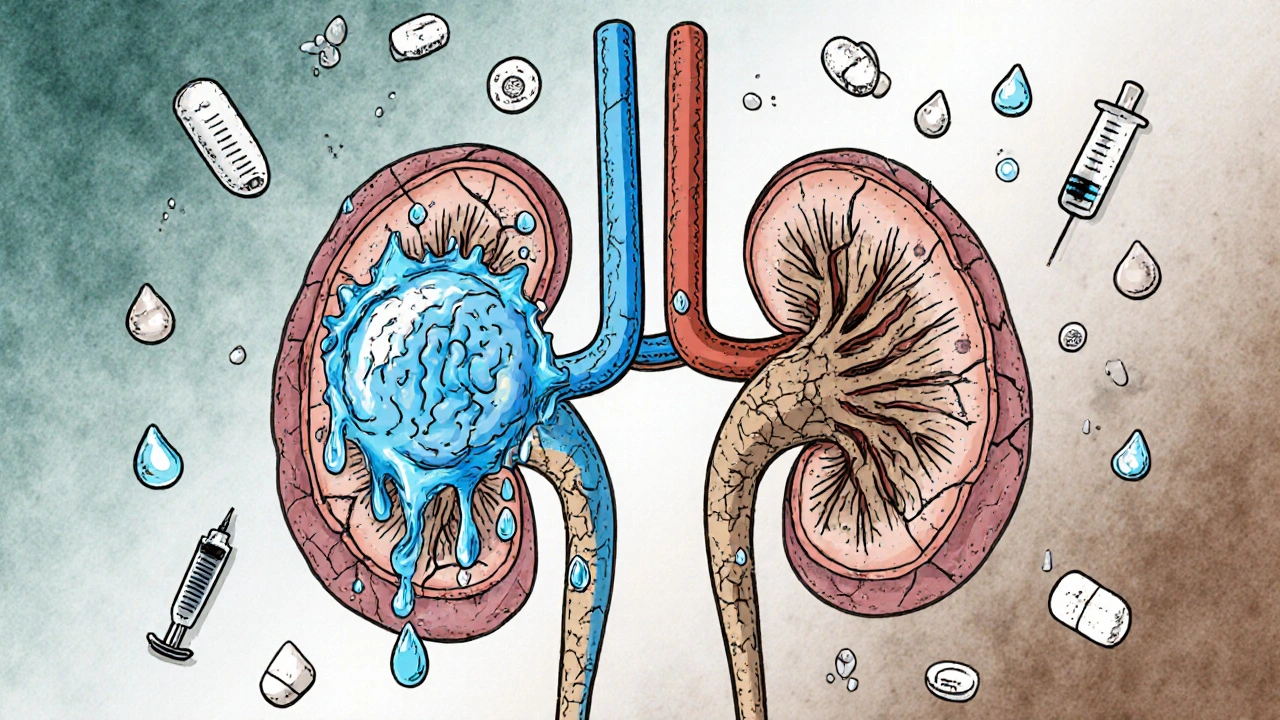
Hyponatremia and hypernatremia are life-threatening sodium imbalances common in kidney disease. Learn how reduced kidney function disrupts sodium balance, why standard treatments can be dangerous, and what actually works to protect your health.
Read more