
When your baby is fussy, feverish, or in pain, ibuprofen for infants, a common over-the-counter pain reliever used to reduce fever and discomfort in young children. Also known as children's ibuprofen, it’s one of the few non-aspirin options approved for babies—but only under strict conditions. Unlike acetaminophen, which can be used as early as 2 months, ibuprofen is generally not recommended for infants under 6 months unless a doctor says so. That’s because their kidneys and digestive systems are still developing, and even small doses can cause problems if given too early or too often.
Parents often confuse infant dosing, the precise amount of medication based on weight, not age, for babies under 2 years with adult guidelines. A 10-pound baby needs a completely different amount than a 20-pound toddler. Giving the wrong dose—whether too little or too much—can lead to ineffective relief or serious side effects like stomach bleeding or kidney stress. The pediatric ibuprofen, a liquid formulation specifically designed for children, with clear measuring tools and concentration labels comes in 50 mg per 1.25 mL, and you must use the syringe or dropper that comes with it. Never use a kitchen spoon. Many parents accidentally double-dose because they misread the label or use the wrong product—like confusing infant drops with children’s syrup, which have different strengths.
There are times when you should skip ibuprofen entirely. If your baby is dehydrated, has vomiting or diarrhea, or has a history of stomach issues, ibuprofen can make things worse. It’s also risky if your child has asthma or a bleeding disorder. And while it’s tempting to give it before or after vaccines to prevent fever, studies show it may reduce how well the vaccine works. Always check with your pediatrician first.
What you’ll find in the posts below are real, practical answers from parents and doctors who’ve been there. You’ll learn how to handle missed doses safely, what to do if your baby spits out the medicine, how to tell if a fever is serious enough to need treatment, and why some pediatricians prefer acetaminophen over ibuprofen for babies under 6 months. There’s also guidance on reading medication labels, avoiding dangerous mix-ups with other drugs, and when to rush to the ER instead of reaching for the bottle. This isn’t theory—it’s what works when your baby is crying, you’re exhausted, and every minute counts.
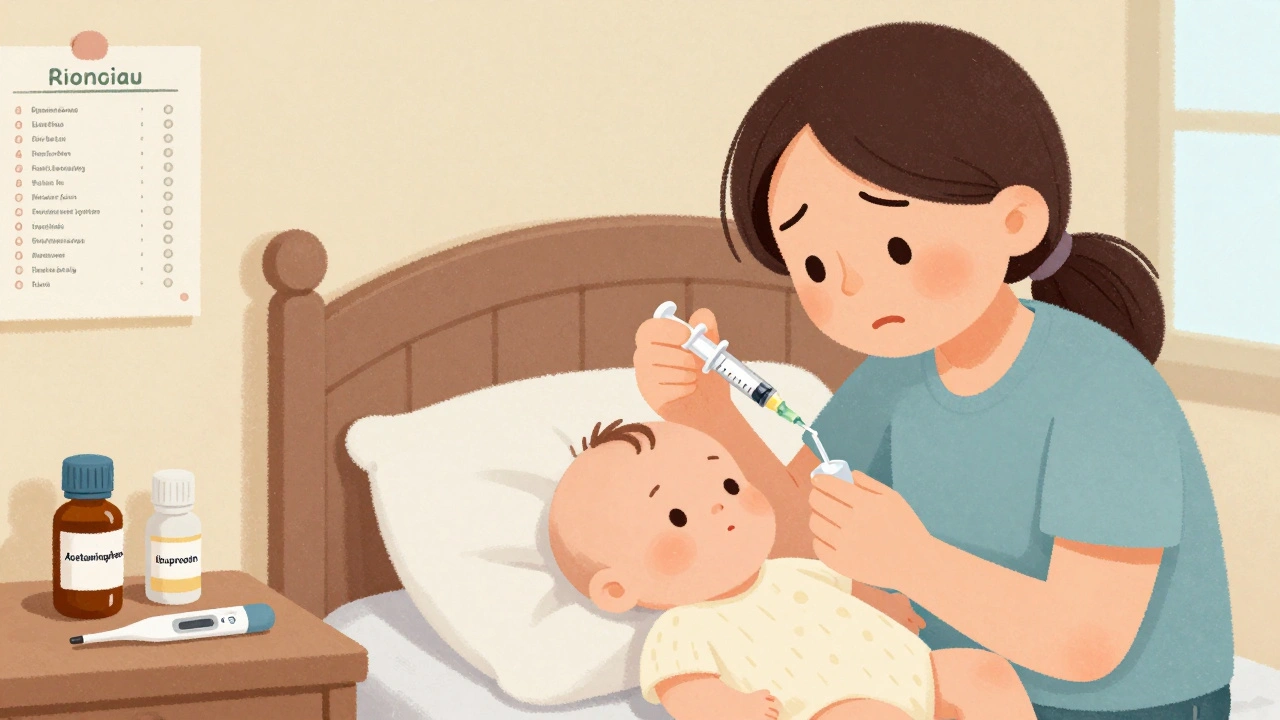
Learn the safest way to treat fever in kids under two with acetaminophen and ibuprofen. Discover dosing by weight, age limits, effectiveness, and when to call the doctor.
Read more