
When you're on a blood thinner like warfarin, a common anticoagulant used to prevent dangerous blood clots. Also known as Coumadin, it works by slowing down your blood's ability to clot — but getting the dose just right is critical. Too little, and you risk a stroke or pulmonary embolism. Too much, and you could bleed internally from a minor bump. That’s where INR monitoring, a simple blood test that measures how long it takes your blood to clot comes in. It’s not optional — it’s the backbone of safe anticoagulant therapy.
INR stands for International Normalized Ratio. A normal INR for someone not on blood thinners is around 1.0. For most people taking warfarin, the target range is between 2.0 and 3.0. If you have a mechanical heart valve, your doctor might aim higher — up to 3.5. But that number isn’t just a number. It tells your doctor whether your medication is working, whether your diet has changed (vitamin K in greens can throw it off), or whether another drug you’re taking is interfering. Antibiotics, aspirin, even some herbal supplements can shift your INR without you noticing. That’s why regular testing isn’t just routine — it’s life-saving.
People with atrial fibrillation, deep vein thrombosis, or artificial heart valves are the most common users of INR monitoring. But it’s not just about the diagnosis — it’s about daily habits. Skipping a dose, drinking alcohol, eating a big plate of kale, or getting sick can all change your INR overnight. That’s why many patients end up tracking their own diet, symptoms, and test results. Some use apps. Others keep paper logs. The goal is the same: catch a dangerous trend before it becomes an emergency.
You’ll also see INR monitoring come up in discussions about anticoagulant therapy, the broader strategy of managing blood clotting risks with medication. Newer drugs like apixaban or rivaroxaban don’t need INR checks — which is why many patients switch. But for those still on warfarin, INR is the only real guide. It’s not perfect, but it’s the best tool we have. And when done right, it keeps people out of the hospital and alive at home.
What you’ll find in the posts below are real, practical ways to handle INR monitoring without stress. From how to prepare for your blood test, to what foods to watch, to how to talk to your pharmacist about interactions — these aren’t theory pages. They’re guides written by people who’ve been there. Whether you’re just starting out or you’ve been on warfarin for years, there’s something here that will help you take control — safely and simply.
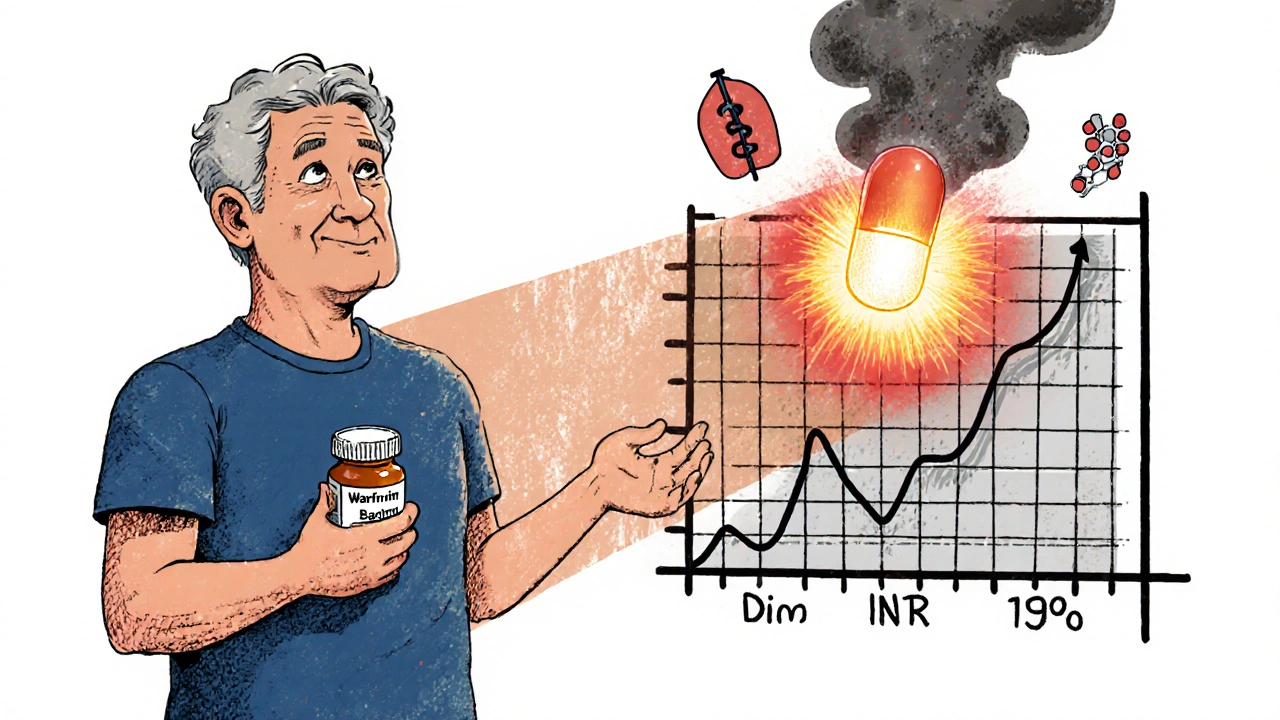
Warfarin and antibiotics can interact dangerously, raising your risk of bleeding. Learn which antibiotics are high-risk, how to monitor your INR, and what to do when you need antibiotics while on warfarin.
Read more