
When you’re on Medicare prescription coverage, the part of Medicare that helps pay for outpatient prescription drugs. Also known as Medicare Part D, it’s not automatic—you have to sign up separately through a private insurer approved by Medicare. Without it, you could pay full price for meds like insulin, blood pressure pills, or cholesterol drugs—costs that can easily hit $500 a month or more.
Medicare prescription coverage doesn’t mean everything’s covered. Each plan has a formulary, a list of drugs the plan agrees to cover.drug list—and it changes yearly. Some plans cover generic versions only, others include brand names but charge more. If your drug isn’t on the list, you might pay full price or need a prior authorization. That’s why checking your plan’s formulary before you enroll matters more than the monthly premium.
Costs don’t stop at the premium. There’s also the deductible, coinsurance, and copays—and don’t forget the coverage gap, often called the donut hole, a phase where you pay more out of pocket after spending a certain amount on drugs. In 2024, once you hit $5,030 in total drug costs, you enter the donut hole. You’ll pay 25% of the cost for both brand and generic drugs until you hit $8,000 in out-of-pocket spending. After that, catastrophic coverage kicks in, and you pay just a small fee or 5% of the cost, whichever’s higher.
Some people qualify for Extra Help—a federal program that cuts Part D costs for those with limited income. You might not know you’re eligible if you’re just below the income limit. Even a small change in your Social Security benefits or bank balance can make you qualify. It’s worth checking every year.
Medicare prescription coverage also interacts with other parts of Medicare. If you’re on Medicare Advantage (Part C), your drug coverage is usually bundled in. But not all Advantage plans are equal. Some have narrow networks of pharmacies, others charge high copays for specialty meds. If you take multiple drugs, compare the total annual cost—not just the monthly premium. A $10 plan with $100 copays on your top three meds could cost you more than a $40 plan with $10 copays.
And then there’s the issue of switching plans. You can only change during the Annual Enrollment Period (October 15 to December 7), unless you qualify for a Special Enrollment Period—like if you move, lose other coverage, or get Extra Help. Miss the window, and you’re stuck until next year. That’s why it’s smart to review your plan every fall, even if you’re happy with it. Your meds might change. Your pharmacy might drop out. Your costs might jump.
What you’ll find in the posts below are real, practical guides on how to navigate this system. From how to read your formulary without getting lost in jargon, to why some generic drugs still cost more than brand names, to how to appeal a denial. You’ll learn how to spot hidden costs, when to use mail-order pharmacies, and how to avoid the most common mistakes that lead to unexpected bills. These aren’t theoretical tips—they’re what people actually use to save hundreds or even thousands a year.
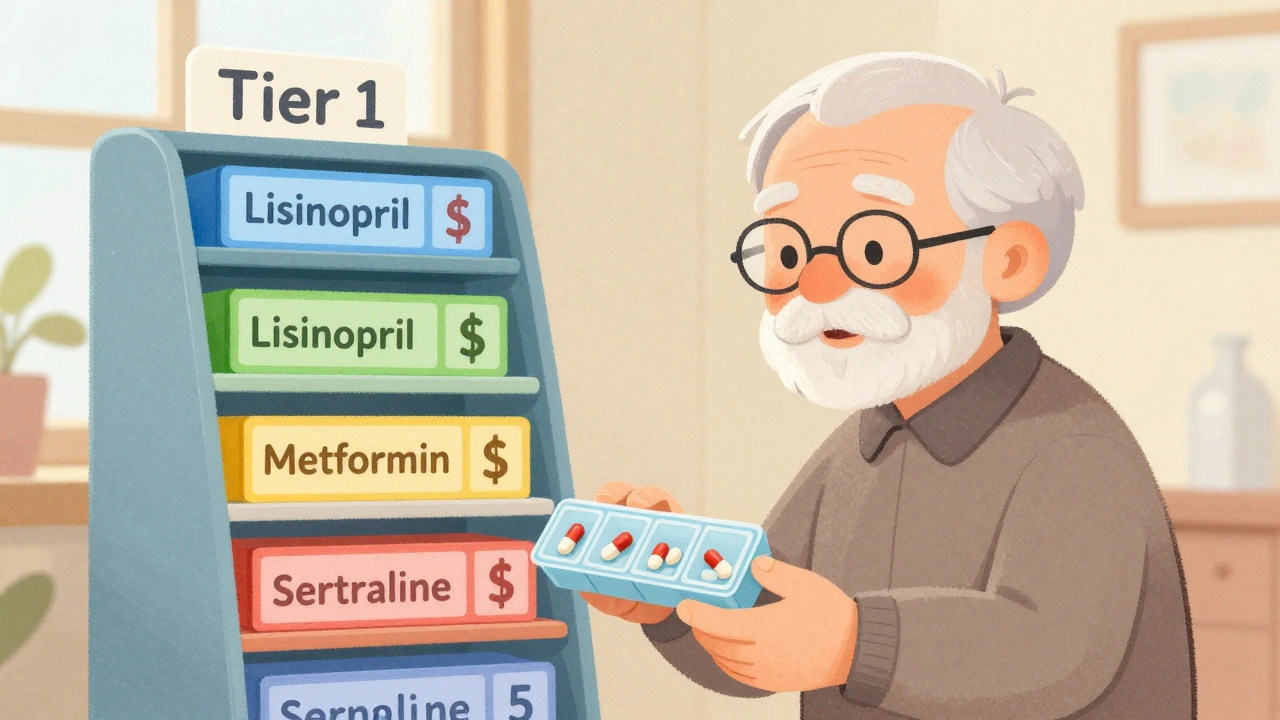
Medicare Part D generic drug coverage in 2025 offers lower costs, $0 out-of-pocket after $2,000 cap, and tiered formularies. Learn how to save on prescriptions and avoid coverage gaps.
Read more