
When you take a medication risk, the potential for harm from a drug, even when taken as directed. Also known as adverse drug reaction, it can range from mild nausea to life-threatening organ failure. Most people assume if a doctor prescribed it, it’s safe. But medication risks aren’t always obvious—and they don’t always show up in brochures or online summaries.
One of the biggest hidden dangers is drug interactions, when one medication changes how another works in your body. For example, carbamazepine can knock out the effectiveness of birth control, blood thinners, and even antidepressants by speeding up how your liver breaks them down. Or take antacids: they can cut antibiotic absorption by 90%, turning a treatment into a waste of time—and maybe even fueling antibiotic resistance. These aren’t rare cases. They happen every day. Then there’s medication safety, the system of practices that prevent errors in dosing, timing, or mixing. It’s not just about avoiding mistakes—it’s about knowing what to watch for before it’s too late. Early signs of a bad reaction—like sudden swelling, confusion, irregular heartbeat, or unexplained bruising—can mean the difference between a quick doctor visit and an ER trip.
Some risks are tied to your body’s unique chemistry. People with kidney disease can develop dangerous sodium imbalances from common diuretics. Those with seizure disorders might not realize tramadol can trigger seizures—even at normal doses. And if you’re over 65, taking even one extra pill increases your chance of a fall, confusion, or hospitalization. These aren’t just side effects—they’re signals your body is under stress from something meant to help you.
It’s not about avoiding medicine. It’s about understanding it. Whether it’s how your thyroid levels affect fertility, why statin timing barely matters anymore, or how look-alike pill packaging causes thousands of errors each year—every post here cuts through the noise. You’ll find real talk about what actually goes wrong, who’s most at risk, and what you can do right now to protect yourself. No fluff. No marketing. Just the facts you need to stay safe while taking what you need.
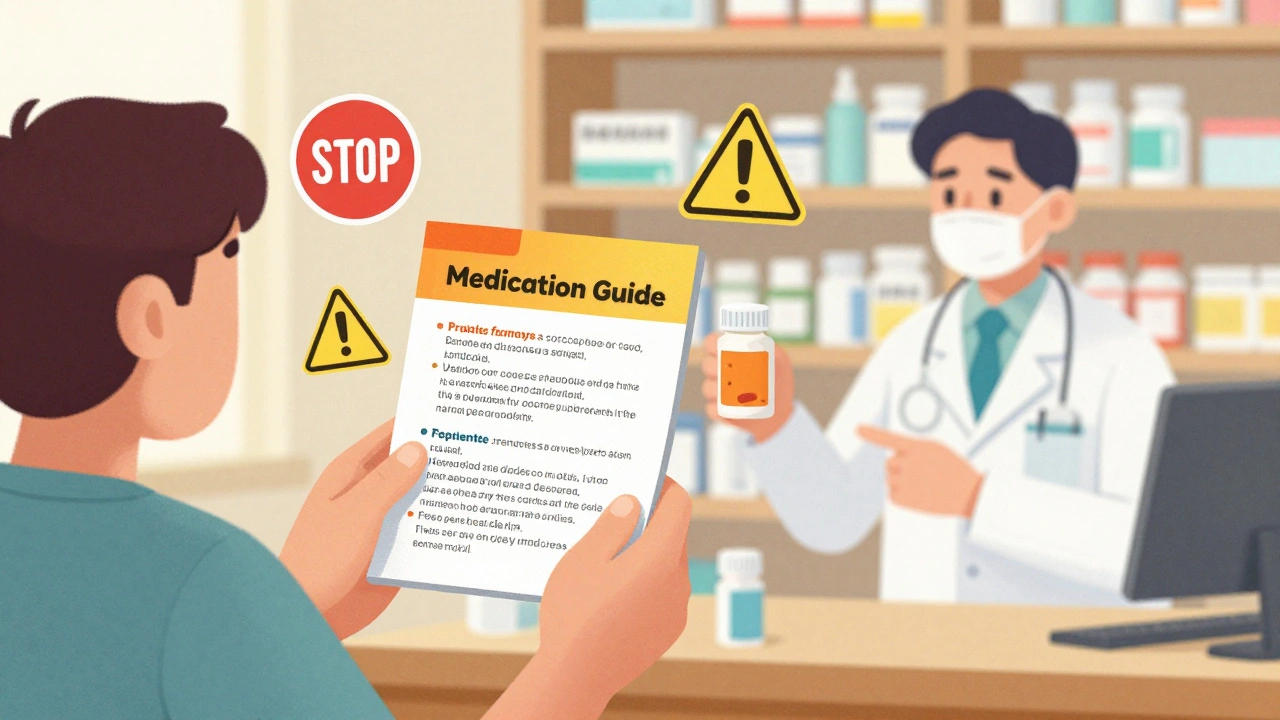
Medication Guides are FDA-mandated safety documents that explain serious risks of prescription drugs in plain language. They're required for high-risk medications and can prevent life-threatening mistakes - if you read them.
Read more