
When a drug gets orphan drug exclusivity, a legal protection granted by the FDA to companies developing treatments for rare diseases affecting fewer than 200,000 people in the U.S., it means no other company can sell a similar version for seven years—even if they figure out how to make it. This isn’t just a corporate perk; it’s a fix for a broken system. Before this rule existed, drug makers had little reason to spend millions developing pills for conditions so rare that they couldn’t possibly turn a profit. Now, they do—because they know they’ll have the market to themselves.
This system relies on FDA orphan drug designation, a formal status given to drugs targeting rare diseases that meet specific criteria for prevalence and unmet medical need.. It’s not automatic. Companies must apply, prove the disease is rare, and show the drug might actually help. Once approved, the clock starts ticking on that seven-year clock. During that time, even if another company finds the same active ingredient, they can’t sell it. This is different from patents. Patents can expire early. Orphan exclusivity doesn’t care—it runs its full course unless fraud is proven.
But here’s what patients need to know: this system isn’t perfect. Some drugs with exclusivity cost tens of thousands of dollars a year. Others are priced fairly. The rule doesn’t control price—only market access. That’s why you’ll see some rare disease drugs with no competition and sky-high costs, while others get generic versions after exclusivity ends. It also means that if you’re waiting for a treatment for a rare condition, the clock might be ticking on when a cheaper option becomes available.
Related to this are drug development incentives, a set of benefits—including tax credits, research grants, and waived fees—that encourage companies to pursue treatments for rare diseases.. These aren’t just about exclusivity. They lower the financial risk of research. That’s why you’ll see more drugs for conditions like Duchenne muscular dystrophy, certain types of cancer in children, or rare metabolic disorders now than ever before. These incentives helped turn science fiction into real treatments.
And then there’s the bigger picture: pharmaceutical market exclusivity, the broader category of legal protections that prevent competition for a set time, including orphan status, patent extensions, and data exclusivity.. Orphan drug exclusivity is one piece of that puzzle. It’s not the only way companies protect their drugs, but it’s one of the most targeted. It’s designed for conditions that would otherwise be ignored—not because they’re unimportant, but because they’re too small to attract investment.
The posts below show how this system connects to real-world issues. You’ll find guides on how medication safety changes when a drug is the only option, how drug interactions matter more when you’re on a rare disease treatment, and why understanding your prescription label becomes critical when there’s no generic alternative. Some articles talk about how patients manage high-cost meds, how insurance fights coverage, and how clinical trials for rare diseases work differently. All of it ties back to the same reality: orphan drug exclusivity shapes who gets treated, how much it costs, and how long you might wait for a better option.
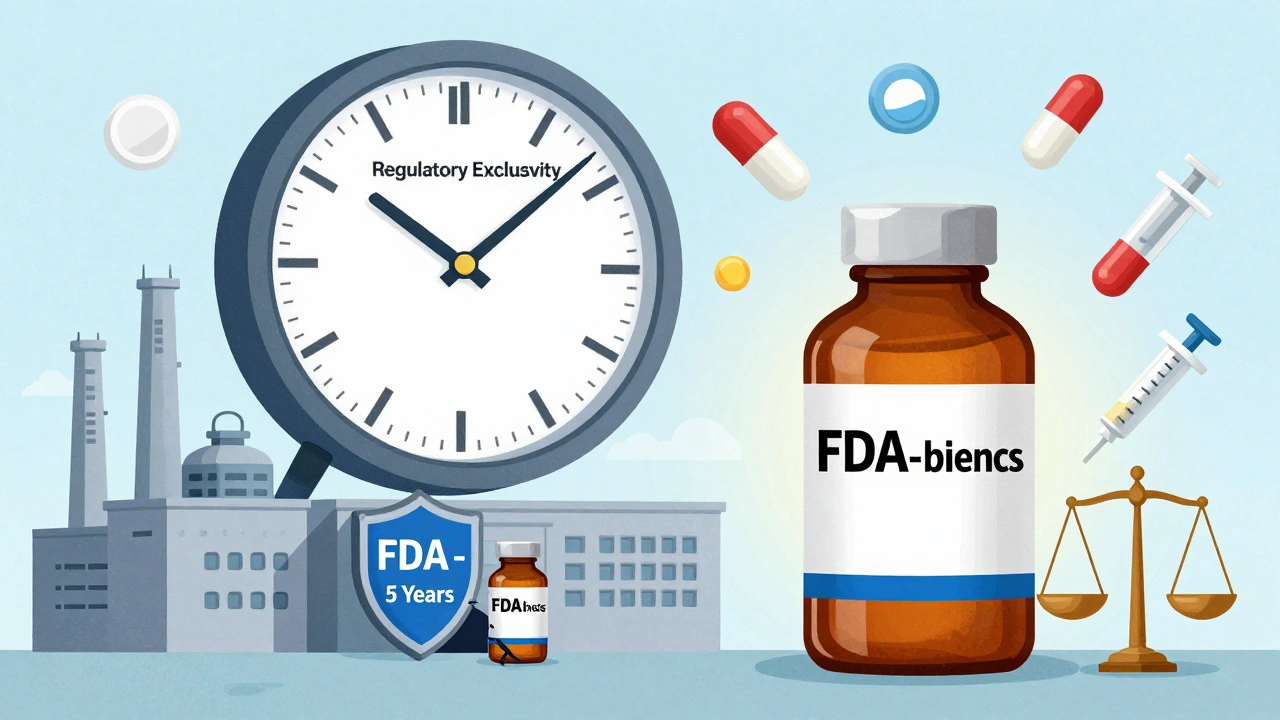
Regulatory exclusivity gives drug makers legal protection from generic competition without relying on patents. It includes 5, 7, or 12-year blocks depending on the drug type and is a major reason why some medications stay expensive for over a decade.
Read more