
When you sign up for Medicare Part D, the federal program that helps cover the cost of prescription drugs for people on Medicare. It's not free, and it's not simple. Many think Part D just means lower drug prices—but what you actually pay depends on your plan, your meds, and where you are in the coverage cycle. Also known as Medicare prescription drug coverage, Part D is managed by private insurers approved by Medicare, and the costs can vary wildly from one plan to the next.
One of the biggest surprises? The coverage gap, also called the donut hole, where you pay more out-of-pocket after you and your plan have spent a certain amount on drugs. It’s still real, even though it’s shrunk over the years. For 2024, once you hit $5,030 in total drug costs, you enter the gap. You’ll pay 25% of the cost for brand-name drugs and 25% for generics until you hit $8,000 in out-of-pocket spending. After that, catastrophic coverage kicks in, and you pay just a small copay or coinsurance for the rest of the year. This isn’t just theory—it’s the exact math that affects thousands of people taking high-cost meds like insulin, cancer drugs, or biologics. Then there’s the premium, the monthly fee you pay just to be enrolled in a Part D plan. Some plans have $0 premiums, but they often come with higher deductibles or limited pharmacy networks. Others charge $50 or more a month but offer better coverage for your specific drugs. And don’t forget the deductible—some plans have one, some don’t, but if yours does, you pay it before anything else kicks in.
What you pay isn’t just about the plan—it’s about your meds. If you take a drug that’s not on your plan’s formulary, you’ll pay full price. If your drug requires prior authorization or step therapy, you might face delays or extra paperwork. And if you’re on a low income, you might qualify for Extra Help, a federal program that cuts your premiums, deductibles, and copays significantly. But you have to apply. Most people don’t realize they’re eligible until they get hit with a $300 month for their heart medication.
Part D costs aren’t set in stone. They change every year. Plans can drop your drug, raise premiums, or shift tiers. That’s why reviewing your plan during Open Enrollment—from October 15 to December 7—isn’t optional. It’s your best shot at avoiding a nasty surprise in January. You don’t need a financial advisor. You just need to know what you’re paying for, what your drugs cost, and how the system actually works. Below, you’ll find real guides that break down exactly how to track your spending, avoid the donut hole traps, compare plans without the jargon, and use tools that save you hundreds—sometimes thousands—each year.
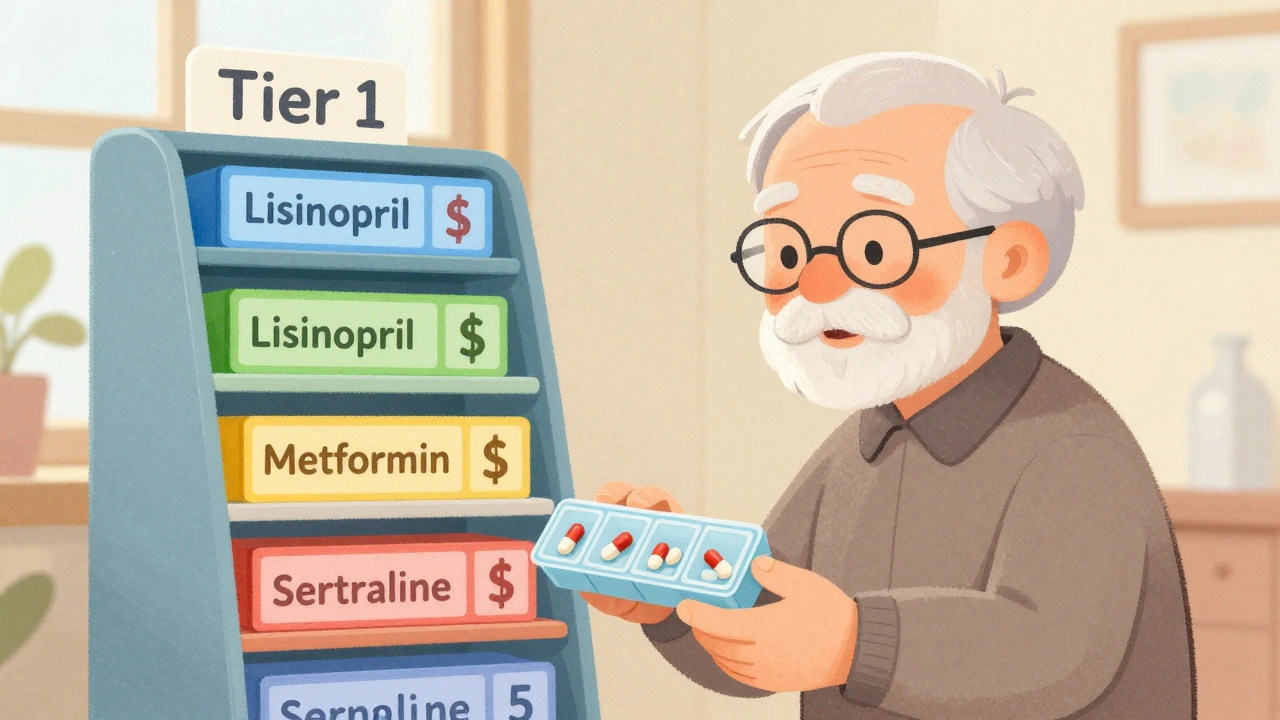
Medicare Part D generic drug coverage in 2025 offers lower costs, $0 out-of-pocket after $2,000 cap, and tiered formularies. Learn how to save on prescriptions and avoid coverage gaps.
Read more