
When you pick up a prescription, the patient labeling, the official written instructions and warnings that come with your medication. Also known as medication guides, it's not just legal paperwork—it’s your personal safety manual. Most people glance at the dosage and toss it. But hidden in that small font are critical details about side effects, interactions, and when to call your doctor—details that could prevent a hospital visit or even save your life.
Take medication guides, detailed handouts required by the FDA for high-risk drugs. They’re not optional. If you’re on warfarin, carbamazepine, or even something as common as losartan-hydrochlorothiazide, the guide tells you what to watch for—like unusual bruising, confusion, or sudden swelling—that you might otherwise ignore. These aren’t generic warnings. They’re tailored to real cases where people got hurt because they didn’t know what to look for. Then there’s prescription safety, the practice of using labels correctly to avoid mistakes. It’s not just about reading the bottle. It’s about understanding Tall Man Lettering (like HYDROmorphone vs. HYDROxyzine), knowing why some pills look nearly identical, and realizing that a missed dose isn’t always fixed by doubling up. For older adults, people with low vision, or caregivers managing multiple drugs, patient labeling isn’t just helpful—it’s essential.
And here’s the truth: most drug interactions don’t happen because doctors made a mistake. They happen because the patient didn’t know that an antacid could block their antibiotic, or that an over-the-counter sleep aid could make their heart race. Patient labeling is your first line of defense. It tells you when to hold off on a new medicine, when to get your INR checked, or when to rush to the ER. The posts below show you exactly how to read these labels like a pro—how to spot red flags, decode medical jargon, and use the information to protect yourself and your family. Whether you’re managing thyroid meds before pregnancy, juggling antibiotics with warfarin, or helping a child take their daily dose, the right understanding of patient labeling makes all the difference.
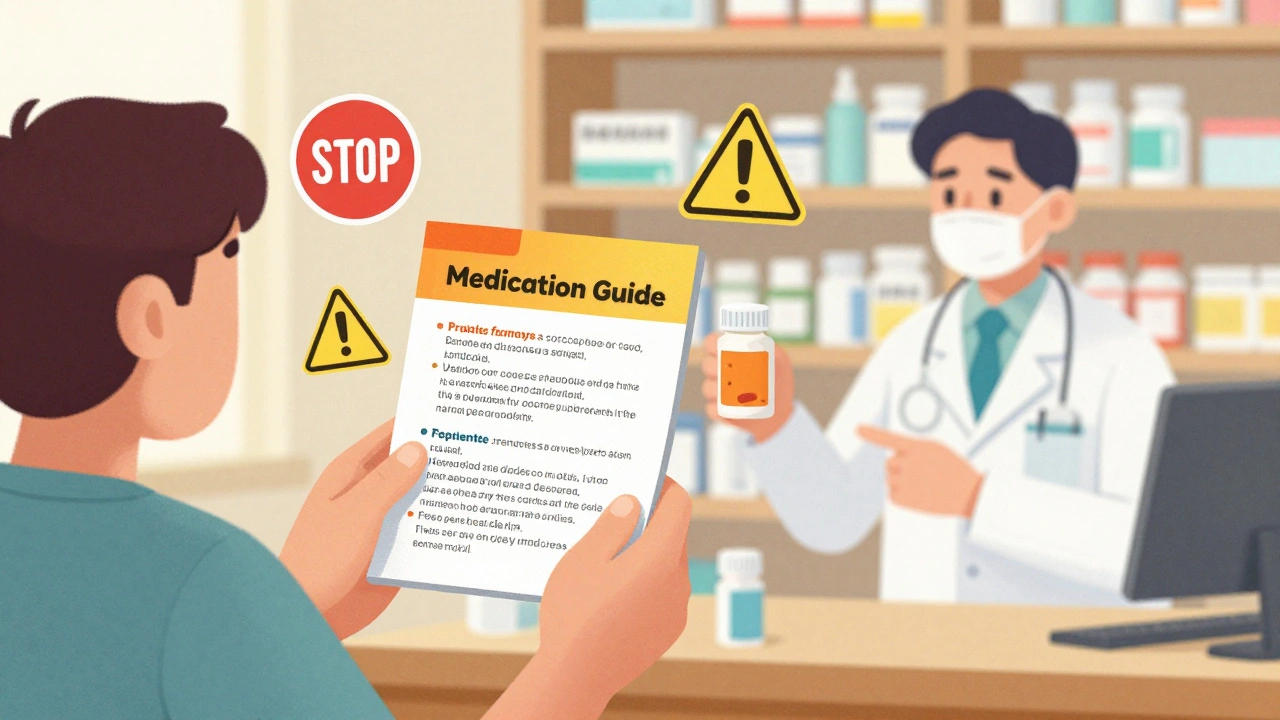
Medication Guides are FDA-mandated safety documents that explain serious risks of prescription drugs in plain language. They're required for high-risk medications and can prevent life-threatening mistakes - if you read them.
Read more