
When your child has a pediatric fever treatment, a set of evidence-based steps to safely lower body temperature in children. Also known as fever management in children, it’s not about rushing to bring the number down—it’s about keeping your child comfortable and watching for signs that something more serious is happening. Fever isn’t a disease. It’s your child’s body fighting off an infection, usually viral. Most of the time, it’s harmless and goes away on its own. But that doesn’t mean you should ignore it. The goal isn’t to get the temperature to 98.6°F. It’s to help your child feel better so they can rest, drink, and recover.
One of the biggest mistakes parents make is giving the wrong dose of medicine—or too much. pediatric medication safety, the practice of giving the correct drug and dose to children based on weight and age is critical. Ibuprofen and acetaminophen are the two go-to options, but they’re not interchangeable. Ibuprofen works longer and is better for higher fevers, while acetaminophen is gentler on the stomach. But both can cause liver or kidney damage if you give too much. The key? Always use the measuring tool that comes with the medicine. Never guess with a kitchen spoon. And never give aspirin to kids—it can cause a rare but deadly condition called Reye’s syndrome.
There’s more to fever in kids, a common symptom in children caused by infections, vaccines, or teething than pills. Dress your child in light clothes. Keep the room cool. Offer fluids often—water, Pedialyte, or even ice chips if they’re old enough. A lukewarm sponge bath? Maybe. Cold baths or alcohol wipes? Never. Those can cause shivering, which makes the fever worse. And don’t wake a sleeping child just to give medicine. Sleep is healing. If they’re breathing normally, not pale or listless, let them rest.
When should you worry? If your baby under 3 months has a fever of 100.4°F or higher, call the doctor right away. For older kids, watch for trouble breathing, stiff neck, rash that doesn’t fade when you press it, or if they won’t drink or urinate for 8 hours. Those are red flags. Fever alone isn’t one. Kids can run high fevers with a cold and be fine. Others might have a low fever and be seriously ill. That’s why behavior matters more than the number on the thermometer.
You’ll find posts here that dig into how to handle missed doses, what drugs interact with fever reducers, and how to keep track of meds without mixing them up. There’s advice on when to use an oral syringe instead of a cup, how to set up alerts so you don’t double-dose, and what to do when your child refuses to take medicine. These aren’t theory pieces—they’re real-world fixes from parents and nurses who’ve been there.
Fevers scare parents. But they don’t have to paralyze you. With the right tools, the right knowledge, and the right calm, you can handle most fevers at home—without rushing to the ER or overmedicating. What follows are the most useful, no-nonsense guides on keeping kids safe during fever episodes. No fluff. Just what works.
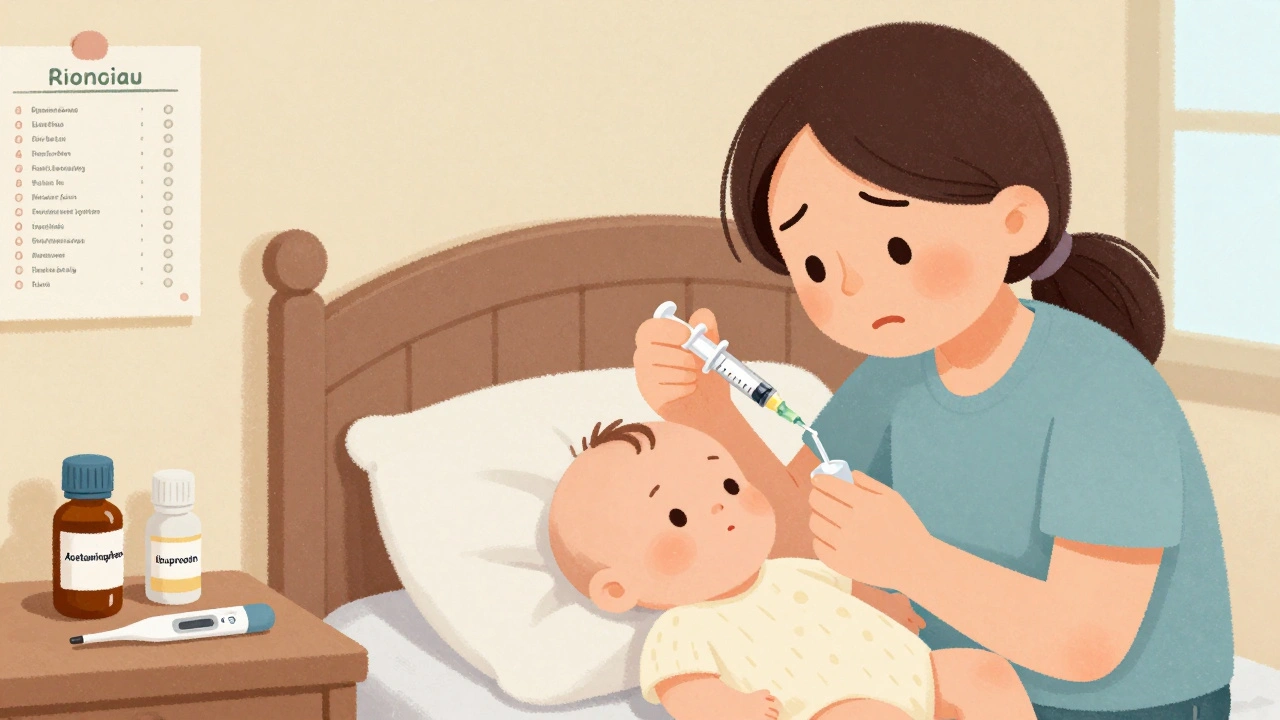
Learn the safest way to treat fever in kids under two with acetaminophen and ibuprofen. Discover dosing by weight, age limits, effectiveness, and when to call the doctor.
Read more