
When you hear about a new drug hitting the market, regulatory exclusivity, a period of market protection granted by the FDA that blocks generic versions even before a patent expires. It's not a patent—it's a separate rule designed to reward innovation, but it also delays cheaper alternatives. This system is why some brand-name drugs stay expensive for years, even after their patent runs out. Think of it like a timer: once the clock starts ticking on regulatory exclusivity, no other company can sell a copy until it runs out—no matter how simple the formula is.
Regulatory exclusivity comes in different flavors. For example, orphan drug exclusivity, a seven-year protection given to drugs treating rare diseases affecting fewer than 200,000 Americans kicks in when a company gets approval for a treatment no one else is making. Then there’s new chemical entity exclusivity, a five-year block on generics for drugs with active ingredients never approved before. And don’t forget pediatric exclusivity, an extra six months added to existing protections when a company studies a drug in children. These aren’t just legal tricks—they shape whether you’ll pay $500 or $5 for the same pill.
It’s easy to assume that once a drug’s patent expires, generics flood the market. But regulatory exclusivity often gets in the way. A drug might have a 20-year patent, but if it also has five years of exclusivity for being a new chemical entity, plus six months for pediatric studies, that’s 25.5 years before generics can legally appear. That’s why some medications stay pricey long after their invention. The FDA doesn’t control prices, but it controls who can sell what—and when. That’s why posts on this site cover topics like generic drug bioequivalence, medication guides, and drug interactions: because when exclusivity delays access, patients need to understand what’s really in their pills and how they work.
What you’ll find below are real-world stories from people navigating this system—how a missed dose of a brand drug becomes a crisis when generics aren’t available, how a parent fights to get affordable fever meds for their child, or how someone on warfarin learns their insurance won’t cover the generic because of an exclusivity loophole. These aren’t abstract rules. They’re daily hurdles for patients, caregivers, and even doctors trying to do right by their health.
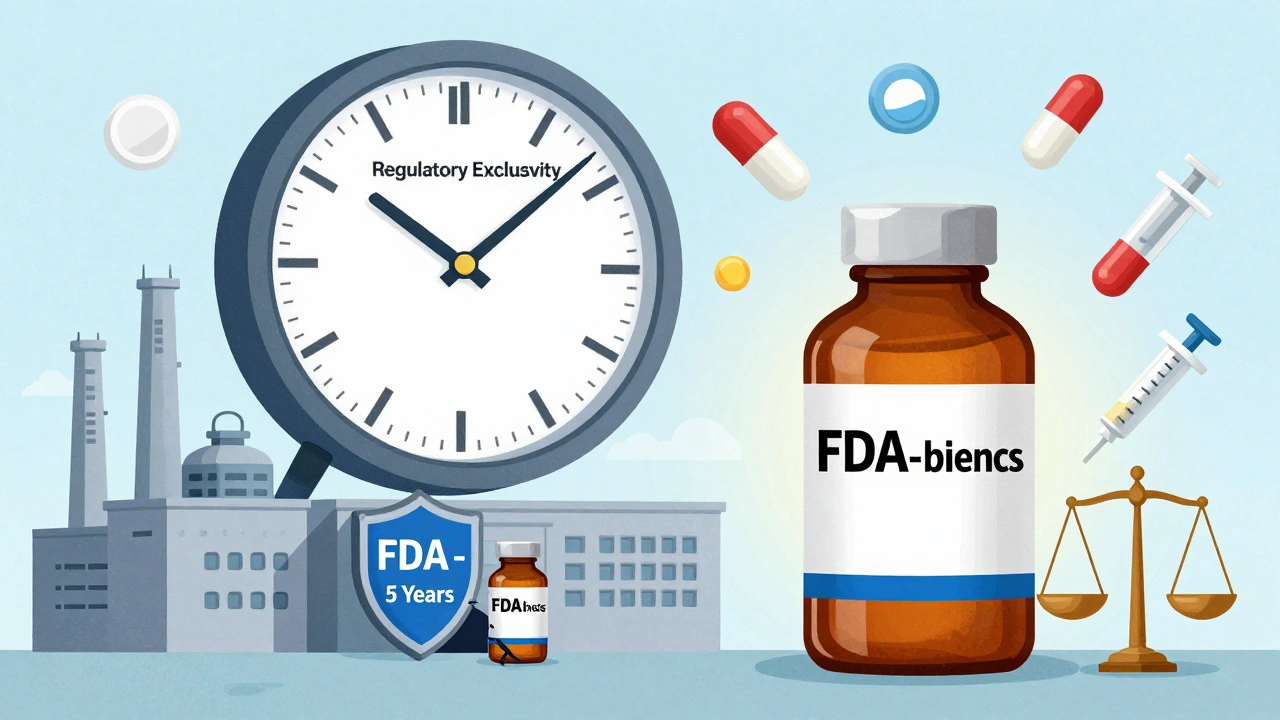
Regulatory exclusivity gives drug makers legal protection from generic competition without relying on patents. It includes 5, 7, or 12-year blocks depending on the drug type and is a major reason why some medications stay expensive for over a decade.
Read more