
When your body’s sodium imbalance, a condition where blood sodium levels are too low or too high, disrupting fluid balance and nerve function. Also known as electrolyte disorder, it can happen fast—or creep up over weeks, often without obvious symptoms until it’s serious. Sodium isn’t just salt on your food. It’s the main electrolyte that controls how much water your cells hold, how your nerves fire, and how your muscles contract. Too little (hyponatremia, low blood sodium, usually below 135 mmol/L) or too much (hypernatremia, high blood sodium, usually above 145 mmol/L), and your brain, heart, and kidneys start to struggle.
Many common medications can mess with your sodium levels without you realizing it. Diuretics like hydrochlorothiazide, often used for high blood pressure, make you pee out more sodium and water—sometimes too much. Antidepressants like SSRIs, pain meds like tramadol, and even some antibiotics can trigger hyponatremia by changing how your kidneys handle water. If you’re on multiple drugs, the risk adds up. And if you’re older, have heart or kidney disease, or drink a lot of water after exercise, you’re more vulnerable. Sodium imbalance doesn’t always mean you feel dizzy or confused right away. Sometimes it’s just fatigue, nausea, or a headache you write off as stress. But left unchecked, it can lead to seizures, coma, or even death.
What’s surprising is how often this gets missed. Doctors test for potassium and glucose all the time, but sodium? Not always. If you’re on long-term meds, especially for blood pressure, depression, or chronic pain, ask for a basic electrolyte panel once a year—or sooner if you’ve had recent illness, vomiting, or heavy sweating. The fix isn’t always cutting salt. Sometimes it’s drinking less water. Other times, it’s switching meds. The posts below cover real cases: how losartan-hydrochlorothiazide affects fluid balance, why tramadol can lower your seizure threshold by messing with sodium, and how antacids and antibiotics interact in ways that surprise even experienced patients. You’ll find practical advice on spotting early signs, what questions to ask your pharmacist, and which drug combinations to watch out for. No fluff. Just what you need to stay safe.
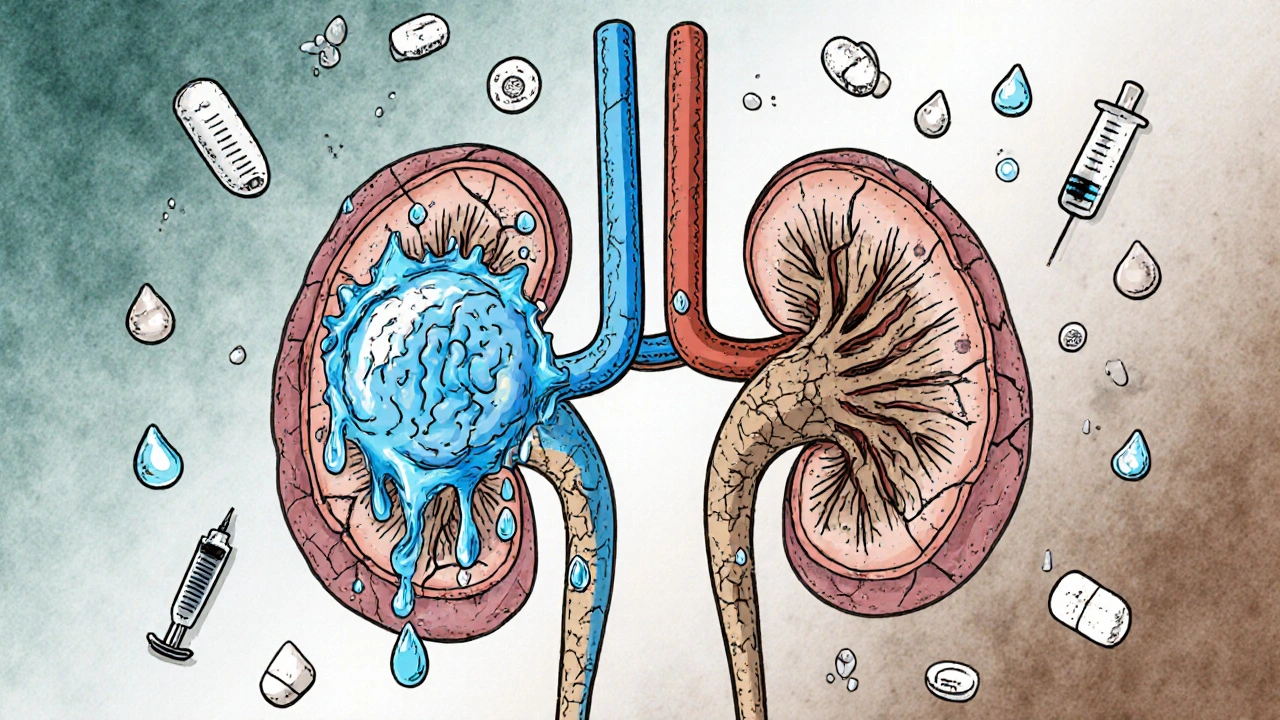
Hyponatremia and hypernatremia are life-threatening sodium imbalances common in kidney disease. Learn how reduced kidney function disrupts sodium balance, why standard treatments can be dangerous, and what actually works to protect your health.
Read more