
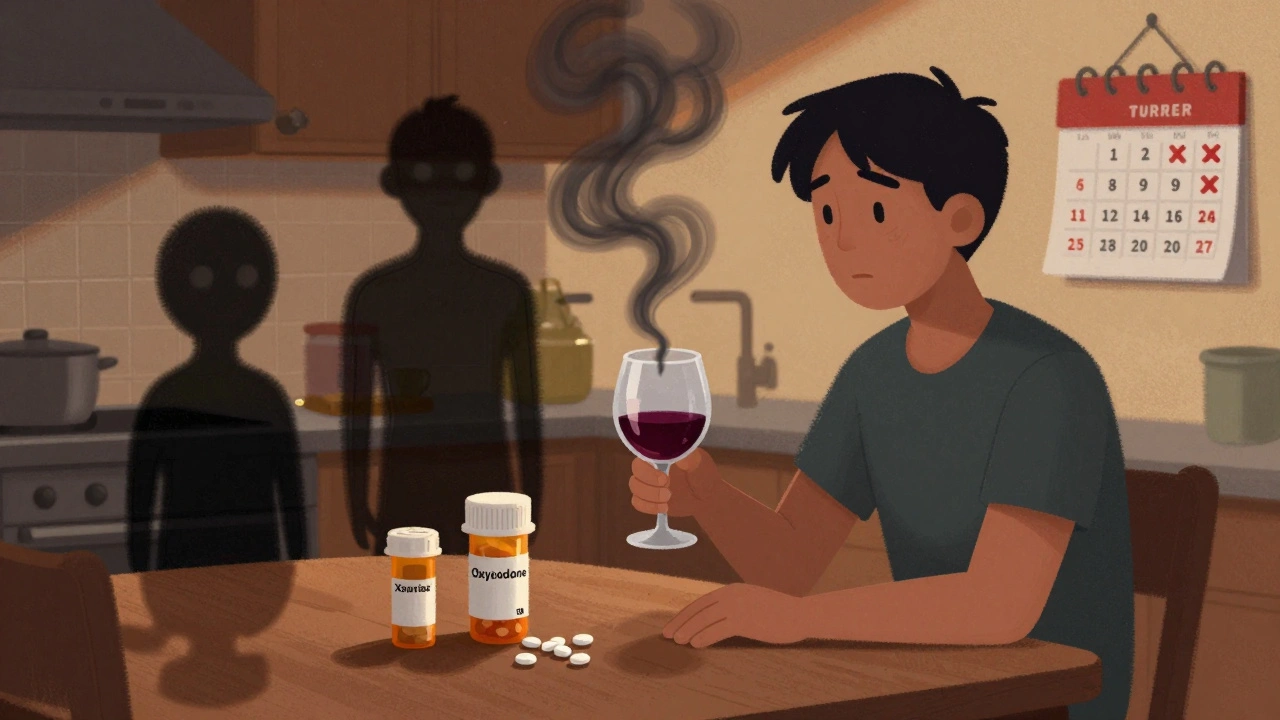
Many people don’t realize that drinking alcohol while on prescription meds isn’t just a bad idea-it can be deadly. You might think one glass of wine with your painkiller or a beer after your anxiety pill is harmless. But the science says otherwise. In 2022 alone, alcohol and prescription drug interactions contributed to 2,318 overdose deaths in the U.S., according to CDC data. That’s not a rare accident. It’s a predictable, preventable crisis happening every day.
How Alcohol Changes How Your Medicines Work
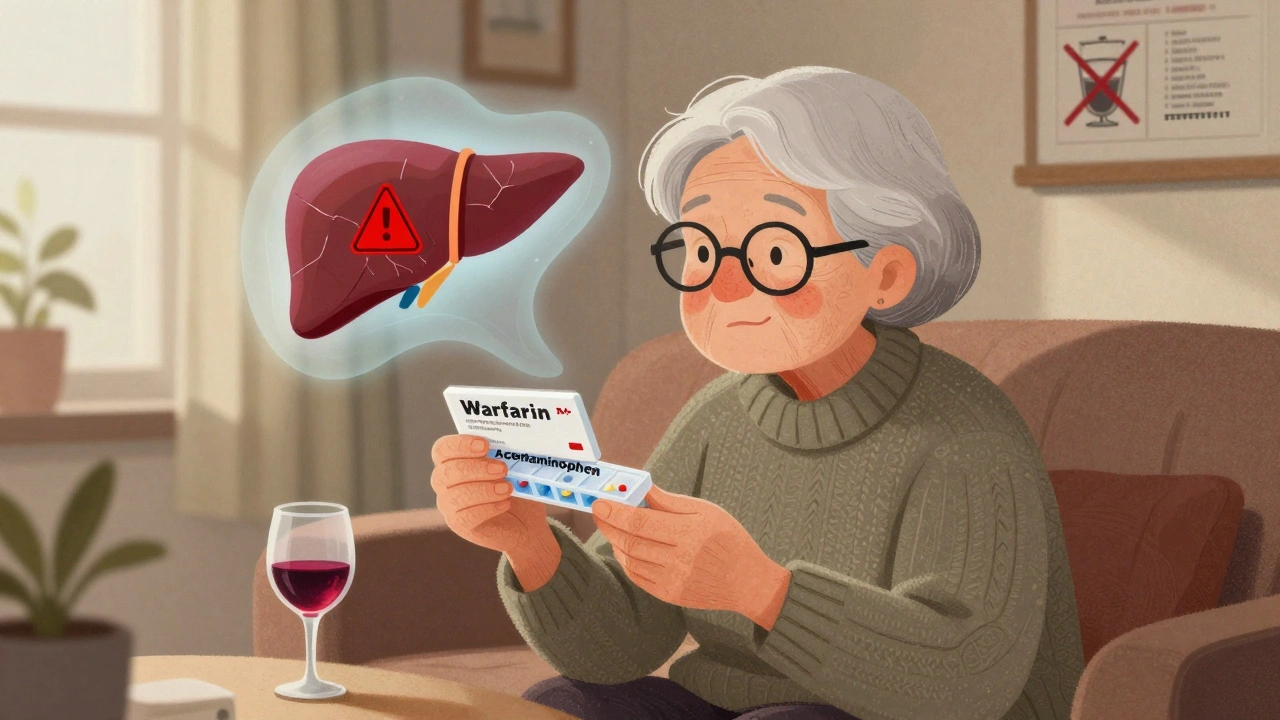
Alcohol doesn’t just mix with drugs-it rewires how your body handles them. There are two main ways this happens: pharmacokinetic and pharmacodynamic interactions.Pharmacokinetic interactions affect how your body breaks down the drug. Most medications and alcohol are processed by the same liver enzymes-especially the CYP450 family. When you drink, especially regularly, your liver starts producing more of these enzymes. That means drugs like propranolol (used for high blood pressure) get broken down too fast. Studies show regular drinkers can lose 30-50% of the drug’s effectiveness. On the flip side, if you drink just once, alcohol can block those enzymes. That causes drugs like warfarin (a blood thinner) to build up in your system. One study found alcohol can spike warfarin levels by up to 35%, raising your risk of dangerous bleeding.
Pharmacodynamic interactions are even scarier. These happen when alcohol and the drug amplify each other’s effects. Think of it like stacking two heavy weights on the same scale. Alcohol is a depressant. So are benzodiazepines like diazepam (Valium) and alprazolam (Xanax). When you combine them, sedation doesn’t just double-it can jump by 400%. That’s not drowsiness. That’s near-unconsciousness. And when alcohol mixes with opioids like oxycodone or hydrocodone, the risk of stopped breathing goes up sixfold. One drink can be enough to tip someone into respiratory failure.
High-Risk Medications You Should Never Mix With Alcohol
Some drugs are just too dangerous to combine with alcohol-even a single drink. Here’s what the data says about the worst offenders:- Opioids (oxycodone, hydrocodone, fentanyl): Alcohol and opioids together are responsible for 26% of all prescription drug overdose deaths. Blood alcohol levels as low as 0.02%-the equivalent of one standard drink-double the risk of a fatal crash when combined with therapeutic opioid doses.
- Benzodiazepines (diazepam, lorazepam, alprazolam): These are prescribed for anxiety and sleep, but mixing them with alcohol causes extreme dizziness, memory blackouts, and a 50% higher chance of falls in older adults. The American Geriatrics Society lists these as “potentially inappropriate” for seniors.
- Antidepressants (SSRIs like sertraline, fluoxetine): While not always deadly, alcohol can make you feel more tired, dizzy, and emotionally numb. One study found 35% of adults over 65 experienced dangerous drowsiness after just 1-2 drinks with SSRIs.
- NSAIDs (ibuprofen, naproxen): These common painkillers already irritate your stomach. Add alcohol, and the risk of internal bleeding skyrockets by 300% in heavy drinkers.
- Acetaminophen (Tylenol): This is one of the most misunderstood risks. Even moderate drinking with regular acetaminophen use can cause acute liver failure. The FDA reports 1 in 200 regular users who drink develop this life-threatening reaction.
Who’s Most at Risk-and Why
Not everyone reacts the same way. Some people face far higher dangers, even with the same dose of alcohol and medication.Aging is a huge factor. After 65, your liver slows down. Your body holds less water, so alcohol concentrates more in your blood. Older adults experience 3.2 times more severe interactions than younger people. Nearly half of U.S. adults over 65 take at least one medication with a known alcohol interaction. Yet, 68% say their doctor never warned them.
Women are more vulnerable too. Due to lower body water content and slower alcohol metabolism, they feel the effects of alcohol more intensely. That means the same drink hits them harder-increasing interaction severity by about 20% compared to men.
If you have liver disease, your risk with acetaminophen or certain antibiotics like isoniazid jumps fivefold. Even if you’ve cut back on drinking, your liver may still be damaged. That makes it harder to process anything.
What Doctors and Pharmacies Are (and Aren’t) Doing
You’d think your doctor or pharmacist would flag these risks. But the system is broken.A 2022 FDA audit found only 38% of benzodiazepine prescriptions include a clear alcohol warning. Many patients get their meds with no verbal warning at all. Reddit threads from people who’ve had near-fatal reactions are full of the same story: “My doctor never mentioned I shouldn’t drink.”
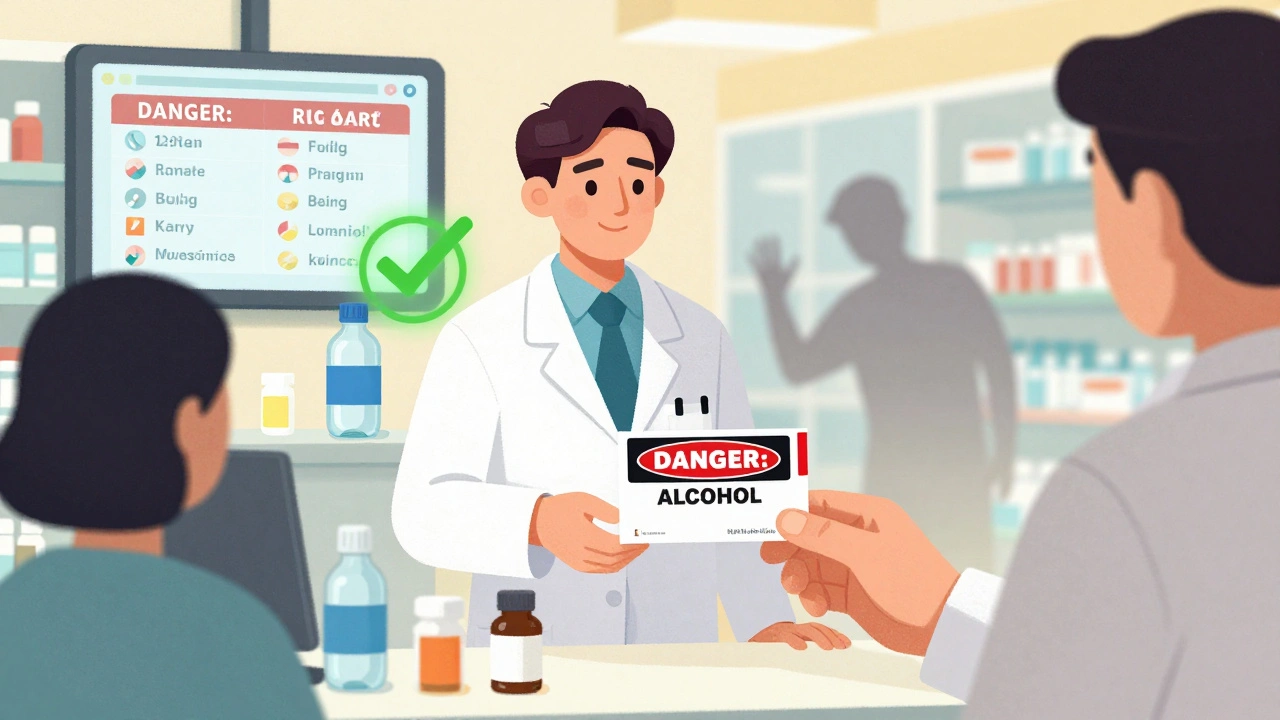
But there’s hope. Pharmacists are often the last line of defense. One patient wrote in a Google review: “My Walgreens pharmacist refused to fill my lorazepam prescription when I admitted to regular drinking. Probably saved my life.” That’s not rare. Pharmacies with strong screening protocols catch these risks before they cause harm.
Still, a 2023 JAMA study showed 43% of primary care doctors couldn’t correctly identify all high-risk medication classes. That’s not ignorance-it’s a system failure. Training is inconsistent. Warnings are buried in fine print. Patients are left guessing.
What You Can Do Right Now
You don’t need to be a medical expert to protect yourself. Here’s what actually works:- Check the label. Look for “Do not drink alcohol” or “May cause drowsiness” warnings. If it’s not there, assume it’s risky.
- Ask your pharmacist. They’re trained for this. Use the four-question screening tool: “Do you drink alcohol? How much? How often? And what meds are you taking?”
- Use free tools. The NIAAA’s “Alcohol Medication Check” app lets you scan your prescription barcode and instantly see if alcohol is dangerous with it. It covers over 2,300 medications.
- Use color-coded risk charts. Some pharmacies now use red (danger), yellow (caution), and green (safe) labels. These improve patient understanding by 47% compared to text-only warnings.
Don’t wait for your doctor to bring it up. Bring it up yourself. Say: “I drink occasionally. Is this safe with my meds?”
The Bigger Picture: Why This Keeps Happening
The problem isn’t just individual choices. It’s systemic. The global market for drug interaction software is growing fast-projected to hit $2.8 billion by 2030. Hospitals like the VA now use real-time systems that flag alcohol risks the moment a prescription is written. But private clinics? Only 32% do this.Regulations are changing. The 2022 Alcohol-Drug Interaction Labeling Act now requires clear warnings on high-risk prescriptions. But enforcement is slow. And even with better tech, only 28% of high-risk patients actually stop drinking. People don’t believe it affects them. Or they think “just one drink” won’t hurt.
That’s the myth that kills.
What About “Moderate” Drinking?
Some experts argue that one drink a day might be okay with certain meds. But the consensus is clear: with opioids, benzodiazepines, or acetaminophen, there is no safe amount. Even a single beer can push someone over the edge.For other medications-like some antibiotics or blood pressure pills-the risk is lower. But “lower” doesn’t mean “safe.” You might feel fine today. But what about next week? Or after a night of poor sleep? Or if you get sick? Your body’s ability to handle the mix changes every day.
When in doubt, skip it. Your liver, your brain, and your life are worth more than one glass of wine.
What’s Next?
New tools are coming. In 2024, Epic Systems rolled out AI algorithms that analyze over 200 patient factors-age, weight, liver function, drinking patterns-to predict individual interaction risk with 89% accuracy. The CDC’s 2023-2025 plan aims to cut overdose deaths by half through mandatory provider training. Already, 42 states require doctors to complete education on substance-medication interactions to renew their licenses.But technology can’t replace human communication. The most effective tool remains a simple conversation between a patient and a pharmacist who takes the time to listen.
Can I have one drink with my prescription medication?
It depends on the medication. With opioids, benzodiazepines, or acetaminophen, even one drink can be deadly. With some blood pressure or antibiotic meds, the risk is lower-but still present. There’s no universal rule. Always check with your pharmacist or doctor. When in doubt, skip it.
What should I do if I accidentally mixed alcohol with my meds?
If you feel dizzy, confused, extremely drowsy, or have trouble breathing, seek emergency help immediately. Call emergency services or go to the nearest hospital. Don’t wait. Even if you feel fine, monitor yourself closely for the next few hours. Symptoms can be delayed.
Why didn’t my doctor warn me about alcohol and my meds?
Many doctors don’t have enough time during appointments to review every possible interaction. Prescription labels often don’t include clear warnings. A 2023 study found 43% of primary care physicians couldn’t correctly identify all high-risk medications. It’s not negligence-it’s a broken system. That’s why you need to ask. Don’t assume they told you.
Are over-the-counter meds safer with alcohol?
No. Many OTC meds carry the same risks. Acetaminophen (Tylenol) plus alcohol can cause liver failure. NSAIDs like ibuprofen increase stomach bleeding risk. Cold and allergy meds often contain antihistamines that cause drowsiness-mixing them with alcohol makes it worse. Always read the label.
Can I drink the night before taking my meds?
Alcohol stays in your system longer than you think. Even if you feel sober, your liver may still be processing it. For high-risk meds like opioids or benzodiazepines, waiting 12-24 hours isn’t enough. The safest approach is to avoid alcohol entirely while taking these drugs. Your body doesn’t reset overnight.
Is it safe to drink on weekends if I only take meds during the week?
No. Many medications build up in your system over time. Even if you don’t take your pill on Saturday, it’s still in your blood. For drugs like warfarin, antidepressants, or painkillers, weekend drinking can still trigger dangerous interactions. Consistency matters. If your medication requires alcohol avoidance, it applies every day.


12 Comments
Richard Eite December 10, 2025
This is why America is falling apart. People think they can do whatever they want and still live. One drink? Nah. One drink kills. The data doesn't lie. Stop being weak.
Katherine Chan December 11, 2025
I'm so glad someone finally said this. I used to have a friend who mixed Xanax and wine and thought she was fine. She ended up in the hospital. Don't wait until it's too late. Your body isn't a lab experiment.
Philippa Barraclough December 12, 2025
The pharmacokinetic and pharmacodynamic distinctions are crucial here, and the article does a commendable job of delineating them. However, I would argue that the real issue lies not just in individual behavior but in the structural failure of healthcare systems to integrate patient education into routine prescribing workflows. The fact that 68% of older adults report no warning from their physicians suggests a systemic blind spot that technological fixes alone cannot resolve without cultural and institutional change.
Tim Tinh December 12, 2025
bro i just took tylenol after a beer and im fine lmao why is everyone acting like its a death sentence. i mean yeah maybe dont go nuts but one drink? chill out. my grandpa drinks wine with his blood pressure meds and hes 82 and still fixes his own car
Olivia Portier December 14, 2025
I work in a pharmacy and I can tell you - the moment someone says they drink, we stop and talk. No judgment. Just care. That one conversation? It’s saved lives. You don’t need to be perfect. Just honest. And if your doc didn’t mention it? Ask. You deserve to be safe.
Shubham Mathur December 15, 2025
In India we have no such problem because people dont take meds like candy and they dont drink like its water. Also why are you all so scared? If you are weak then dont take the meds. Simple. Alcohol is natural. Pills are made in labs. You trust the lab more than your own body? Madness.
Noah Raines December 17, 2025
i used to think one beer was fine with my zoloft... until i passed out on the couch and woke up at 3am wondering why my dog was licking my face. now i just skip it. not worth the weirdness.
Katie Harrison December 18, 2025
I appreciate the data, but I'm concerned this framing still blames individuals. What about the pharmaceutical companies who design labels with tiny print? Or insurance companies that limit appointment time to 8 minutes? The system is rigged. We're told to 'ask your doctor' - but the doctor is drowning in paperwork. This isn't about willpower. It's about design failure.
Michael Robinson December 19, 2025
People forget. Your liver is a worker. It doesn't get a break. Alcohol and pills? It's like asking a guy who just ran a marathon to lift a car. He can't. And he won't tell you until he collapses.
Kathy Haverly December 20, 2025
Oh please. Another fear-mongering article. 2,318 deaths? Out of 300 million people? That's 0.0007%. You're more likely to die from a falling coconut. This is just virtue signaling dressed up as science. People like you scare others into silence instead of letting them make their own choices.
Haley P Law December 20, 2025
I took my Xanax with a glass of wine last night and I felt SO GOOD. Like, spiritual. Like I was floating. I think it's the secret to happiness. Why are people so scared of feeling good? 🌈🍷
Andrea DeWinter December 21, 2025
I'm a nurse and I've seen this too many times. One drink turns into three, then they forget to take their warfarin, then they get dizzy, fall, and end up in ICU. It's not about being perfect. It's about being smart. If you're unsure, call your pharmacy. They'll tell you. No shame. No judgment. Just help.