
What Chronic Bronchitis Really Means
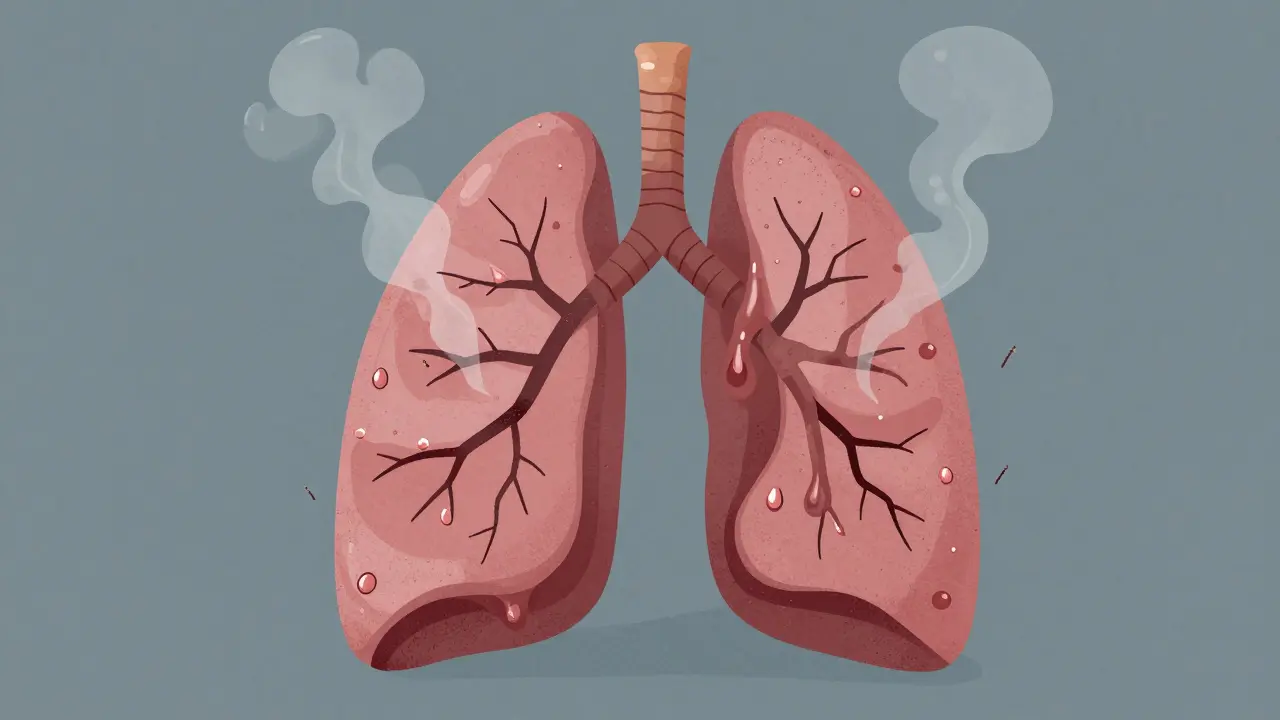
Chronic bronchitis isn't just a bad cold that won't go away. It's a persistent, long-term condition where the airways in your lungs are constantly inflamed and clogged with mucus. Doctors diagnose it when you have a productive cough - one that brings up sputum - for at least three months a year, for two years in a row. This isn't something you shake off after a week. It's a sign your lungs are under constant stress.
Most people with chronic bronchitis also have some level of airflow blockage, which is why it's considered a major form of COPD. About 10 million Americans live with this condition, and it's the fourth leading cause of death in the U.S. The good news? You can take control. The bad news? Without action, half of those diagnosed won't survive 10 years. The biggest risk? Respiratory failure after an infection.
Why You Cough and Produce Sputum
Your lungs are designed to stay clean. Tiny hairs called cilia sweep out dust, germs, and mucus. But when you smoke or breathe in irritants for years, those cilia get damaged. The airways respond by making way more mucus than they should. That thick, sticky mucus builds up, blocks airflow, and triggers your body's natural reflex: coughing to clear it.
It's not just annoying - it's exhausting. About 75% of people with chronic bronchitis are current or former smokers. The cough starts as a morning thing, then becomes constant. You might feel chest tightness, especially when moving around. Eighty-two percent of patients report shortness of breath during daily tasks like walking or climbing stairs. Wheezing? That's common too - affects more than half. And fatigue? Nearly three out of four people feel drained all the time.
Smoking Is the Main Culprit - But Not the Only One
Over 90% of people with chronic bronchitis have smoked. But here's something surprising: only 15% of smokers ever develop this disease. That means genetics, environment, and how long you smoked all play a role. A 30-year study found that 42% of current smokers developed chronic bronchitis. Former smokers? 26%. Even people who never smoked? 22% - because of other triggers.
Long-term exposure to air pollution, dust, or chemical fumes at work can do the same damage. Secondhand smoke is another silent threat, especially for non-smokers living with smokers. And while rare, a genetic condition called alpha-1 antitrypsin deficiency can make your lungs more vulnerable. Most people start noticing symptoms after 40, and the risk climbs sharply after 65.
Smoking Cessation Is the Only Real Cure
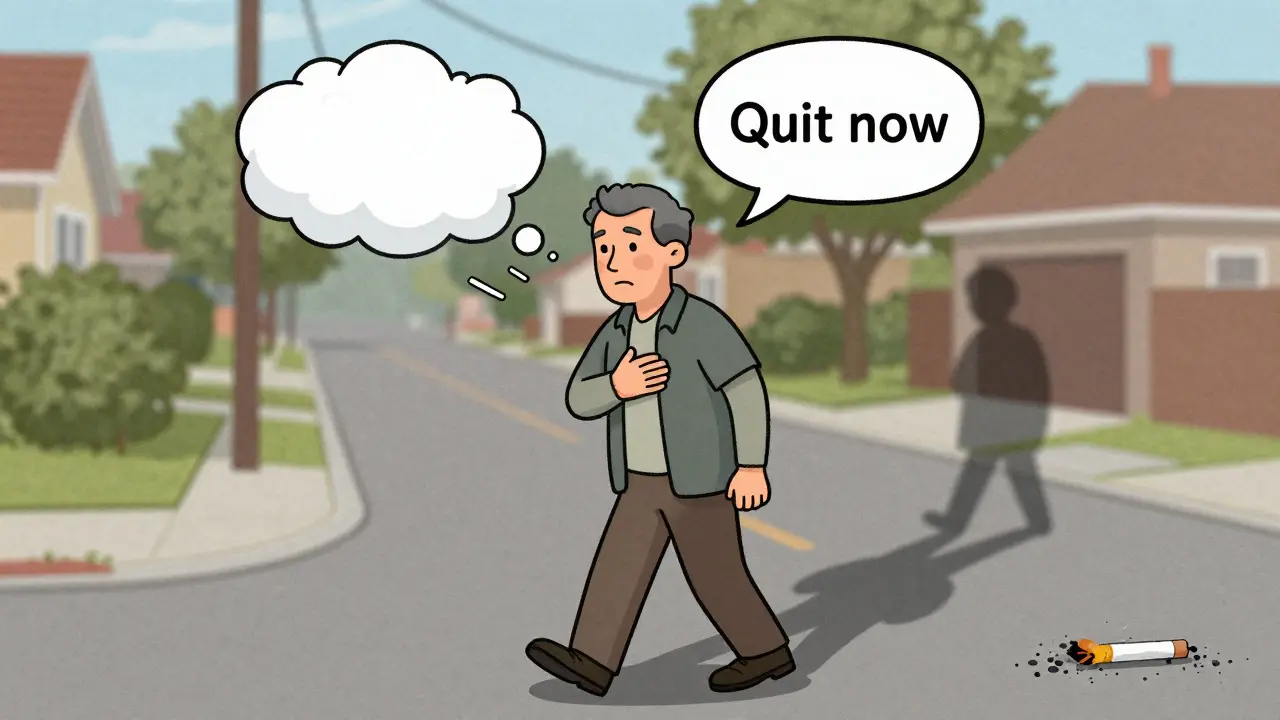
If you have chronic bronchitis and you're still smoking, quitting isn't just a good idea - it's the single most powerful thing you can do. Research shows that people who quit slow disease progression by 60% compared to those who keep smoking. It doesn't reverse the damage, but it stops it from getting worse. Your lungs begin to heal. Coughing and mucus production drop. Your risk of deadly infections falls.
But quitting is hard. Most people try on their own and fail. The truth? Only 7% of smokers quit without help. But with the right support - counseling, medication, and follow-up - your chances jump to 45% or higher. Programs that combine nicotine patches or gum with behavioral coaching work best. Varenicline (Chantix) has helped many people stay smoke-free. The key? Don't try to do it alone. Ask your doctor for a structured quit plan.
Medications That Help - and the Ones That Don't
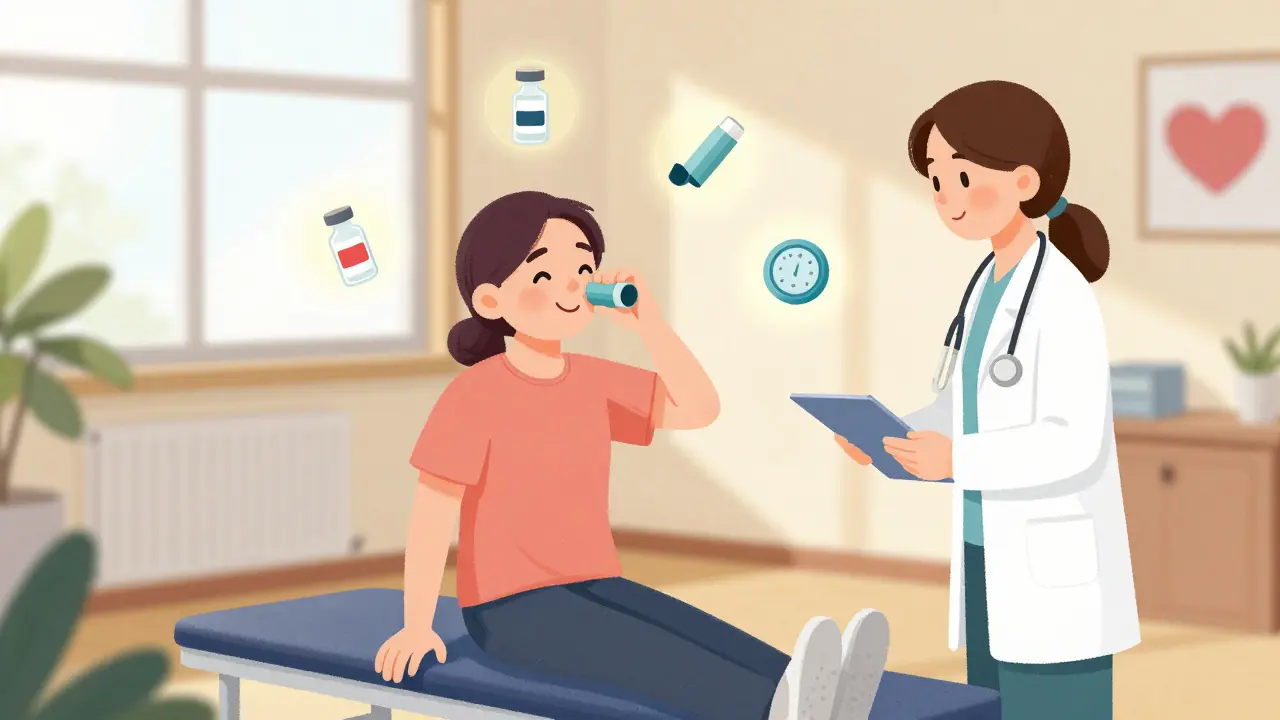
There's no pill that cures chronic bronchitis, but certain drugs can make life easier. Bronchodilators - inhaled medicines like albuterol or tiotropium - relax your airways and make breathing easier. They work fast: short-acting ones kick in within 15 minutes and last 4 to 6 hours. Long-acting versions are used daily to keep symptoms under control.
Inhaled steroids reduce inflammation, but they come with risks. Long-term use increases your chance of osteoporosis by 23%, high blood pressure by 18%, and diabetes by 15%. Doctors usually only prescribe them if you have frequent flare-ups or asthma-like symptoms.
Antibiotics? Only when you have a bacterial infection - like a cold that turns into pneumonia. Amoxicillin-clavulanate works well for these cases. But don't take them just because you're coughing more. Overuse leads to resistance.
As for mucolytics like N-acetylcysteine, opinions differ. The GOLD guidelines say they reduce flare-ups by about one episode every three years. The American College of Chest Physicians says the evidence is weak. Talk to your doctor - it might help you, but it's not for everyone.
Pulmonary Rehabilitation: The Game-Changer Most People Skip
If you're only taking pills, you're missing half the picture. Pulmonary rehab is a structured program that includes exercise training, breathing techniques, nutrition advice, and education. It's not gym class - it's tailored to your limits.
People who complete rehab walk 78 meters farther in six minutes on average. Hospital visits drop by 37%. And the best part? 78% of patients say they feel more confident doing daily tasks. One 58-year-old former smoker told his support group, "After six months of rehab and quitting, I can walk to the end of my street without stopping. I hadn't done that in three years."
Yet, only 1 in 5 people with COPD get referred to rehab. Why? Lack of awareness. Insurance confusion. Or thinking it's "too late." It's never too late. Even if you're barely able to walk, rehab can help. Ask your doctor for a referral.
Vaccines and Oxygen Therapy: Preventing the Worst
Every time you get a cold or flu, your lungs take a hit. That's why vaccines matter. Get the flu shot every year - it cuts your risk of a bad flare-up by 42%. Get the pneumococcal vaccine every five to seven years. It protects against pneumonia, which can be deadly with chronic bronchitis.
If your blood oxygen level drops below 88%, you may need oxygen therapy. This isn't just for people on their deathbed. Many people use it for 15+ hours a day. Studies show that continuous oxygen therapy can boost your 5-year survival rate by 21%. But compliance is low - only 62% of people use it as prescribed. If you're given oxygen, stick with it. It's not optional if your doctor says you need it.
Why You're Struggling to Stick to Treatment
Many people with chronic bronchitis don't take their meds right. Only 54% follow their prescription. Why? Inhalers are tricky. It takes an average of 4.7 visits with a respiratory therapist to learn proper technique. Thirty-eight percent need extra help. If you're not sure you're using your inhaler right, ask for a demo. Film yourself and show your doctor.
Home exercise programs? Forty-one percent drop out within three months. That's normal. Start small. Walk for five minutes a day. Add two minutes each week. Use a pedometer. Celebrate small wins. Don't wait to feel better - move even when you're tired.
And don't underestimate the power of support. People who get structured help quitting smoking are three times more likely to succeed than those who go it alone. Join a group. Talk to others online. You're not alone.
What’s New in Treatment - And What's Coming
There's progress. In 2023, the FDA approved ensifentrine, a new inhaler that reduces flare-ups and improves walking distance. Researchers are also studying gene variants that affect mucus production - this could lead to personalized treatments soon.
Digital tools are helping too. Smart inhalers that track when you use them and send reminders to your phone are becoming more common. Tele-rehab programs let you do exercises at home with virtual coaching. Early data shows these tools can cut hospital visits by nearly 30%.
But here's the bottom line: no new drug or gadget replaces quitting smoking. Every dollar spent on smoking cessation programs saves $5.60 in healthcare costs within two years. That's not just smart medicine - it's life-changing.
What You Can Do Today
- Call your doctor and ask if you qualify for pulmonary rehab.
- Get your flu and pneumonia vaccines if you haven't already.
- Ask about smoking cessation - don't wait until you're "ready."
- Practice breathing techniques - inhale through your nose, exhale slowly through pursed lips.
- Track your symptoms - keep a simple log: cough frequency, mucus color, shortness of breath level.
- Find a support group - online or in person. Connection saves lives.
Chronic bronchitis doesn't have to be a death sentence. It's a signal - your lungs are asking for help. The path forward isn't about magic pills or miracle cures. It's about consistent, simple actions: quit smoking, move your body, take your meds right, and get support. Do those things, and you're not just surviving - you're living better.

8 Comments
Lance Nickie January 14, 2026
bruh i got the cough for 2 years n still smoke lmao wtf is this article even for
Acacia Hendrix January 15, 2026
The pathophysiological cascade initiated by chronic exposure to noxious particulates-particularly cigarette smoke-induces a maladaptive hypersecretory phenotype in the bronchial mucosa, mediated by goblet cell metaplasia and impaired ciliary clearance. This is not merely a "bad cold"; it's a systemic dysregulation of mucociliary transport with downstream fibrotic remodeling of the small airways. The 60% reduction in disease progression post-cessation is statistically significant (p<0.001), per the GOLD 2023 meta-analysis.
Milla Masliy January 15, 2026
I'm from Texas and my grandma had this for 15 years. She quit smoking at 68, started walking every morning, and now she sings in the church choir. It ain't easy, but it's never too late. I'm helping my dad quit now-he's 59, same as her. You got this.
Avneet Singh January 15, 2026
The entire premise is so bourgeois. You're telling people in rural India, who inhale biomass smoke 12 hours a day, that "quitting smoking" is the solution? Please. This is a Western-centric narrative that ignores structural determinants. Also, NAC is clinically useless. I've seen 300 cases in my clinic-none improved.
Adam Vella January 16, 2026
It is imperative to recognize that the ontological nature of chronic bronchitis transcends mere symptomatology. It is an existential confrontation with mortality, mediated through the corporeal vessel of the respiratory system. The cessation of tobacco use, while empirically efficacious, is but a symbolic act of reclamation-a renunciation of the self-destructive pact one has made with entropy. One must not merely cease smoking; one must become a different person.
vishnu priyanka January 17, 2026
man i used to work with a dude who smoked 2 packs a day and still ran marathons. then he got the cough and just... stopped. not because of doctors. he saw his kid cry when he couldn't hug him without wheezing. that's the real cure right there. no meds needed.
jefferson fernandes January 17, 2026
Listen. If you're still smoking and reading this-you're not ready. But that's okay. You don't need to be perfect. You just need to be willing. Ask for help. Call your doctor. Text a friend. Use the patch. Try Chantix. Go to rehab. You don't have to do it alone. And if you slip? Get back up. This isn't about willpower-it's about support. You matter. Your lungs matter. Start today. Not tomorrow. TODAY.
James Castner January 17, 2026
The epistemological framework underpinning the clinical management of chronic bronchitis reveals a profound dissonance between biomedical intervention and human behavioral reality. While pharmacological agents such as bronchodilators and inhaled corticosteroids offer transient palliation, they operate within a paradigm that externalizes agency-positioning the patient as a passive recipient of technological remedies. True therapeutic efficacy emerges not from the inhaler, but from the ontological shift: the reclamation of autonomy through cessation. This is not a medical problem-it is a moral and phenomenological one. The data is clear: survival increases not because of oxygen saturation levels, but because the individual, having confronted the fragility of their existence, chooses to align their actions with their intrinsic value. Thus, the most potent pharmacopeia is not synthesized in a lab-it is cultivated in the quiet, daily decision to breathe freely, unshackled.