
Dry Mouth Risk Assessment Tool
Current Medications
Select the categories that apply to your daily regimen:
Analysis Results
Select medications above and click "Assess" to see your risk level and actionable advice.
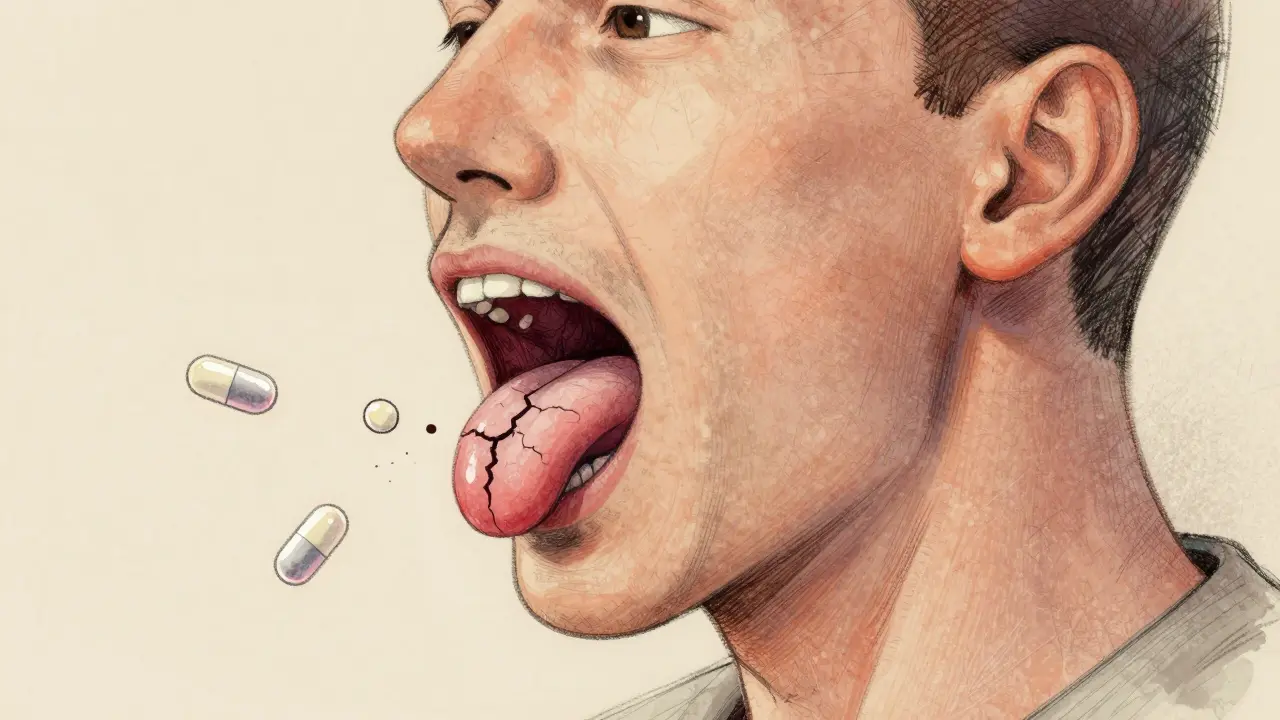
You know that feeling when your mouth turns into a desert? That sticky, sandy texture on your tongue isn't just dehydration. If you're taking prescription drugs, this sensation-clinically known as xerostomia-might be the direct result of your treatment plan. While many dismiss it as a minor annoyance, recent medical analysis suggests this side effect can seriously alter your oral health if left unchecked. By March 2026, we know with certainty that dry mouth is the single most reported oral complaint linked to pharmaceuticals, affecting millions who never connect the dots between their pill bottle and their discomfort.
Understanding the Mechanism Behind Dry Mouth
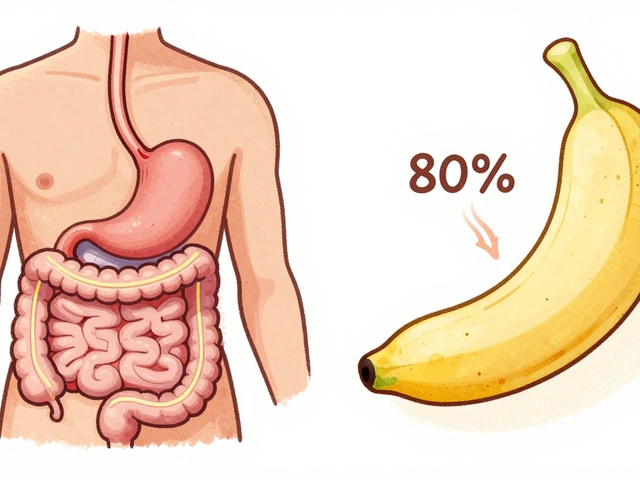
To fix the problem, we first have to look at what's actually happening inside your body. Saliva is produced by glands controlled by your autonomic nervous system. Specifically, these glands rely on chemical messengers called neurotransmitters to trigger secretion. When certain medications enter the bloodstream, they don't just target their intended condition; they cross over and block these signals. Approximately 92% of medications that cause dry mouth interfere with the sympathetic nervous system.
The primary culprits are drugs with anticholinergic properties. These substances block acetylcholine receptors at nerve endings in the salivary glands. Imagine trying to water a garden, but someone has turned off the tap at the main valve. According to data published by the Ostrow School of Dentistry in 2021, this mechanism reduces saliva production by up to 85% in severe cases. This isn't just less spit; it changes the entire chemistry of your mouth. Without enough saliva, your natural defense against bacteria fails, leading to rapid tooth decay and gum inflammation.
Common Medications Linked to Salivary Dysfunction
Not all drugs carry the same weight. You might wonder if your specific prescription is to blame. The American Academy of Oral Medicine identified over 1,110 medications with xerostomic potential in their 2022 review. However, some classes of drugs are far more aggressive than others.
| Medication Class | Example Drugs | Incidence Rate | Primary Mechanism |
|---|---|---|---|
| Overactive Bladder Agents | Oxybutynin, Tolterodine | 62-70% | Muscarinic Receptor Blockade |
| First-Generation Antihistamines | Diphenhydramine (Benadryl) | 58% | Sympathetic Interference |
| Tricyclic Antidepressants | Amitriptyline, Nortriptyline | 63% | Anticholinergic Effect |
| SSRI Antidepressants | Sertraline, Fluoxetine | 31% | Partial Drying Effect |
| Second-Gen Antihistamines | Loratadine (Claritin) | 12% | Minimal Impact |
If you are managing an overactive bladder, the statistics are stark. Immediate-release formulations of oxybutynin cause dry mouth in over 70% of users according to GoodRx's 2023 medication review. Even common allergy relief can be a trap. While second-generation options like Loratadine have a much lower impact (around 12%), older options like Benadryl still sit in pharmacies nationwide, causing distress for nearly 6 out of 10 users. Understanding which category your medication falls into helps you prepare for potential side effects before they become unmanageable.
The Hidden Dental Risks of Untreated Dry Mouth
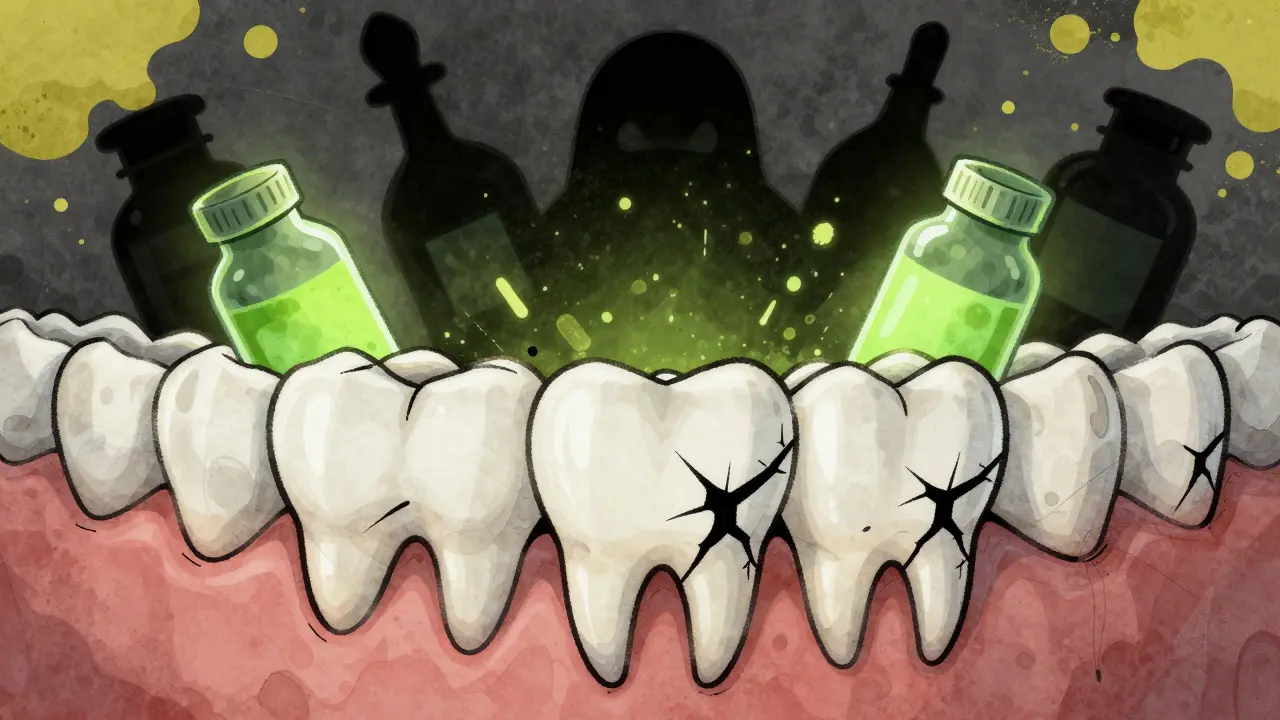
Many people think dry mouth is merely uncomfortable. It is, but it is also dangerous to your teeth. Dr. Jane Doe, chief dental officer at Delta Dental, noted in a 2023 white paper that patients on three or more prescriptions have a 47% higher Root Caries Index than those on one or two medications. Why does this happen? Saliva washes away food particles and neutralizes acids produced by plaque bacteria. When you lack saliva, your mouth becomes acidic very quickly.
The clinical guidelines from the American Dental Association in 2022 warn that untreated dry mouth accelerates dental decay by 300% within the first year of onset. This is not a theoretical risk. Patients report waking up three times a night to drink water because they physically cannot swallow. One patient on Reddit described developing three cavities in six months despite perfect brushing habits solely due to 'Detrol' usage. This highlights a critical gap: good oral hygiene is impossible without adequate moisture.
Strategies for Effective Management
Living with chronic dry mouth doesn't mean you have to accept the symptoms indefinitely. There are actionable steps you can take to manage the condition effectively.
- Medication Review: Talk to your doctor about switching to alternatives. For instance, switching from a tricyclic antidepressant to an SSRI like sertraline can drop the incidence of dry mouth from 63% down to 31%. About 42% of patients successfully resolve the issue simply by changing prescriptions.
- Prescription Stimulants: In cases where the original medication cannot be changed, drugs like pilocarpine (Salagen) can mimic saliva production. Trials at Cleveland Clinic showed these stimulants increased saliva flow by 63% within two weeks.
- Oral Moisturizers: Over-the-counter products like Biotene Dry Mouth Oral Rinse provide immediate relief. Manufacturers report that these specialized rinses last four hours in 81% of users. New innovations launched in late 2023, such as enzyme-activated systems, claim to extend relief up to seven hours.
- Dental Monitoring: Because the risk of decay is high, standard six-month checkups might not be enough. Shifting to a three-month schedule allows your dentist to catch early decay signs before they turn into emergencies.
Navigating Doctor-Patient Communication
One of the biggest hurdles is that doctors rarely bring this up. A survey in the Journal of General Internal Medicine found that only 28% of primary care physicians routinely screen for dry mouth during reviews. You often have to be the one to raise the flag. Don't just say "my mouth feels dry." Be specific: "My throat hurts when I swallow pills," or "I am waking up thirsty every night." This specificity helps providers distinguish between lifestyle thirst and true glandular suppression.
If you are on polypharmacy-taking three or more daily meds-the risk skyrockets. Patients on five or more medications experience complete gland shutdown in 18% of cases. In these instances, a coordinated approach involving your GP and a dentist is vital. Studies show that coordinated care models reduce dental complications by 57% compared to treating conditions in isolation.
Frequently Asked Questions
Can stopping my medication cure dry mouth?
In many cases, reducing the dosage or switching to a non-xerogenic alternative restores normal function. However, never stop medication abruptly. Consult your physician to safely taper doses while monitoring symptoms.
Is drinking more water enough to solve dry mouth?
Water provides temporary relief but does not address the underlying reduction in saliva production. Frequent sipping may help hydration, but using saliva substitutes or stimulating medications is often necessary for sustained protection against dental decay.
Which antidepressants are safest for saliva?
SSRIs like sertraline generally cause less dry mouth than Tricyclic Antidepressants. SSRIs affect saliva in approximately 31% of users, whereas Tricyclics affect around 63%. Discuss switching classes with your psychiatrist if side effects persist.
Does age make dry mouth worse?
Yes. Adults aged 65+ account for 76% of dry mouth cases, largely due to higher rates of polypharmacy. However, dry mouth should not be accepted as a normal part of aging; it is often treatable.
Are there foods that help dry mouth?
Foods containing water-rich vegetables like cucumbers or melons can offer mild relief. Avoid sugary snacks and acidic fruits that accelerate decay when saliva levels are low. Chew sugar-free gum containing xylitol to stimulate remaining gland function.



8 Comments
Victor Ortiz March 31, 2026
You really think this is news to anyone who actually reads labels? Most people skip right past the contraindications section like it's fiction. The autonomic nervous system gets blocked before you even chew the pill. It is incredibly lazy to act surprised when your salivary glands shut down. Why am I explaining basic pharmacology to adults who can't read a prescription box?
Dan Stoof April 1, 2026
Omg!!! This is such a huge wake-up call!!!! You guys gotta stay positive even when the meds hit hard!!! There is SO much hope out there if you just keep fighting!!! Switching meds is totally possible!!!
Amber Armstrong April 1, 2026
I honestly feel for everyone going through this nightmare of dryness right now. It sounds absolutely horrible waking up thirsty three times every single night. I remember a friend of mine complaining about her gums hurting constantly too. She said she couldn't swallow anything without water nearby constantly. It makes you realize how important saliva is for our health daily. We take these little white tablets for granted so many times. The chemistry changing in our mouths is such a scary thought. Imagine trying to fight bacteria without that protection shield. Your teeth are basically sitting unprotected against the acid attacks daily. I know switching pills sounds like a hassle to deal with. But your quality of life matters way more than sticking to the old script. Have you tried those enzyme rinses the article mentioned earlier? I think they last longer than just plain sipping water. It feels like we are always searching for the perfect balance. Please talk to your doctor before you try to stop cold turkey. Safety is always the absolute most important thing to consider. Take care of your body while you handle the treatment plan. We can get through this thick fog together if we stay informed.
Calvin H April 2, 2026
Wow another generic medical blog telling us the obvious surprise.
Carolyn Kask April 4, 2026
Sarcasm aside, American pharmaceutical standards are the highest in the world and you should thank us. Stop acting like everything is a crisis when the solution is right here.
Katie Riston April 5, 2026
The philosophy of bodily fluids is fascinating when you think about control. We seek relief from suffering yet the cure brings its own form of silence. Is moisture not a metaphor for life itself flowing through us? To deny the wetness of existence is to invite the decay of the spirit. Perhaps the dryness is nature forcing us to listen to the inner self more. We rely on chemical signals to govern our internal garden states. When those valves close, what does the soul hear in the desert? We must ponder the balance between medicinal intervention and natural function. The mind seeks clarity but the body seeks fluid equilibrium. Are we sacrificing vitality for mental stability in our modern quest? It begs the question of what we are willing to endure.
Brian Yap April 5, 2026
Mate, back here in Oz we reckon gumming is half the battle. Just keep chewing those mints! 😅 Keep hydrated though seriously.
sanatan kaushik April 5, 2026
Simple things help sometimes. Drink water and see dentist. Do not panic too much about it please.