
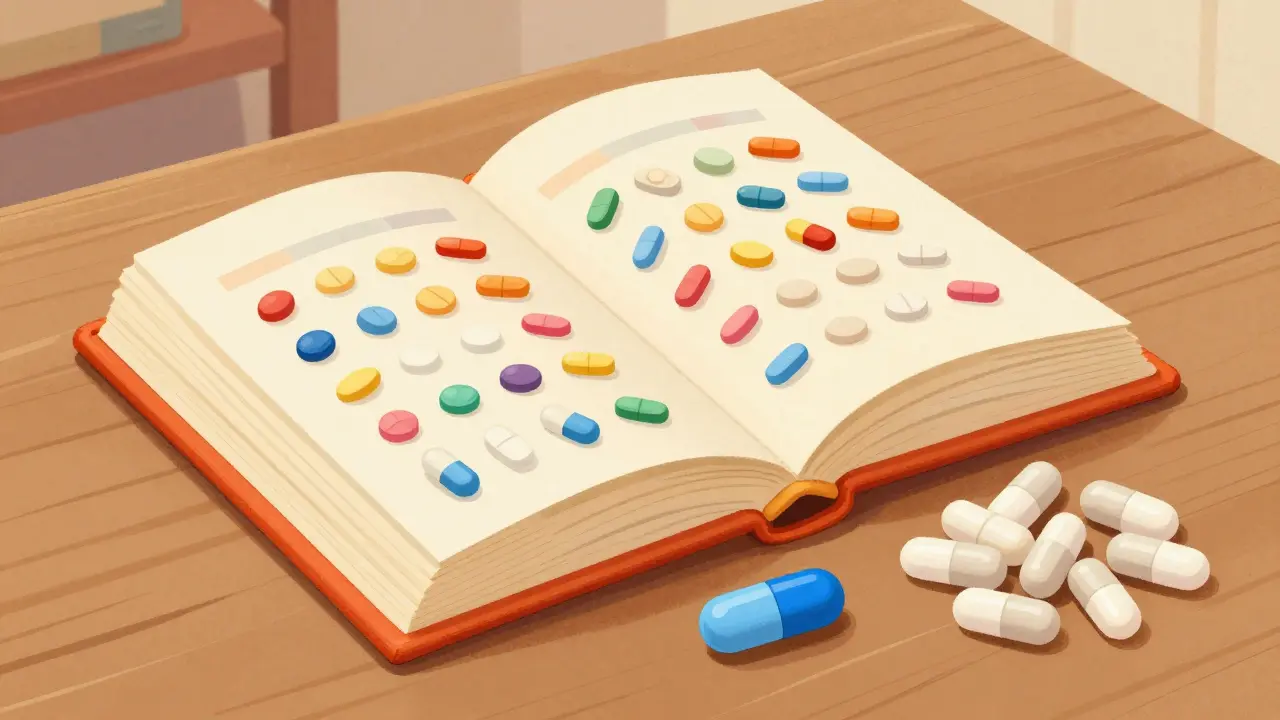
Did you know that about 90% of prescriptions filled in the United States are for generic drugs? Behind this massive shift in healthcare lies a specific government publication that acts as the rulebook for the industry. It is called the FDA Orange Book, which is the official register of drug products deemed safe and effective by the Food and Drug Administration. Also known as Approved Drug Products With Therapeutic Equivalence Evaluations, this resource determines which generic medications can replace brand-name drugs. Understanding how this book works is crucial for pharmacists, prescribers, and anyone curious about how medicine reaches the market.
The Orange Book is not just a list of names; it is a legal and regulatory tool created under the Hatch-Waxman Act, which is the Drug Price Competition and Patent Term Restoration Act of 1984. This law balanced two competing needs: protecting the intellectual property of innovators while encouraging the rapid development of affordable generic alternatives. Today, the Center for Drug Evaluation and Research (CDER) maintains the electronic version, updating it monthly to reflect new approvals and patent changes. With over 16,000 approved drug products listed, it serves as the definitive reference for determining substitutability.
What Makes a Drug Eligible for Listing
Not every medicine you buy ends up in the Orange Book. To be listed, a drug must be approved under the Federal Food, Drug, and Cosmetic Act. The book is divided into three main sections: the Prescription Drug Product List, the Over-the-Counter Drug Product List, and the Discontinued Drug Product List. Prescription drugs are the primary focus because they require specific therapeutic equivalence evaluations.
For a generic drug to appear in the Active Section, it must go through the Abbreviated New Drug Application (ANDA) pathway. This process is different from the New Drug Application (NDA) required for brand-name drugs. Instead of repeating extensive clinical trials, a generic manufacturer must demonstrate that their product is bioequivalent to a Reference Listed Drug (RLD). The RLD is the specific brand-name product identified by the FDA as the standard upon which the generic applicant relies. In the Orange Book, the RLD is marked with a 'Yes' in the RLD column, while generic equivalents are marked with 'No'.
This distinction matters because it establishes the chain of trust. If the generic matches the RLD in dosage, strength, safety, and quality, the FDA considers them interchangeable. Once approved, the new product generally appears in the Active Section of the Orange Book in the month following its approval. This timeline ensures that the data is current for healthcare providers making decisions.
Decoding Therapeutic Equivalence Codes
The most critical part of the Orange Book for pharmacists and prescribers is the Therapeutic Equivalence (TE) Code. These codes tell you whether a generic can be substituted for the brand-name drug in a pharmacy. The codes start with a letter that indicates the FDA's evaluation of the product.
Products with an 'A' code are considered therapeutically equivalent to the RLD. This means they can be substituted with the expectation of the same clinical effect and safety. For example, a code like 'AB' indicates the product meets all necessary requirements for substitution. On the other hand, 'B' codes indicate that the product is not considered therapeutically equivalent. This might happen if the generic has a different salt, ester, or active moiety, or if there are specific concerns about bioavailability.
| Code Prefix | Meaning | Substitution Status |
|---|---|---|
| A | Therapeutically equivalent to RLD | Generally substitutable |
| B | Not therapeutically equivalent | Requires prescriber approval |
| BN | Single source or no equivalence eval | Not substitutable |
It is important to note that Over-the-Counter (OTC) products listed in the book are not evaluated for therapeutic equivalence. They are listed for informational purposes only. This distinction is vital because a pharmacist cannot automatically assume an OTC generic works exactly like the brand version without checking the specific formulation details.
How Patents Influence Drug Listings
The Orange Book is also a database for intellectual property. New Drug Application (NDA) holders are responsible for submitting patent information to the FDA. These patents can cover the drug substance, the drug product formulation, or specific approved methods of use. When a patent is listed, it includes the number, expiration date, and a patent use code (like 'U-12345').
For patents granted after drug approval, the company must submit Form 3542 within 30 days of patent issuance. This process creates a linkage between regulatory approval and patent rights. If a generic manufacturer challenges a patent, the Hatch-Waxman framework allows for a 30-month stay period for generic approval if patent litigation ensues. This can happen even if the Orange Book patent is later determined to be inappropriately listed.
Industry analysis shows that patent listings have increased significantly over the last two decades. Critics sometimes argue this leads to 'patent evergreening,' where companies extend exclusivity through minor changes. However, supporters maintain that this protects legitimate innovation. The FDA's role here is primarily ministerial, meaning they rely on the information provided by NDA holders rather than validating the patents themselves.
Authorized Generics vs. Traditional Generics
A common point of confusion is the difference between a traditional generic and an authorized generic. An authorized generic is essentially the brand-name drug sold without the brand name. It is marketed under the same New Drug Application (NDA) as the brand-name product. Because it is the exact same product made by the same manufacturer, it does not go through the ANDA pathway.
According to Section 505(t) of the FD&C Act, the FDA must publish a separate list of all authorized generic drugs on its website. This list includes the drug trade name, the brand company manufacturer, and the date the authorized generic entered the market. Crucially, authorized generics are not separately listed in the Orange Book. They are encompassed within the NDA listing under which they are marketed. This distinction matters for pharmacists who need to verify the source of a medication, as authorized generics share the same manufacturing standards as the brand but often come at a lower price point.
Navigating the Electronic Orange Book
Searching the Electronic Orange Book requires a specific approach to get accurate results. Users can search by active ingredient, proprietary name, applicant, application number, dosage form, route of administration, or patent number. There are over 1,800 active ingredients listed in the system.
When looking for an approved generic, the best strategy is to first identify the brand-name product using the Proprietary Name search. Then, use the Ingredient Search to find all approved products containing that specific ingredient. Within each Dosage Form and Route grouping, the book displays the RLD and any therapeutically equivalent generics. If a product has been discontinued, it will appear in the Discontinued section without RLD or TE Codes.
Healthcare technology companies often integrate this data into their systems. However, challenges remain with complex multi-ingredient products. For example, searching for combination products like Trelegy Ellipta requires knowing all three active ingredients. Additionally, the TE codes do not always reflect real-world interchangeability issues with specific delivery devices like inhalers. Despite these challenges, the Electronic Orange Book API processes over 2 million queries monthly from healthcare systems and pharmacy benefit managers.
Impact on Market Competition and Pricing
The Orange Book directly impacts the economics of the pharmaceutical market. Products with 'A' TE codes face immediate competition once patents expire, which drives prices down. A 2023 analysis by the Congressional Budget Office found that therapeutic equivalence ratings correlate with 18-22% lower prices for multi-source generics compared to single-source products.
The FDA's Generic Drug User Fee Amendments (GDUFA) program has accelerated this process. Review times for generic applications have decreased from 36 months in 2010 to 10 months in 2023. This speed allows more generics to enter the market faster, increasing the number of listings in the Orange Book. However, emerging challenges include complex generic products like ophthalmic suspensions, where equivalence determinations remain controversial and require more granular evaluation.
Frequently Asked Questions
What is the official name of the FDA Orange Book?
The official title is 'Approved Drug Products With Therapeutic Equivalence Evaluations.' It is commonly referred to as the Orange Book due to the color of its cover in print versions.
How often is the Orange Book updated?
The FDA updates the electronic version of the Orange Book monthly. Newly approved products generally appear in the Active Section in the month following their approval.
Can I find OTC drugs in the Orange Book?
Yes, there is an Over-the-Counter Drug Product List section. However, OTC products are not evaluated for therapeutic equivalence, unlike prescription drugs.
What does an 'A' code mean in the Orange Book?
An 'A' code indicates that the product is considered therapeutically equivalent to the Reference Listed Drug. This means it can generally be substituted for the brand-name product.
Are authorized generics listed separately?
No, authorized generics are not separately listed in the Orange Book. They are encompassed within the NDA listing of the brand-name product and appear on a separate FDA website list.
The Orange Book remains indispensable infrastructure for the U.S. pharmaceutical market. Its continued evolution is critical to balancing innovation incentives with timely generic competition. As the FDA works on modernizing the system with a new 'Digital Orange Book' by 2025, the core function remains the same: providing transparency on what is safe, effective, and interchangeable.




11 Comments
Aaron Sims March 26, 2026
pharma companies are definitely hiding something in there!!! they list patents that dont even make sense just to block generics from coming in early...!!! it is a total scam to keep prices high for the patients!!! they say it is for innovation but really it is just profit protection!!! the orange book is just a tool for them to delay competition!!! nobody checks the patents properly so they can list anything they want!!! it is a conspiracy to keep us sick and paying more!!! the government should stop letting them play these games with our health!!!
Rachele Tycksen March 28, 2026
this is kinda useful stuff for people who take meds
Agbogla Bischof March 28, 2026
The therapeutic equivalence codes are actually quite straightforward if you know what to look for. The A codes indicate that the FDA has reviewed the product for bioequivalence and safety. This means that substitution is generally safe and effective for the patient. The B codes suggest that there are differences in the formulation that might affect performance. It is important to note that the Orange Book is updated monthly to reflect new approvals. This ensures that healthcare providers have the most current information available. The patent listings also provide transparency regarding exclusivity periods. Understanding these details helps in navigating the pharmaceutical market more effectively.
Stephen Alabi March 29, 2026
One must acknowledge that the regulatory framework is far more complex than a simple list of codes. The Hatch-Waxman Act established a specific legal precedent that governs these interactions. It is not merely about substitution but about the intellectual property rights of the innovator. The FDA acts as a ministerial body in this regard and does not validate the patents themselves. This distinction is often overlooked by those who are not well-versed in pharmaceutical law. The linkage between regulatory approval and patent rights creates a unique ecosystem. It is essential to understand that the Orange Book serves as a public database for this information. The accuracy of the data depends largely on the submissions made by the NDA holders.
Elaine Parra March 31, 2026
US healthcare is broken and this system just makes it worse for everyone. We pay the highest prices in the world for these drugs because of patent protections. Generic competition should be the norm not the exception in this country. The government needs to stop protecting big pharma profits over patient health. It is unacceptable that people cannot afford their medication because of these rules. The Orange Book is just another barrier to affordable care for Americans. We need to fix this system before more people die from lack of access. This is a national disgrace and it needs to end now.
Marissa Staples April 1, 2026
There is a deeper meaning to how we value health in society. The struggle for affordable medicine reflects our priorities as a nation. We often prioritize profit over people without even realizing it. The Orange Book is a mirror of this imbalance in our healthcare system. It shows how regulation can be used to maintain status quo. We must think about what kind of future we want for our children. The path to better health requires more than just new drugs. It requires a shift in how we view access and equity.
Korn Deno April 3, 2026
the search function is pretty good but sometimes it misses combo drugs
Pat Fur April 4, 2026
I totally agree with that point about combination products. It can be tricky to find all the ingredients listed correctly. The API helps a lot though for systems that need to pull this data. It is nice to see the FDA trying to modernize the way we access this info. Thanks for sharing that observation about the search limitations.
Anil Arekar April 4, 2026
The regulatory framework surrounding generic drug approval is indeed fascinating to observe. It represents a delicate balance between innovation and accessibility for patients worldwide. Many people overlook the significance of the therapeutic equivalence codes in their daily lives. Understanding these codes helps consumers make informed decisions about their medication options. The distinction between an A code and a B code can literally change the outcome of a treatment plan. Pharmacists rely on this data to ensure that substitutions do not compromise patient safety. Patent expiration dates listed in the book determine when prices might finally drop for everyone. It is crucial that we support systems that allow for transparency in the pharmaceutical industry. Without such a database, the market would be rife with uncertainty regarding drug quality. The Hatch-Waxman Act laid the groundwork for this entire ecosystem of generic competition. We must appreciate the efforts of regulatory bodies in maintaining these public records accurately. Access to affordable medication is a fundamental right that these regulations help protect. Generic manufacturers play a vital role in keeping healthcare costs manageable for families. The electronic version of the book makes this information much more accessible than before. Continued modernization of these systems will ensure better health outcomes for future generations.
Grace Kusta Nasralla April 4, 2026
It feels heavy to think about how much control these systems have over our bodies. The numbers and codes hide the human cost of these decisions. I wonder how many people suffer because they cannot access the right medication. The silence of the database speaks louder than the words written in it. We are all connected through this invisible web of regulation. It is a quiet struggle that happens every day in pharmacies. The weight of these policies rests on the shoulders of the vulnerable.
Natasha Rodríguez Lara April 6, 2026
It is great to see such detailed information available for public use. The transparency helps build trust between patients and healthcare providers. We should all take the time to learn about these resources. It empowers us to make better choices for our own health. The collaboration between industry and regulators is key here. We can all benefit from a more informed approach to medication management.