
What Deep Brain Stimulation Actually Does for Parkinson’s
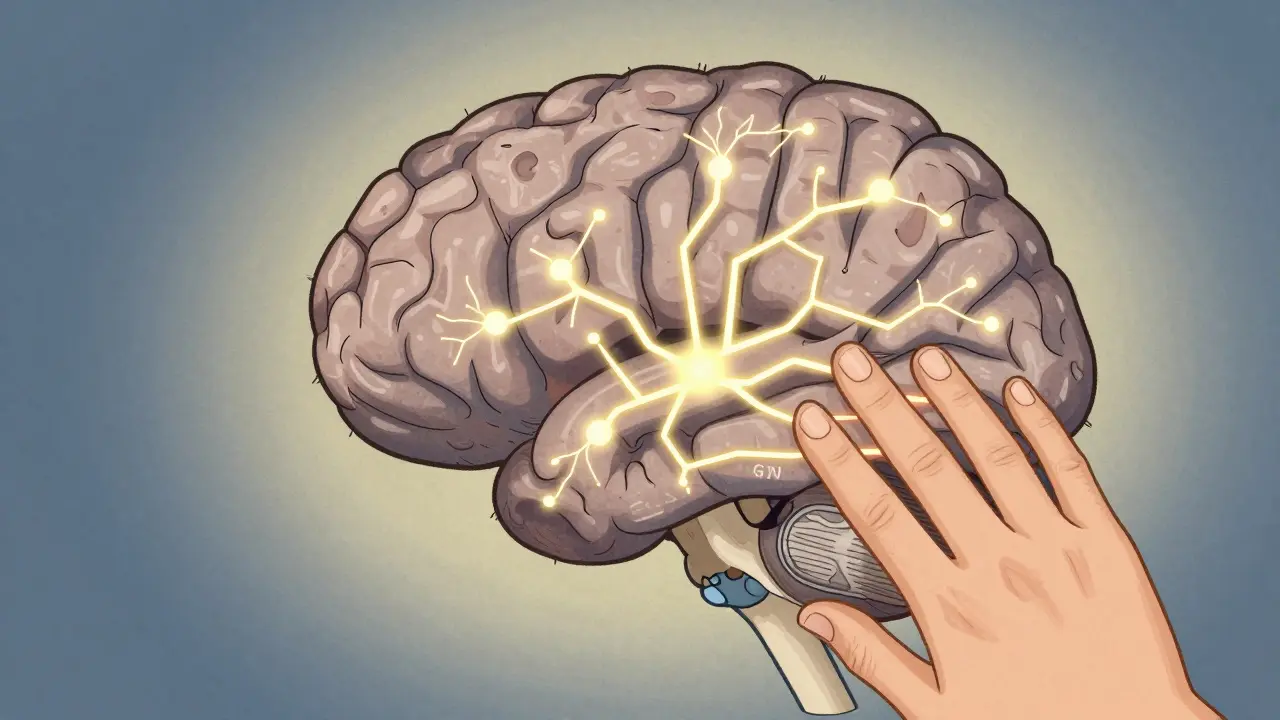
Deep Brain Stimulation, or DBS, isn’t a cure for Parkinson’s. It doesn’t stop the disease from progressing. But for many people, it changes everything. If your tremors won’t quit, your meds cause wild swings between freezing and jerking, or you’re tired of swallowing pills every hour - DBS can bring back control. It works by sending tiny electrical pulses to specific spots in the brain that are firing out of sync. Think of it like resetting a faulty circuit. The result? Less shaking, fewer freezing spells, and often, a 50% drop in medication doses.
The technology has come a long way since the first implants in the late 1990s. Today’s devices aren’t just simple on-off switches. Systems like Medtronic’s Percept™ PC and Boston Scientific’s Vercise™ Genus™ can actually listen to your brain. They detect abnormal electrical patterns - like the beta waves that spike when you’re stiff or slow - and adjust stimulation in real time. This closed-loop feedback is a game-changer. It means fewer manual tweaks, better symptom control, and less battery drain.
Who Is a Good Candidate for DBS?
Not everyone with Parkinson’s is a candidate. The biggest red flag? If your symptoms don’t improve with levodopa, DBS won’t help much. That’s because DBS only works on the parts of Parkinson’s that respond to medication. If you’re stiff and slow when you’re off your meds, but feel much better after taking them, you’re likely a strong candidate. Studies show people with at least a 30% improvement on levodopa have the best outcomes.
Timing matters too. Most centers look for people who’ve had Parkinson’s for at least five years. Why? Because early on, meds work well. By year five or six, side effects like dyskinesias (involuntary movements) and “off” periods (when meds wear off) start to dominate. That’s when DBS starts to make the most sense. The EARLYSTIM trial proved this: patients who got DBS earlier - still in their mid-60s, with moderate symptoms - had far better quality of life than those who waited until things got worse.
Cognitive health is non-negotiable. If your memory or thinking skills are already slipping - say, your MMSE score is below 24 or MoCA below 21 - DBS can make things worse. You might get better movement, but struggle even more with planning, speaking, or decision-making. That’s why every candidate goes through a full neuropsychological test. It’s not a formality. It’s a safety check.
The Two Main Targets: STN vs. GPi
During surgery, the neurosurgeon places electrodes in one of two brain regions: the subthalamic nucleus (STN) or the globus pallidus interna (GPi). Both work well for motor symptoms, but they have different trade-offs.
STN is the more popular choice. It allows for bigger drops in medication - often 40-50% less levodopa. That means fewer nausea, swelling, or hallucinations from drugs. But it comes with a risk: some people notice word-finding trouble, slower thinking, or mood changes after STN stimulation. One Reddit user wrote: “My tremors vanished, but now I forget where I put my keys. It takes me 3x longer to plan a meal.”
GPi doesn’t reduce meds as much, but it’s gentler on the brain. It’s often preferred if dyskinesias are your main problem. The VA/NINDS trial showed GPi reduced involuntary movements by 70%, compared to 46% with STN. It’s also the safer pick if you’re already struggling with depression or anxiety. If you’re younger, active, and want to cut pills, STN might be right. If you’re older, have mood issues, or your biggest problem is uncontrolled movements, GPi could be better.
The Surgery: What to Expect
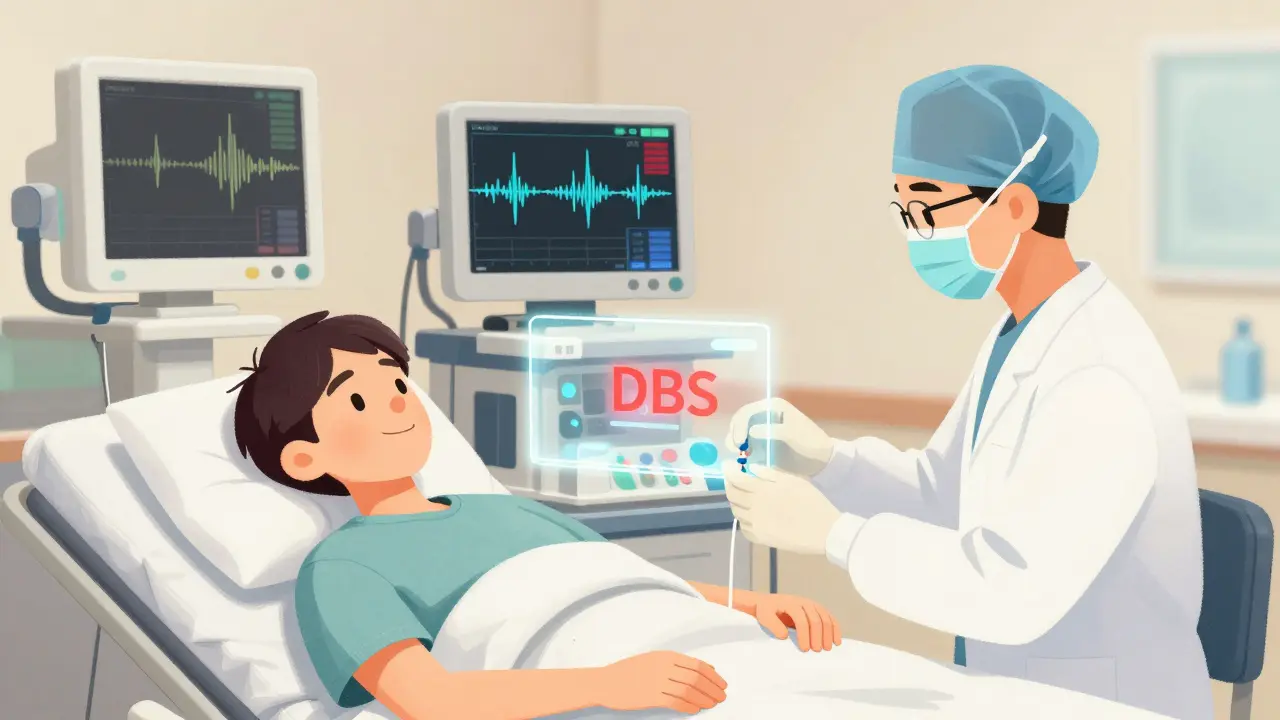
The procedure sounds intense - and it is - but it’s routine for experienced teams. You’re awake during most of it. That’s not a mistake. Surgeons need you to move your hand, speak, or blink so they can confirm the electrodes are in the right spot. You’ll feel pressure, maybe a tingling, but no pain. A frame is attached to your head, a tiny hole is drilled, and electrodes are threaded in using real-time brain recordings. It takes 3 to 6 hours, usually done in two sessions (one side at a time, a week apart).
The pulse generator - the battery pack - is implanted under your collarbone or belly. It’s about the size of a stopwatch. Modern ones last 9 to 15 years if rechargeable. Non-rechargeable models need replacement every 3 to 5 years. That’s a surgery you’ll likely need again.
Complications are rare but real. About 1-3% of people have bleeding in the brain. Around 5-15% face hardware issues: infection, broken wires, or lead movement. Most of these can be fixed. But if you get an infection, the whole system may need to be removed - a painful, risky process.
What Happens After the Surgery?
DBS isn’t a set-it-and-forget-it treatment. The device doesn’t turn on right away. You wait 2 to 4 weeks for swelling to go down. Then comes the long tuning process. Your neurologist will meet you every few weeks for months, adjusting voltage, frequency, and which contacts are active. It can take 6 to 12 months to get it just right.
You’ll need to keep a symptom diary. Note when you feel stiff, shaky, or tired - and what you took and when. That’s how they match stimulation to your daily rhythm. Some people get lucky and feel better after one visit. Others need 10 or more. Don’t get discouraged. This isn’t failure - it’s fine-tuning.
And you’ll need to keep taking your meds. DBS doesn’t replace them. It just makes them work better. You might cut your dose, but you won’t stop entirely. Missing a pill can still trigger an “off” period, even with stimulation on.
Real People, Real Results
On the Parkinson’s Foundation Forum, a user named ParkinDad2018 said: “My OFF time dropped from 6 hours a day to 1. Dyskinesias went down 90%. But I lost some words. I needed speech therapy.” That’s the full picture. DBS gives back independence - you can button your shirt, walk without freezing, sleep through the night. But it doesn’t fix everything.
People often expect it to stop cognitive decline or fix balance problems. It doesn’t. Gait and posture improve by only 20-30%. Falls don’t disappear. If you’re struggling with freezing in hallways or turning around, DBS won’t solve that fully. That’s why experts now push for broader assessments - measuring how you walk, how you stand, how you speak - not just how your hand trembles.
Still, 70-80% of well-selected patients report major improvements in daily life. In the EARLYSTIM trial, quality of life scores jumped 23 points for DBS patients - double the gain from meds alone. That’s not just a number. It’s being able to go to a family dinner without worrying about shaking your glass. It’s driving again. It’s sleeping through the night.
Why So Few People Get It
Despite clear benefits, only 1-5% of eligible Parkinson’s patients ever get DBS. Why? Many never get referred. Doctors assume they’re too old, too sick, or too far along. Others are scared of brain surgery. Insurance can be a nightmare - you need proof you’ve tried and failed at optimal meds for months. That process can take 3 to 6 months.
Also, not all centers are equal. High-volume centers - doing over 50 DBS procedures a year - have 20% fewer complications. They have teams: neurologists who specialize in movement disorders, neurosurgeons who do this daily, neuropsychologists, and DBS coordinators who guide you through every step. Smaller hospitals might just hand you a referral and say, “Good luck.”
And then there’s cost. In the U.S., the total price - surgery, device, hospital stay, follow-ups - runs $50,000 to $100,000. Medicare covers it, but private insurers vary. Outside the U.S., access is even more uneven.
What’s Next for DBS?
The field is moving fast. Closed-loop systems like Medtronic’s Percept™ PC are already here. They learn your brain’s patterns and adjust stimulation automatically - no manual programming needed. Early data shows 27% better symptom control than older systems.
Researchers are testing DBS earlier - even at 3 years into diagnosis. The EARLYSTIM-2 trial is exploring whether treating sooner can slow decline. Genetic studies are also emerging. People with the LRRK2 mutation respond 15% better to DBS. That could one day mean testing your DNA before surgery.
Future devices may link to your Apple Watch or Fitbit, using tremor data to auto-adjust stimulation. There’s even early work on using DBS for depression and anxiety in Parkinson’s - not just movement.
Final Thoughts: Is DBS Right for You?
If you’ve had Parkinson’s for more than five years, your meds are failing, and you still respond well to levodopa - talk to a movement disorders specialist. Don’t wait until you’re stuck in a chair or can’t leave the house. DBS isn’t magic, but for the right person, it’s the most powerful tool we have.
Ask for a full evaluation: neurology, neuropsychology, and a multidisciplinary team review. Don’t settle for a quick opinion. Get the full picture. Know the risks. Understand the tuning process. And remember: this isn’t about fixing Parkinson’s. It’s about getting your life back - one button, one step, one quiet morning at a time.
Can DBS cure Parkinson’s disease?
No, DBS does not cure Parkinson’s. It doesn’t stop the brain from degenerating. Instead, it manages symptoms that respond to levodopa - like tremors, stiffness, and dyskinesias. It improves quality of life and reduces medication side effects, but the underlying disease continues to progress.
How long does a DBS battery last?
Battery life depends on the device. Rechargeable pulse generators last 9 to 15 years. Non-rechargeable ones need replacement every 3 to 5 years. Replacement surgery is minor but still requires anesthesia and carries infection risks. Most patients plan for at least one battery replacement in their lifetime.
Is DBS better than medication alone?
For patients with advanced motor complications, yes. The EARLYSTIM trial showed DBS plus medication led to a 23-point improvement in quality of life, compared to just 12.5 points with medication alone. DBS reduces OFF time by 60-80% and dyskinesias by up to 80%. It’s not a replacement for meds - it makes them work better.
Can DBS help with balance and walking problems?
Minimally. While DBS improves tremor and stiffness, it has limited effect on gait freezing, posture, and balance - symptoms that don’t respond well to levodopa. Improvement in these areas is typically only 20-30%. For these issues, physical therapy, assistive devices, and fall prevention strategies remain essential.
What are the biggest risks of DBS surgery?
The most serious risk is brain bleeding, which occurs in 1-3% of cases and can cause stroke-like symptoms. Hardware problems - like infection, broken wires, or lead movement - happen in 5-15% of patients. Cognitive changes, including memory or speech issues, affect up to 20% of STN patients. These risks are lower at high-volume centers with experienced teams.
How long does it take to see results after DBS?
You won’t feel the full effect right away. After surgery, you wait 2 to 4 weeks for swelling to subside. Then, programming begins. Most patients see gradual improvement over 6 to 12 months as settings are fine-tuned. Some notice changes after the first session, but optimal results take time and patience.
Can I get DBS if I have dementia or memory problems?
Generally, no. If your cognitive test scores (MMSE <24 or MoCA <21) show significant impairment, DBS is not recommended. The stimulation can worsen thinking, speech, or decision-making. A full neuropsychological evaluation is required before surgery to ensure safety and realistic expectations.
Is DBS covered by insurance?
Yes, Medicare covers DBS for Parkinson’s disease in the U.S. since 2003. Most private insurers also cover it if you meet clinical criteria: confirmed Parkinson’s, levodopa responsiveness, and documented failure of medication optimization. Pre-authorization can take 3 to 6 months and requires detailed medical records.





10 Comments
Anu radha December 16, 2025
I just read this and cried. My dad has Parkinson’s and he’s been struggling so much. I didn’t know DBS could help him feel like himself again. Thank you for writing this so clearly.
Joe Bartlett December 17, 2025
UK’s NHS waits 18 months for this. Americans get it in weeks. Guess who wins?
Sachin Bhorde December 18, 2025
Dude, STN is the GOAT if you’re under 70 and wanna slash meds. GPi’s for the folks who can’t handle the brain fog or are already mood-swinging. I’ve seen both. STN = more freedom. GPi = less drama. Pick your poison.
Peter Ronai December 19, 2025
Oh wow, another one of those 'DBS is magic' articles. Let me guess - no mention of the 20% who get worse cognition, the 15% with infections, or how 40% still can't walk without a cane? This is pure marketing fluff. I had this done in '19. My tremors vanished, but now I can't remember my daughter's birthday. And the battery? Replaced it twice. Costs more than my car. This isn't therapy - it's a high-risk gamble dressed up as hope.
Jigar shah December 19, 2025
The EARLYSTIM trial data is robust, but it's important to note that the 30% levodopa response threshold is critical. Patients below this cutoff rarely benefit. Also, GPi stimulation shows superior outcomes for dyskinesia-dominant phenotypes, as confirmed by the VA/NINDS study. The choice between STN and GPi should be individualized based on motor phenotype and cognitive baseline.
Nishant Desae December 20, 2025
Hey everyone, just wanted to say I’m so glad this post exists. My brother got DBS last year and it changed his life - he’s playing guitar again, even though he still forgets his keys sometimes. It’s not perfect, but it’s the best thing that’s happened to him since diagnosis. If you’re thinking about it, don’t wait until you’re stuck in a chair. Talk to a movement specialist. Find a center that does at least 50 a year. And please, please, get the neuropsych eval - it’s not just a formality, it’s your safety net. You’re not alone in this.
Anna Giakoumakatou December 21, 2025
Ah yes, the classic 'DBS gives back your life' narrative. How poetic. Meanwhile, the pharmaceutical-industrial complex quietly funds every 'breakthrough' article to keep the $100K device market alive. Tell me, does the article mention that the battery replacement is a $30K surgery? Or that the 'closed-loop' tech is still just a fancy thermostat for your brain? We’re not curing disease - we’re monetizing decay.
Marie Mee December 23, 2025
They put chips in your brain and you think that’s safe? What if they’re tracking you? What if the government turns it off? I heard they use it to control thoughts in secret labs. My cousin’s neighbor’s dog got electrocuted by a power line and now it barks in binary. This is all connected. You’re being played. Don’t let them wire you.
Evelyn Vélez Mejía December 25, 2025
To frame DBS as a tool for reclaiming autonomy is both accurate and profoundly moving - yet it obscures a deeper truth: we are not merely treating symptoms, we are negotiating the erosion of selfhood with electrodes. The brain, once considered sacred ground, is now a circuit board to be calibrated. We optimize tremor, but at what cost to the quiet, unmeasurable textures of identity? Is a buttoned shirt worth the silence where your voice used to linger? This is not medicine - it is a quiet revolution, waged in volts and volts alone.
BETH VON KAUFFMANN December 27, 2025
The article cherry-picks the best-case outcomes and ignores the real-world messiness. 70-80% improvement? Says who? The manufacturer-funded trials. The 20-30% who get depression, apathy, or speech deficits? Erased. And don’t get me started on the 'tuning process' - it’s a 12-month nightmare of insurance denials, no-show neurologists, and patients giving up because they’re too exhausted to keep going. This isn’t a guide - it’s a sales pitch with footnotes.